Nederlands
OpenAI launches ChatGPT for Accounting with connections to accounting software
ChatGPT for Accounting connects ChatGPT to QuickBooks, Xero and NetSuite, among others. Accountants and business owners can use it to prepare accounting checks with data from their own books.

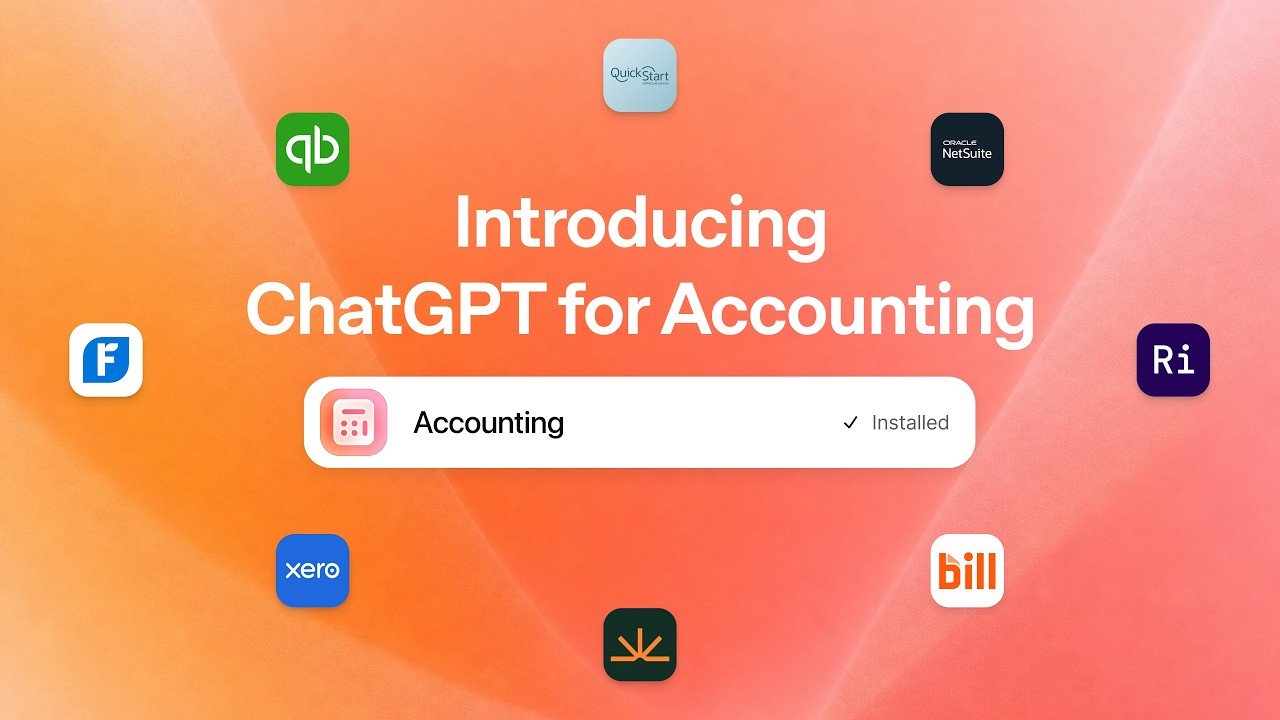
OpenAI made ChatGPT for Accounting available . It consists of OpenAI's own Accounting plugin and plugins from partners that connect ChatGPT to accounting software. The tools are meant for tasks such as the month-end close, reconciling entries and preparing audits.
OpenAI presents ChatGPT for Accounting in the video below.
Playing loads YouTube, which may set cookies. More information
The Accounting plugin can draft journal entries from invoices and receipts, gather data for reconciling entries and write notes about possible duplicate entries, missing information and unexplained differences. Users can also save checks and templates as reusable skills for the following months. The bookkeeper still approves the final entries.
The plugin is installed through the ChatGPT desktop app. Administrators of a workspace choose which apps are switched on. For programs without a plugin, OpenAI says ChatGPT can help through computer use: ChatGPT then operates the program itself, the way a person does with a mouse and keyboard.
At launch, OpenAI is working with seven providers of accounting and financial software: Intuit QuickBooks, Xero, BILL, FreshBooks, Oracle NetSuite, Rillet and Campfire.
Xero and checking the figures
Accounting software provider Xero has expanded its existing ChatGPT connection for the new service. Accountants and bookkeepers can use it, for example, to review changes since the previous month and ask questions about their clients' books. The answers use up-to-date data from Xero, including profit and loss statements, balance sheets and invoices.
Changes are then made in Xero itself, where they remain traceable. Xero serves five million customers in more than 180 countries; the connection with ChatGPT for Accounting is currently available in the United States.
Financial software provider Count warned that ChatGPT can be unreliable with figures and with explanations for which it has not been given any data. A plausible explanation for a discrepancy is therefore not necessarily the real cause. Count advises tracing figures back to a connected report or a supplied file and recalculating at least one total by hand.
What does this mean for the road to the singularity?
AI can already summarise financial statements and help with calculations. The connection to accounting software narrows the gap between that one-off help and a recurring workflow: an accountant can request up-to-date data and save checks for the next month. If such connections keep improving, small businesses could also more often get a clear view of their books without putting every overview together by hand.
For providers of accounting software, it then becomes important that their data stays usable in whichever assistant customers choose. OpenAI, in turn, has a reason to make ChatGPT suitable for more steps in the same workflow. That could reduce routine work and give advisers more room to look at what the figures mean together with their clients.
Checking still matters here: a convincing explanation must not end up unnoticed as a fact in a financial report. Traceable figures and human approval can help to combine the gain in speed with reliable decision-making.
What is the technological singularity? Read the explanation →