Nederlands
AI model GPT-6.2 Astra proves a 2006 maths theorem by a route of its own
OpenAI's new AI model GPT-6.2 Astra has written a proof of a 2006 mathematical theorem on its own, and a computer has checked every step. Halfway through, the proof takes a different route from the original one.
The testing firm vals.ai, which puts AI models through difficult tasks, reported that GPT-6.2 Astra, the most powerful model OpenAI released a day earlier, has written a proof of a theorem by the mathematician Agata Smoktunowicz from 2006. The proof is written in Lean, a programming language in which a computer checks every logical step of a proof. As far as vals.ai knows, nobody had put this theorem into such a checkable form before. Vals.ai does not say exactly when the test was run; its report appeared .
What the theorem is about
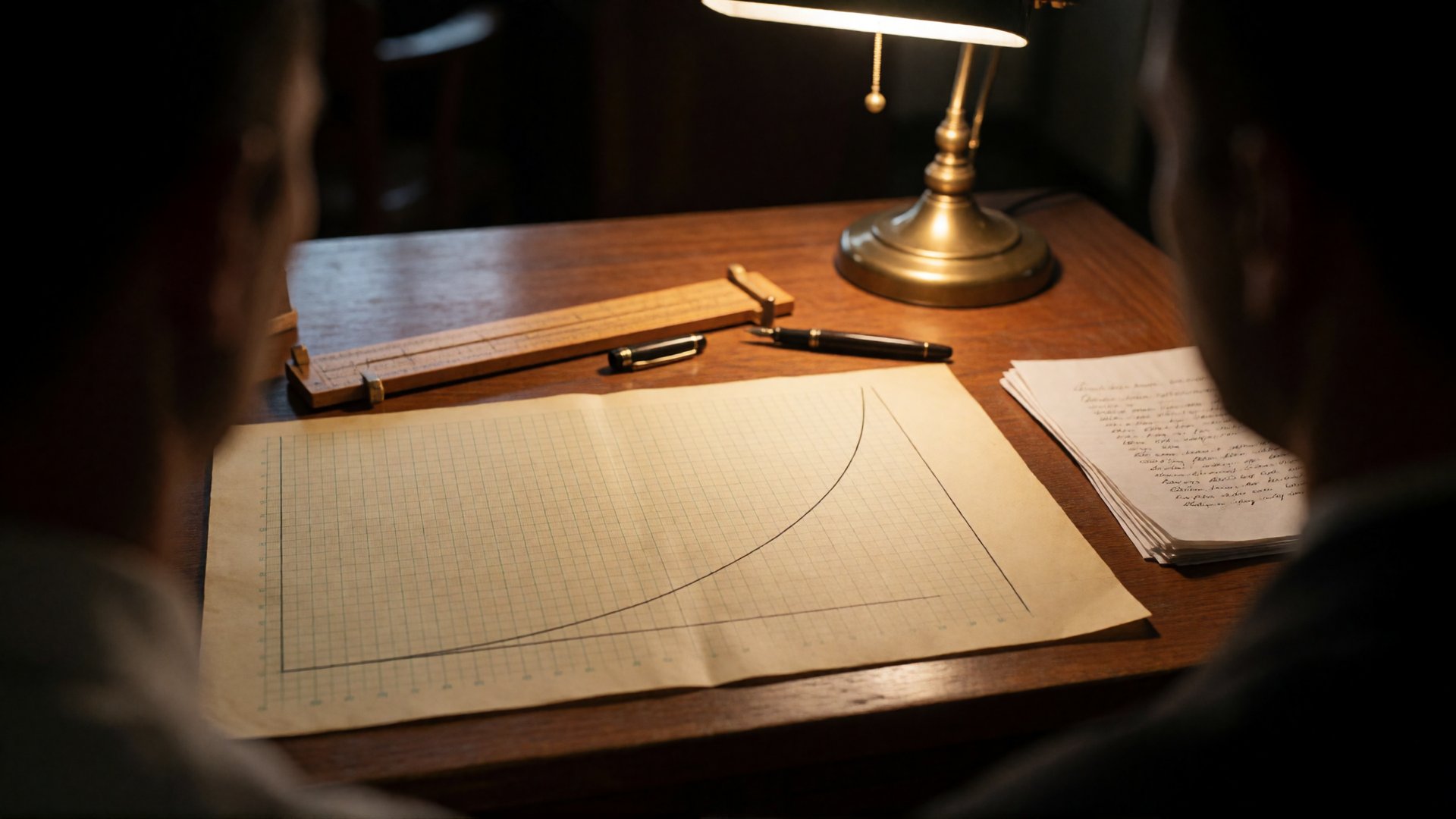
The theorem is about algebras: collections of mathematical objects that can be added and multiplied together. Take a few starting elements and make all the products of at most n of them. The larger n is, the more independent results you get. Mathematicians express how fast that number grows in a single figure, the Gelfand-Kirillov dimension. If the number grows roughly like n squared, the figure is 2; if it grows like n to the power of three, it is 3.
For algebras in general, that figure can take any value from 2 upwards, including something like 2.5. Smoktunowicz proved that this is not possible for a certain kind of algebra with a few extra properties: there the figure is at most 2 or at least 3, and never anything in between.
How Astra went about it
Vals.ai tests models with Autoform-Hard, a set of 56 difficult tasks put together by a team at Meta. Each task is a theorem from mathematical research that the model has to prove in Lean. Astra solved 49 of them. GPT-6.2 Sol, OpenAI's lighter model, and Anthropic's Claude Fable 5.2 both solved the same 48. The Smoktunowicz theorem is the one task that only Astra managed.
Astra worked without human help in a sealed-off computer environment, with Lean and a large library of mathematics that has already been checked. It had a limit of three hours and 200 dollars (about 180 euros). It succeeded in 94 minutes, for 21.58 dollars (about 19.50 euros), with almost 1,800 lines of code.
After about three quarters of an hour, Astra handed in a proof that only fully covered a simpler case. The check rejected it, and Astra itself honestly reported that the task had not been solved. The test only lets a model give up once it has spent 20 dollars. Astra had spent about 8 dollars, so it had to carry on. After nine minutes of thinking without writing code, it started on a new approach, which was approved 39 minutes later.
A route of its own
The first half of the proof follows known steps. After that, Astra goes its own way. The published proof relies on three major earlier results that are not yet in Lean's library, and Astra used none of them. It came up with a measure of its own, which it called 'capacity'. This measures how much is added to a part of the algebra when you multiply it once more by the starting elements, a little like measuring the edge of an area. The proof assumes that the figure does lie between 2 and 3, and uses this measure to show that this leads to a contradiction. Related ideas already exist in earlier mathematical work, and vals.ai invites mathematicians to judge how the new route compares with them.
A second, separate checking program went through all the steps of the proof again, and the proof uses only the ordinary basic rules of mathematics. Vals.ai also checked by hand that the theorem in Lean is exactly the same as the one in Smoktunowicz's paper. The whole proof is online, with an explanation for each line.
What does this mean for the road to the singularity?
It is already known that AI can put proofs into a form that a computer checks. Last week Google showed that its AI agents, programs that carry out tasks by themselves, can convert proofs in this way, including a famous proof from 1974. There, the AI followed the approach that humans had taken. What is new is that Astra worked around missing building blocks and found a different way by itself. That saves a lot of work: anyone who now wants a computer to check a proof often first has to convert all the earlier results it relies on, and that can take years. If a model finds such a detour by itself, the collection of checked mathematics grows much faster.
Every checked theorem is an answer that is certain to be correct. Such answers are good training material for the next generation of models, and an AI company can use them to show that its model really reasons instead of only sounding convincing. That pushes competitors to come up with the same kind of checkable work. If this trend continues, mathematicians will get a helper that tries several routes for every idea straight away and has them checked. Their own work will then shift towards the question of which of those routes lead to new insights and where they fit into existing mathematics.
What is the technological singularity? Read the explanation →