Nederlands
Nvidia releases open AI models for digital assistants on servers and laptops
Nvidia has released three new open AI models for assistants that carry out tasks on their own. The largest runs in companies' data centres; the smaller ones simply work on a laptop. According to Nvidia, the large model beats top models on specialist tasks after extra training.
On 15 October 2026, chipmaker Nvidia released three new AI models in its Nemotron series. They are open models: companies and individuals can download them free of charge, adapt them and run them on their own computers. They are made for AI agents, assistants that carry out tasks on their own, such as processing documents, looking at websites or operating other software. The largest model is meant for companies. The two smaller ones do not work in a large data centre, but simply on a laptop or PC.
A large model that can also read what it sees
The largest new model is called Nemotron 3.5 Super VL. The letters VL stand for vision-language: the model understands not only text, but also images. It can read, for example, a scanned PDF, a table, a chart or a web page. That is useful for an assistant that works with real business documents.
Super VL has 120 billion parameters, the adjustable numbers an AI model calculates with. That number is a rough measure of how large a model is. The model does not use them all at once. It is built from a group of specialised parts, and for each word only a few take part: together about 12 billion parameters. That makes it fast. According to Nvidia, Super VL performs as well on tasks with text and images as its own top model Nemotron 3 Ultra, while being about a fifth of its size. And it is said to be up to five times as fast as comparable open models.
Extra training for one task
Companies can train the model further on their own data, for one specific task, and run it in their own data centre. After such extra training, Super VL scores better on five specialist tasks than the closed models Claude Opus 5 from Anthropic and GPT-6.1 Sol from OpenAI, according to Nvidia. Closed means that those models can only be used through the maker itself, over the internet. In assessing health insurance claims, Super VL went from about 28 to 72 per cent correct after the extra training, against about 38 per cent for Claude Opus 5. Other tasks were document processing, reading receipts for accounting, scientific experiments and fending off digital attacks. These are Nvidia's own measurements. Independent tests have to show how the models do outside the lab.
Companies such as EY, Atlassian, CrowdStrike, Salesforce, Ramp and Perplexity are already working with the model, Nvidia says. Atlassian uses it, for example, to search in its collaboration software, CrowdStrike to defend computer systems. Nvidia is releasing not only the model itself, but also the training data and the method. This lets others see exactly how it was made and build on it.
Smaller models for the laptop
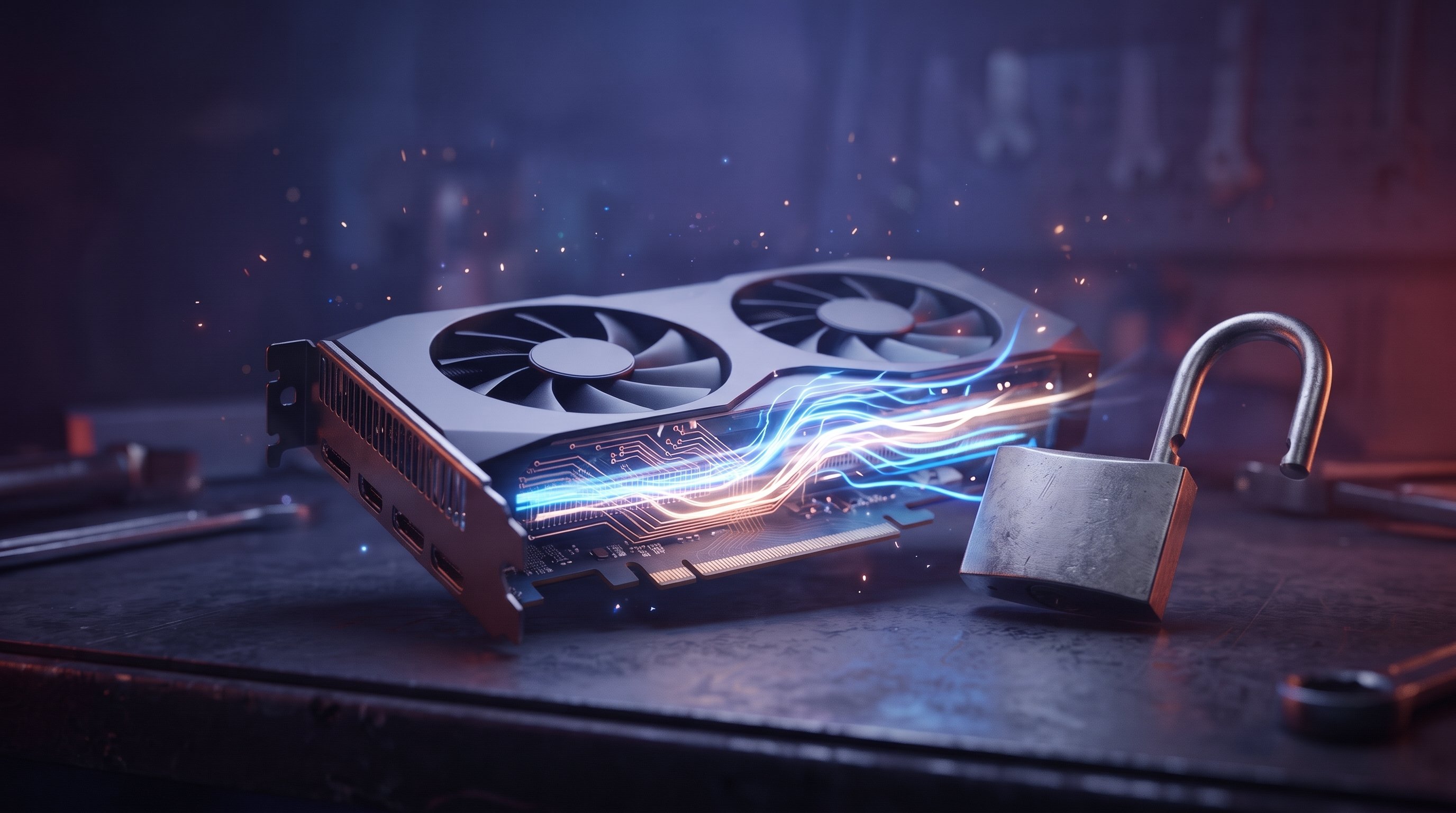
Nvidia is also releasing two smaller models from the Bolt line. The larger of these, Nemotron 3.5 Bolt 74B-A9B, has 74 billion parameters, of which about 9 billion take part for each word. Nvidia has compressed the model so strongly that it fits into 24 gigabytes of working memory. As a result, it runs on a fast PC with an Nvidia graphics card, on DGX Spark, a compact AI computer for the desk, and on the new laptops with Nvidia's RTX Spark chip. Those laptops, from Microsoft, Dell, Asus, HP and Lenovo among others, have been in the shops since mid-October. On such a computer, Bolt can carry out multi-step tasks on its own, search the internet and use other programs.
The smallest model, Bolt E4B, fits into 4 gigabytes of memory. It is meant for quick conversations, for example in a voice assistant or a talking character in a game. According to Kari Briski, vice president for open models and software at Nvidia, organisations and consumers can thus leave tasks to an AI assistant without the work having to go to someone else's data centre.
Super VL and Bolt 74B-A9B can be downloaded right away; Bolt E4B follows on 23 October. The launch comes at a time when large AI developers are increasingly also using chips from other makers, such as Amazon's Trainium, chips from Cerebras or their own chips. With strong open models, Nvidia shows that it supplies not only the chips, but also the software that runs on them.
What does this mean for the road to the singularity?
AI assistants that work on their own no longer always have to run in the data centre of a big tech company. If such an assistant can do difficult multi-step tasks on your own laptop, your data stays with you. That makes it easier for companies and ordinary users to really put AI assistants to work.
Also striking: according to Nvidia, a model a fifth of the size now does the same work as its large predecessor. And with extra training on one task, it can even overtake the best closed models in that area. So smarter-built models need less computing power for the same result. Because Nvidia also shares the training data and the method, anyone can build on it. In this way, advanced AI comes within reach of more and more organisations, and with the smaller models also of people at home.
What is the technological singularity? Read the explanation →