Nederlands
Free tools take the brakes off Nvidia graphics cards: up to twice as much AI computing power
Free open-source tools remove a brake that Nvidia built into the firmware of its GeForce graphics cards. For AI calculations, some cards become up to twice as fast. In practice the gain is smaller, and the tools are still experimental.
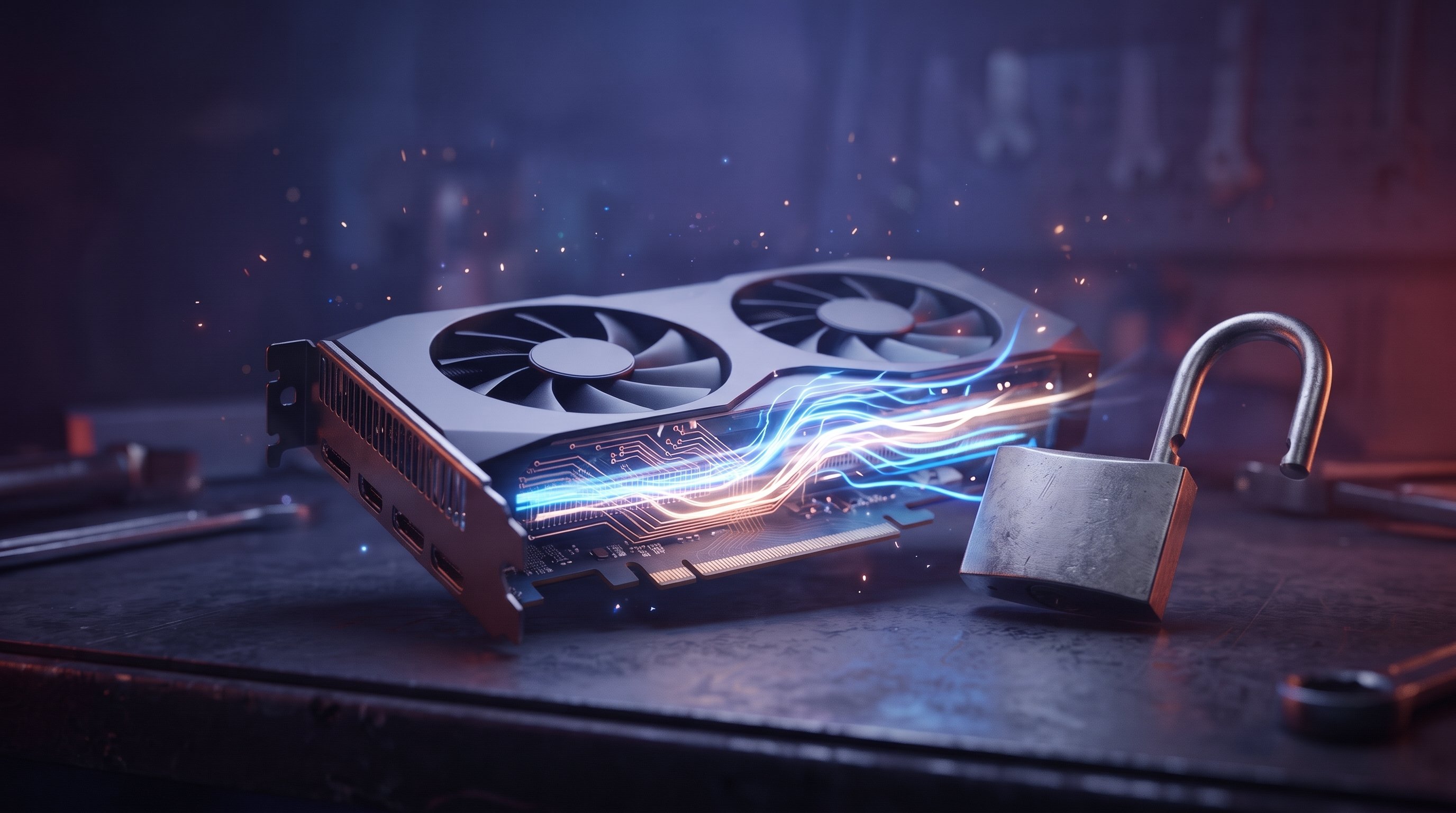
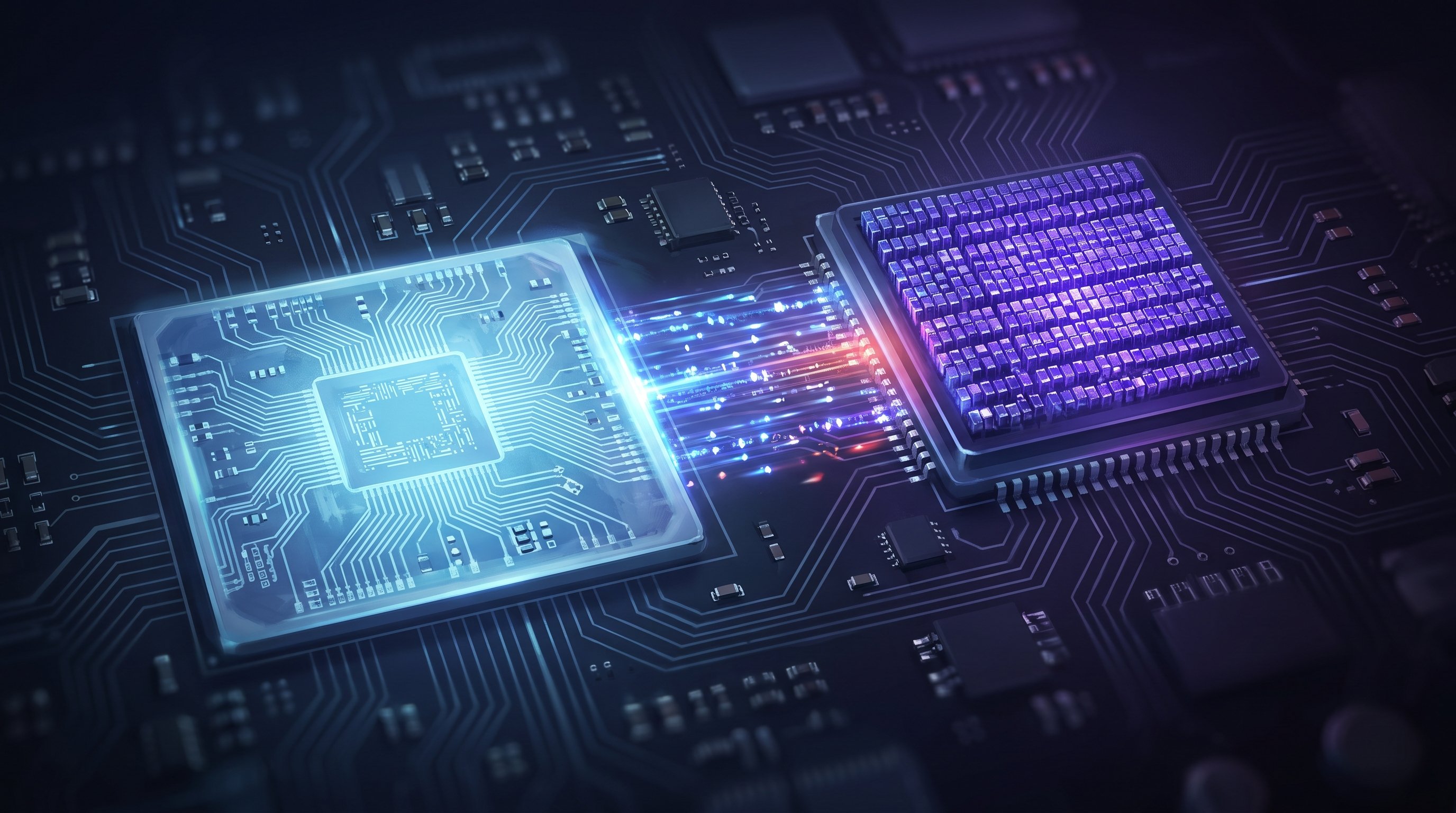
People who work with AI at home often use a graphics card from Nvidia's GeForce range. These cards have special computing cores for AI, called Tensor Cores. They do the calculations that neural networks run on: huge numbers of multiplications. But for one widely used type of AI calculation, these cores run at about half speed on GeForce cards. Nvidia keeps the full speed for its much more expensive cards for professionals, while according to the modders the computing cores of the consumer cards are capable of it too.
Modders have now removed that brake with free open-source tools. The tools change two settings on the card before Nvidia's software (the driver) is loaded. Nothing changes in the driver or in the card's own software. The change is temporary: once the computer is switched off, it is gone again.
Up to twice as fast
The first project, gpu-unlock by developer Zagitta, works on Linux and is meant for the RTX 30 series. Other developers made similar tools for the RTX 20 and RTX 40 series. Zagitta's project got almost 6,800 stars on GitHub in its first eight days, a sign that many people find it interesting.
The developers' measurements show big jumps. Computing power is measured in TFLOPS: trillions of calculations per second. An RTX 4090 went from 165.6 to 331.6 TFLOPS, exactly double. An RTX 2080 Ti went from 46.9 to 93.7 TFLOPS. For the RTX 3090 Ti, the gain depends on the type of numbers being calculated with: from 87.5 to 157.4 TFLOPS for one type, and to 118.4 TFLOPS for the other.
Smaller gains in practice
In real use the gain is smaller and depends on the task. On an RTX 3090 Ti, making images with the program ComfyUI became 47 to 59 per cent faster. An AI language model read in a question 14 to 36 per cent faster. Writing the answer, word by word, was hardly any faster. There the limit is not the calculating, but how fast the card gets data from its memory. Gamers get nothing out of the tools.
Since 24 October there has also been a version for Windows, made by GitHub user impacifist. It starts as a small separate program before Windows starts up. Users have to select it by hand every time the computer starts. The maker has so far tested the Windows version on only one computer, with an RTX 3090.
Caveats
The tools are still being developed. They do not work on every card: on a special RTX 3080 Ti with 20 gigabytes of memory, the brake simply stayed on. In the worst case the computer no longer starts, and a change like this can cost the warranty. How the cards hold up when they run at full power for a long time has not yet been studied independently. There is no working version yet for the newest RTX 50 series. Nvidia has not yet responded.
What does this mean for the road to the singularity?
How much AI people can run at home depends heavily on how much computing power they get per euro. These tools get more out of cards people already have. That fits a wider movement to make powerful AI work on people's own hardware. Earlier, the company Unsloth made a large AI from DeepSeek so small that it fits on a computer with 128 gigabytes of memory. There, memory was the limit; here it is computing speed. The more of these limits disappear, the more researchers, students and hobbyists can work with AI themselves, without expensive rented computing power in the cloud. Now it is a matter of waiting to see how Nvidia responds.
What is the technological singularity? Read the explanation →