Nederlands
Organoid
An organoid is a tiny piece of tissue grown in the lab that resembles a real organ. It grows from stem cells and lets researchers study how organs work, without needing a human or an animal.
An organoid is a miniature version of an organ, grown in the lab. Such a piece of tissue is often only a few millimetres across, about the size of a lentil. There are organoids of the gut, kidneys, liver and brain, among others.
How does it work?
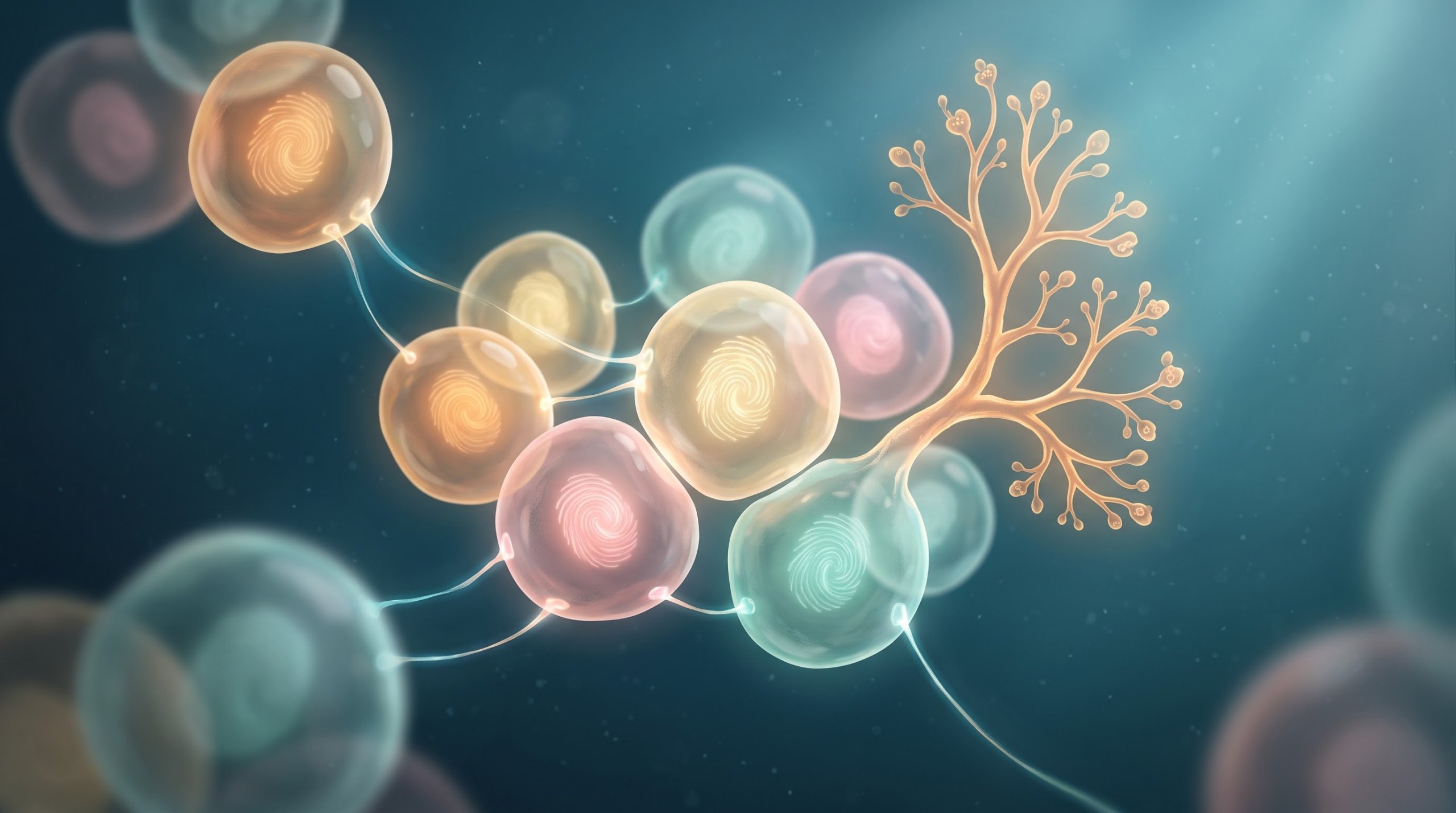
It starts with stem cells: cells that can develop into all kinds of tissue. In a dish, researchers give them nutrients and signals that the body also uses to make an organ grow. The cells then largely find their own places. They arrange themselves into layers and structures, and begin to resemble a real organ.
An organoid is not a complete organ. It has no circulation, for example, and the whole thing stays small. But it does contain real human cells working together, and that makes it useful. Researchers can study how an organ develops, how a disease arises and how tissue reacts to a substance.
Why it matters
Organoids complement research with a model that is closer to the human than a cell culture in a dish, and that does not require a laboratory animal. At WATTBA it is mainly brain organoids that have come up, in research where AI and biology meet.
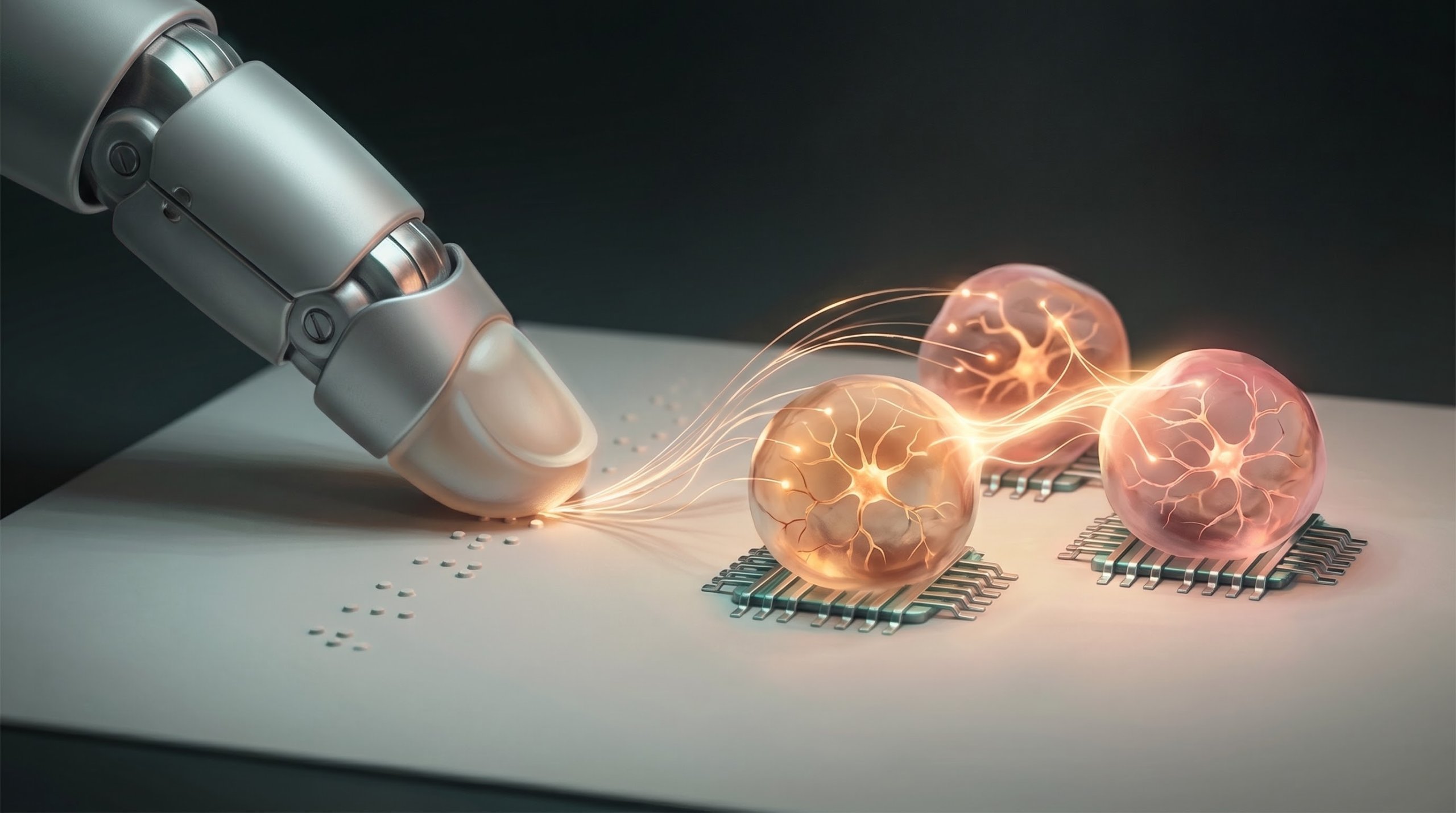
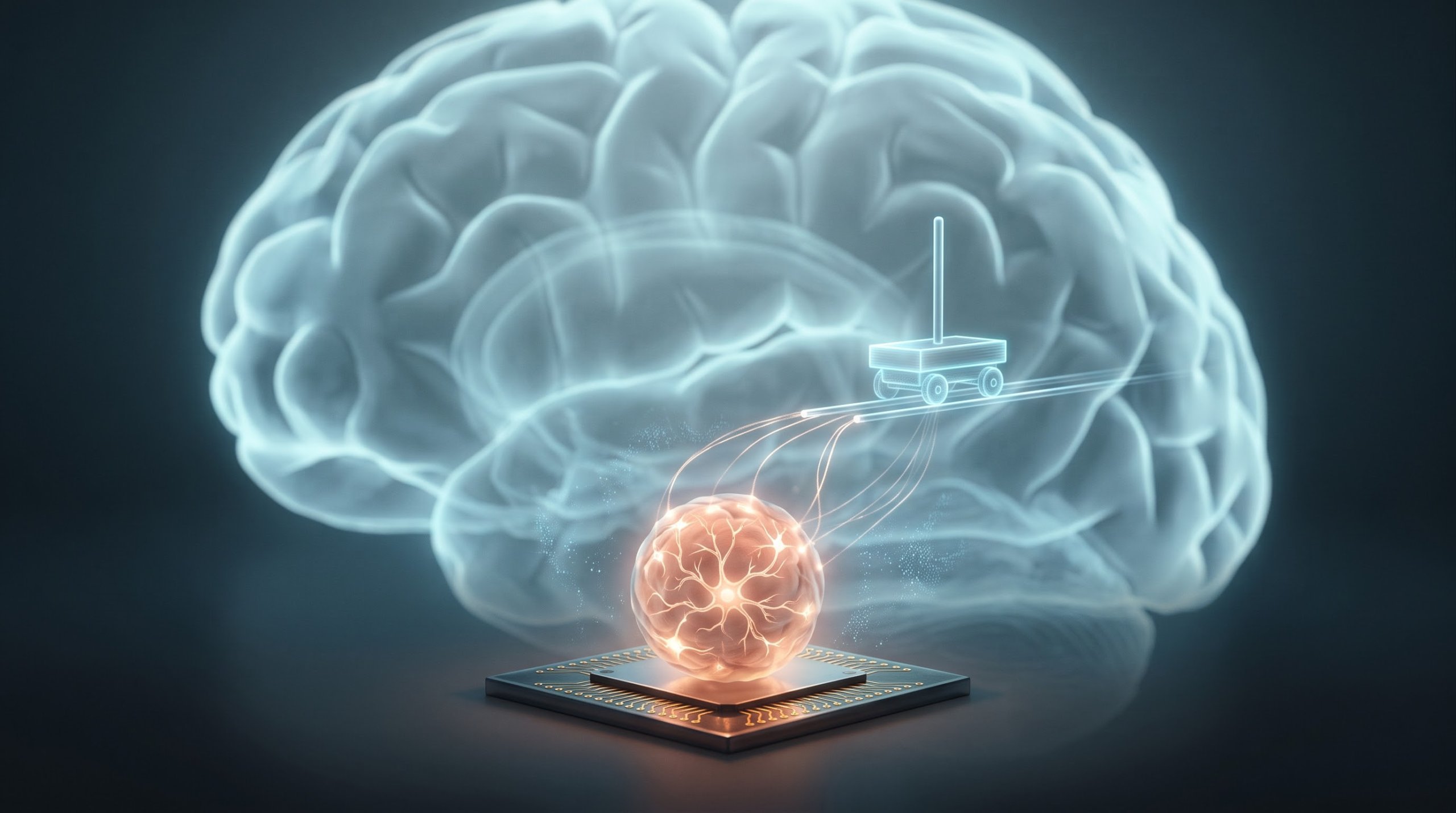
A team at UC Santa Cruz had cultured human brain tissue learn a classic control task: keeping a pole upright on a cart. An AI algorithm acted as the coach (link). Researchers at the University of Bristol sent braille, felt by a robot finger, as small electrical pulses to cultured spheres of brain tissue. From the response of three spheres together, they read 83 per cent of the letters correctly (link). The Australian company Cortical Labs went a step further and linked fifteen computers with cultured human brain cells. Together they did better than a single machine in first tests, though these are preliminary results from the company itself (link).
Such research shows how tissue learns and responds. It remains a matter of small clusters of cells, without senses and without a body.
Articles about Organoid
-
Fifteen computers built with human brain cells work together and do better than one
Australian company Cortical Labs linked fifteen computers that use lab-grown human brain cells. In early tests they did better together than a single machine and a common AI program. The results are preliminary and come from the company itself.
-
Researchers read braille with lab-grown brain tissue
Researchers at the University of Bristol sent braille, felt by a robotic finger, as small electrical pulses to lab-grown balls of brain tissue. From the response of three balls together, they read 83 per cent of the letters correctly. A first step towards energy-efficient biocomputers.
-
AI model IRIS reads which signals cells in an embryo have received
Researchers at MIT and the Whitehead Institute have built an AI model that can tell from a cell's gene activity which signals that cell received from its neighbours. With that knowledge, they have already improved a lab recipe for growing precursors of lung tissue from human stem cells.
-
Lab-grown human brain tissue learns to balance a virtual pole with an AI coach
At a meeting in Silicon Valley, a team from UC Santa Cruz showed how cultured human brain tissue learns a classic control task: keeping a pole upright on a cart. An AI algorithm acts as the coach. A volunteer with a keyboard could barely keep up with the tissue.