Nederlands
Google DeepMind tests Gemini Robotics 2.5 in Mercedes-Benz factories
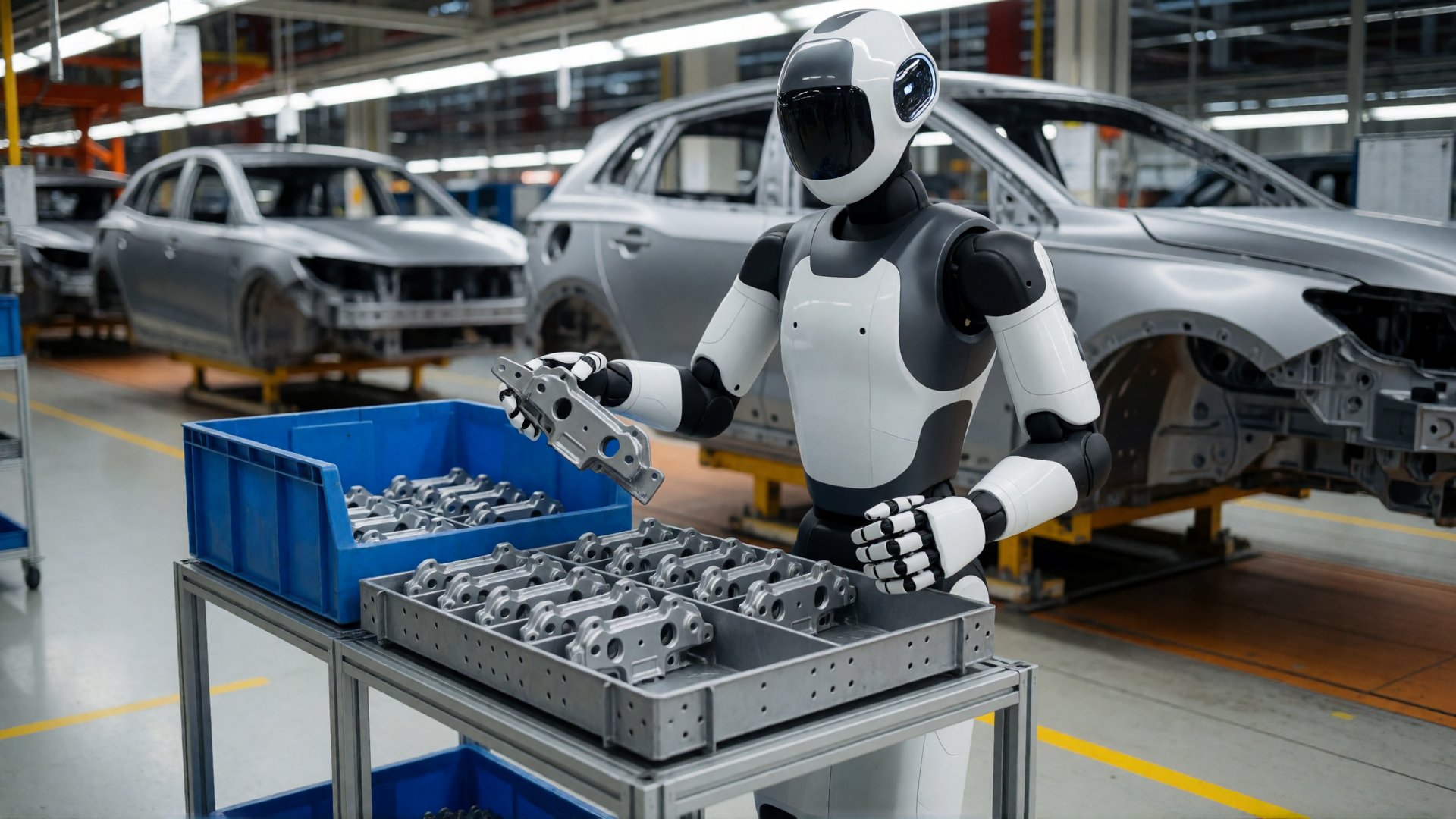
Google DeepMind has presented Gemini Robotics 2.5, an AI model that makes robots more skilful with their hands. In a trial at Mercedes-Benz, a humanoid robot sorted car parts on a running production line. According to DeepMind, it succeeded 96 per cent of the time.
Google DeepMind announced Gemini Robotics 2.5 on 10 November 2026. It is an AI model that lets a robot see, understand and act: it links camera images and an instruction in plain language directly to the movements of arms and hands. According to DeepMind, robots using this model learn a wider range of skills, and learn them faster, than with the previous version, Gemini Robotics 2. The model will go first to the companies DeepMind works with on robots.
A robot in a factory usually performs one action that has been programmed in advance down to the millimetre. If a part lies slightly differently, it gets stuck. A model that sees what is in front of it and adjusts its grip can handle many more kinds of work.
DeepMind tested the model on 200 different tasks, such as serving food with tongs, tying a bow on a present and transferring liquid with a pipette. Depending on the type of task, it succeeded 30 to 100 per cent more often than the previous version, according to DeepMind, and the robot finished 20 to 30 per cent faster.
The model works with different robots. DeepMind mentions the humanoid robot Apollo 2 from the American company Apptronik, with a five-fingered hand that can move in 22 independent ways, and the Franka Duo, a set-up of two robot arms fitted with simple two-fingered grippers.
Sorting parts at Mercedes-Benz
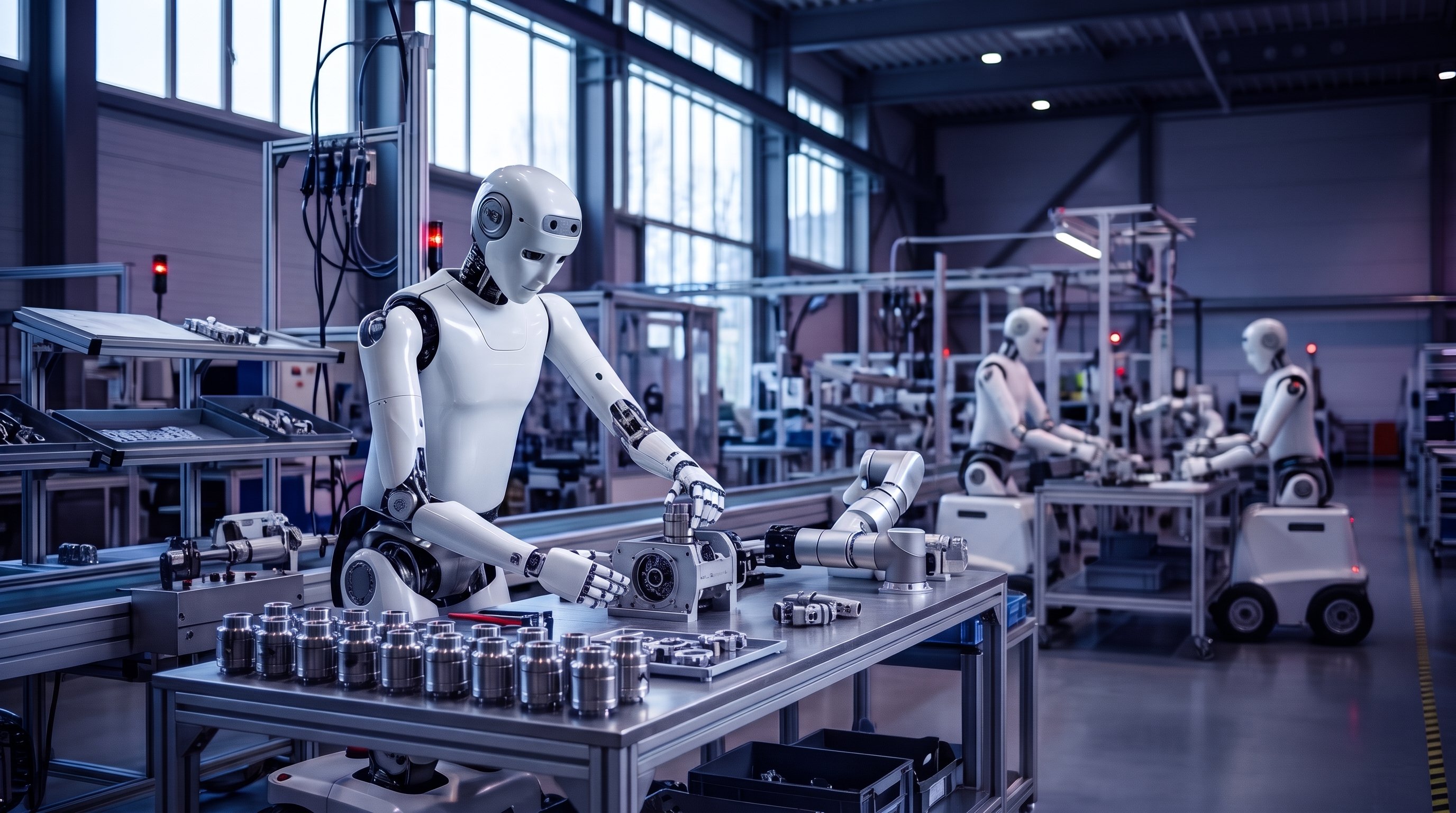
Together with Apptronik and Mercedes-Benz, DeepMind tried out Apollo 2 on running production lines at the car factories in Kecskemét (Hungary) and Sindelfingen (Germany). It was a trial to show that it works, not yet a permanent deployment. The robot took metal brackets out of large bins and placed them in holders, in exactly the order in which each car on the line needs them. It filled gaps in the sequence by itself. According to DeepMind, this succeeded 96 per cent of the time.
Two models worked together: Gemini Robotics ER kept track of which step was next, and Gemini Robotics 2.5 controlled the arms and hands. Apptronik's chief executive Jeff Cardenas says the models improved a lot after a few weeks of extra training on Apollo 2, and that they worked almost as well in the Mercedes-Benz factory.
Working safely alongside people
While working, the model watches for hazards nearby and steers the robot around them. According to DeepMind, this increased the share of tasks completed safely by 33 per cent around obstacles and by 43 per cent when people were nearby.
DeepMind is also sharing a new, freely available test set, ASIMOV-Jailbreak: hundreds of instructions in which a dangerous request is cleverly disguised, to test whether a robot model can be talked into it. Gemini 4 Argon, the general AI model that Google rolled out widely in October, resisted 99.5 per cent of these attempts according to DeepMind, against 82 per cent for the earlier robot model Gemini Robotics ER 2.
Argon also helped build Robotics 2.5. From a camera image of a real workplace, it creates a simulated copy in which thousands of practice rounds can be run. This practice was used alongside the real examples. All figures come from DeepMind itself; independent measurements still have to confirm them.
What does this mean for the road to the singularity?
Robots that pick and sort parts by themselves on a running production line mark a step from the lab to real work. What stands out is that one model works with different robots, and that a large AI model speeds up practice in a simulated world. If this also works beyond this trial, robots could soon do many more kinds of manual work alongside people.
What is the technological singularity? Read the explanation →