Nederlands
Robots lay all the bricks of a house in Almere, including the round wall and the letters
The Amsterdam company Monumental says its bricklaying robots laid all the bricks of a house in Almere, including a round wall and letters in the brickwork. Another 15 houses will follow, and near Groningen the company is starting on a district of 112 homes and a hotel.
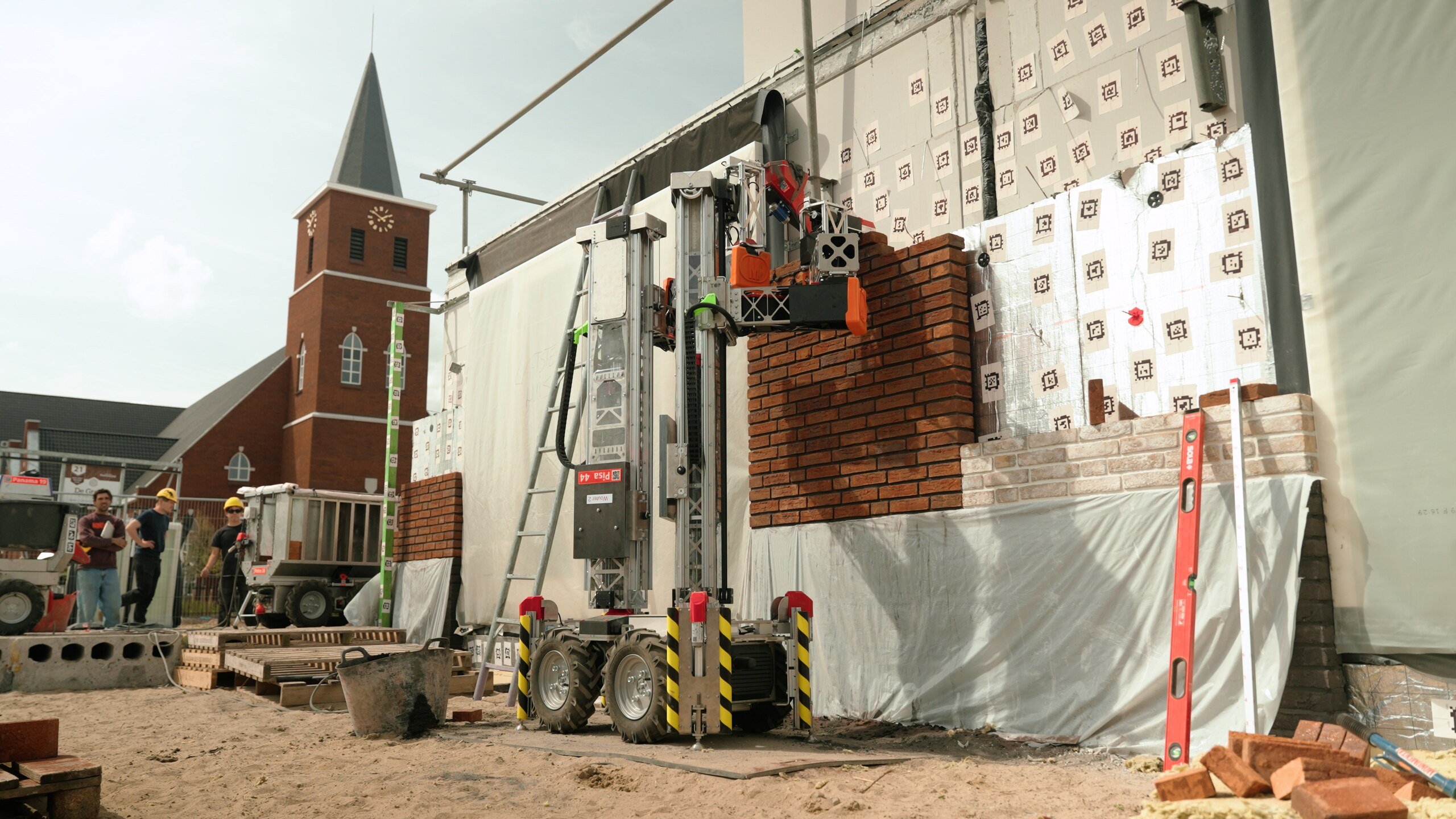
The Amsterdam robotics company Monumental has had its robots do all the brickwork of a house. Co-founder and chief executive Salar al Khafaji reported on X on 28 October that the robots in Almere laid every brick of a home. According to him, another 15 houses will follow in the same way in the coming weeks.
Playing loads X, which may set cookies. More information
That is a step further than earlier this year. At a project in Kesteren, with the contractor JG Timmer, the robots laid more than 80 per cent of the bricks, according to the company. In Almere it was 100 per cent.
The difficult work, in particular
The house in Almere was not a simple box with straight walls. According to al Khafaji, the robots laid a round wall and worked with different types of bricks and different bonds. A bond is the pattern in which the bricks lie in relation to each other. They also laid letters into the wall, set slightly back from the rest of the façade.
A straight wall of one type of brick is the easiest job for a robot: every brick lies just like the one before. With a curve, a different pattern or letters, almost every brick gets its own place. Custom work like this normally needs an experienced bricklayer.
How the robots work
Monumental does not sell its robots. The company works as a subcontractor: a building firm pays for a finished wall, and Monumental provides the robots and the people who operate them. Beforehand, the company's software, called Atrium, works out from the architect's drawing where every brick and every joint must go. The electric robots then carry out that plan with a small crane arm, sensors and cameras. Fixed sensors around the building site track where each robot is. People stay on site: they operate and check the robots.
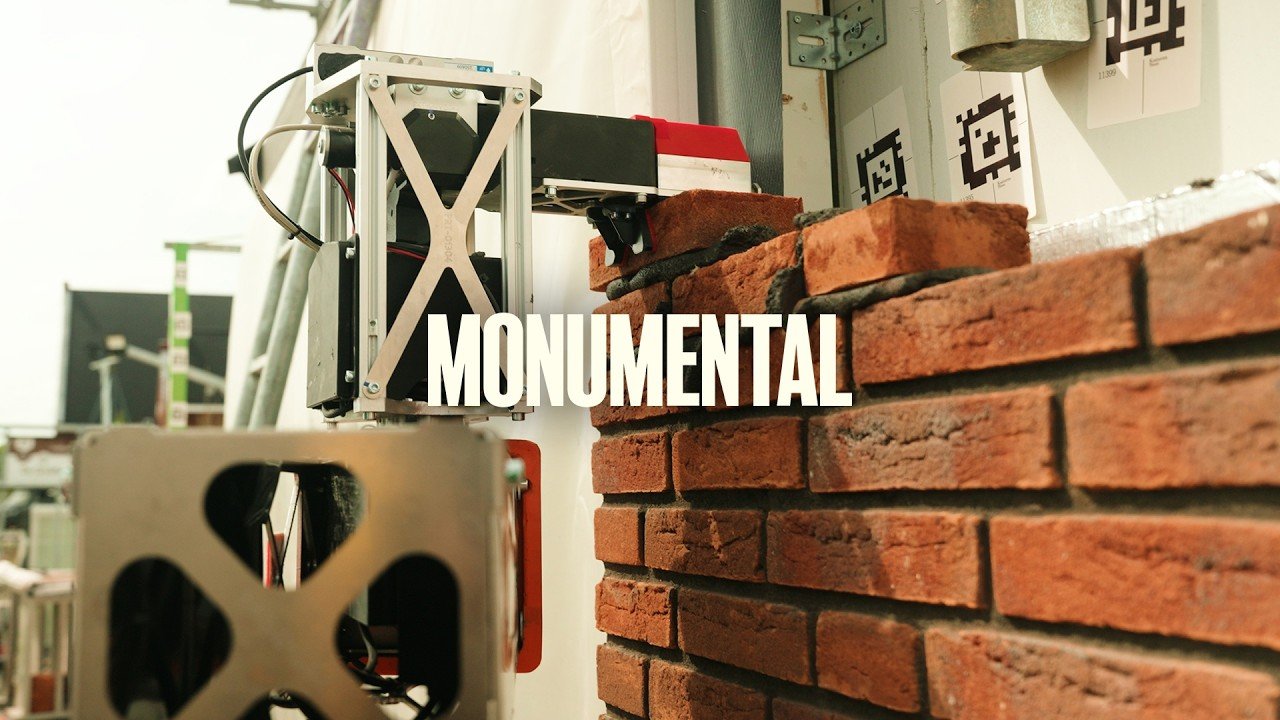
Playing loads YouTube, which may set cookies. More information
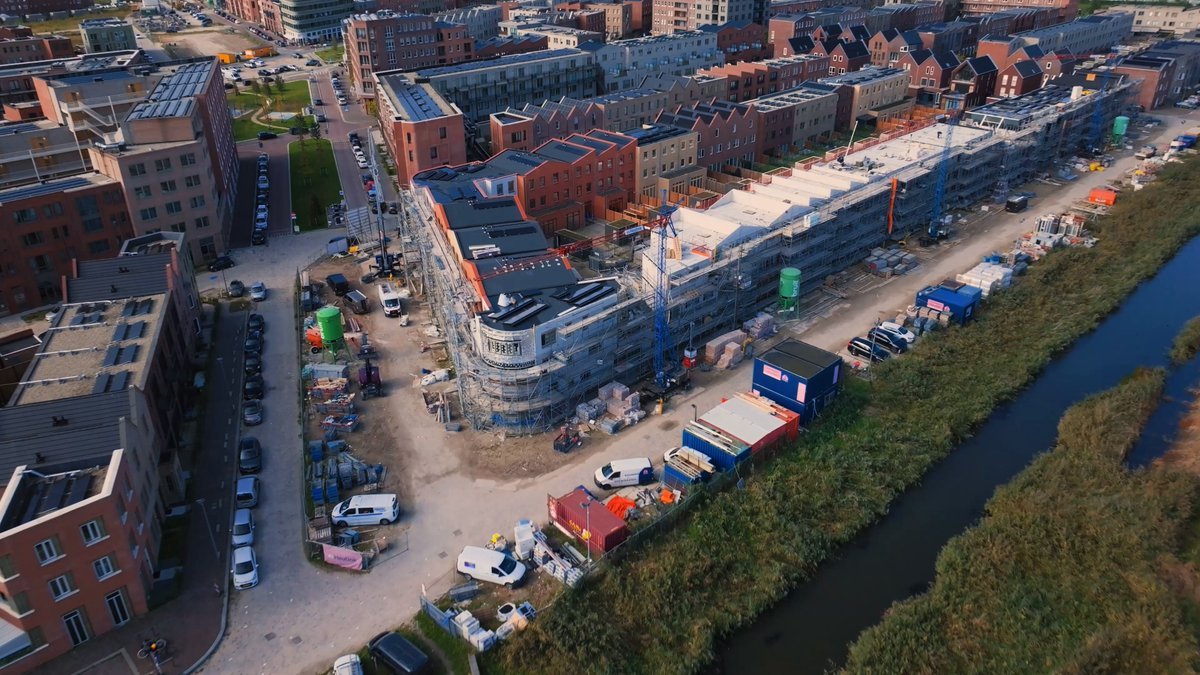
According to Monumental, its robots have already built the walls of more than 100 homes in the Netherlands and the United Kingdom, and also of a school, a hotel, a community centre and a stretch of quay wall in Amsterdam, among other things. Almost half of those homes were added within a few months.
From one house to a whole district
On 22 October, al Khafaji announced that the robots have started on a new district near Groningen: 112 houses and a hotel, together with the building firms Hesco Bouw and Brands Bouwgroep. According to him, the houses are meant for families whose homes have to be replaced because of earthquake damage. After Amsterdam, Groningen becomes Monumental's second permanent base in the Netherlands, with its own team of robot operators.
There is plenty of work. The Netherlands wants to build 100,000 new homes a year, while about 69,000 were added in 2025. One of the reasons is a shortage of skilled workers, including bricklayers.
What comes next
The results from Almere come from Monumental itself. The coming weeks, with the 15 houses in Almere and the district near Groningen, will show whether the robots can also deliver this kind of custom work reliably and at a good price across dozens of houses in a row. If that works, it becomes easier for building firms to include robots as a fixed part of their planning.
What does this mean for the road to the singularity?
Robots that do the same thing over and over in a factory have existed for a long time. A building site is much harder: the weather changes, the ground is uneven and no project is the same. That robots there now lay not only straight walls but also round walls and decorative work shows that machines can take over more and more ordinary skilled work in the real world.
The next step is scale: more robots, more types of construction and more projects at the same time. If that works, houses can be built faster, even when there are too few skilled workers. In this way, the technology will soon help with something many people notice directly: a roof over their heads.
What is the technological singularity? Read the explanation →