Nederlands
Microsoft finds a more economical recipe for training large AI models
Microsoft AI has completed the first training phase of its new base model MAI-Base-2. According to the company, its new approach reaches the same level as a strong Chinese model with a quarter to a twelfth of the computing. The model is now being trained further.

Training a large AI model takes an enormous amount of computing power, electricity and money. Anyone who finds a smarter way to get the same result with less computing can build a better model for the same budget. That is exactly what Microsoft now says it has done.
On 15 October 2026, Microsoft AI, Microsoft's AI division led by Mustafa Suleyman, described how it trained its new model MAI-Base-2. It is a base model: the result of the first and largest training phase, in which a model learns from a gigantic pile of text and images how language and the world fit together. After that comes a second phase, in which the model learns to answer questions, reason and program. Microsoft is working on that now.
A large model, cleverly divided
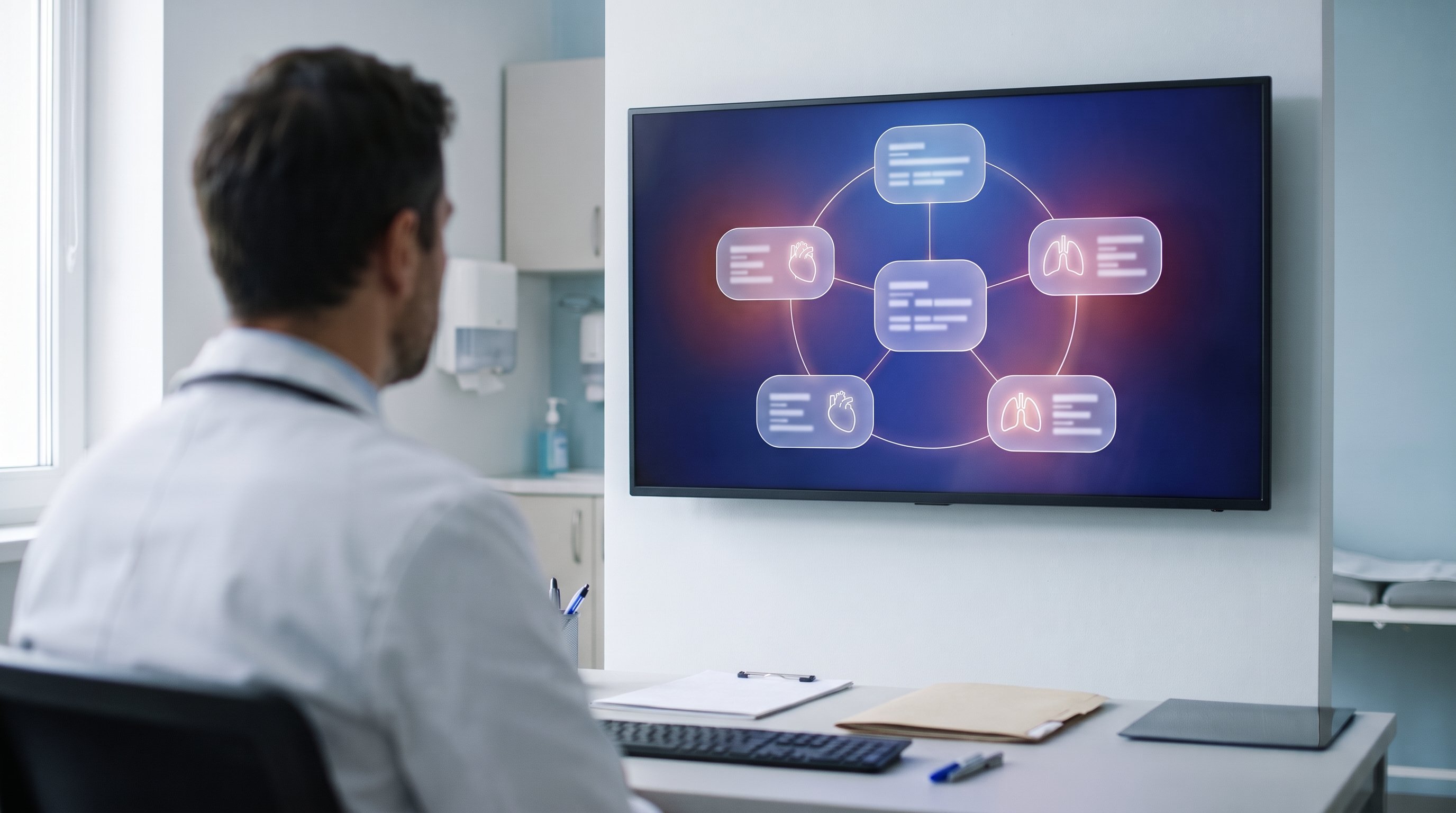
MAI-Base-2 has 2.8 trillion parameters. These are the adjustable numbers in an AI model that hold its knowledge. The model is divided into many smaller specialists. For each word, only a small part takes part, about 80 billion parameters. You can compare it with a large hospital: not all the doctors see every patient, only the specialists who are needed.
The training took 38 days, in August and September 2026, on about 16,000 powerful AI chips from Nvidia. The model learned from some 50 trillion pieces of text and images. What is new is that the model was also trained with pictures right from the start, such as charts, documents with images and computer screens. The previous version, MAI-Base-1 from June 2026, could not do that yet.
Four to twelve times more economical
The most striking figure is the saving. According to Microsoft, a model built with its training recipe would need only a quarter to a twelfth of the computing (4.2 to 12.3 times less) to score as well as DeepSeek-V4-Pro-Base, a strong base model from the Chinese company DeepSeek. Compared with its own previous model, Microsoft says it is 6.3 to 12.7 times more economical.
That figure is a calculated estimate, not a direct contest between two models. Using smaller test models, Microsoft derived rules of thumb: how good a model becomes as you put more computing into it. With these, the company calculated how much computing its recipe would need to match DeepSeek, and compared that with what DeepSeek actually used. Microsoft did not use the saving to train more cheaply, but to build a larger and better model.
What is behind the saving?
Microsoft mentions a number of technical improvements. The company switched to a newer calculation method for steering the model during training, which other researchers had also found to be more economical. Furthermore, no text is lost any more when some of the specialists in the model are too busy: those pieces simply get their turn in an extra round. And the team monitors the training at more points at once, so that it runs more smoothly. That monitoring even brought to light an error in the way programming code had been prepared. According to Microsoft, the better quality of the training data also counts heavily.
What is still to come
How good MAI-Base-2 will really be at programming, mathematics or carrying out tasks has to be shown by the second training phase. Microsoft wants to share those results soon. There are no independent measurements yet. The model will not be freely available: Microsoft wants to offer it to business partners through its Foundry platform. Meanwhile, work on MAI-Base-3 has already begun.
What does this mean for the road to the singularity?
The speed at which AI improves depends not only on more chips, but also on smarter recipes. A jump of four to twelve times in efficiency within a few months means that the same data centres can deliver much more. That applies to everyone: such improvements are often quickly adopted by other labs.
Also notable is how this kind of research increasingly builds on itself. Microsoft used small test models to predict how the large model would behave, and that worked. The better those predictions become, the fewer expensive failures there are. And AI models that themselves help design such experiments and track down errors in the data make that cycle even faster.
What is the technological singularity? Read the explanation →