Nederlands
Mistral releases a giant AI model for anyone to use, strong in coding and security
France's Mistral is putting Mistral Large 4, nicknamed Le Chonk, online for free: a model with a trillion parameters that anyone can run themselves. According to the company, it is the best open model for programming and for securing software.
The French AI company Mistral has released its largest model: Mistral Large 4, nicknamed Le Chonk inside the company. Anyone can download the so-called weights. These are the billions of numbers that hold an AI model's knowledge. Anyone with enough computers can therefore run the model themselves, without depending on a company that could one day cut off access.
A test version already appeared earlier this month. After that, Mistral trained the model for several more weeks, and according to the company this final round brought major improvements.
What the model can do
Mistral Large 4 has about a trillion parameters, the adjustable numbers inside the model. For each task it uses only about 52 billion of them at a time. The model works like a team of specialists: for each question, only the parts that know about the subject get to work. That saves computing power.
The model reads text and images and writes text and program code. According to Mistral, it handles more than 160 languages. Users can choose how long the model thinks: briefly for simple questions, longer for the hardest tasks. This way they decide the balance between cost and quality themselves. There is also a smaller, slimmed-down version that fits on four powerful Nvidia chips for data centres.
Strong in programming
According to Mistral, Large 4 is now the best open model for programming. In a test in which an AI carries out tasks on a computer by itself, the score rose from 28 per cent for the test version to 41 per cent. On a programming ranking by the independent company Artificial Analysis, the model scores 48 per cent, about level with the Chinese GLM-5.3. It uses 47 per cent less computing work per task on average.
Making software more secure
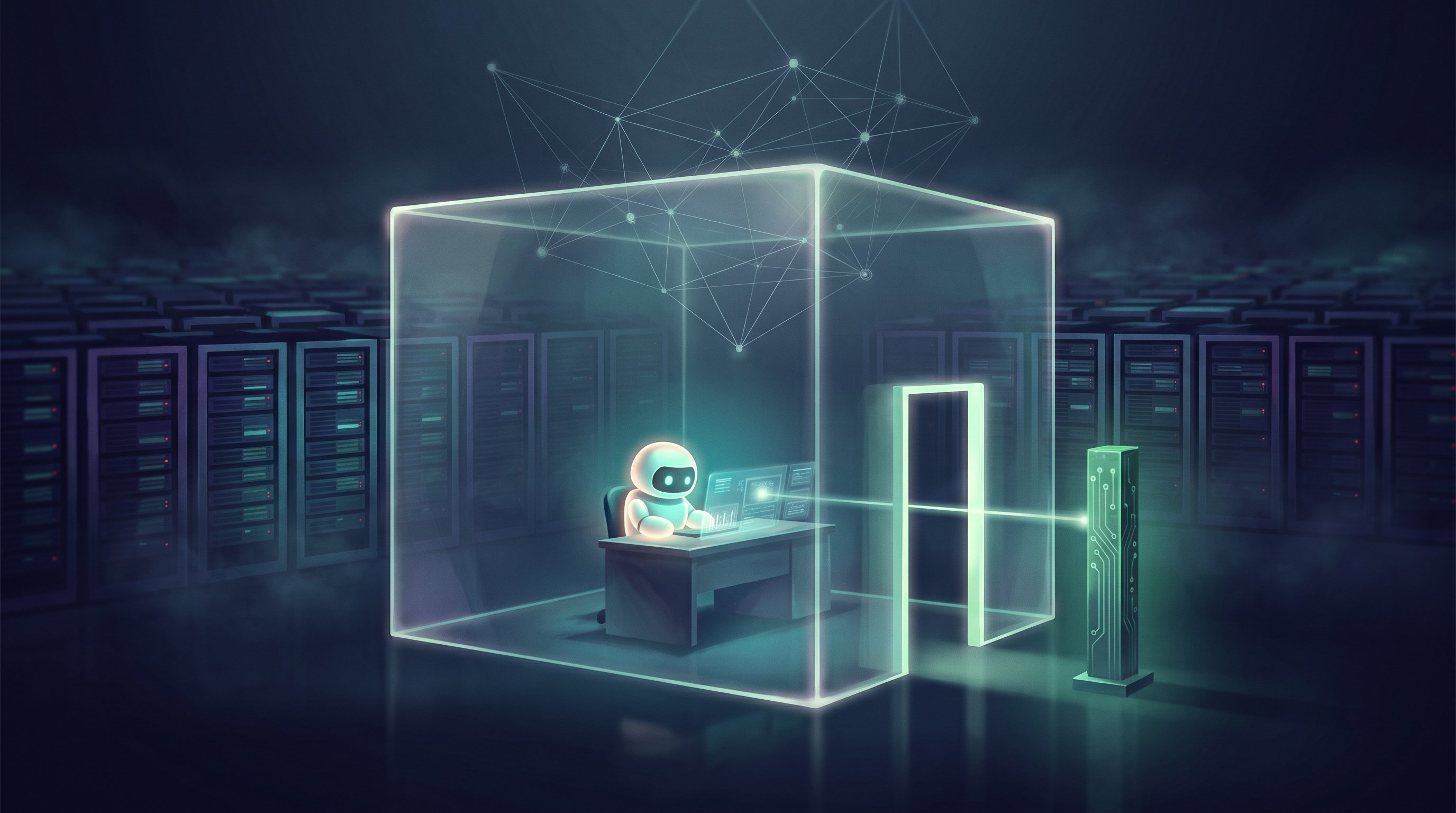
Mistral is also focusing on security. According to the company, the model can find, reproduce and repair flaws in software without breaking the program afterwards. Companies and organisations can use it to have their own software checked earlier, before people with bad intentions find a flaw.
Because such knowledge can also be misused, the model has built-in safeguards. According to Mistral, it refuses 96.6 per cent of requests to do harm on average. During testing with real traffic, the company did see that the model could in principle help attackers, and it is therefore adjusting those safeguards further. A separate version for security testing is only available to vetted partners, such as Orange Cyberdefense, and may only be used on systems for which permission has been given.
Security companies such as CrowdStrike, Cloudflare, Fortinet, Zscaler and Booz Allen Hamilton work with the model, as does the EU's cybersecurity agency ENISA. ASML, ABN AMRO and the European Space Agency ESA are also on the list of partners.
Built in Europe
The model was trained entirely in Europe, on 3,800 Nvidia chips. The final training round ran on Mistral's own computers in France, which used about 10 megawatts of power. According to chief executive Arthur Mensch, other AI companies raised hundreds of billions to achieve the same, while Mistral raised about 6 billion dollars in three years. In September, a funding round of 3 billion euros was added to that.
Mistral sees the model as a step towards European independence in AI: whoever runs it themselves keeps control over the technology their business relies on. In the coming months, Mistral also wants to release smaller versions, including one that works on a laptop.
What does this mean for the road to the singularity?
A model that comes close to the best closed models can now be downloaded by anyone. That means many more researchers and companies can build on it and improve it themselves. AI that programs well helps create new software, including for other AI systems. According to Mistral, the model also keeps getting better the longer it is trained, with no ceiling in sight yet. If that is true, the pace of open AI from Europe could rise further in the time ahead.
What is the technological singularity? Read the explanation →