Nederlands
OpenAI uses its AI for hardware design: from 3D models to circuit boards
OpenAI shows how ChatGPT and Codex help engineers design physical products. Two employees had the GPT-6 Astra model design a working prototype in less than a week. Getting it made in a factory still took several rounds of checks by humans.
On 3 November, OpenAI showed how its AI models help design things you can hold in your hand, from machine parts to electronics. Engineers use ChatGPT and Codex, OpenAI's programming assistant, to design and adjust parts in CAD programs: computer programs in which engineers draw parts and machines in 3D. The AI models also design circuit boards and make production drawings: drawings with all the dimensions a factory needs to make a part. They also set up simulations, computer calculations that imitate how air flows around a shape, for example, and they assess designs.
Until now, AI assistants mostly worked on software. With a physical product, a mistake costs more: a part that does not fit has to be made again. OpenAI also describes where its AI model still fell short.
A prototype designed by AI
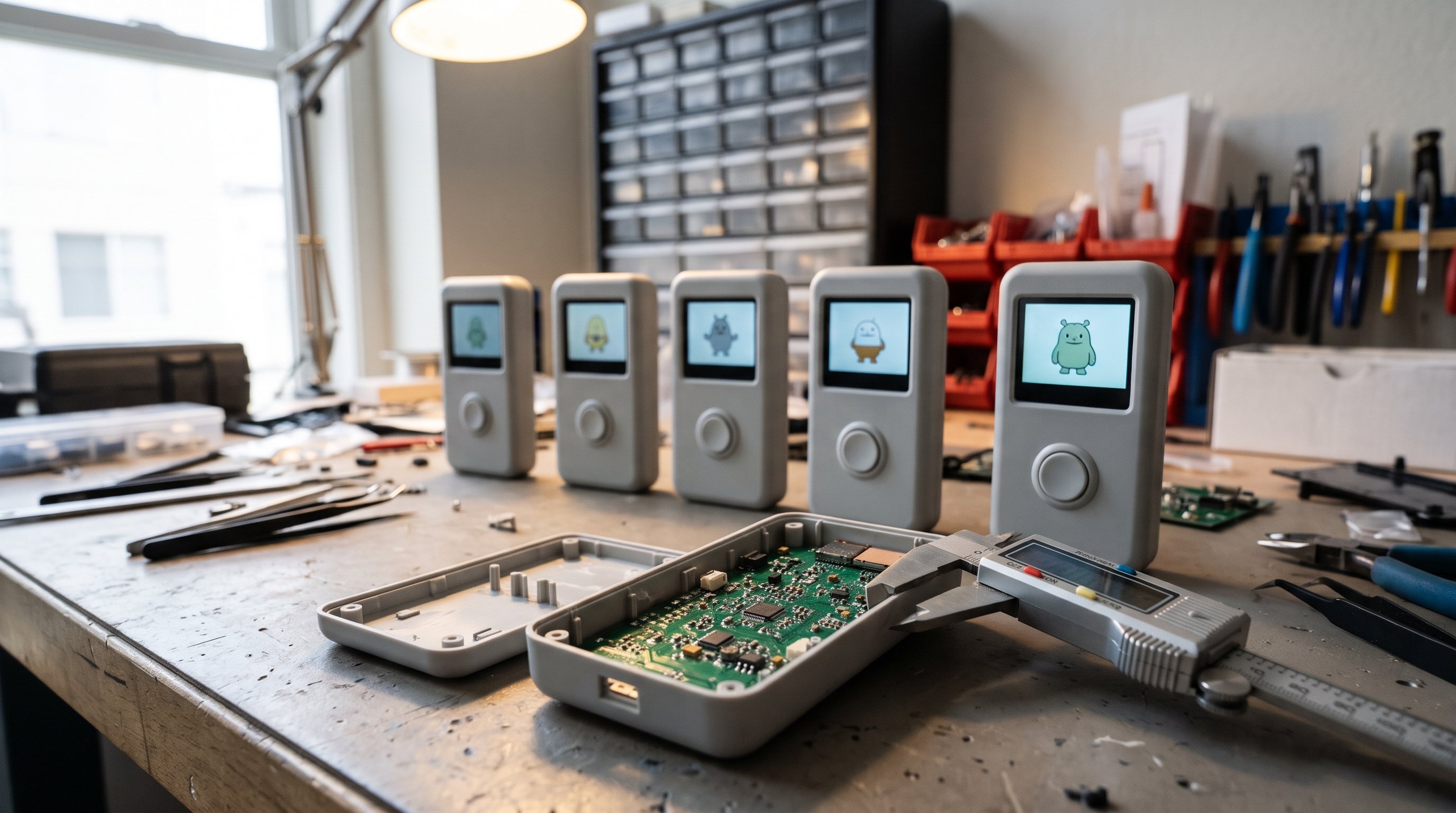
As an example, OpenAI describes a side project by two employees. They had GPT-6 Astra, OpenAI's most powerful model, which came out in September, design a small device for giving Codex spoken instructions. It has a small screen showing a drawn figure that acts as a kind of pet for Codex, and a button you hold down while you talk. The aim was to find out whether the AI model could make the whole design without humans directly editing its work.
Astra decided what the device had to be able to do and designed the casing, with the supports that hold the parts inside in place. It chose the electronic components and designed the circuit board: the board to which those components are soldered and connected by copper tracks. It also made what appears on the screen, the firmware (the software that runs in the device itself) and the link with Codex. The design was ready in less than a week; the factory and the checks came after that. A contract manufacturer made a small series of prototypes within a month.
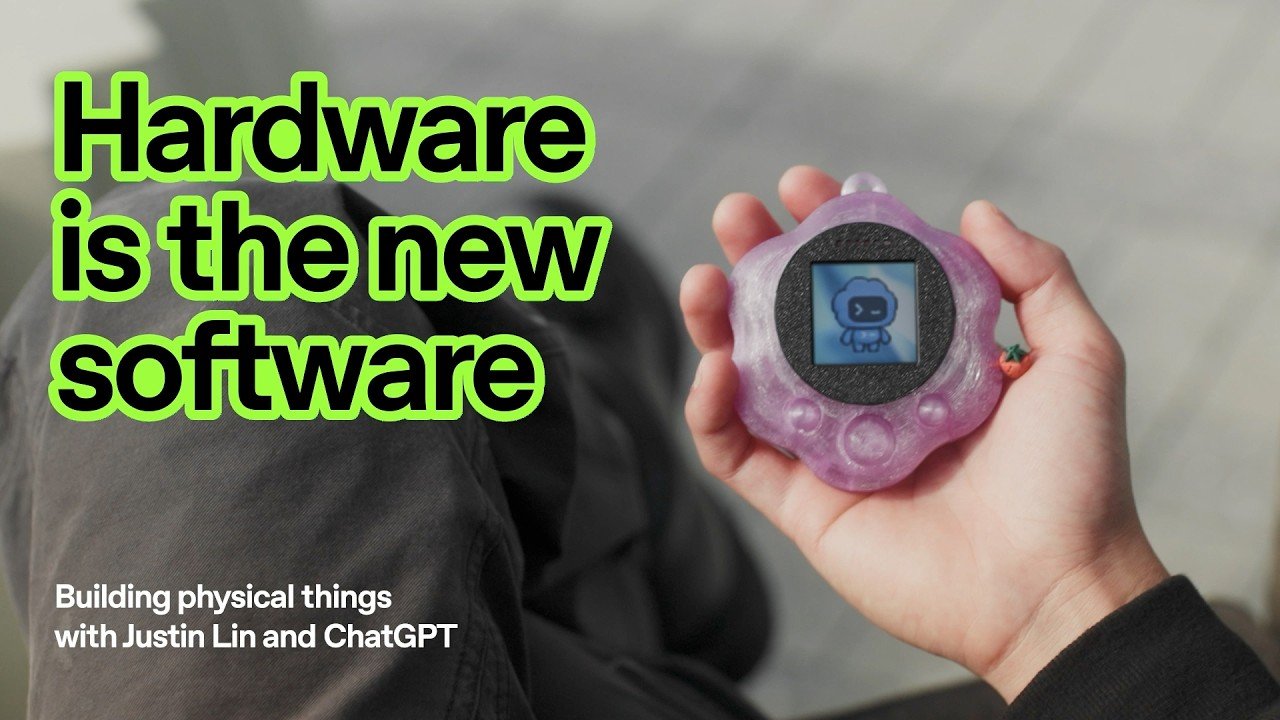
Playing loads YouTube, which may set cookies. More information
After that, it became clear what was still missing. Before the device was ready for the factory, several rounds of checking and adjustment were needed. Astra did not always take into account what the manufacturer could make, tolerances (how much a part may deviate from the drawing in the factory) and how the parts are assembled. OpenAI uses these lessons to improve its models.
This is similar to what Gregory Kurtzer, the creator of Rocky Linux, showed last week. He had an AI agent from OpenAI build a new core for an operating system in eleven days: the part that divides memory and computing power and controls the hardware. In his case too, the building itself went fast, while the work afterwards, such as security and support for real hardware, is still done by humans. With a physical device, there is also the step to the factory.
OpenAI's own teams use it more and more
OpenAI's hardware teams, who work on robots and on the company's computers and data centres, already use ChatGPT and Codex for CAD designs, production drawings, simulations and assessing designs. According to OpenAI, these teams have used the AI models 23 times as much since February. That is measured in tokens, the pieces of text a model reads and writes. So the figure says how much the models are used, not how much faster the work goes. Grace Lam, an OpenAI engineer who works with customers, says Codex shortens the road from idea to part: designs are adjusted faster and 3D designs are turned into production drawings faster.
OpenAI also measures progress with a design test, BenchCAD 2.0. In it, AI models have to recreate parts and assembled pieces in 3D and work out which connections run on a circuit board. A newer internal OpenAI model, which has not been released yet, reached an average score of 0.875, where higher is better. GPT-6 Astra scored 0.594, even when it was allowed to think as long as possible. OpenAI sees this as a first sign that the AI models are getting better at design work, and adds that design is only one part of an engineer's work.
A racing team and a carmaker join the tests
OpenAI is also trying out the AI models with a small group of companies, whose engineers check whether the AI's work is correct and usable. OpenAI had already worked for a year with the racing team Chip Ganassi Racing, known from the American IndyCar series, on sensor and racing data. Now design work is being added. The team is trying out how 3D scans of existing parts can be turned into CAD designs that can be adjusted, and into production drawings. This way a part can be made again even if the original design files no longer exist.
With Mazda, OpenAI is starting a study of the airflow around cars and of crash safety. Astra comes up with different shapes for the nose of a car, calculates how the air flows around them and develops the best shapes further, to reduce air resistance. Less air resistance makes a car more economical. Mazda's engineers then weigh these designs against the look of the car and the cost. According to Akihiro Nakata, chief engineer at Mazda, the dozens of calculated variants show which features really matter for the airflow and where designers are free to vary. This way, he says, Mazda can better combine an attractive design with low air resistance.
OpenAI wants to share more results and invites companies in design, simulation and manufacturing to take part. The next step is to show that better designs also hold up in the factory and when checked by engineers.
What does this mean for the road to the singularity?
AI models already write a lot of software. This example shows that they can also design a simple physical device, from casing and electronics to the software inside, in less than a week. This means AI can do a larger part of the design work while engineers check and adjust. What is still missing is knowledge of the factory: tolerances, what a manufacturer can make and how parts fit together. The newer internal model already scores higher than Astra on the design test. If models also learn the step to the factory better, the road from idea to working prototype becomes shorter, including for the robots and computers that OpenAI is building itself.
What is the technological singularity? Read the explanation →