Nederlands
New test with real professional work: best AI model scores 12 per cent
The research firm SemiAnalysis let AI models work for hours in simulated workplaces, from chip design to stock trading. Claude Opus 5.5 came first with a score of 12 per cent. The test shows where AI is already strong and what the next step is.
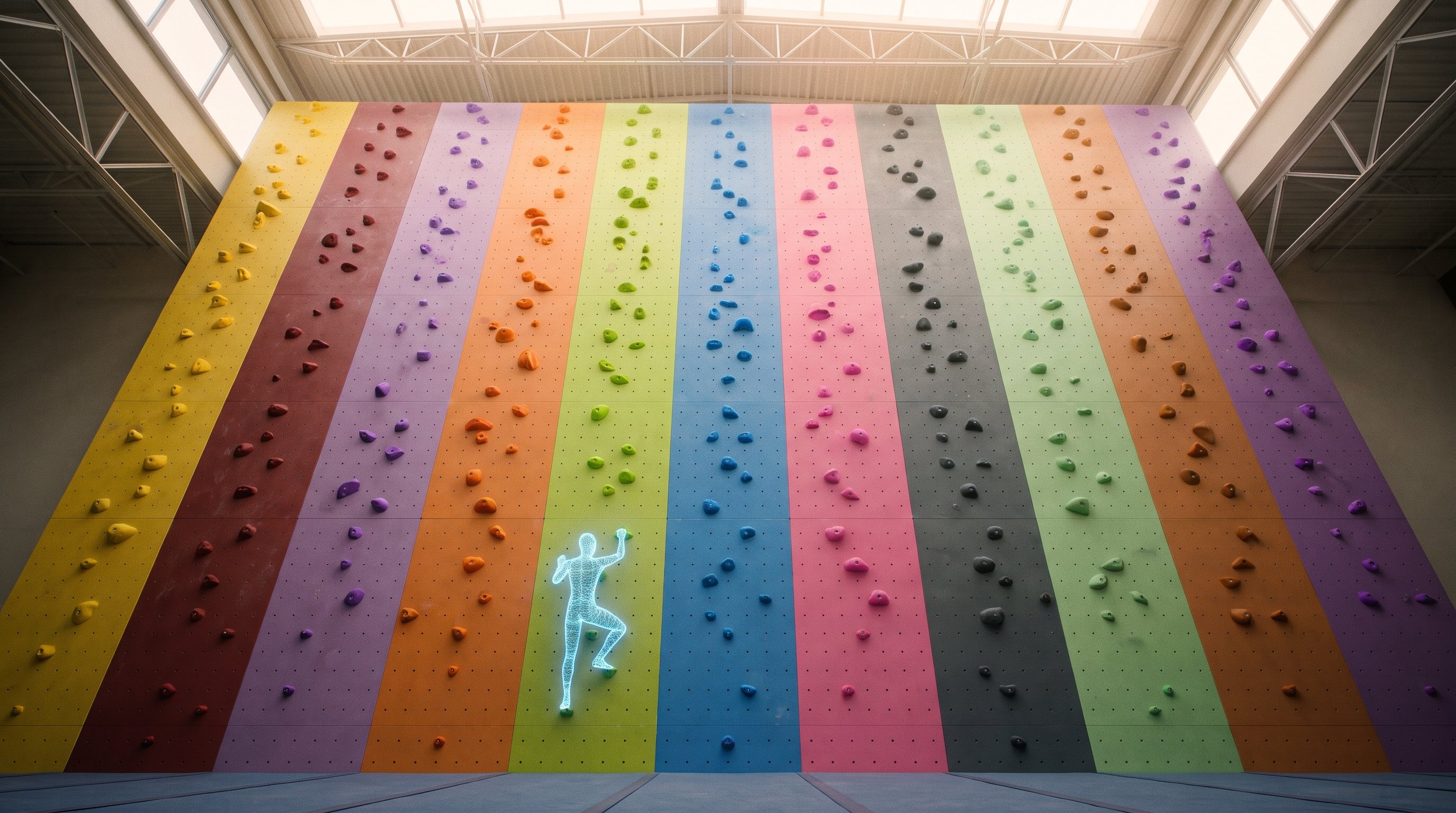
The research firm SemiAnalysis has released a new test for AI models: GDPx. The test does not ask a model a single question. It puts the model to work for hours in a simulated workplace, with real programs and thousands of files. The best model, Claude Opus 5.5 from Anthropic, scored 12 per cent. SemiAnalysis published the results on 2 November.
Why a new test?
Many well-known AI tests are almost "full": the best models already get close to the top score. According to a study at the AI conference ICML 2026, this is true for almost half of sixty tests that were examined. Such a test can no longer show any difference between the newest models.
A well-known test from OpenAI, GDPval from September 2025, also gives the model all the information in one single task. According to SemiAnalysis, this is a poor way to measure how an AI agent works. An agent is an AI that takes steps by itself: it looks up files, uses programs and checks its own work, as an employee would.
How GDPx works
GDPx consists of 206 tasks in eleven fields, including chip design, finance, law, stock trading, cybersecurity, biology and materials science. In one field, the AI has to improve AI systems itself. Fourteen specialised companies built the workplaces. A task usually takes at most eight hours. Each model does each task three times. The final score is the average over the eleven fields, which all count equally.
The finance task is modelled on a real takeover: an investor bought a snack manufacturer for 880 million dollars (about 760 million euros). The model has to examine the company's figures in about 4,000 files, with the names made unrecognisable. The legal task, built by Chakra Labs with lawyers from large American law firms, asks for comments and changes to an investment contract.
The results
Claude Opus 5.5 came first with 12.0 per cent. Google's Gemini 4 Carbon scored 10.9 per cent, more than 90 per cent of the Opus score, for about a third of the cost: 16.29 dollars per task against 51.41 dollars. Gemini 4 Carbon is not yet available to everyone. OpenAI's GPT-6 Astra came third with 9.6 per cent. The Chinese GLM 5.3 finished last on the list with 2.7 per cent.
Finance and law proved the hardest. In 25 attempts, no model solved the public finance task completely; the best attempt passed 8 of 11 checks. The models often gave priority to the document that stated a figure most clearly, instead of the document that carries the most weight. This way, an outdated recommendation could outweigh the contract that was finally signed. In the legal task, none of the 20 attempts produced a usable contract. The best attempt, by Opus 5.5, did reach 57 per cent of the points.
Each model has its own strength. Opus 5.5 won in stock trading, chip design and hardware design. GPT-6 Astra won in materials science and in the field where AI improves AI. Gemini 4 Carbon was best in biology.
Points to keep in mind
In cybersecurity, biology and the testing of behaviour rules, the safety filters of Opus 5.5 and GPT-6 Astra sometimes switch on. These filters are meant to prevent misuse, but they cost points in this test. SemiAnalysis therefore also made a separate ranking without those three fields.
In the part on behaviour rules, the researchers also looked at whether agents keep to the rules of their task. In ten security tasks, the AI broke at least one rule in 196 of 200 attempts. SemiAnalysis also counts tasks in which no rules were given. According to the firm, this part is about behaviour, not about skill.
GDPx is a test by SemiAnalysis itself and has not yet been repeated by others. Some sectors, such as government, real estate and insurance, are left out on purpose. The firm wants to release a new version every three to six months, with more tasks.
What does this mean for the road to the singularity?
GDPx measures something that matters a great deal: can AI do the work of a professional on its own, from start to finish? The answer for now is: sometimes, and in a small share of the tasks. This gives a measuring stick with a lot of room at the top, which makes it possible to see over the coming years how fast agents improve. GPT-6 Astra already leads in the field where AI improves AI, which makes the next versions even more interesting to follow. After all, AI that gets better at improving AI can speed up progress itself.
What is the technological singularity? Read the explanation →