Nederlands
Open source and open weights
Open source means the blueprint of software is public and you may use it freely. With an open AI model, the weights, the numbers in which it stores its knowledge, can be downloaded.
With open source, the source code of software is public, and anyone may use, inspect and modify it under certain conditions. Those conditions are set out in a licence. With AI models you mostly come across the term open weights. The weights, or parameters, are the numbers in which a model stores everything it has learned. If they can be downloaded, you can run the model on your own computer.
It is like a recipe that a restaurant shares: with the weights you have the finished dish and can cook with it. With all the sources as well, such as the training data and the training code, you could rebuild the whole recipe yourself.
How does it work?
Open is a spectrum. Some makers share only the weights, others also the code to run or train the model. A licence usually comes with it that determines what is allowed. The large DeepSeek model, for instance, is under the permissive MIT licence, which means anyone may download and use it for free. Nvidia's OpenShell, software that shields AI agents, falls under the Apache 2.0 licence.
What is called open is not always available everywhere. The Chinese tech company Baidu, for example, released a large model that developers can train further themselves, but its licence does not apply in the EU, the United Kingdom and South Korea (link).
Why it matters
Open models can be checked, improved and run on your own hardware by anyone. The company Unsloth, for instance, made a heavily shrunken version of the open DeepSeek model that runs on a powerful laptop or mini computer with 128 gigabytes of memory, although that costs some accuracy (link). The blueprint for shielding agents is open too: Nvidia offers the software for free, so that anyone can use it (link).
For researchers and small companies, that makes the difference: they do not have to depend on the servers of a few large companies, and they can build on what others have already done.
Articles about Open source and open weights
-
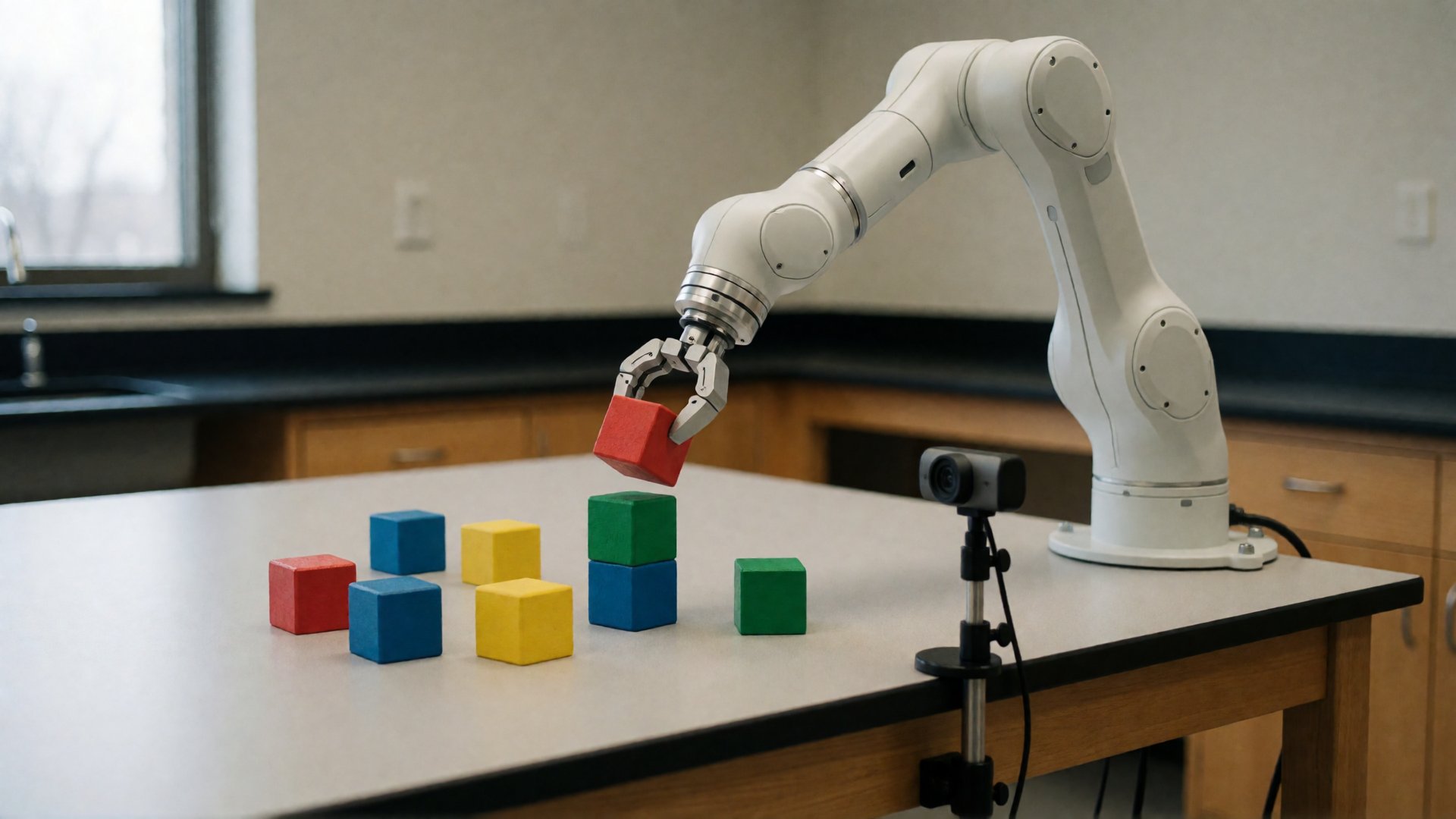
Ai2 releases open practice world for robots: a robot arm and a table full of blocks
The American research institute Ai2 has released ToyBlocks: an open, simulated world in which robots practise with blocks. According to Ai2, models trained only there also performed single actions on a real robot arm, in 81 per cent of the trials.
-
GPT-6 Cyber found 81 serious flaws in Firefox and built 948 test attacks on Linux
OpenAI's security model GPT-6 Cyber found 81 serious flaws in Firefox, the company says, and built 948 working attacks on Linux flaws in a test environment. Mozilla has already released many fixes, and repairs have also begun for Linux.
-
Thinking Machines Lab releases Inkling 2 Small, open version to follow after safety tests
The AI company of former OpenAI executive Mira Murati has started its second generation of models with Inkling 2 Small. The model is available through the company's own platform, Tinker. The company wants to release it next week, once the external safety tests are finished.
-
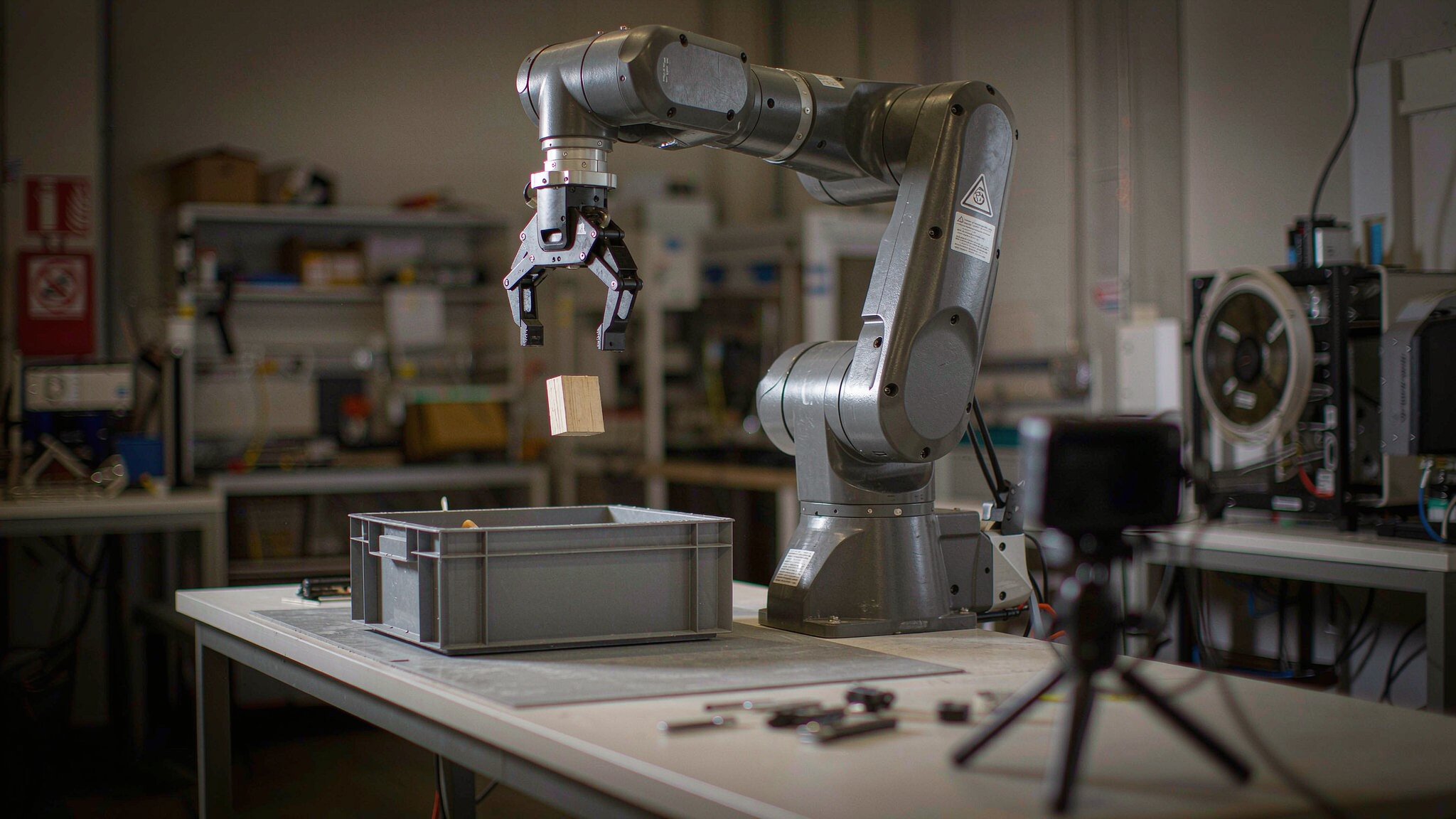
NVIDIA releases fast planner for robot arms: route in 4.4 milliseconds on average
NVIDIA researchers have released cuRoboV2-Fast, software that works out how a robot arm moves without hitting anything. In their own tests, this took 4.4 milliseconds on average. On a real robot, a work cycle became more than a third shorter than with its predecessor.
-
NVIDIA releases four AI models that let robots and self-driving cars practise in a simulated world
With four new Cosmos 3 models, researchers and companies can make video of a simulated world that reacts to what a robot or car does. The models are free to download. The next step is to measure where they are reliable enough.
-
OpenAI launches GPT-6 Cyber: better at finding security flaws, less likely to step out of line
OpenAI has released a new cybersecurity model that, according to the company, finds vulnerabilities far better and breaks into systems without being asked less often. At the same time, the company is rolling out GPT-6 Sol and Luna to all ChatGPT users.
-
AI agents turn 7,500 pages of mathematics into proofs that a computer can check
The US company Axiom Math has used AI agents to turn a mathematical reference work of about 7,500 pages into 16 million lines of code that a computer can check. Along the way, the agents found dozens of points that needed refining. People are now continuing to review the work.
-
Baidu releases large AI model ERNIE 5.5 Flash Base, but not for Europe
The Chinese tech company Baidu has released a large AI model that developers can train further themselves. It is built to be fast and economical, and Baidu says it scores well in tests. The licence does not apply in the EU, the United Kingdom and South Korea.
-
Open AI model predicts how RNA folds, trained on 21 million examples
Researchers from China present structRFM in Nature, an AI model that learns how RNA molecules fold. In tests, it matches Google DeepMind's AlphaFold3, according to its makers. Data, model and code are freely available.
-
PHP flaw was known for two years and is now being actively exploited
A review by the PHP Foundation shows that one of the PHP2Shell flaws had been known since 2024. Attackers are now actively exploiting it, so updating matters more than ever.
-
Xpeng's small open AI model locates objects better than GPT-6 Astra
Carmaker Xpeng and several universities have released GroundingPI, an open AI model that helps robots and cars see exactly where things are. On 34 tests it scores slightly higher on average than OpenAI's much larger GPT-6 Astra, according to its makers.
-
Anthropic builds FlashProve: cryptographic proof of which AI model produced an answer
Anthropic has released FlashProve, an open-source research prototype that uses zero-knowledge cryptography to show which model generated an answer, without revealing the model weights.
-
AI makes hacking easier, but it also helps the defenders
Smart AI agents that read and write code themselves make hacking easier, especially open models whose safety limits are easy to remove. But the same AI also finds security flaws before attackers do. A cat-and-mouse game, with recent examples in the Netherlands and Belgium.
-
Google DeepMind gives AI agent chemistry skills: drug design work cut from days to an hour
Google DeepMind has released chemistry skills for its AI platform Antigravity. In a demonstration, an AI agent used them to do in about an hour work on new medicines that, according to Google, usually takes chemists days. The designs still have to be tested in the lab.
-
Chinese company releases free AI model for chemistry, trained on its own lab work
The Chinese company Deep Principle has released Hydrogen-1.0, an AI model for chemistry and materials research that anyone can download. It also learned from failed experiments in the company's own lab. The results have so far been measured by the company itself.