Nederlands
Google DeepMind gives AI agent chemistry skills: drug design work cut from days to an hour
Google DeepMind has released chemistry skills for its AI platform Antigravity. In a demonstration, an AI agent used them to do in about an hour work on new medicines that, according to Google, usually takes chemists days. The designs still have to be tested in the lab.
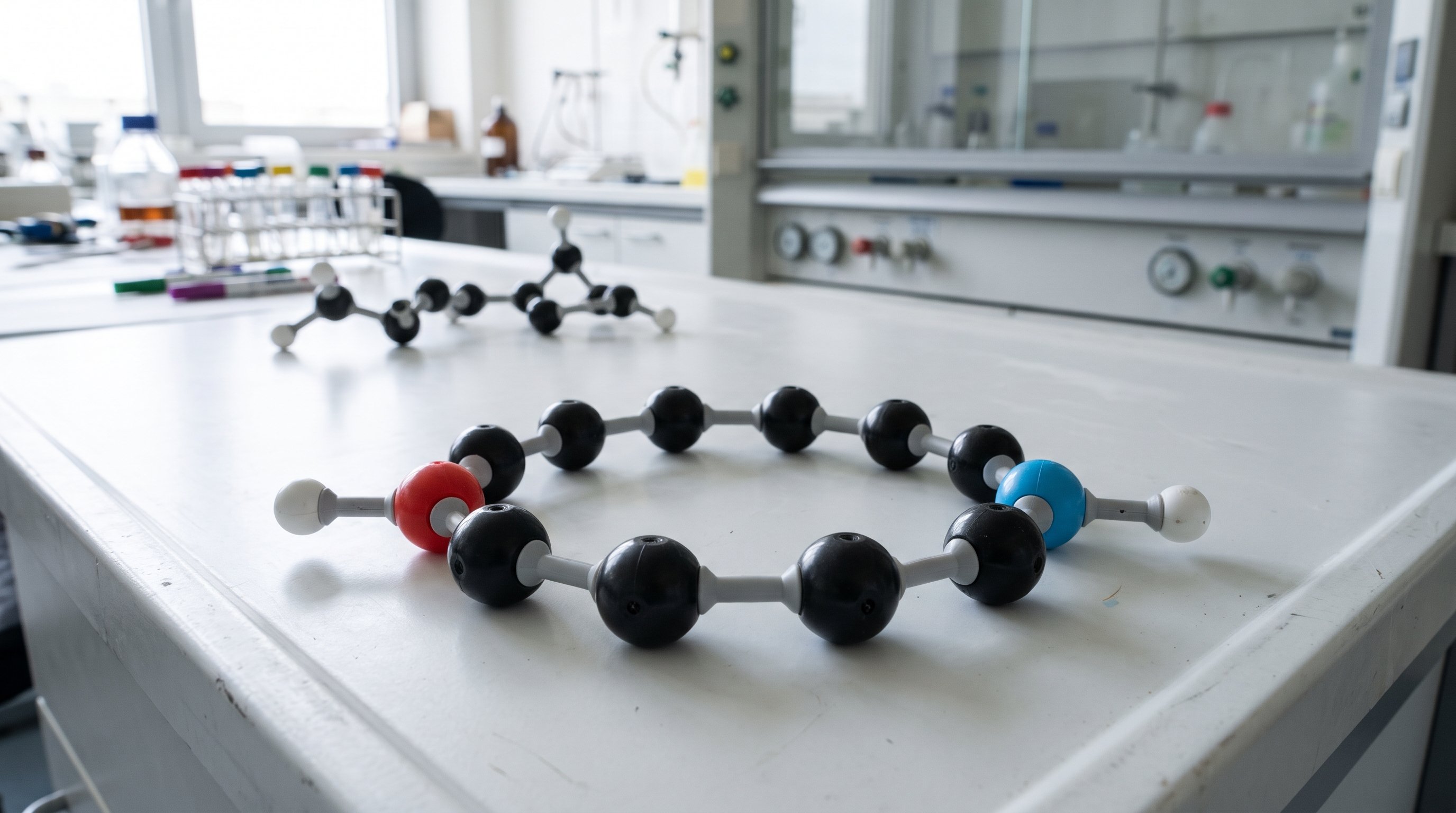
Google DeepMind has released a set of chemistry skills for Google Antigravity, Google's development platform with AI agents. An AI agent is an AI program that carries out a series of tasks on its own, one after the other. With the new skills, such an agent can do much of the computer-based work that chemists do when designing new medicines.
From days to an hour
Anyone looking for a new medicine usually starts with substances that are already known. Chemists look them up in scientific literature and patents, clean up the data, see which small changes make a substance stronger, and then design new variants. According to Google, one such round usually takes several days. In Google's demonstration, an agent with the new skills did it in about an hour.
The agent worked with a well-known example from the treatment of lung cancer: the medicines crizotinib and lorlatinib. Lorlatinib is the newer and stronger successor. The difference lies mainly in the shape. In lorlatinib, the molecule is closed into a ring, so it can twist and bend much less.
The agent collected thousands of substances from the literature, removed what did not belong (such as solvents) and kept 568 usable substances. It then showed that substances in this group often work better when they are closed into a ring. On that basis, the agent proposed new ring-shaped molecules, with a step-by-step plan for making them. It also noted that, according to the calculations, these molecules can probably reach the brain. That matters, because this form of lung cancer often spreads to the brain.
Playing loads YouTube, which may set cookies. More information
How it works
The work is divided. The language model decides the steps, searches databases and reasons about the results. The calculations on the molecules themselves are done by fixed chemistry programs, which always give the same answer to the same question. This way the language model does not have to estimate those calculations itself. The programs are built on RDKit, widely used open-source software for chemistry, and draw their data from the public databases ChEMBL and PubChem.
The skills can be installed through the Science plugin in Antigravity. GitHub also hosts a broader collection, Science Skills, with skills for areas such as genetics research, protein structure and searching scientific literature. It works with more than thirty databases and programs, such as AlphaGenome, the AlphaFold database and UniProt. The software is open source. Some parts, such as AlphaGenome, only work with a personal access key.
Next step: the lab
Google itself says that the predictions have limits. There is often little measurement data, and measurements from different laboratories differ from each other. The proposed molecules are therefore ideas to test, not yet medicines. Each design must first be made and studied in the lab.
To speed up research, Google is giving 10,000 scientists the highest usage limit in Antigravity free of charge for six months. According to the Antigravity website, this includes the model Gemini 4 Argon. Scientists can apply through Google's form. Google chooses who takes part.
What does this mean for the road to the singularity?
An AI agent that collects and cleans data itself, makes predictions and proposes new molecules with a step-by-step plan is doing a large part of the thinking work in a chemistry lab. That is a step from AI that summarises texts to AI that takes part in the research itself. If such a round takes an hour instead of days, researchers can try out many more ideas. Lab experiments must show which of the proposed molecules really work well, and how much faster new medicines can come about this way.
What is the technological singularity? Read the explanation →