Nederlands
AI found the blueprint for a lock that opens with a proof, also of interest for Bitcoin
In September, an AI model from OpenAI found the blueprint for a digital lock that opens with a mathematical proof. Researchers have now made the encrypted message more than ten billion times smaller. For Bitcoin, such a lock could make bridges to other blockchains simpler.
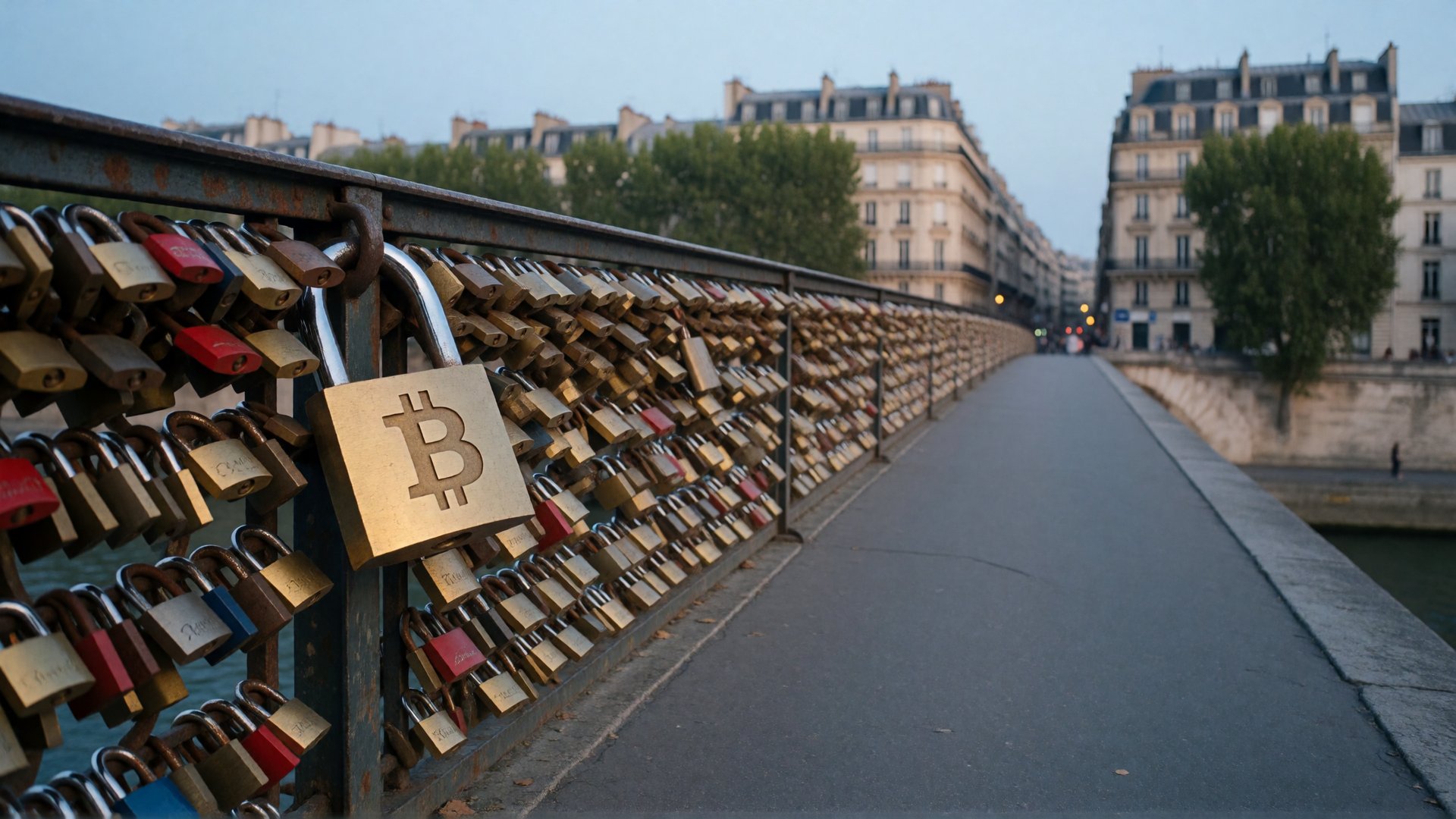
Bitcoin cannot check a complicated mathematical proof by itself. Researchers from the company Babylon Labs, the research group Byzantine Research and elsewhere, among them David Tse of Stanford University, calculated that this would take about 900 megabytes, or roughly 225 blocks (the packages in which Bitcoin stores transactions). That is a problem for anyone who wants to use bitcoin on another blockchain, for example as collateral for a loan on Ethereum.
The money should then only be released once someone proves that something really happened on that other blockchain. Such a link is called a bridge. Without such a check, a custodian has to hold the money, and users have to trust that custodian.
A lock that opens with a proof can help here. Suppose you want to encrypt a message for anyone who solves a certain puzzle. This is called witness encryption: you put a mathematical puzzle on the message as a lock, and only someone who knows a solution can open it. If the puzzle is "show a valid proof", then an amount in bitcoin can only be unlocked by someone who has that proof.
The same researchers described a first version of this idea, BABE, in January. It uses only what Bitcoin can already do and needs almost 1,900 times less storage than BitVM3, an earlier approach: about 22 megabytes instead of about 40 gigabytes. Its lock, however, covers only part of the check.
The blueprint came from AI
, the cryptographers Isaac Hair and Amit Sahai of the American university UCLA put a blueprint for such a lock online as a preprint.
According to Hair and Sahai, the most important ideas did not come from them, but from Codex, OpenAI's AI program that writes code and does calculations on its own. Behind it was the model ChatGPT 6 Astra Ultra, which, judging by its name, belongs to the GPT-6 Astra series, at the time OpenAI's most powerful. The two had been stuck for months and gave the model their approach. Codex supplied all the major ideas and a first draft of the paper. They reworked it and take responsibility for it. The work was done before 17 September.
From paper to nearly practical
The blueprint was still far from usable. To make the lock open straight away with the right solution, Hair and Sahai had to make a built-in gap in the mathematics very large, and that makes the encrypted message enormous. , Tse and two colleagues from Byzantine Research submitted Praxis. They keep that gap small. This makes the message much smaller, but anyone who knows the solution has to do an extra calculation at the end. At the chosen level of security, that calculation stays manageable: seconds on a laptop, according to the researchers.
They worked it out for checking a Groth16 proof, a short digital proof that a calculation was carried out correctly. An encrypted message is then almost 8.5 gigabytes, about the size of a high-quality film. That message is more than ten billion times smaller than with Hair and Sahai, and opening it is more than a million times faster. The security rests on simplified assumptions about what an attacker can do. The paper was written mainly in the weeks after Hair and Sahai's paper, partly with AI: the researchers used Claude and GPT for the research and for writing text and proofs. The ideas and directions were their own; the models worked out the details and wrote the proofs in Lean, a language in which a computer checks every step. The researchers do not say which versions of the models they used.
The paper names bridges on Bitcoin without a custodian as a possible application. Tse also worked on BABE, and like BABE, Praxis checks Groth16 proofs. Praxis has not yet been tried out for a bitcoin bridge: the paper does not describe a built version, and the message is large. Both are preprints: other cryptographers still have to review them.
What does this mean for the road to the singularity?
That AI can find mathematical proofs is already known: GPT-6.2 Astra proved a theorem from 2006 by its own route. This time it was a new blueprint that two people had been stuck on for months. Two months later, another team made a version that is more than ten billion times smaller, and there too AI models did much of the detailed work.
If that trend continues, a bitcoin bridge could eventually work without custodians: the amount is unlocked by a mathematical proof, not by the signature of a group you have to trust. The risk: a lock made of such mathematics has no custodian you can call when something goes wrong, and bitcoin that rests on a wrong assumption cannot be recovered. If AI both supplies the idea and does the detailed work and checking, that speeds up not only the thinking, but the whole road to something people can really use.
What is the technological singularity? Read the explanation →