Nederlands
Claude helps logician track down hundreds of theorems in Gödel's notebooks
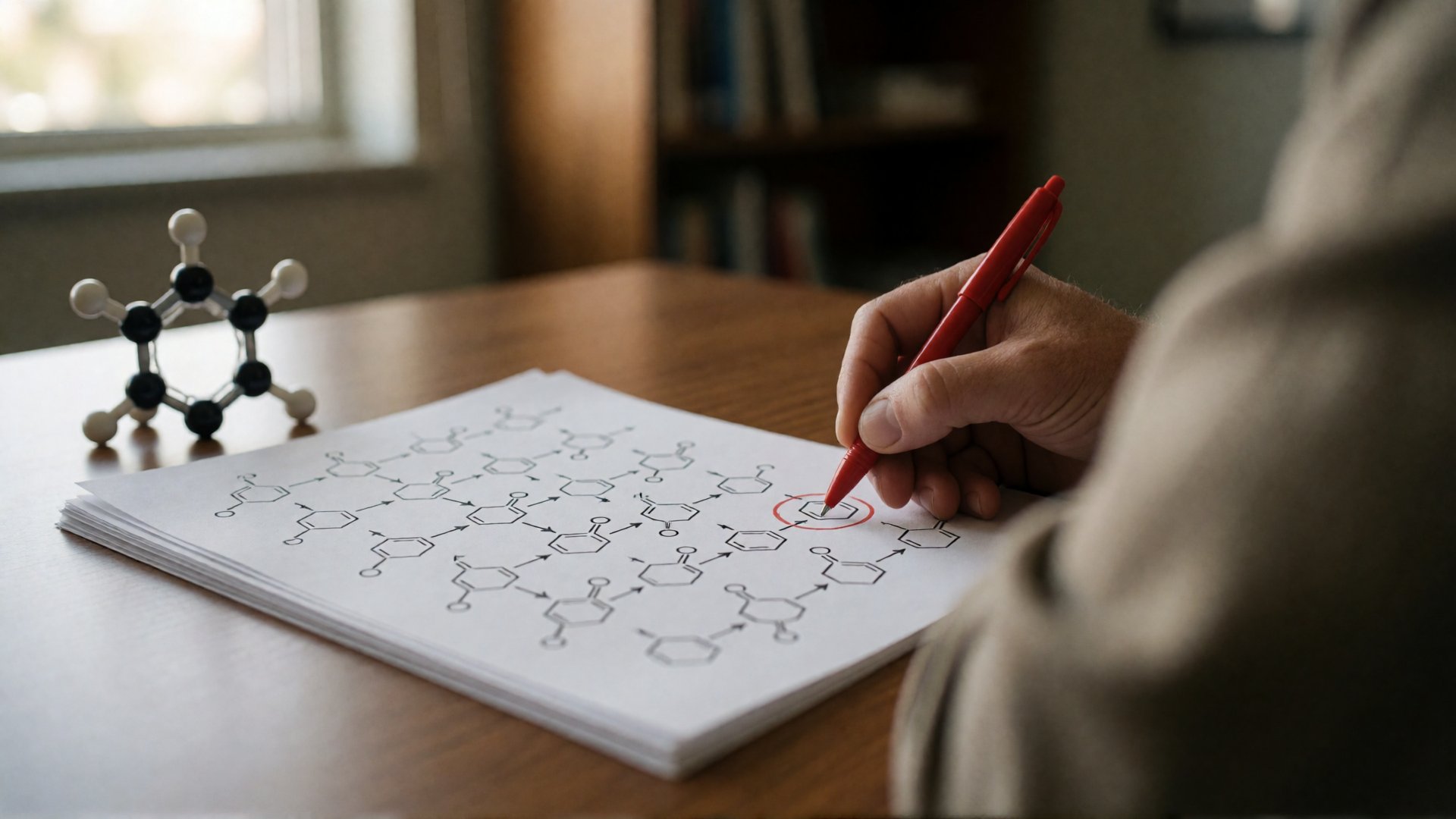
Logician Jan von Plato had the AI model Claude work through 1,009 transcribed pages from Kurt Gödel's notebooks. According to him, a proof-checking program then confirmed about 400 of the 663 theorems found exactly as they were written.

The Finnish logician Jan von Plato, who studies how to reason without errors at the University of Helsinki, has been trying since 2017 to make sense of sixteen notebooks by Kurt Gödel. The Austrian logician, who changed mathematics profoundly in the last century, filled them with mathematics and logic in the early 1940s: 1,009 pages in total. Much of it is in Gabelsberger, a German shorthand that was already out of fashion at the time.
Von Plato learned the shorthand himself and transcribed the pages with a small team. The project received 2.5 million euros from the European Research Council. Even so, understanding the mathematics went slowly: about one page a week.
After a conference in France on AI and mathematical proofs in August 2026, Von Plato gave his transcribed text to Claude, the language model from Anthropic, in September. He added six of his own books on Gödel and work by other experts. So Claude received the written-out text, not the shorthand itself. Within a few days the model produced a 650-page explanation, which Von Plato then had to check page by page. Which version of Claude he worked with is not known.
663 theorems, checked by a computer
Von Plato then asked Claude to list all the theorems for which Gödel had a proof, had sketched a proof or had an idea for a proof. That produced 663 candidates. They were checked with Coq, a proof-checking program now called the Rocq Prover. Such a program checks whether each step of a proof really follows from the rules that have been entered into it.
About 400 theorems were correct exactly as they were written. About 200 could be repaired, for example by stating the theorem more precisely or adding a condition. About 50 were wrong; for some of these, Gödel himself had already written "falsch" (false) in the margin. These are rounded figures from Von Plato himself.
One step away from a famous proof
Von Plato's first question to Claude was about the axiom of choice. The American mathematician Paul Cohen received the Fields Medal in 1966, the most important prize in mathematics, partly because he showed that this axiom is independent of the usual basic rules of mathematics. Gödel later said that he had already proved this in the 1940s, but he could no longer find the proof in his notes.
In the notebooks, Claude found an almost complete proof of that second half. According to Von Plato, Gödel was only one step away: one crucial definition was wrong, while he had already written down the correct one two years earlier. With that definition fixed, the proof passed the check in Coq.
Logic professor Joel David Hamkins of the University of Notre Dame has not yet seen the repaired proof. If it holds up, he finds it remarkable and historically interesting. He does stress that a proof that resembles Cohen's does not mean Gödel already had the result: anyone who does not share their work gets no credit for it. How much comes from Gödel and how much from Claude is, in his view, work for historians.
Claude also points to more than ten topics in logic that nobody has taken further for over eighty years. After logic, Von Plato wants to study Gödel's notebooks on physics and cosmology, the science of the universe as a whole.
What does this mean for the road to the singularity?
That AI helps check mathematics is almost normal by now. AI agents previously turned the longest mathematical proof ever into code that a computer can check, and found 34 discrepancies in published work along the way. What is new here is that this is work that was never published: ideas that lay in an archive for eighty years, in a script that hardly anyone can read. The language model reads and organises, the proof-checking program checks. Whatever is wrong comes to light this way, whether the mistake is Gödel's or the model's.
If this way of working continues, the legacy of a great thinker is no longer a dusty archive but a list of open questions for today's mathematicians. A project that moved forward at one page a week can then be worked through in days, and the researcher has time left to check and decide. Universities and archives with notebooks that nobody ever read get a good reason to transcribe them and open them up, because every archive that becomes readable offers new starting points. It must always be clearly recorded, though, which idea comes from the original thinker and what the model added. If that succeeds, the mathematics of tomorrow will build on ideas that were once left untouched.
What is the technological singularity? Read the explanation →