Nederlands
AI drafts plans for building complex molecules at the level of a first-year PhD student
Anthropic's AI program Claude has worked out how chemists could make four complex molecules step by step. Three chemistry professors say the work is comparable to that of a first-year PhD student. None of the plans has been tried in the lab yet.
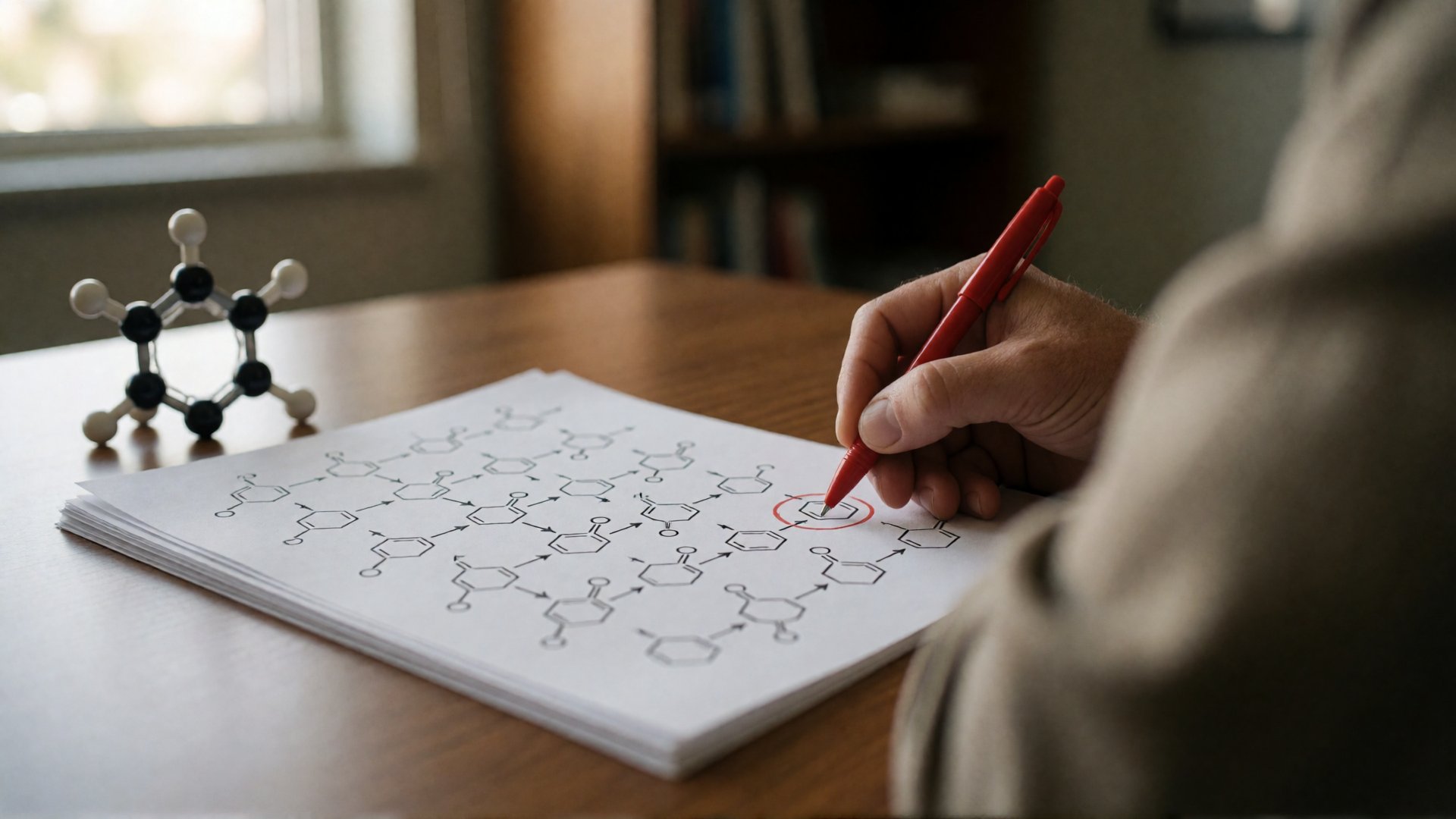
Everything around us is made of molecules: tiny structures of atoms, such as the active ingredient in a pill. Anyone who wants to make a new medicine has to build such a molecule in the lab. That happens step by step. Each time, chemists bring together substances that react with each other: together they form a new substance. In this way, every step adds a small piece to the molecule or changes something in it. The order of all those steps is called a synthesis route, a kind of building plan. For large molecules, such a plan can easily run to dozens of steps, and working one out takes experienced chemists a lot of time.
The American AI company Anthropic had three versions of its AI program Claude do that thinking, the company says in a report published . They were Mythos 5.1 and earlier test versions of Mythos 5.2 and Opus 5.5. Mythos is Anthropic's most powerful family of models, one step above Opus. Mythos 5.1 came out , but it is available by invitation only, to organisations that Anthropic has vetted first. The final version of Mythos 5.2 was released , the same day as the report. Anthropic does not say when the tests were carried out.
The test used four molecules for which no building plan had been published anywhere. That is the core of the test. An AI program learns from enormous amounts of text. It may have read a known building plan there and could then simply repeat it. For these four, it had to come up with something itself.
For each molecule, Claude was given a drawing of what the molecule looks like. The internet, scientific journals and databases were blocked, so it could not look anything up. It was allowed to write and run small computer programs of its own. It had one attempt per molecule, and each attempt took between 26 and 84 minutes. For the largest molecule, the plans had 29 to 35 steps.
What the professors think
The four molecules came from three chemistry professors at the American universities Stanford, Yale and the California Institute of Technology (Caltech). Together they assessed the twelve building plans, one per molecule for each version of Claude. Each professor saw only the plans for their own molecules, without knowing which version had written which plan. Their verdict: the work resembles that of a first-year PhD student, someone who has just started training as a researcher after university and is still learning the craft. One of the three, Sarah Reisman of Caltech, thinks it could become a useful tool for her research group.
They also saw weak points. Mythos 5.1 misread a detail in a drawing and so made a plan for a slightly different molecule than the one requested. The test itself also has limits. The plans mainly used well-known steps that have often worked before. So this test does not yet show whether the program can also come up with clever new ideas that make a building plan much shorter. And without scientific journals, Claude could not check what the starting materials cost, the substances a building plan begins with, or which steps had already failed in a lab. The professors did know that from their own experience. In practice, a building plan with expensive or unworkable steps is of little value.
None of the twelve building plans has been tried in a laboratory yet. Only there will it become clear which steps really work.
Earlier: proteins that were tested in the lab
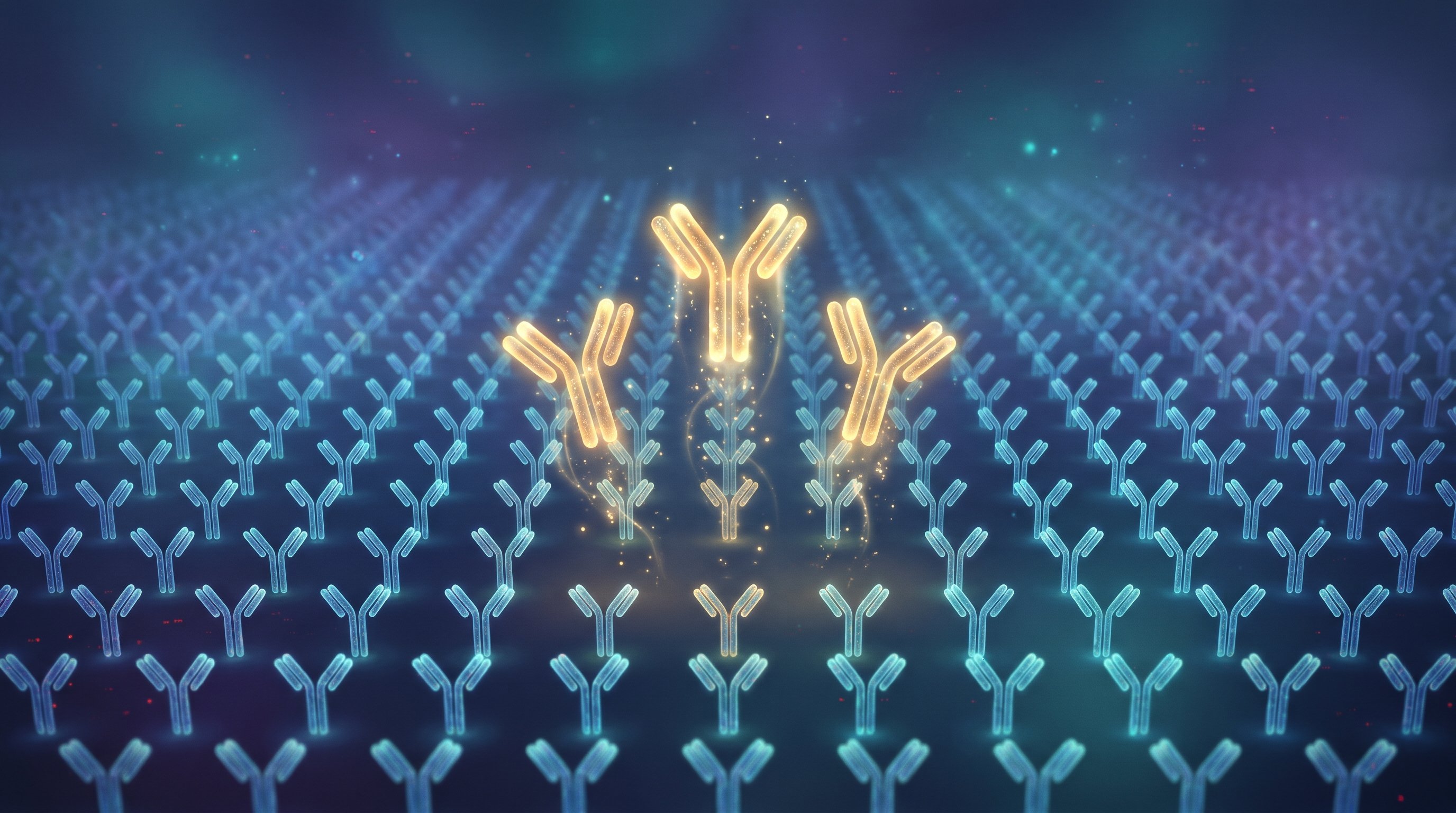
In August 2026, Anthropic had already shown that Claude can also design proteins, the large molecules that do most of the work in every living thing. That was done by Claude Opus 4.8 and Mythos Preview, a first test version of the Mythos family that was not publicly available. The aim was proteins that attach themselves to another, chosen protein. In principle, such a protein can grab and block another protein that plays a role in a disease, which is why they are an early step in the search for new medicines. Two companies that can make and test such proteins actually produced 1,320 of those designs: 354 attached as intended, just over a quarter. According to Anthropic, in this kind of design work that usually succeeds for only 10 to 15 per cent of the designs.
What does this mean for the road to the singularity?
Working out a building plan for a molecule means thinking ahead over dozens of steps, where every choice decides what is still possible later on. Claude did that in less than an hour and a half per molecule, without books or databases, at the level of a researcher at the start of their career. So chemists could soon have a first building plan drawn up quickly and spend their own time on the hardest steps and the work in the lab.
If such a program later also gets access to scientific journals, prices of starting materials and earlier failed experiments, exactly what it lacked this time, the building plans will get better and chemists will need to correct less. That way, a new medicine or material can reach the lab sooner.
What is the technological singularity? Read the explanation →