Nederlands
Google says its quantum chip solved in 200 seconds a problem that would take a supercomputer far longer
Google reports in Nature that a chip with 53 qubits carried out a calculation in 200 seconds. According to Google, the fastest supercomputer would need 10,000 years. IBM thinks it can be done in days. A first sign that quantum chips can do something.
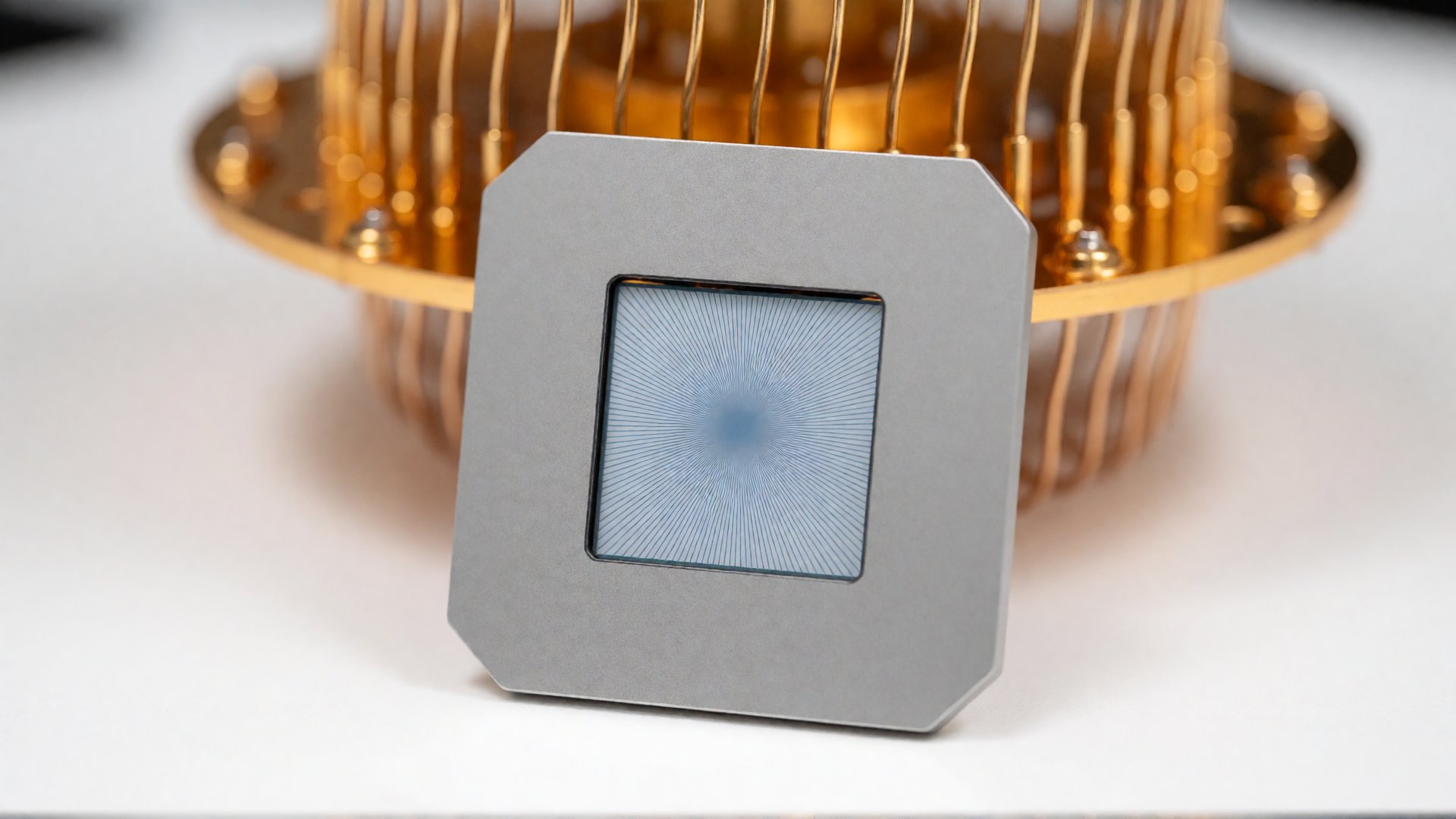
MOUNTAIN VIEW, OCTOBER 2019 - The journal Nature today publishes a result from Google that physicists have been talking about for months. A chip with 53 qubits, the computing units of a quantum computer, carried out a calculation in about 200 seconds. According to Google, the fastest supercomputer of today would need 10,000 years. The company calls this quantum supremacy: the moment when a quantum computer can do something that ordinary computers cannot do in a reasonable time.
What is a quantum computer?
An ordinary computer calculates with bits. A bit is a switch that is off (0) or on (1). Everything a computer does is a very long series of such zeros and ones.
A qubit is the quantum version of this. It is made according to the laws of physics for very small things. As long as nobody looks, it is not just at 0 or just at 1, but in a mixture of both. Several qubits can also be linked together, so that they form one state together. For 53 qubits, that state is a list of more than 9 quadrillion numbers. Every extra qubit makes the list twice as long. An ordinary computer that has to imitate this must keep track of all those numbers. The quantum chip does not have to: it is that state itself.
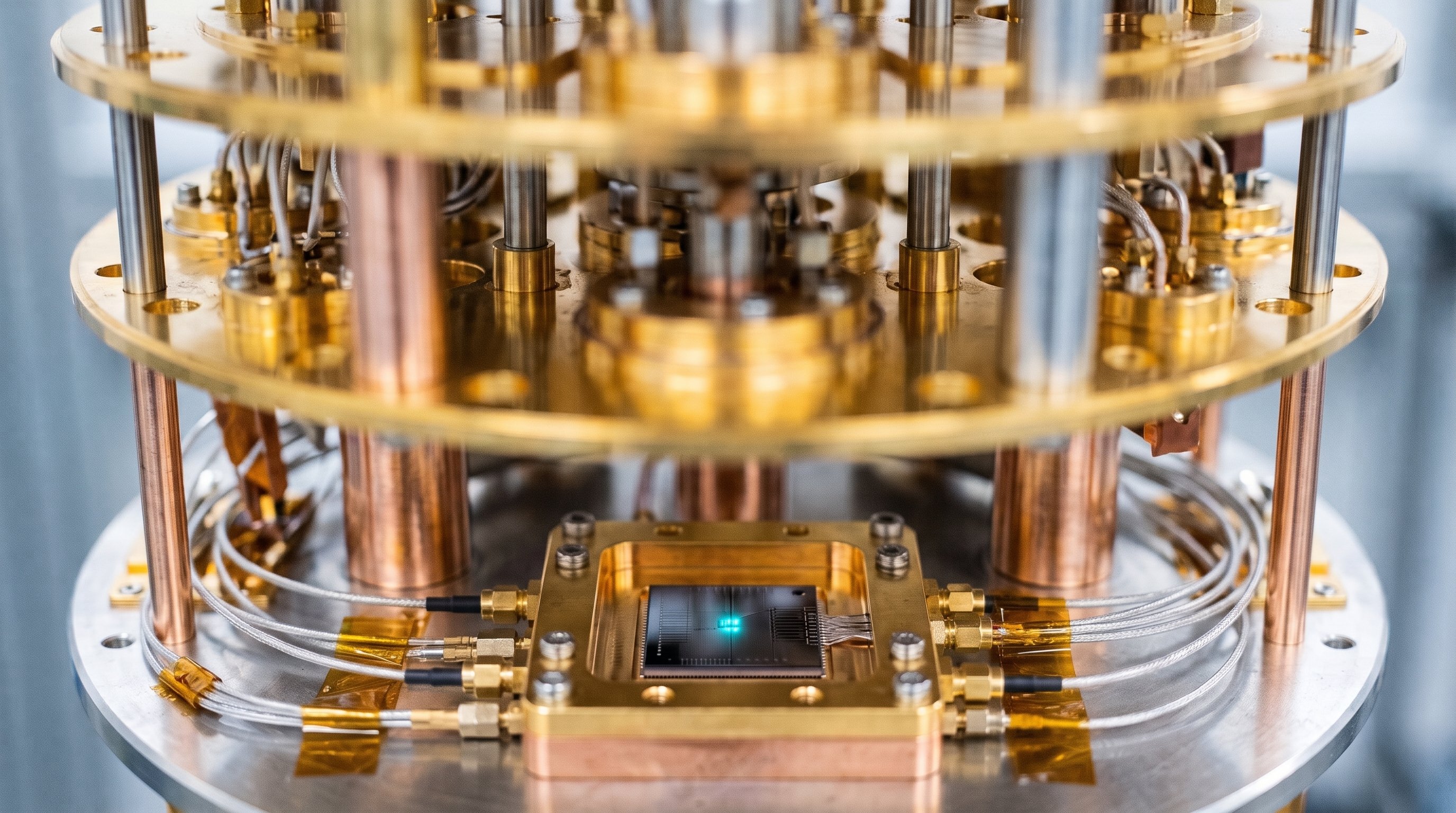
Google's chip is called Sycamore. The qubits are tiny electrical circuits made of a superconducting metal, which carries electricity without loss at very low temperatures. That is why the chip hangs in a refrigerator.
What was the task?
The task sounds abstract, because it was designed to be as hard as possible for ordinary computers. The chip carries out a random series of operations on the qubits. It then measures them, which gives a row of zeros and ones, for example 0000101. If this is repeated many times, some rows appear more often than others. This happens because qubits can strengthen and cancel each other out. The pattern of those frequencies is the result.
An ordinary computer has to work out that pattern by keeping track of the whole list of numbers for all the qubits, and that list grows extremely fast with the number of qubits and the number of operations. The chip simply carries it out itself.
How do they know it is right?
Google first checked the chip with smaller circuits of 12 to 53 qubits, which an ordinary computer can still check. The results matched the calculations. The team then ran longer and longer series of operations, until an ordinary computer could no longer check them.
The figure of 10,000 years is an estimate based on the measurements and on a calculation method for ordinary computers. It has therefore not been measured.
Caveats
IBM, which builds quantum computers itself, thinks the estimate is too high. The company says that an ordinary computer can do the same task in 2.5 days if it also uses storage space on disks, instead of only its working memory. The difference therefore lies in the calculation method for ordinary computers, not in the chip. In addition, the task itself is not a useful application, and errors are still a limit: every operation sometimes goes wrong, so the series cannot be longer than about a thousand operations.
Looking back from 2026
The term quantum supremacy remained controversial. Thirteen researchers argued in Nature for the term quantum advantage, partly because "supremacy" has a different ring in everyday use. In the meantime, researchers came up with faster calculation methods for ordinary computers, which made the gap smaller. In 2024, Google's own team estimated that improved methods could do the task on the Frontier supercomputer in about six seconds. It is not strange that such a lead is temporary.
The importance lies elsewhere. After 2019, the work shifted to catching errors: letting several qubits work together as one more reliable qubit. Only then can quantum computers become useful for chemistry or materials. The experiment showed that a large quantum chip can work, and that is the first step towards that.