Nederlands
Mistral expands its business platform with AI agents that work independently under supervision
French company Mistral is expanding its business platform, Studio. Companies can now build AI agents on it that carry out multi-step tasks themselves, while a human decides at sensitive steps. It can also run on a company's own servers. Most new parts are still in a test phase.
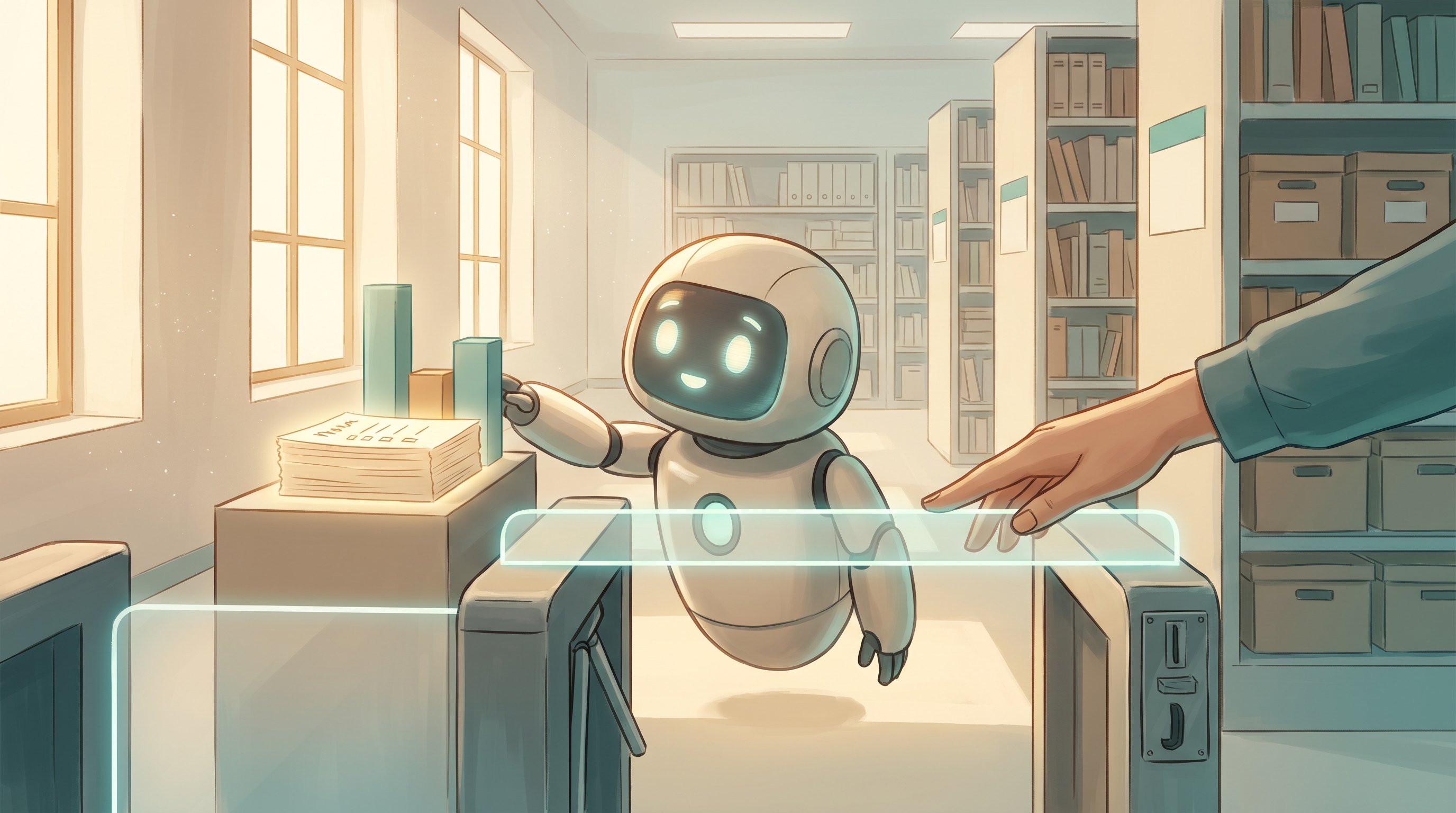
On Thursday, the French AI company Mistral greatly expanded its business platform, Mistral Studio. Companies can now build and run so-called agents on it: AI programs that carry out a task in several steps on their own, such as looking up data, running a piece of program code and passing the result on to a colleague. There are also new apps for employees and new tools for checking exactly what an agent has done.
The brain behind Studio is Mistral's new top model, Mistral Large 4, nicknamed Le Chonk. Mistral released that model at the end of October, so that anyone can download it and run it themselves. That article was about what the model can do, especially in programming and in securing software. Studio is the next piece of the puzzle: the place where companies put such a model to work inside their own organisation.
From trial project to daily work
Many companies have been experimenting with AI for years, but a trial does not always become a regular part of the work. An agent that does real work needs access to the company's data and systems. At the same time it must not be allowed to do just anything, and afterwards it must be possible to see what it did. Building all of that yourself takes a lot of time. With Studio, Mistral wants to offer these parts in one platform.
Studio runs in Mistral's cloud, but it can also run in a company's own cloud or on its own servers. Sensitive data then does not have to leave the company. For banks, governments and other organisations with strict rules, this is often a requirement.
Studio itself is not new: Mistral launched the platform in October 2025, and workflows were added in April 2026. The expansion of 5 November makes it a much more complete platform.
What is new
The agents receive a team's standard ways of working. They can run code in a shielded environment where they cannot touch anything else, and they can hand part of their task to another agent. The company decides which data and tools an agent may use and which actions it may carry out.
With workflows, companies set out a fixed step-by-step plan. For each step they decide whether a fixed rule applies, whether an agent may think for itself, or whether a human decides. If a workflow stops halfway, it later continues where it left off. Anyone who does not want to write code can describe a process in plain language in Mistral Vibe, the chatbot that used to be called Le Chat. Vibe then turns it into a workflow, which the team can test and then put into use.
For apps, Studio takes care of hosting, logging in and who may see what. Teams can use building blocks that have already been approved, so less new code has to go through the security check.
To check what is happening, Studio records every step of an agent: which questions it asked the model, which tools it used and who gave permission for what. Teams can also test a change on their own sample data first, before it goes into real use.
Most of the new parts, including the agents and the apps, are still in a public test phase. Companies can already use them while Mistral finishes them.
Examples at Mistral and its customers
Mistral also uses Studio itself. When a fault alert goes off at the company, an agent follows the technical team's standard step-by-step plan, asks for permission before it does anything sensitive and posts its findings in the chat program Slack. According to Mistral, this saves the team hundreds of hours a month.
Playing loads YouTube, which may set cookies. More information
Another workflow recognises error reports and requests for new features in messages from customers and colleagues, and sends them to the right team. According to Mistral, this saves about 35 hours a week. A third example is an app that suggests people for a new project and explains why their experience fits.
Several large companies already work with Studio. The French bank BNP Paribas runs it on its own servers for some of its most sensitive processes, and the bank ABANCA runs it in its own cloud. The shipping company CMA CGM used it to build, among other things, systems for releasing cargo and for customer questions. According to CMA CGM, every new process is now ready for use within weeks instead of months. Consultancies such as Accenture, Capgemini and Tata Consultancy Services use it to build systems for their clients.
Caveats and next steps
The time savings were measured by Mistral itself, in its own teams. How much it brings to other companies will become clear as more customers start using the new parts. Mistral is also not the only one with such a platform: OpenAI, Amazon and Cohere, among others, offer companies similar services for building agents. Mistral mainly stands out because everything can run on a company's own servers, with a model that the company itself controls.
What does this mean for the road to the singularity?
AI models keep getting better, but to take over real work they must also be able to work safely inside a company. Studio shows what that can look like: agents that carry out a task from start to finish themselves, while a human decides at the moments that matter and every step can be traced. At Mistral itself, such agents already investigate faults and sort customer feedback. The fact that this also works with an open model on a company's own servers makes it available to many more organisations, including banks and governments that do not want to give up control of their data. The more companies use such agents every day, the faster they will learn which work AI can handle on its own.
What is the technological singularity? Read the explanation →