Nederlands
OpenAI: its own AI cracked three major problems, and top scientists will check the work
OpenAI says its internal AI models have solved three long-standing problems in mathematics, computer science and physics. Part of the proofs has already been checked by a verification program. Independent experts will now examine whether everything holds up and what it means.
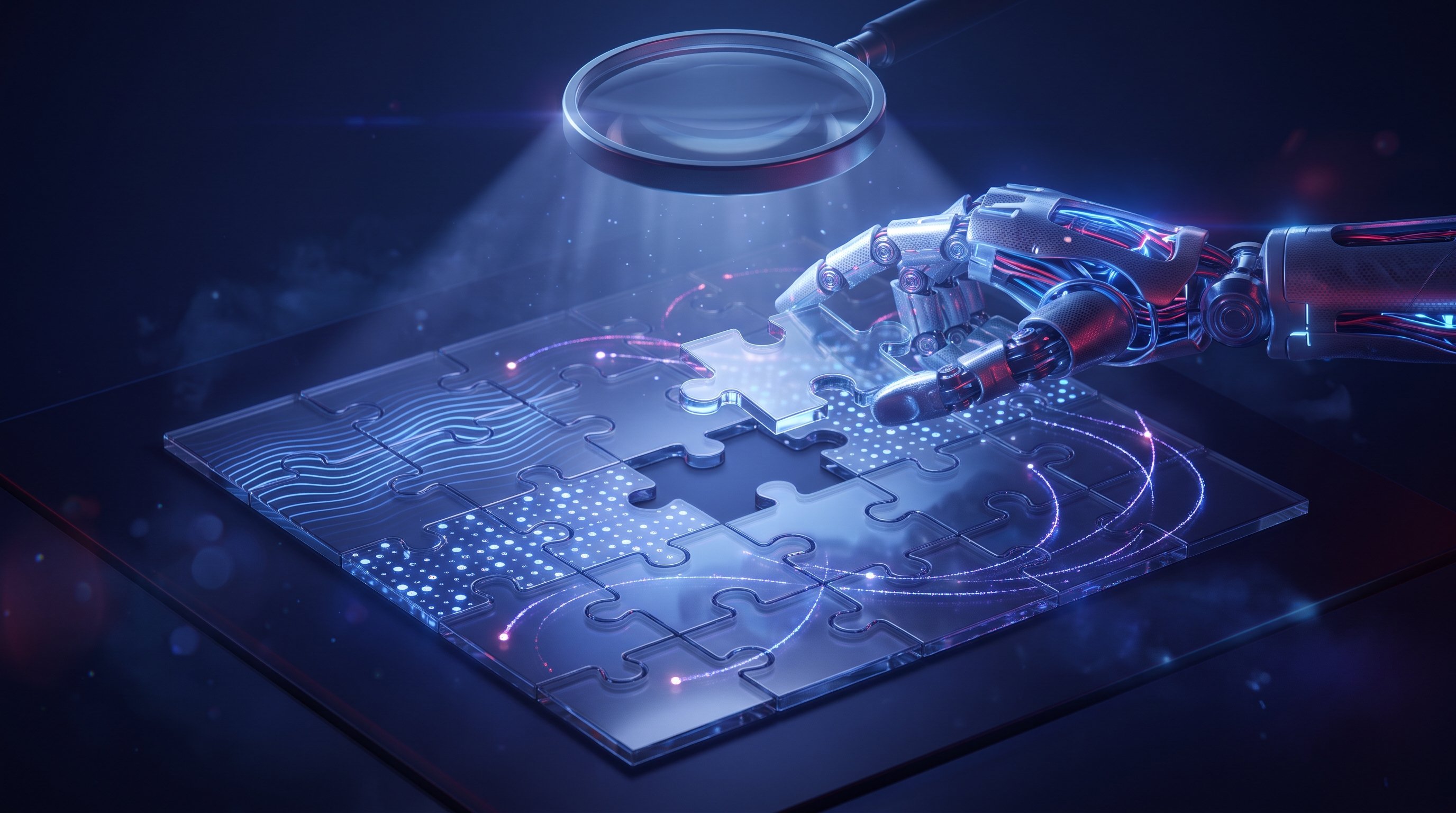
On 26 October 2026, OpenAI announced that its internal AI models have produced three major research results. Dan Roberts, who leads the Frontiers research team at OpenAI, made the news public. The first result is a mathematical proof about waves. The second is a result in computer science that would overturn a widely used assumption. The third is a proof about the theories that describe the smallest particles in nature. These are claims by OpenAI itself: independent scientists still have to examine the results thoroughly.
It is the second time in a short period that OpenAI has announced something like this. On 6 October, the company published 722 manuscripts at once with possible solutions to old mathematical questions. They all came online at the same time, so mathematicians had to work out afterwards what they were worth. This time the company is taking a different approach. Well-known scientists are helping from the start to understand and check the results.
How do you check a proof written by an AI?
According to OpenAI, the texts the models write are raw research data. People still have to turn them into real understanding. Lean helps with this: a computer program that checks every step of a mathematical proof. The company has written down the mathematical proof and the computer science proof in Lean, and an important part of the physics proof.
OpenAI also asked outside experts to act as guides. The company calls them "shepherds". They advised a different approach for each result. For the mathematics, everything is made public straight away. For computer science and physics, a group of experts guides the work. OpenAI says it does not yet know which approach works best, and is asking for feedback.
According to OpenAI, the collaboration follows fixed agreements. There are no confidentiality contracts, and participants are free to talk about the work and publish their conclusions. OpenAI itself does not claim scientific credit for the discoveries. The groups do receive recognition for their own explanations and reports. Taking part is voluntary and unpaid.
Waves that focus with equal strength
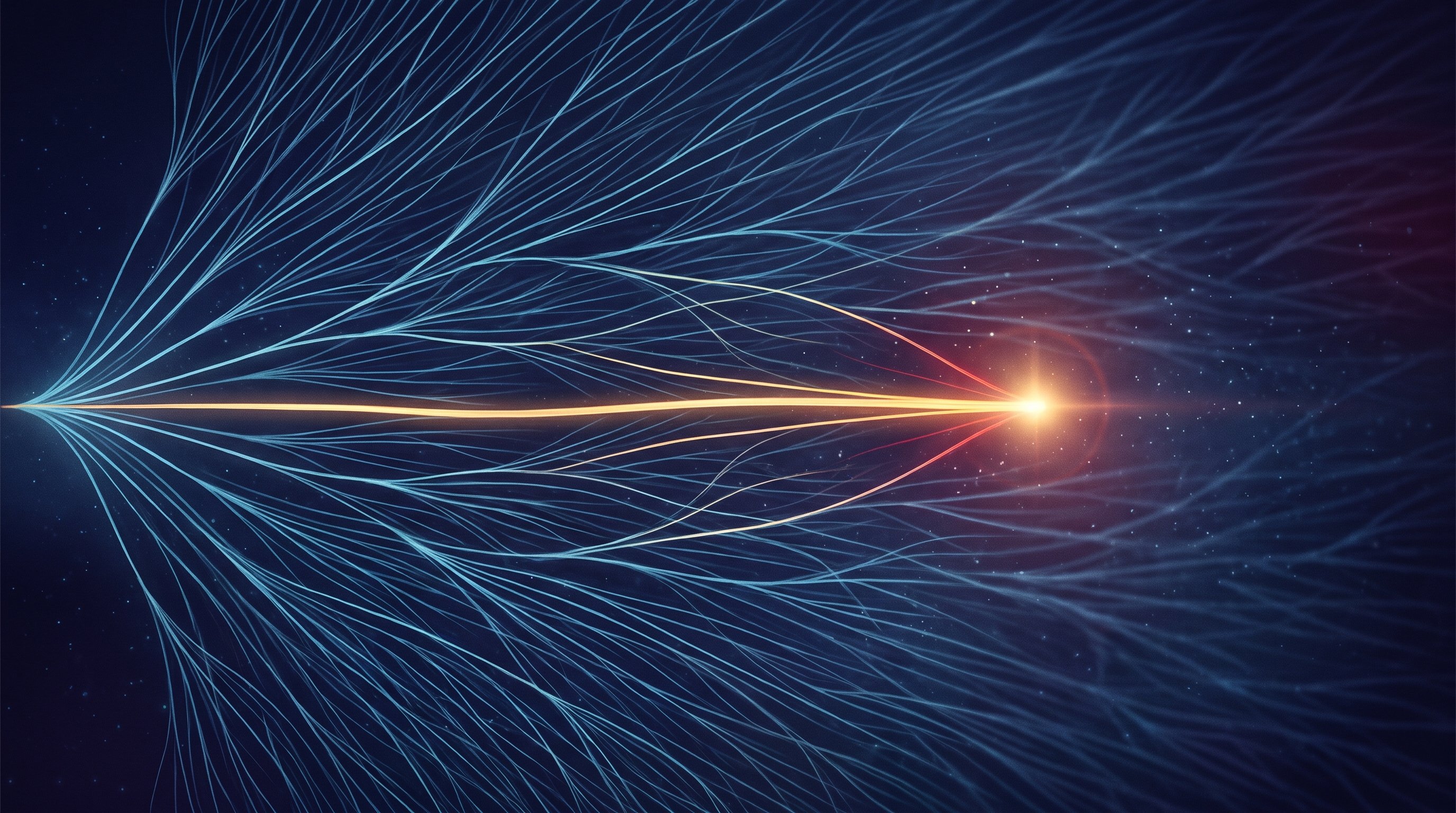
The mathematics result is about a conjecture: a statement that mathematicians believe to be true, but that has not yet been proven. The mathematician Christopher Sogge proposed it in 1991. It is about waves that come together and focus, like light in a focal point. According to the conjecture, the very strongest focusing always lasts only a short time. At an ordinary moment the focusing is much weaker than at the worst moment.
Mathematicians see this as a fundamental problem, because two other famous conjectures follow from it: the Kakeya conjecture and Stein's restriction conjecture. For waves in a flat plane, Guth, Wang and Zhang already proved Sogge's conjecture in 2019. The Kakeya conjecture in three dimensions was solved in 2025 by Hong Wang and Joshua Zahl. Wang, a professor at New York University, received the Fields Medal for this work this year, one of the highest honours in mathematics.
OpenAI now says its models have proven Sogge's conjecture for any number of dimensions, using a new kind of auxiliary equation. This would also solve the Kakeya and Stein conjectures in all dimensions. The models delivered the proof on 18 October, and a day later it was written down in Lean. On the advice of an expert, OpenAI put the model's text and the Lean proof online straight away. This way, researchers can write their own explanations of it.
A puzzle that can be solved faster than expected
The computer science result is about a well-known kind of puzzle. Imagine a large number of switches that can be on or off, and a long list of conditions. Each condition concerns at most a few switches. The question is whether you can set all the switches so that every condition is met. With every extra switch, the number of possible settings doubles. That is why such a puzzle quickly becomes very large.
In 1999, Russell Impagliazzo, Ramamohan Paturi and Francis Zane proposed the Exponential Time Hypothesis, ETH for short. This assumption says that the computing time for such a puzzle with three switches per condition will inevitably keep growing explosively. Every pair of extra switches would make the puzzle a fixed amount harder again. Computer scientists widely assumed this was true. Hundreds of scientific papers use the ETH to show that other problems are hard, including in the mathematics of networks, in biology and in databases.
According to OpenAI, its model has found a method that counts the number of solutions to such puzzles exactly. Anyone who can count how many solutions there are also knows straight away whether there is at least one. The computing time grows more slowly than the ETH allows, and the memory use stays limited. If that is correct, the ETH is false. The models wrote the proof on 16 October, and a day later it was written down in Lean. The proof and the Lean version are publicly available on GitHub, a website where researchers and programmers share their work.
A group led by Impagliazzo and Paturi of the University of California San Diego and Ryan Williams of MIT will examine and explain the proof. So two of the people who came up with the ETH are themselves checking its refutation. In an open letter to their field, the three write that their participation is not an endorsement of the claim. In their view, a result of this importance must be examined carefully and independently. If it is correct, they say, an important part of theoretical computer science, the mathematics behind computers and calculation methods, will change.
Williams reports that the group has not signed a confidentiality agreement and is not being paid. At the group's request, OpenAI has made all the data behind the result public, so that anyone can follow along. Also at their request, OpenAI is paying for a conference on what the result means. According to OpenAI, much more research is needed to turn this theoretical result into computers that are faster in practice.
The blueprint of the smallest particles
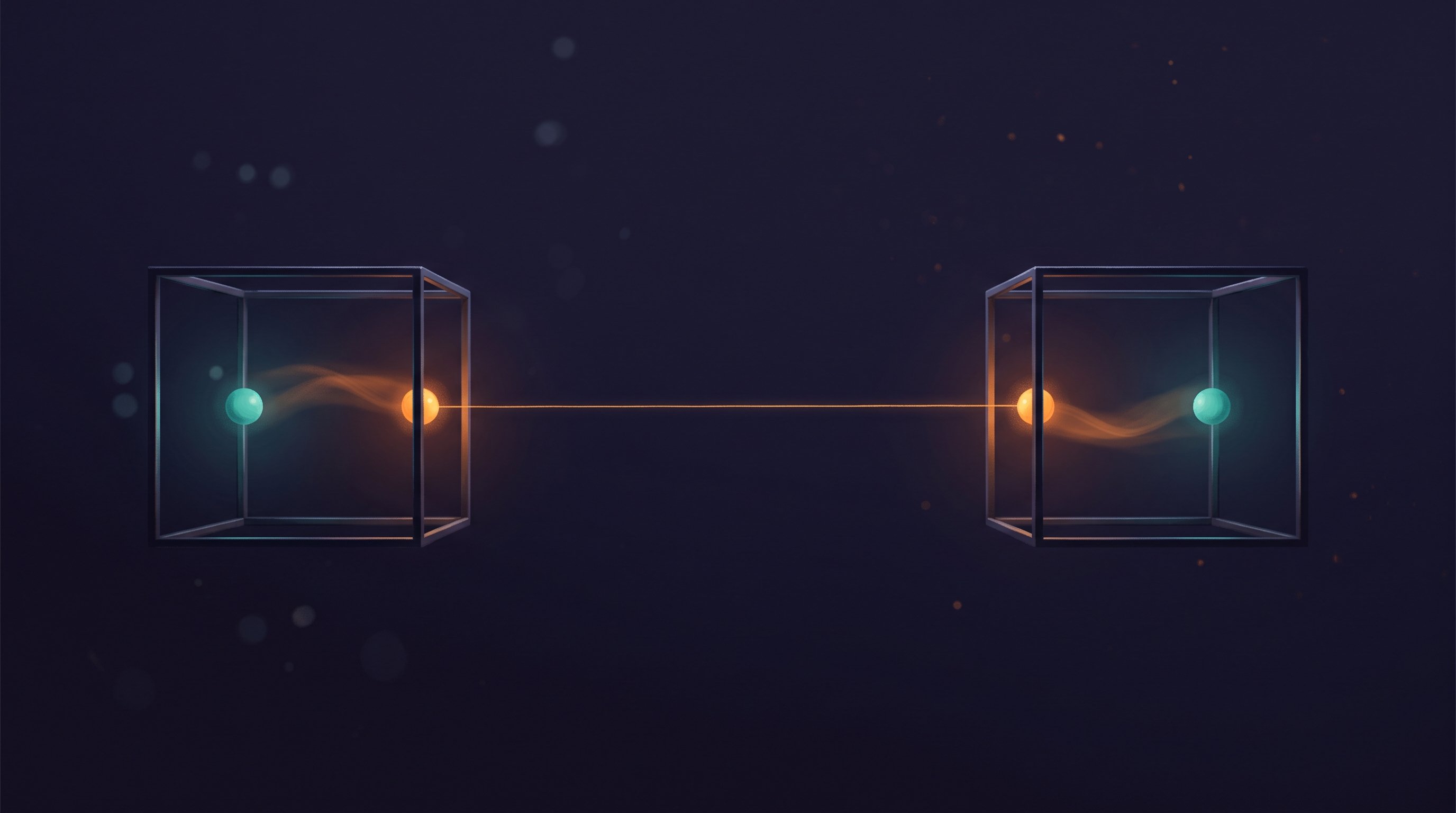
The third result is about physics. The Standard Model describes how the smallest particles interact through three of the four forces of nature: all forces except gravity. One part of it is quantum chromodynamics (QCD). This theory describes how quarks and gluons, the building blocks of protons among other things, hold on to each other through the strong nuclear force.
OpenAI says its models have delivered a mathematically rigorous proof that such theories exist in four dimensions, including QCD. The proof applies to the simplest extension of the Standard Model that brings together all forces except gravity. That is because the Standard Model itself does not work down to arbitrarily small distances. As an intermediate step, the work contains a proof for the theory of Yang and Mills, which describes how gluons interact with each other. That proof is part of one of the famous Millennium Prize Problems of the Clay Mathematics Institute.
The models delivered the Yang-Mills proof on 9 September and the QCD proof on 18 September. Because the work is so long and complex, OpenAI waited until the Yang-Mills part had been written down in Lean. That was finished on 16 October.
Nobel laureate David Gross leads the group guiding this work. He received the Nobel Prize in Physics in 2004, partly for work that helped establish QCD as the theory of the strong nuclear force. The group also includes Michael Douglas, Arthur Jaffe, Igor Klebanov and Nikita Nekrasov. Jaffe helped formulate the Millennium Prize Problem on Yang-Mills. For now, the group is not releasing the AI's texts, but is first writing up the result itself.
Caveats and next steps
OpenAI acknowledges that the approach has drawbacks. Whoever is chosen as the first guides helps decide who gets involved early, and those people know more than others. A day before the announcement, AGMAI, an advisory panel of mathematicians that OpenAI put together itself, actually advised AI companies against giving certain people early access. The panel pointed to unequal access, to results that ride on the reputation of well-known scientists and to a skewed choice of who gets to take part.
The three computer scientists are also concerned about how the credit will be shared. In their letter they warn that it may go mainly to whoever publishes first or has the most powerful tools. The work of checking and explaining would then get less recognition. In June, mathematicians voiced similar concerns in the so-called Leiden Declaration.
The panel advises AI companies to publish their results in scientific archives from now on. This should include proofs in Lean, an explanation of how the problems were chosen and money for researchers who want to understand the results. OpenAI gave 5 million dollars (about 4.3 million euros) to the Simons Foundation, an American foundation that supports scientific research. That money is for workshops and conferences on results found by AI. The company continues to ask for feedback. In the coming period, the expert groups and other mathematicians will have to show whether the proofs hold up.
What does this mean for the road to the singularity?
If the proofs hold up, AI has solved problems that mathematicians and computer scientists have been working on since 1991 and 1999. Then AI does not just calculate faster, but itself contributes new knowledge in the hardest fields. A refuted ETH would also reopen hundreds of earlier conclusions about what computers can and cannot do quickly.
At least as important is the way of checking that is now emerging. A computer program checks every step, and experienced scientists work out why a proof works. The better that combination works, the faster discoveries by AI become a solid foundation for new research. The coming months will show how far this collaboration between humans and machines already reaches.
What is the technological singularity? Read the explanation →