Nederlands
OpenAI launches as a non-profit research organisation, with 1 billion dollars in pledges
Sam Altman and Elon Musk announce OpenAI, a non-profit lab for artificial intelligence that does not work for shareholders but for everyone. Backers have pledged a total of 1 billion dollars.
SAN FRANCISCO, DECEMBER 2015 - There is a new laboratory for artificial intelligence: OpenAI. It is a research organisation without a profit motive. According to the announcement, its goal is to develop digital intelligence in a way that helps humanity as a whole, and that is not driven by the question of what it earns. A non-profit, OpenAI writes, builds value for everyone rather than for shareholders. The announcement comes one day after Facebook made the designs of its AI hardware public.
What does artificial intelligence mean here?
It is about computer programs that learn from examples instead of from rules that a programmer has written down in advance. Such programs recognise speech and images and translate texts. Research into them has so far mostly taken place at large technology companies and universities. OpenAI wants to add a research organisation that does not depend on profit.
How is it paid for?
A company with shareholders has to make a profit to keep its investors happy. OpenAI therefore works with donations. Backers have together pledged 1 billion dollars, although OpenAI expects to spend only a small part of it in the coming years. Those named include Sam Altman of the start-up accelerator Y Combinator, Greg Brockman, Elon Musk of Tesla and SpaceX, Jessica Livingston, Peter Thiel, Amazon Web Services, the Indian technology company Infosys and YC Research.
Who does the work?
Altman and Musk are the co-chairs. Ilya Sutskever, until now a researcher at Google, becomes research director. Greg Brockman, previously chief technology officer of the payments company Stripe, gets a similar leading role. The team includes Trevor Blackwell, Vicki Cheung, Andrej Karpathy, Durk Kingma, John Schulman, Pamela Vagata and Wojciech Zaremba. Pieter Abbeel, Yoshua Bengio, Alan Kay, Sergey Levine and Vishal Sikka take part as advisers. According to TechCrunch, the involvement of Musk, who has previously given money to keep AI safe, gives the project a focus on safety.
Looking back from 2026
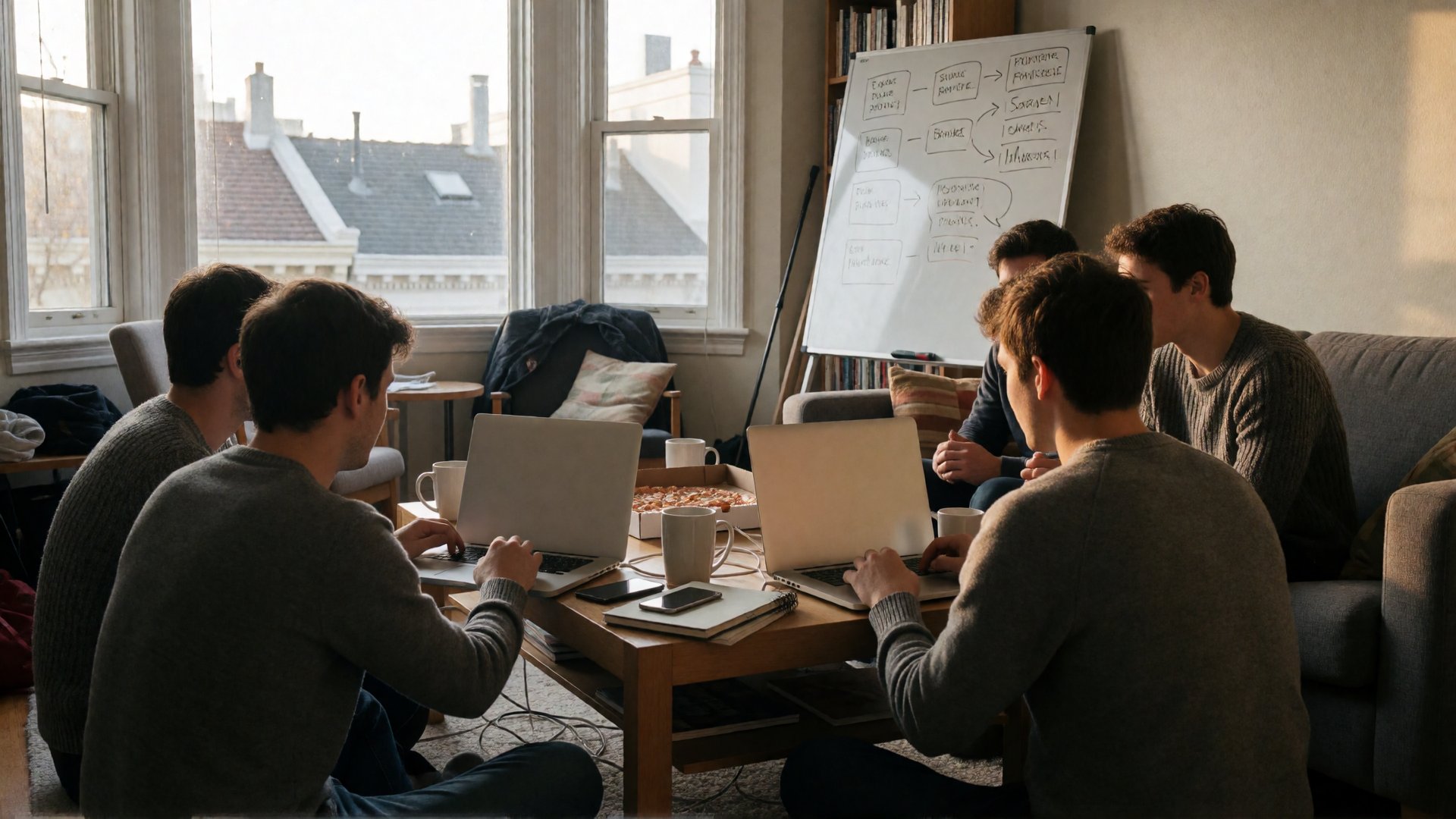
The first team of nine researchers initially worked from Brockman's living room and moved to an office in September 2016. The set-up did not stay the way it began. The 1 billion dollars turned out to be a pledge: according to tax filings, about 133 million dollars had come in by 2021. In 2019 OpenAI became a for-profit company with a cap: the profit for investors is limited to 100 times what they put in.
OpenAI grew into the maker of GPT and ChatGPT and is one of the players driving the race towards ever more powerful AI. Ilya Sutskever, who worked on AlexNet in 2012, was one of the founders.