Nederlands
Language model
A language model is an AI model trained on vast amounts of text, so it can understand, write and translate text. The chatbots you know run on a language model.
A language model is an AI model that has learned from vast amounts of text. That lets it answer questions, write and summarise texts, translate and produce programming code. The well-known chatbots run on a language model. With a large language model, or LLM, both the model itself and the amount of text it was trained on are very large.
How does it work?
At its core, a language model learns to predict the next piece of text. It reads a passage, guesses what comes next and checks how far off it was. This happens billions of times. That is how it picks up patterns in language, but also in the knowledge contained in those texts. The text is chopped into small pieces, the tokens, and the model works with those pieces.
What the model has learned is stored in its parameters: billions of numbers. An answer usually emerges piece by piece, with each new piece depending on what is already there. Some models work differently. Mercury 3, from the American company Inception, first makes a rough version of the whole text and sharpens it in a few rounds. According to the company, that makes it four to eight times as fast as comparable models (link).
Why it matters
Language models are the engine behind almost all AI news. They form the basis of AI agents that carry out tasks on their own. They are also used in science, for example to design proteins or devise experiments.
Training such a model takes a lot of computing power, and a great deal of work goes into reducing that. Microsoft AI has finished the first training phase of its base model MAI-Base-2. According to the company, the model reaches the same level as a strong Chinese model with 4 to 12 times less computation (link). Researchers measure how good a language model is with fixed tests, the benchmarks.
Articles about Language model
-
MIT teaches AI to see how crystals are built, and that helps the search for new materials
Language models know a lot about materials, but cannot 'see' how a crystal is built. MIT researchers linked 3D structures to descriptions in plain language. As a result, their model finds better candidates, for example for batteries.
-
AI company pays plumbers and technicians to teach robots home repairs
The American data company HUMXN is paying for repairs to plumbing, electrics and heating and cooling systems in Minneapolis, Chicago and Miami. The technician wears a camera during the job, so that robots can learn how skilled workers solve problems. The resident gets the job done for free.
-
Gemini gets a real desktop app, with a shortcut to Google's programming agent
Google now has a Gemini app for Mac and Windows. Since 13 October, one button on the Mac also opens Antigravity, Google's AI programming environment. This gives Google its own answer to ChatGPT with Codex and Claude with Claude Code, although it is not yet all in one app.
-
Meta releases Muse Spark Open: a large AI model for programming that also runs on your own computers
Meta has released Muse Spark Open, a large AI model for programming and independent agent tasks that anyone can download. According to Meta, it is the strongest American open model so far, and it even runs on two Mac Studios.
-
Gemini 4 Argon widely available: Google back among the leaders
Google has rolled out Gemini 4 Argon widely. On paper it beats GPT-6 Astra and Claude Opus 5.5 on 13 of 19 benchmarks, but independent measurements put it alongside the competition, not above it. The biggest leap is in price, long context and science.
-
Is AI just a remix machine? Mathematicians debate the rubber band around all knowledge
Now that AI finds mathematical proofs on its own, scientists are debating: is that truly new work, or clever combining of what was already known? An image of nails and a rubber band sharpens the question. According to an economist, that very combining holds the next big leap for all of science.
-
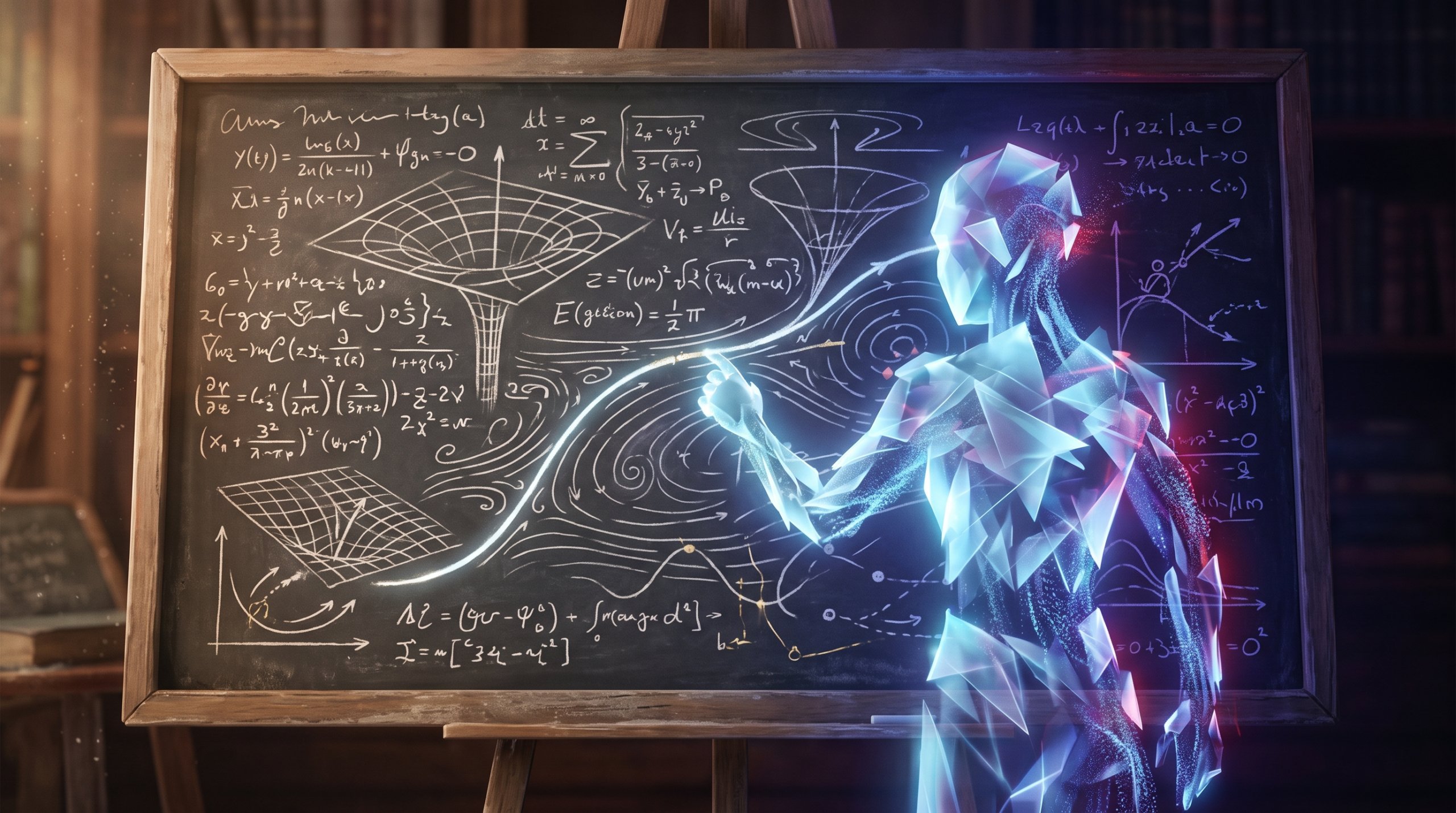
AI agent solves 49 of 50 new research problems in theoretical physics
An AI agent based on GPT-6 Astra solved 49 of 50 unpublished physics problems, for less than 3 dollars each. These are heavy calculations that would take a top expert a day. The researchers mainly see a powerful calculation assistant.
-
OpenAI publishes 719 mathematical manuscripts from a not-yet-released AI model
OpenAI has published 719 mathematical manuscripts on GitHub, produced by an unreleased internal model. According to the advisory group AGMAI, they contain solutions to 'hundreds' of open questions. Independent review has yet to begin.
-
AI agents find two candidate magnets for a new kind of computer memory
More than ninety Claude Opus 5.5 agents at Vals AI spent three days calculating magnets for future computer memory. They arrived at two candidates, including a substance from 1999. It remains calculations only: nobody has measured the predicted properties yet.
-
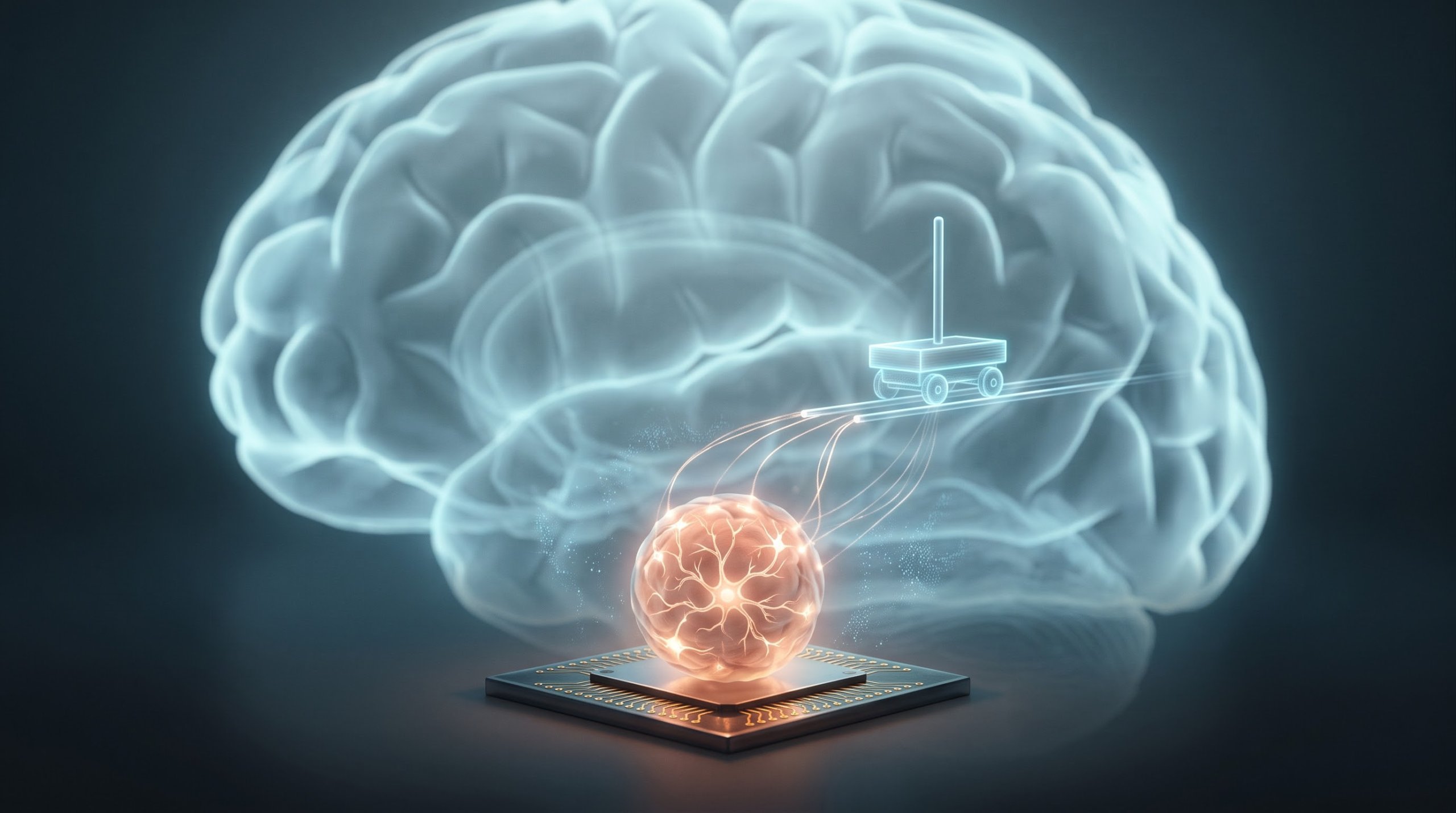
Lab-grown human brain tissue learns to balance a virtual pole with an AI coach
At a meeting in Silicon Valley, a team from UC Santa Cruz showed how cultured human brain tissue learns a classic control task: keeping a pole upright on a cart. An AI algorithm acts as the coach. A volunteer with a keyboard could barely keep up with the tissue.