Nederlands
AI agents find two candidate magnets for a new kind of computer memory
More than ninety Claude Opus 5.5 agents at Vals AI spent three days calculating magnets for future computer memory. They arrived at two candidates, including a substance from 1999. It remains calculations only: nobody has measured the predicted properties yet.
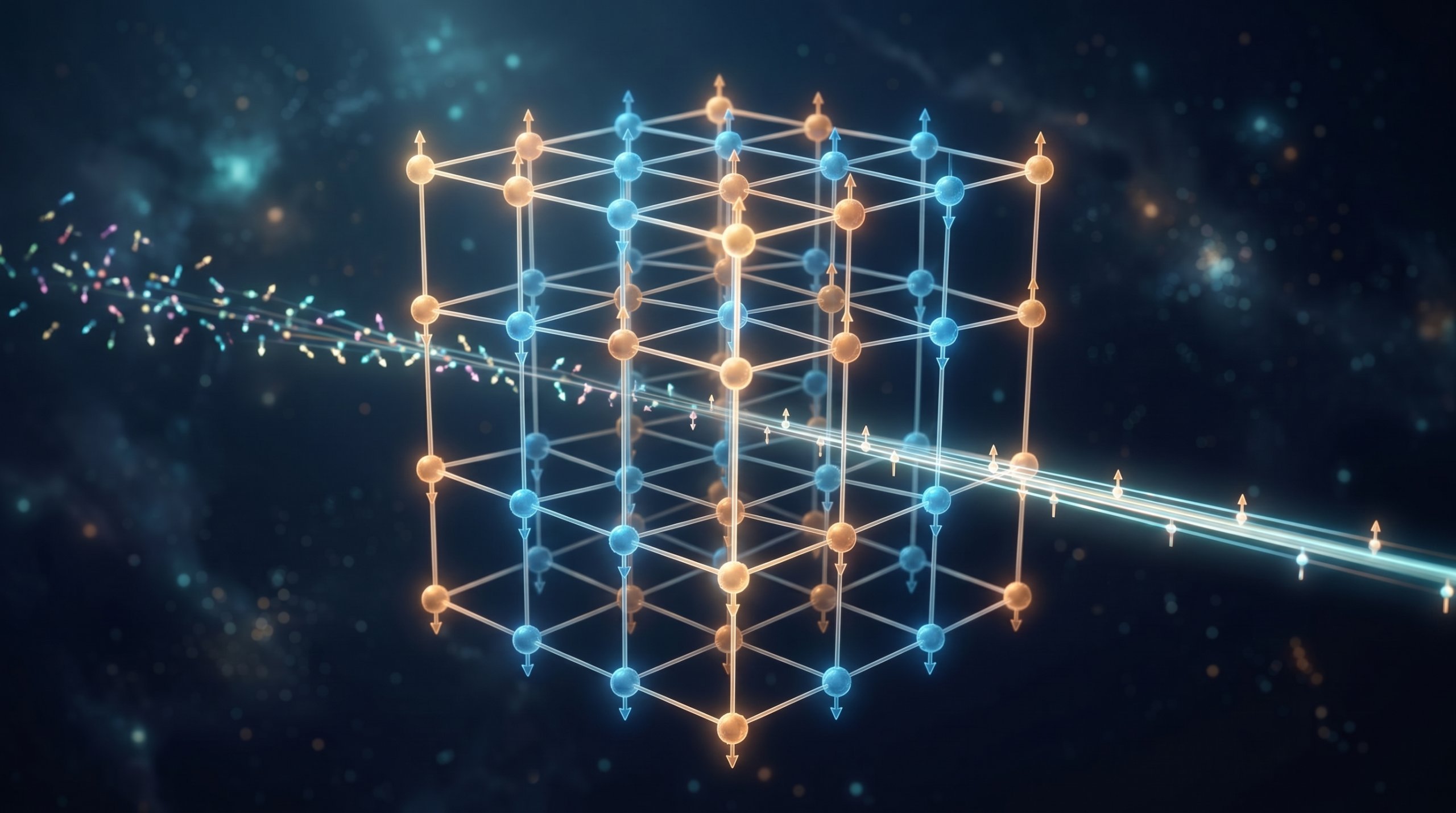
The American AI company Vals AI has presented two materials that may be suitable for a new kind of computer memory. The search was carried out by more than ninety AI agents: independently working versions of Claude Opus 5.5, Anthropic's language model. They worked together with researcher Geby Jaff and, in early October, ran hundreds of physics simulations on cloud computers over three days.
One candidate is a new substance that the agents came up with themselves. The other was already made in 1999 by chemists in the United States. According to Vals, nobody saw at the time what else that substance might be able to do.
What kind of magnet are they looking for?
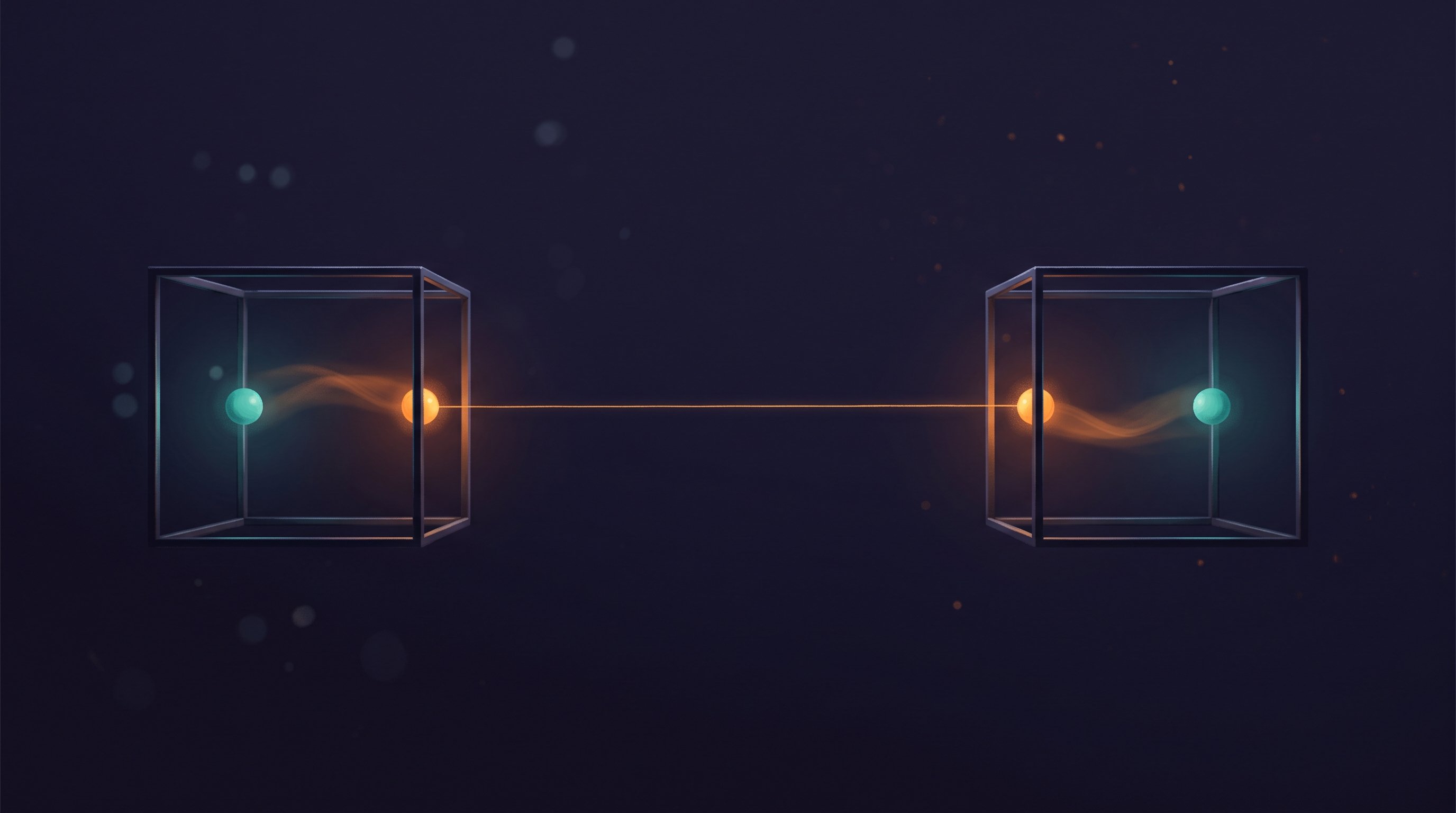
Computers store information as zeros and ones. Part of the memory does this with magnetism, for example in hard disks. A property of electrons called spin plays a role here. An electron can be seen as a tiny magnet pointing up or down. If a material can keep these two kinds of electrons apart, it can be used to store and read out information.
An ordinary magnet, like the one on the fridge, can do that. But such a magnet also attracts things nearby. In a chip with billions of tiny memory cells, they then interfere with each other.
There are also magnets in which the tiny magnets in the substance point in alternating, opposite directions. They cancel each other out, so nothing can be noticed from outside. That is useful, because such cells can be placed close together. According to Vals, they can also switch from zero to one much faster. The drawback: they do not keep the two kinds of electrons apart, so it is hard to store anything with them.
Researchers are therefore looking for something in between: a substance whose magnetism is zero from outside, but which still sorts the electrons. Such a substance is called a Luttinger compensated magnet. Ideally it is also a semiconductor, the kind of material computer chips are made of, and stays magnetic at ordinary room temperature. Until now, such materials existed almost only on paper.
The two candidates
The first candidate is a new substance made of yttrium, barium, manganese, iron and oxygen. On paper it is almost ideal: it would sort the electrons well and stay magnetic up to about 150 degrees Celsius. But there is a big problem. It only works if the manganese and iron atoms lie neatly in alternation, like the squares of a draughts board. According to the simulations, that pattern already gets mixed up at around 680 degrees Celsius. Substances of this kind are made at 900 to 1,300 degrees. What you get then is probably a messy crystal that does not work. The agents themselves called it an interesting design, but not a usable find.
The second candidate is more promising. It is related to Prussian blue, a blue pigment that has been used in paint for centuries. The American chemists Stephen Holmes and Gregory Girolami made the substance in 1999. They deliberately built it so that the magnetism of the two metals in it, vanadium and chromium, cancels out. Their powder stayed magnetic up to 103 degrees Celsius, well above room temperature. The agents have now calculated that this substance is also a semiconductor that sorts the electrons. A big advantage: here each metal atom naturally sits in its own fixed place, so the problem of the first candidate does not arise.
Caveats
For now everything has only been calculated. The simulations assume a perfect crystal. The only real sample ever made is a powder from 1999 with water in it. The two calculation methods the agents used disagree about what that water does. Nobody has ever measured the predicted properties.
The find is also less new than it seems. The substance has existed for 27 years, and a study from 2008 already showed how the electrons in it are sorted, without doing anything with that. Readers on the tech forum Hacker News therefore found 'discovery' too big a word.
The project is, however, remarkably open. Vals has put all calculations and the computer code online, so that other researchers can check everything. During that check, the researchers themselves found five mistakes in the agents' work. These have been corrected and, according to Vals, do not change the conclusion. The next step, according to the researchers, is simple: make the substance from 1999 again and measure whether the prediction is right.
What does this mean for the road to the singularity?
This project shows how AI now takes part in science. The agents do not replace the laboratory, but do the calculation and search work at lightning speed. In three days they did what takes a team of people weeks or months. Some agents even had the task of refuting the claims of the other agents. The human set the direction and decided what was made public.
The best result may not be the new substance, but the link the agents made between a forgotten substance from 1999 and a kind of magnet that only recently got a name. Finding such links in scattered knowledge is something AI is getting better and better at. But the limit is also clear: as long as nobody makes and measures the substance again, it remains a promise. The real acceleration will only come when AI predictions can be tested in the lab as quickly as they arise on the computer.
What is the technological singularity? Read the explanation →