Nederlands
Protein
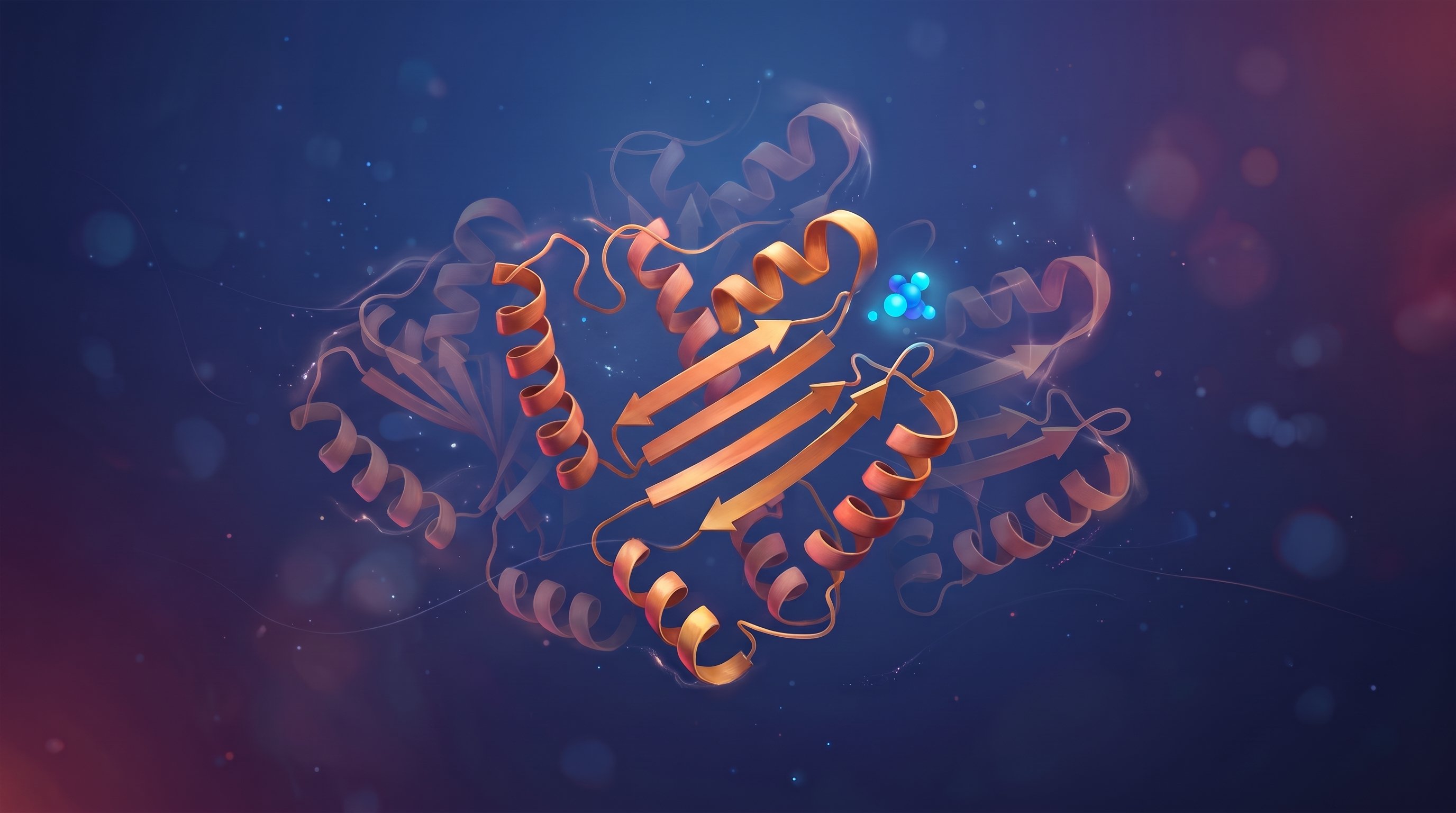
Proteins are the workhorses of the body: molecules that build, transport, pass on signals and speed up reactions. They consist of chains of amino acids that fold into a fixed shape.
A protein is a molecule that carries out a task in a living cell. There are proteins that make muscles contract, proteins that carry oxygen through the blood, and proteins that recognise invaders. Your body uses tens of thousands of different kinds.
How does it work?
A protein is a long chain of amino acids, small building blocks of which there are twenty kinds. The order of those building blocks is fixed in the DNA. After it is made, the chain folds up into a three-dimensional shape, a bit like a thread folding into a tangle, but always in the same way. That shape determines the task. Many proteins have a sort of pocket into which exactly one substance fits, like a key in a lock.
A well-known group are the enzymes. These are proteins that start or speed up a chemical reaction. They cut food into smaller pieces, for example, or convert one substance into another. Other proteins are antibodies, which attach to a target and so help with defence.
If the shape is wrong, a protein cannot do its job. In diseases such as Alzheimer's, proteins clump together in a way that causes damage.
Why it matters
Anyone who understands proteins understands a large part of biology and medicine. Many medicines work by blocking a protein or by helping it. That is why protein research is one of the areas where AI is currently advancing fastest.
Chinese researchers had an AI model design proteins from a description in plain language, and in four trials the result did what was asked, such as giving off light and breaking down plastic (link). With BioEmu-2, Microsoft is sharing a model for free that lets researchers predict which shapes a protein can take. That matters, because a protein does not stand still: its movement determines what it can do (link). At Tencent, the research AI Hyra builds its own tools for protein research and mathematics, and models for proteins and molecules are already public (link).
Proteins are versatile in nature too: an enzyme that bacteria in forest soil use to break down bioplastic turns out to render penicillin harmless as well (link).
Articles about Protein
-
Anthropic uses AI to determine, for the first time, the shape of a puzzling protein shell from the bacterial world
Anthropic's biology team has used its AI assistant Claude to determine, for the first time, the 3D shape of a vault from the bacterial world: a hollow protein shell made with a protein from a bacterial virus. What such shells do in cells is now being studied further.
-
AI agents run DNA experiments on their own in a robot lab
In AutoDNA, a lab at Shanghai Jiao Tong University, AI agents design DNA experiments and carry them out themselves, using more than twenty types of equipment. People only refill materials and maintain the machines. The research is published in Nature.
-
Implant removes excess sugar from the blood of mice using a little electricity
Researchers at ETH Zurich built an implant that converts excess blood sugar into a substance the body passes out in urine, without drugs. In mice with diabetes and obesity, blood sugar returned to normal within 90 minutes and the animals lost weight. Tests on larger animals are the next step.
-
Bacteria as a calculator: swimming through a maze, they test many solutions at once
Researchers led by Canada's McGill University have bacteria solve a calculation puzzle by letting them swim through a network of tiny channels. Because bacteria divide, the number of "calculators" grows by itself. It is a first trial.
-
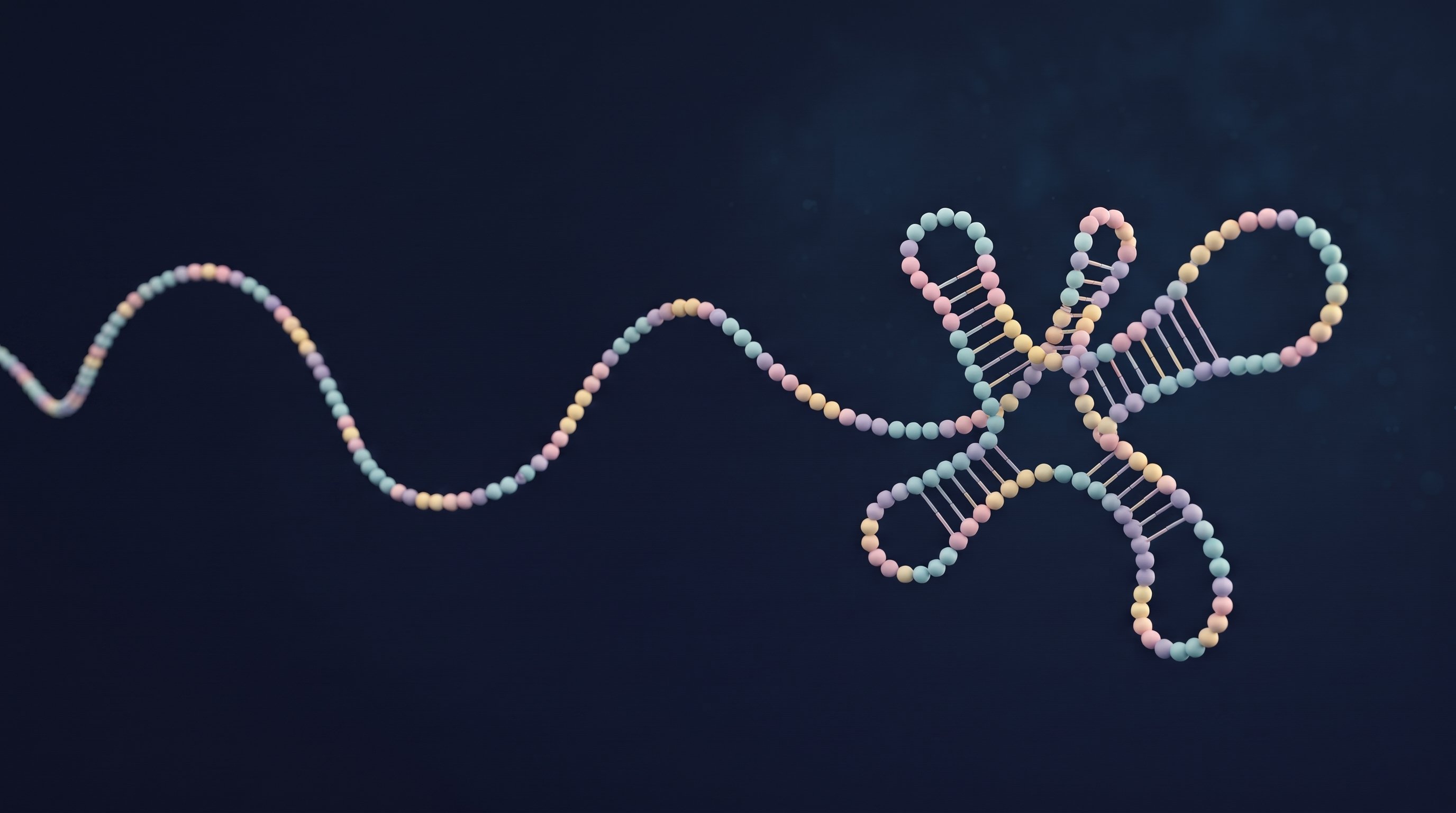
Open AI model predicts how RNA folds, trained on 21 million examples
Researchers from China present structRFM in Nature, an AI model that learns how RNA molecules fold. In tests, it matches Google DeepMind's AlphaFold3, according to its makers. Data, model and code are freely available.
-
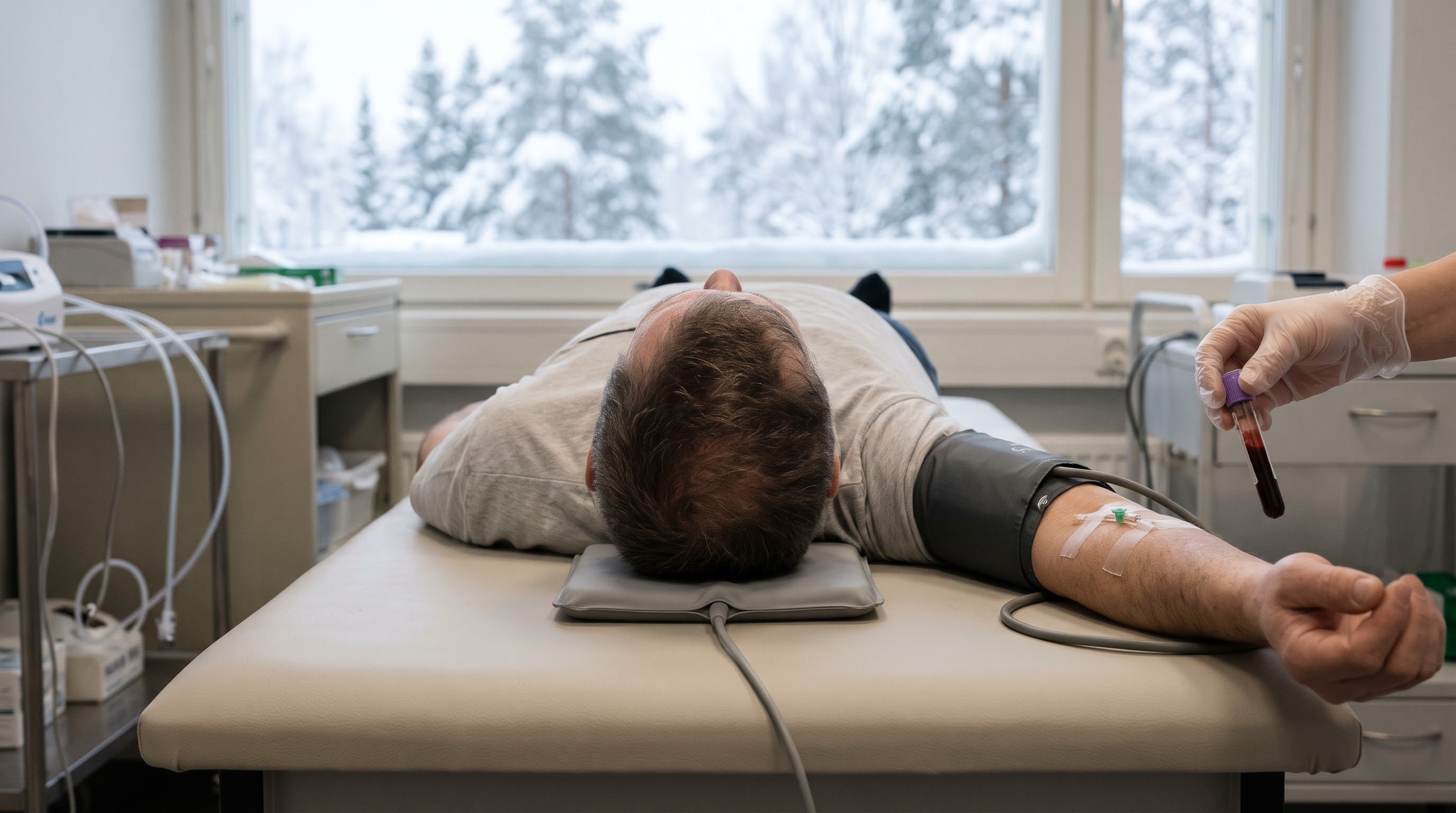
Nitroglycerin and vibration help the brain clear an Alzheimer's protein
Finnish researchers gave healthy people a nitroglycerin tablet under the tongue and had them lie on a vibrating surface. Afterwards, their blood held a third more amyloid-beta, a sign that the brain cleared the Alzheimer's protein faster. The next step is research in patients.
-
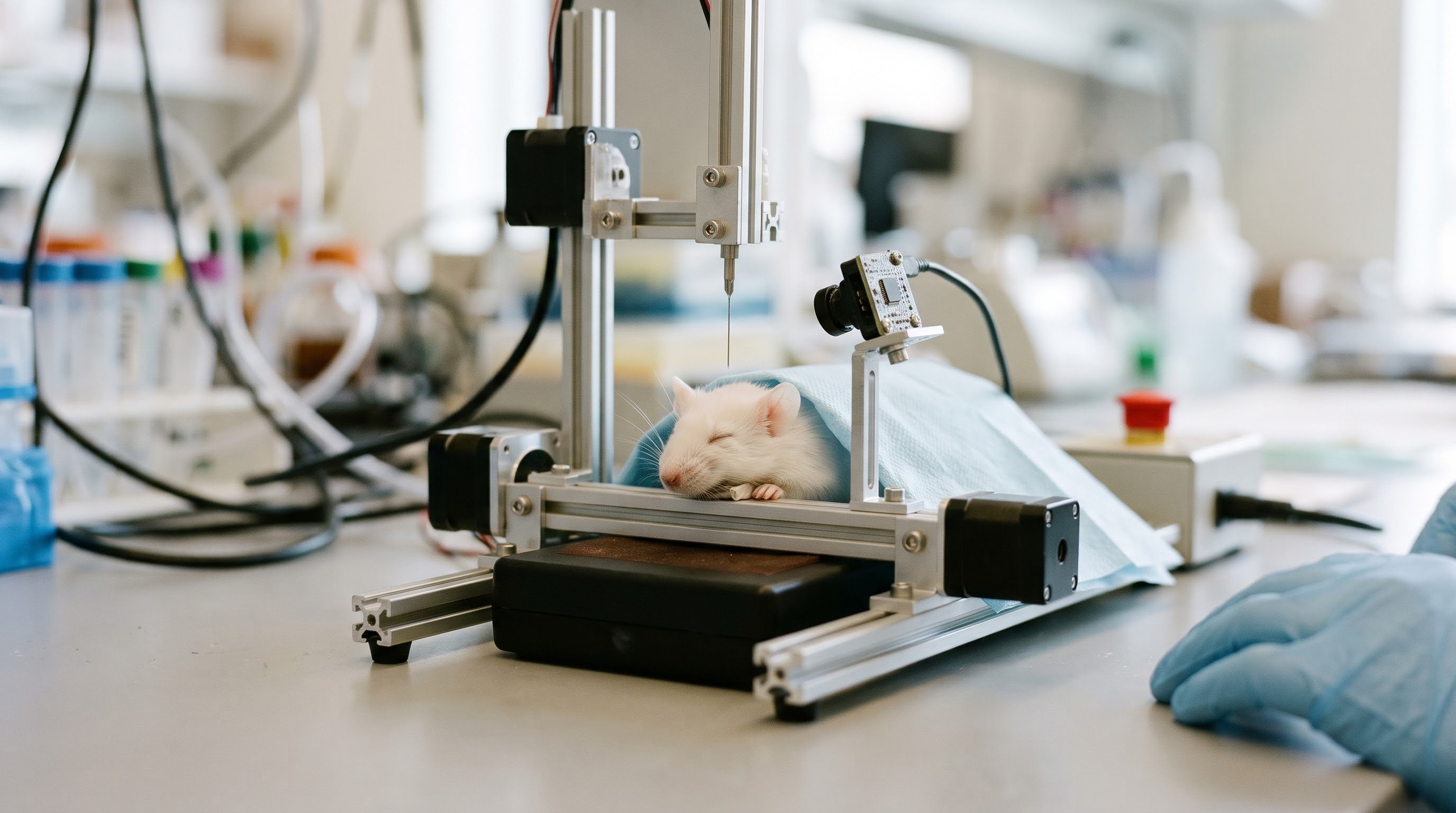
AI agent chooses gene therapy and injects the brain of a live mouse
The US biotech company Exin Therapeutics says an AI agent running on Claude Sonnet 5 chose a gene therapy and a brain region by itself and injected a mouse with epilepsy. Models from OpenAI and xAI ran the same test, each making its own choices. Now the team is measuring which therapy works.
-
Google DeepMind gives AI agent chemistry skills: drug design work cut from days to an hour
Google DeepMind has released chemistry skills for its AI platform Antigravity. In a demonstration, an AI agent used them to do in about an hour work on new medicines that, according to Google, usually takes chemists days. The designs still have to be tested in the lab.
-
Tencent lets AI build its own tools for protein research and mathematics
Tencent has presented the second version of its research AI, Hyra. It delivers not only solutions but also tools that can be used again later. Models for proteins and molecules are already public, so other researchers can now test them themselves.
-
Microsoft releases free AI model that shows how proteins move
With BioEmu-2, researchers can predict which shapes a protein or other biomolecule can take, also together with DNA, RNA or small molecules. Microsoft shares the code and the model for free under an open licence; it is meant for research.
-
Claude designs building blocks for a new food allergy medicine
For Divergence Labs, the AI model Claude came up with some 35,000 designs for small antibodies that should pull the allergy antibody IgE off immune cells. In the lab, three of them removed more IgE than an existing allergy medicine. The next step is to combine the parts into a single medicine.
-
Anthropic buys a one-person biotech company: Claude handled the work with eleven laboratories
With help from Claude, one scientist took a possible treatment for a rare muscle disease from idea to first results in mice in less than 18 months. Anthropic took over his company and also reports early results from six partners.
-
Researchers wake up silent, healthy genes in Prader-Willi syndrome
In Prader-Willi syndrome a group of genes does not work, even though every cell has a healthy back-up copy. Researchers in Melbourne switched that copy back on by removing one protein, in patient cells and in mice. Work on a medicine is now under way.
-
Precise DNA correction used inside a patient's body for the first time
Prime Medicine has for the first time treated a patient with prime editing directly inside the body. A single infusion is meant to repair a DNA error in the liver in Wilson's disease, an inherited copper disorder. The study has just begun; first results are expected in 2027.
-
AI designs molecular scissors that cut disease proteins at a chosen spot
The lab of Nobel laureate David Baker used AI to design enzymes that cut other proteins at a preselected position, including the protein that clumps together in Alzheimer's disease. Some of those enzymes also work in living cells.