Nederlands
Deep Venture explores the deep sea with navigation software from space research
The US ocean research institute WHOI and NASA have presented Deep Venture, an autonomous underwater robot for depths of up to 11,000 metres. In June 2026 the robot already dived to about 6,000 metres near Bermuda.
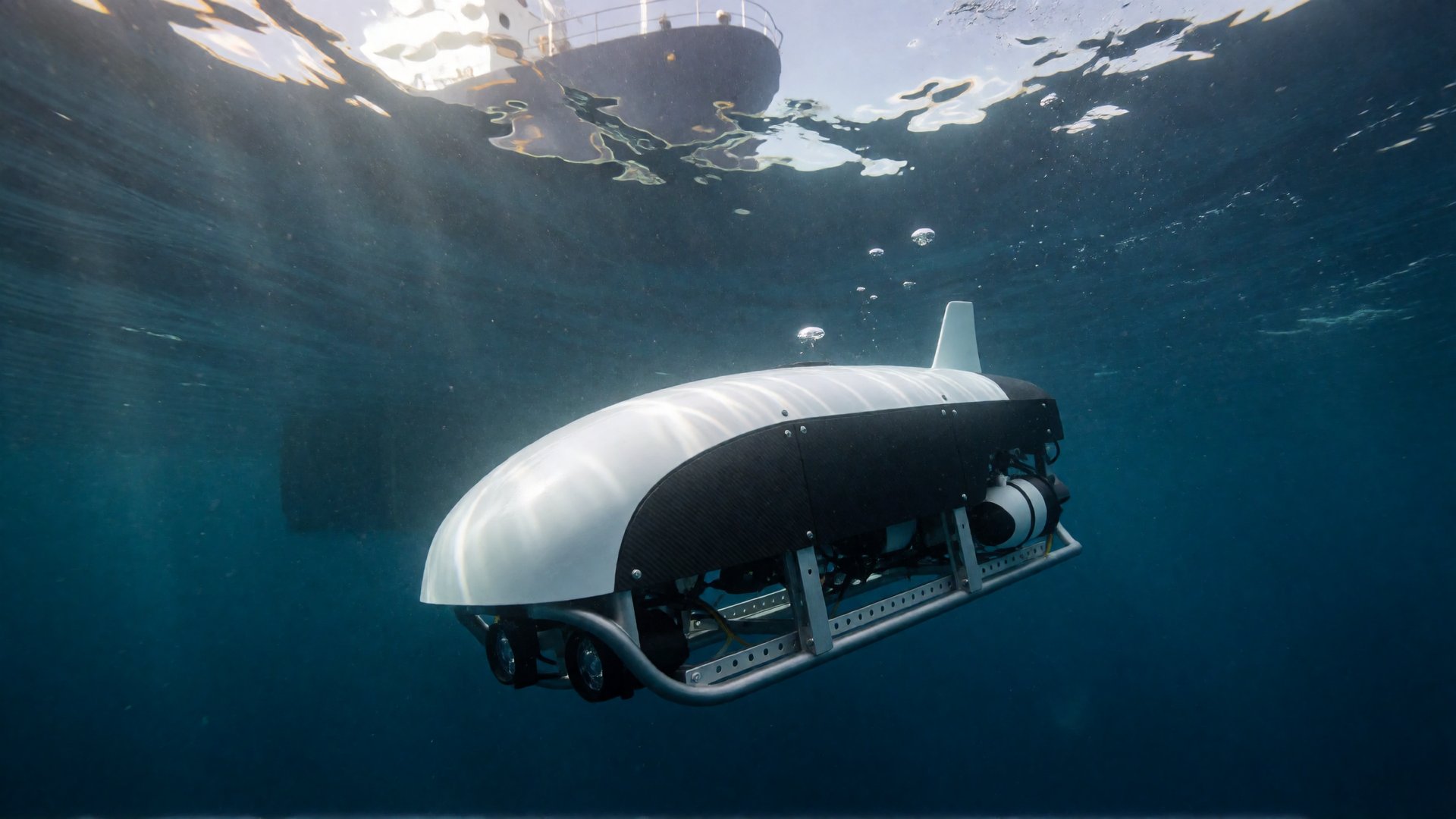
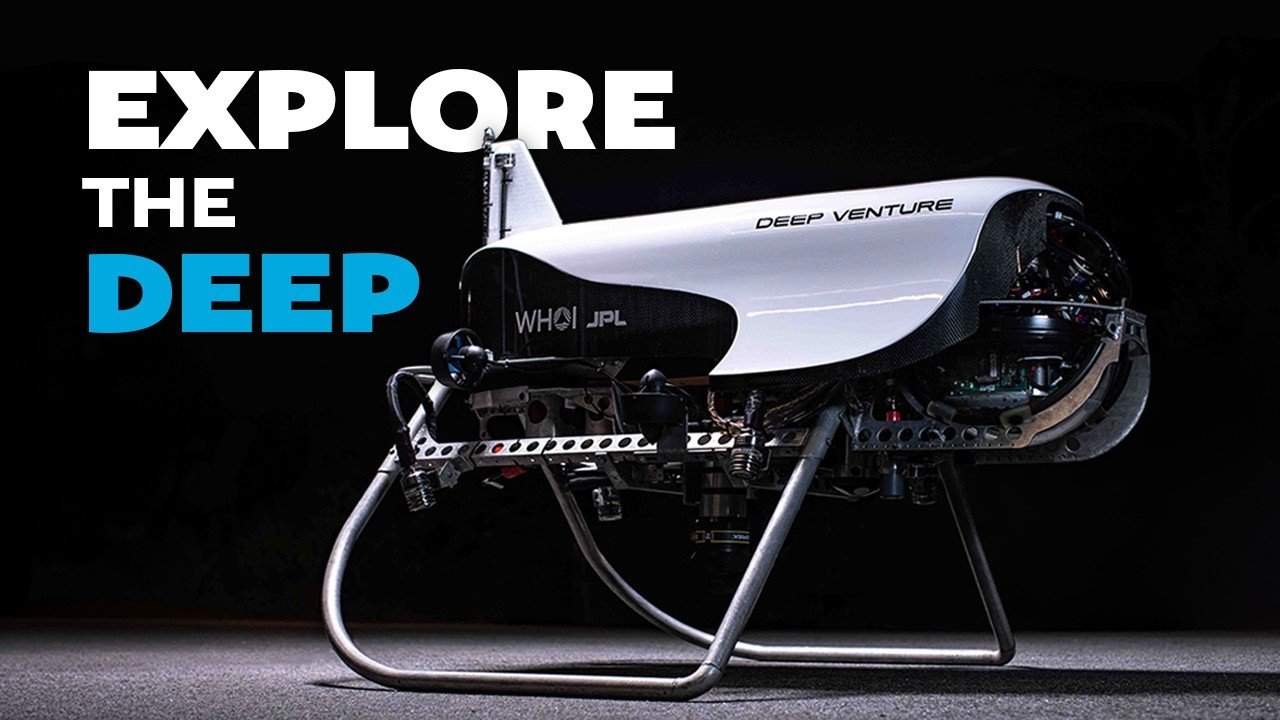
The US ocean research institute Woods Hole Oceanographic Institution (WHOI) announced Deep Venture . It developed the robot together with the Jet Propulsion Laboratory (JPL), the NASA research laboratory that builds the Mars rovers, among other things. Deep Venture weighs 250 kilograms and is built to withstand the pressure at a depth of 11,000 metres. That means it can reach the bottom of the Mariana Trench, the deepest place in the ocean.
Deep-sea robots that work on their own already exist. But they are usually built for one kind of job and need special equipment, their own crew and a suitable ship. Deep Venture is light and small enough to be launched by a small team from many different research ships. Once in the water, it works without a cable and without anyone steering it.
WHOI presents the robot in this video:
Playing loads YouTube, which may set cookies. More information
Software from other planets
Deep underwater, GPS does not work and radio signals do not travel far. A robot down there must therefore know by itself where it is and what it is doing, just like a robot on another planet that cannot wait for instructions from Earth before every step. According to WHOI, Deep Venture's navigation and decision-making software comes from systems that were originally developed to explore distant planets on their own.
The robot takes sharp photos of the seabed. With photogrammetry, a technique that builds a three-dimensional model from many photos taken from different sides, these photos become maps and 3D reconstructions. Deep Venture can also land on the seabed to take samples. An exchangeable bay holds chemical and biological sensors and samplers, so researchers can refit the robot for each expedition.
Already at 6,000 metres
During an expedition near Bermuda in June 2026, Deep Venture worked together with Alvin, WHOI's crewed submersible. Ahead of a dive by Alvin, the robot descended to about 6,000 metres and photographed the seabed. With those images, the Alvin team could choose the best spots for the dive.
The robot builds on an earlier deep-sea programme by WHOI and JPL. In 2024 that programme carried out thirteen autonomous dives to depths of up to 5,000 metres in the Gulf of Alaska, in support of dives with Alvin. With Deep Venture, that technology is now ready for regular use. Robin Littlefield, who leads the programme at WHOI, wants to build more of these robots. That way, researchers can map larger areas or use different measuring instruments at the same time.
What does this mean for the road to the singularity?
The deep sea is one of the least explored places on Earth. That is mainly because every dive is expensive: a special ship, a specialised crew and often a crewed submersible. If a robot like Deep Venture can work from almost any ship with a small team, that changes. An expedition can then take a few along and let them explore the seabed while the crew sleeps. The next day's crewed dive then goes straight to the most interesting spot.
If that trend continues, such robots will become an ordinary tool, as drones already are above ground. With dozens of robots at once, a large part of the deep sea can be mapped, with samples and measurements, and knowledge becomes available about life and raw materials that are now out of reach. It also works the other way round: what software learns from working on its own at the bottom of the ocean, without contact with people, is exactly what a robot will need when it one day explores another planet, or a moon with an ocean under its ice.
What is the technological singularity? Read the explanation →