Nederlands
Spinning drone with a single propeller scans everything around it
Researchers at the University of Hong Kong have built a drone with a single motor that spins around its own axis as it flies. This lets one laser sensor look in every direction. In tests, PULSAR II flew on its own through forests and car parks, without GPS or a computer on the ground.
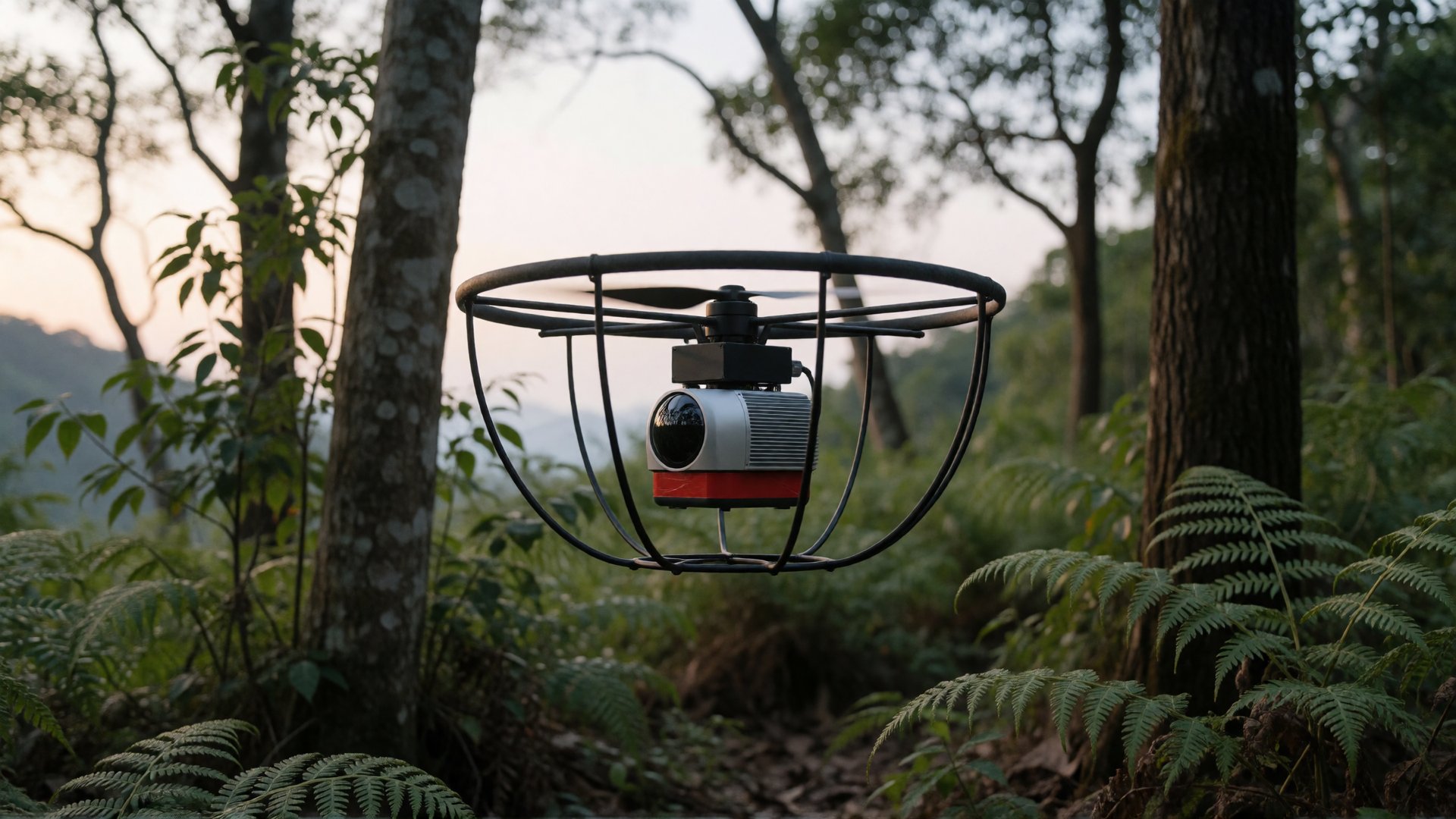
A drone that flies through a forest on its own has to be able to look everywhere at once: at the branches above it, the ground below it and the trees beside it. Usually such a drone is given several sensors for this, or one sensor on a separate rotating mechanism. That makes it heavier and more complicated.
Researchers in the Department of Mechanical Engineering at the University of Hong Kong (HKU) took a different approach. Their drone, called PULSAR II, keeps spinning around its own axis as it flies. A single fixed lidar, a sensor that measures distances with laser light, turns with it and so looks above, below and all around the drone. The work, by a team including Nan Chen and Fu Zhang, was published in the scientific journal Nature Communications.
One motor, two blades
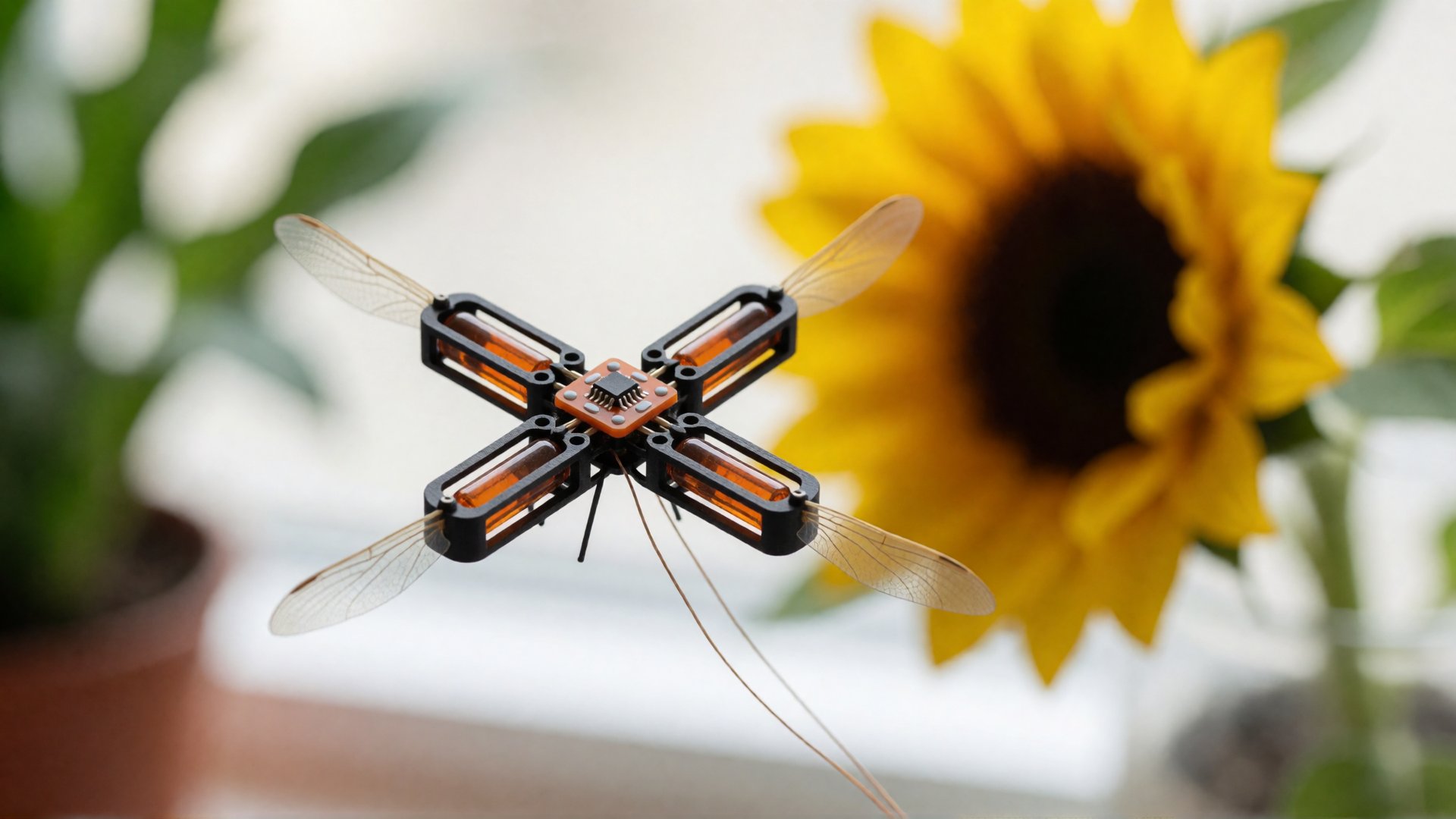
An ordinary quadcopter has four propellers and steers by making each of them spin faster or slower. PULSAR II has one motor with two propeller blades, attached to the centre piece (the hub) with slanted hinges. By making the motor speed up and slow down very precisely within each turn, the drone changes the angle at which the blades cut through the air. That way they push harder on one side than on the other, and the drone can steer.
PULSAR II is the successor to PULSAR. With that drone, the team showed in 2023 that a spinning drone with one motor can let its sensor look around. The new version is built to fly fast and nimbly and to survive collisions. The idea of a single propeller that also steers exists outside the lab too: the maker Joshua Bird built a drone at home that flies and steers with one propeller. PULSAR II also uses its spin to look around, and flies entirely without outside help.
Looking around and finding its own way
Before take-off in an indoor space, the lidar saw only part of its surroundings. As soon as the drone flew and spun, an almost complete 3D map appeared, without blind spots. So even when it hovers in place, the drone knows where obstacles are and can plan a route.
Steering with one motor is difficult, because the motor does not respond the same way at every speed. The researchers therefore first measured exactly how the drive system behaves, and built a control system that corrects for this and constantly calculates a little way ahead. In fast figure-of-eight flights and in mid-air flips, the drone strayed much less from its route than with the standard control method used for comparison.
In dense forests and in underground car parks full of pillars and pipes, PULSAR II dodged obstacles at more than 6 metres per second, well over 20 kilometres per hour. The computer on board did all the mapping, route planning and flying by itself: without GPS, without cameras in the room tracking the drone and without a computer on the ground. The drone weighs about 1.12 kilograms and could hover in place for 15 minutes and 50 seconds.
Built to take a knock
A light carbon-fibre frame protects the propeller and the fragile parts. In addition, the control system recognises when something hits the drone from outside, even though the drone itself is spinning all the time. In tests, PULSAR II kept flying steadily when a soft ball was dropped on it from above while it hovered, and when it flew forward and pushed obstacles in its path aside.
The team sees uses in search and rescue, disaster response and 3D mapping of terrain, in places where satellite navigation works poorly, such as dense forests, caves and tunnels. A next step is to improve how the drone works out its position in open spaces, where few surfaces reflect the laser light.
What does this mean for the road to the singularity?
Drones that avoid obstacles by themselves already exist. They usually need several cameras or sensors for this, and every extra part costs weight, power and money. PULSAR II shows that it can also be done the other way round: the movement the drone makes anyway in order to fly does the work of a separate rotating mechanism. If this approach matures further, it could lead to lighter and simpler drones that break less easily.
A rescue team could then send a few such drones into a collapsed building or a cave before anyone goes inside. Each drone builds its own 3D map on the way, so the rescuers know what they will find inside. The idea behind it is interesting for every robot builder: not adding more and more sensors, but making clever use of what the robot already does. Robots that find their own way in an unknown environment with simple means are a building block for machines that work independently in the real world.
What is the technological singularity? Read the explanation →