Nederlands
ETH Zurich quantum chip computes with a memory that vibrates
Researchers at ETH Zurich have built a quantum chip with a separate memory that stores information as tiny vibrations. Two test calculations worked. The next step is to show that the design also works reliably in larger systems.
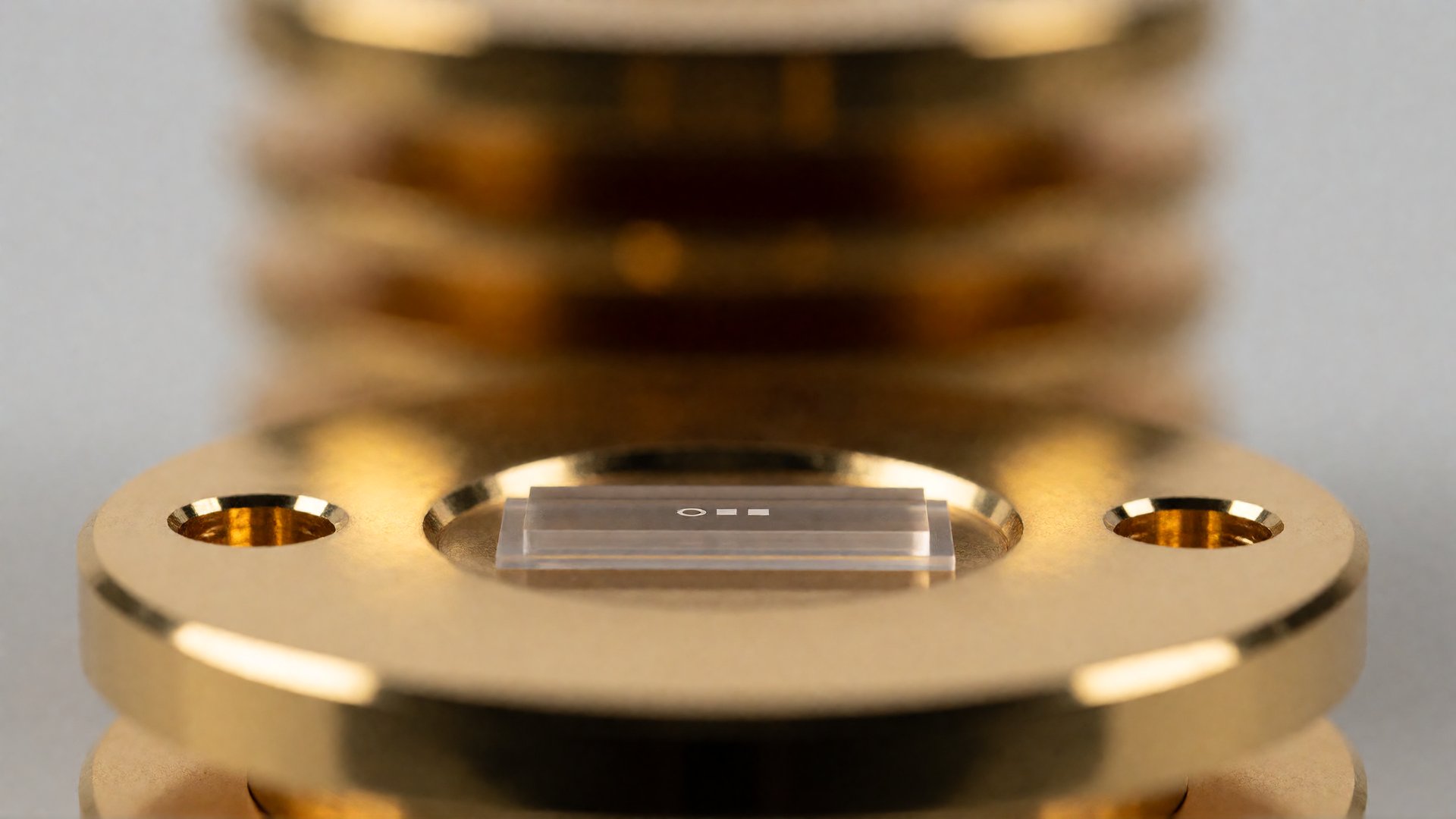
An ordinary computer has a processor that does the calculations and a working memory that briefly holds data while the calculations run. Researchers at ETH Zurich, the Swiss technical university, have now built this division of tasks into a quantum computer too: a computer that calculates according to the rules of quantum physics. What makes it special is the memory. It stores information as tiny vibrations. The team of physicist Yiwen Chu described the work in July 2026 in the scientific journal Science.
Calculating and remembering separately
The calculations are done by a qubit, the basic computing unit of a quantum computer. The memory consists of small parts that can vibrate. For a calculation, the qubit takes a vibration out of the memory, changes it and writes the result back.
The qubit is superconducting: it is made of a material that conducts electricity without resistance when it is very cold. Many quantum computers work with such qubits. According to ETH Zurich, calculating and storing are usually more closely intertwined in them than in this new design.
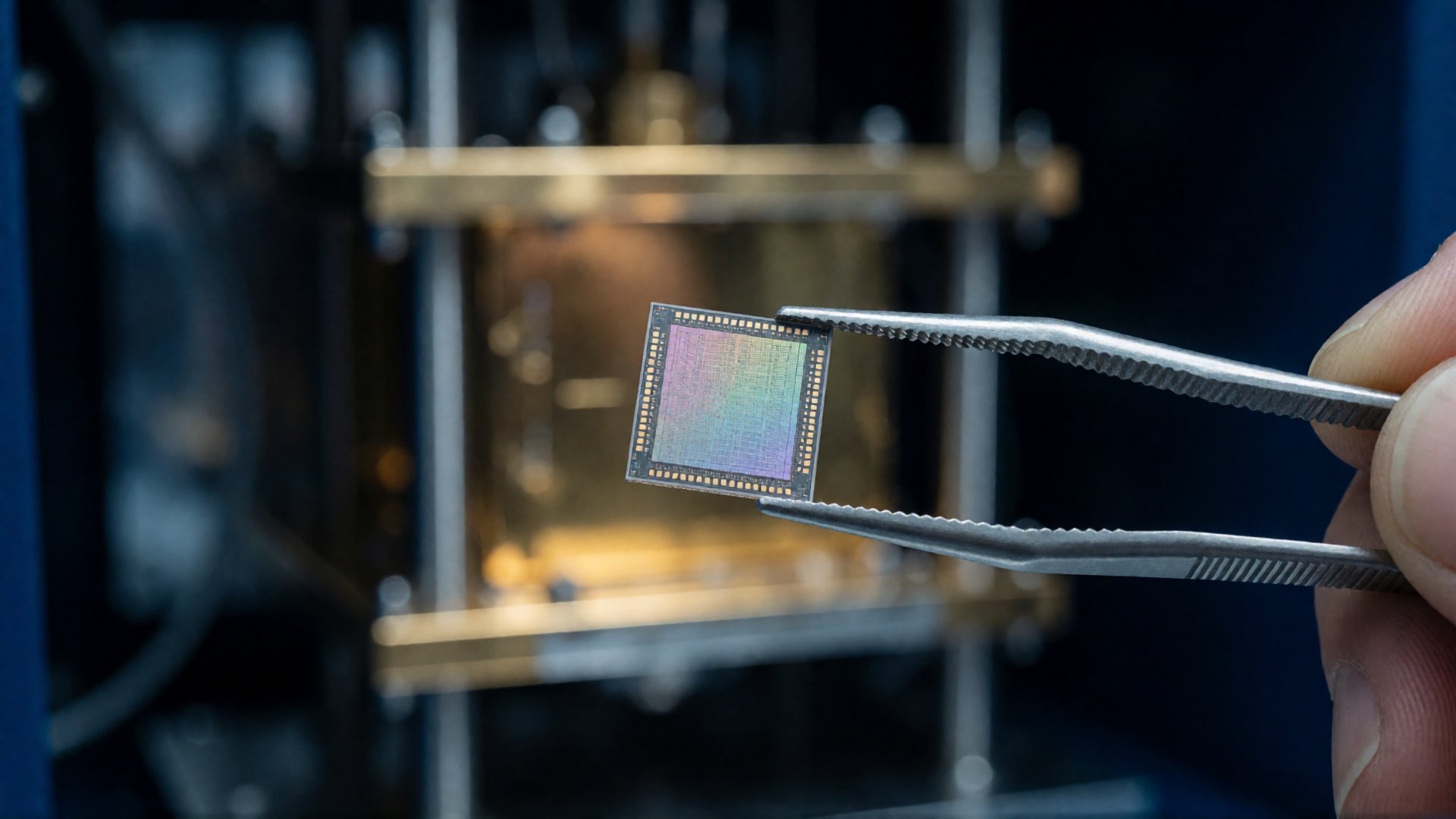
The whole chip is about 7.5 millimetres long, 2.5 millimetres wide and 1 millimetre high. That makes it roughly as wide as a small fingernail.
Why a vibrating memory?
Superconducting qubits are now often paired with a memory that works with electromagnetic waves. That type is well developed: researchers can read and change the information in it very precisely. But such a memory is fairly large and takes up a lot of space.
According to the researchers, the mechanical resonators from ETH Zurich are much smaller. A resonator is a tiny part that can vibrate in a few fixed ways, like a guitar string that produces overtones as well as its basic note. Each way of vibrating can store information separately. One resonator therefore offers several memory slots at once.
According to the team, the vibrations also hold on to the fragile quantum information for longer before it fades. That matters for calculations with many steps, where the information has to be kept along the way.
Two test calculations
The team tested the chip with two calculation methods. The first is the quantum Fourier transform, a calculation step that according to ETH Zurich is needed in many quantum programs. The second works out after how many steps a pattern in a series of numbers repeats itself. Both tests worked. According to the university, it is the first time that mechanical resonators together with superconducting qubits have carried out quantum calculations in an experiment.
This is a test set-up with a limited number of parts. The next step is to show that the design keeps working reliably when more qubits and resonators are added. Chu's team is now working on that. According to ETH Zurich, the work lays the foundation for a quantum computer that is fully programmable. Many steps will follow before such a machine does real work for research and industry.
What does this mean for the road to the singularity?
Quantum computers will be able to do some calculations much faster than ordinary computers. For that, though, they need many more qubits, and much more memory in a small space. A memory that is small, has several slots per part and holds information for longer can help with that. This chip shows for the first time that such a vibrating memory can really take part in calculations. If the design can be scaled up, a compact and powerful quantum computer comes a step closer.
What is the technological singularity? Read the explanation →