Nederlands
Chinese space station cools atoms to 9.7 trillionths of a degree above absolute zero
On board China's Tiangong space station, a cloud of about 20,000 atoms has been cooled to roughly a quarter of the previous record temperature. In weightlessness, researchers could also observe the cloud for seven seconds, against 1 to 2 seconds in earlier records.
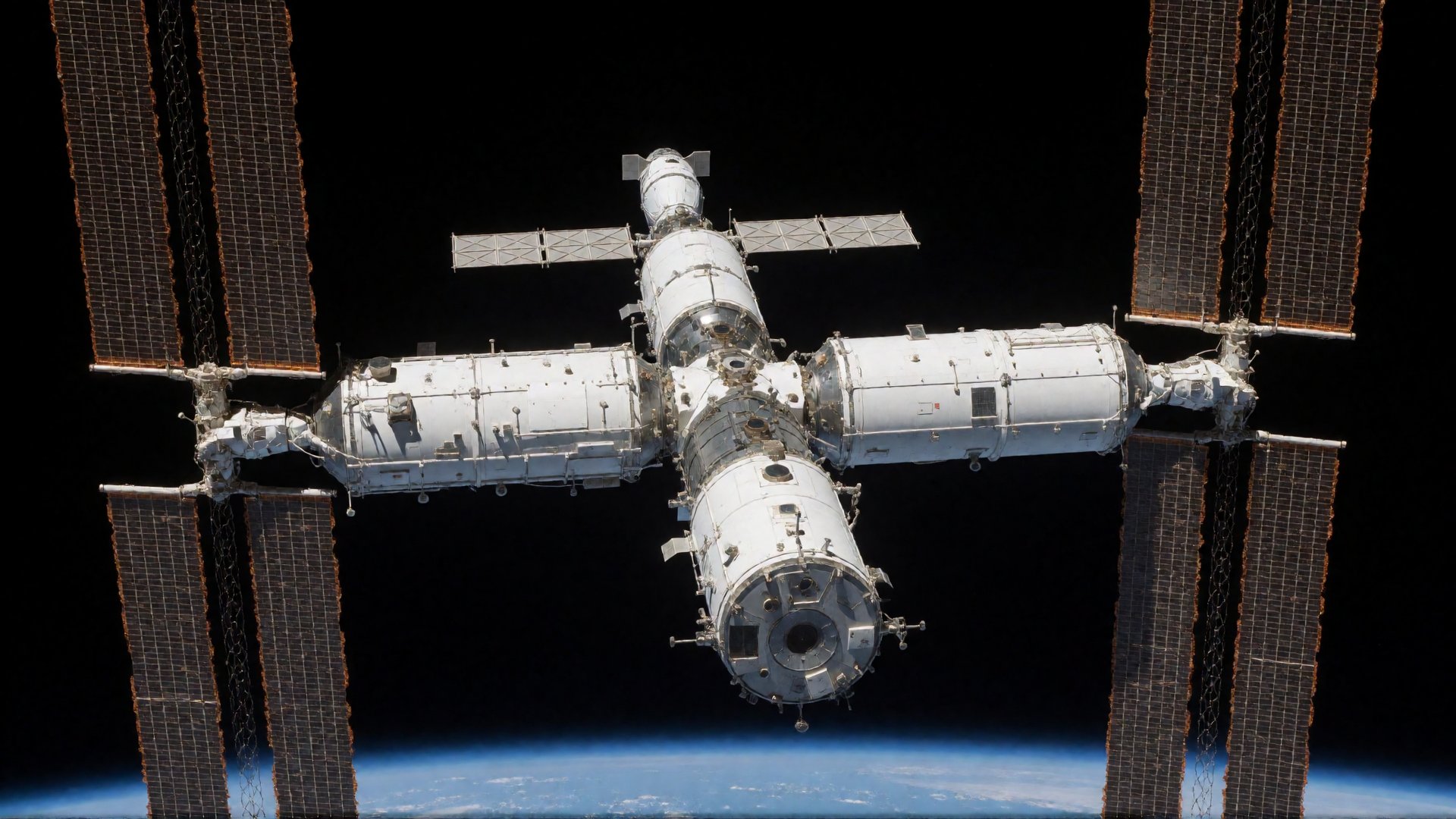
Researchers on board China's Tiangong space station have cooled atoms further than ever before, a Chinese team reported on 5 November in the journal Science. A cloud of about 20,000 rubidium atoms reached 9.7 trillionths of a degree above absolute zero. Absolute zero, minus 273.15 degrees Celsius, is the lowest temperature that can exist. In scientific terms, the new value is 9.7 picokelvin, with a margin of error of 7.0 to 12.9 picokelvin.
The previous record was 38 picokelvin, set in 2021 by scientists who dropped atoms down a drop tower in Bremen. On the International Space Station (ISS), NASA's Cold Atom Laboratory reached 52 picokelvin. The new value is therefore about a quarter of the old record temperature.
Temperature tells how fast particles move. So the team released the cloud of atoms and measured how slowly it spread out. The temperature follows from that speed. The record therefore applies to the atoms, not to the device or the space around it.
Why this had to happen in space
At such low temperatures, atoms form a Bose-Einstein condensate: they no longer behave as separate particles, but together as one wave. Physicists want to watch such a cloud for a long time, because small effects only become visible after a long time. On Earth this does not work well. Gravity pulls the cloud down, so it sinks as it falls and cooling works less well. A released cloud also quickly drops out of view.
Physicist Wolfgang Ketterle of the Massachusetts Institute of Technology, who received the Nobel Prize in 2001 for work on such condensates and did not take part in this research, worked this out for the Chinese state broadcaster CGTN. In the seven seconds that the cloud has now been observed, it would fall about 250 metres on Earth. That would need a vacuum chamber of that height. In the drop tower the cloud was visible for 2 seconds, on the ISS for 1 second.
How the atoms became so cold
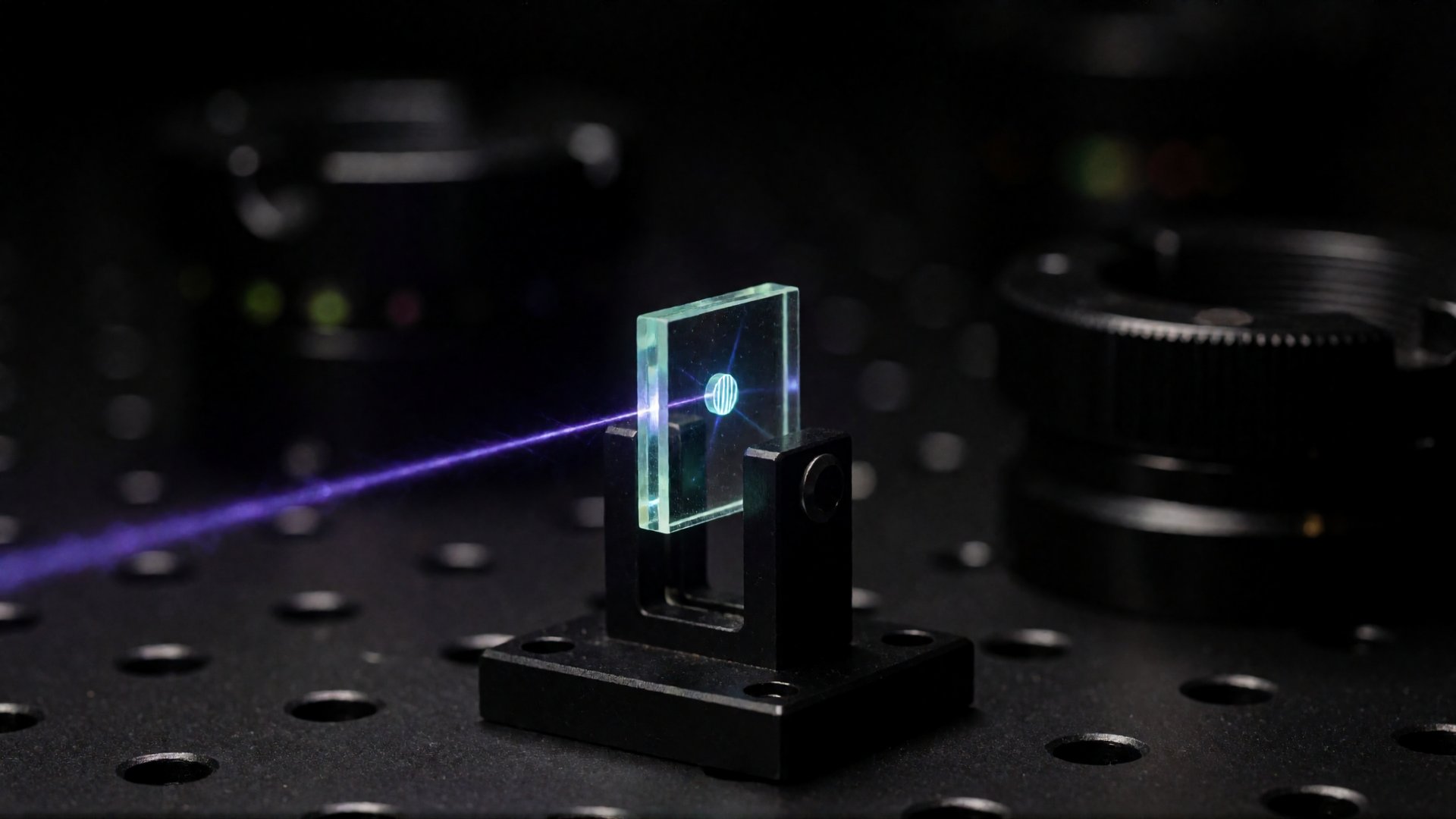
The device is in Mengtian, one of the laboratory modules of the station, and holds the atoms with laser light: a light trap. Earlier space records came from magnetic traps, which hold atoms with magnetic fields. Nobody had cooled atoms this far in weightlessness with a light trap before. A light trap gives more freedom, because it also works for atoms that do not respond to magnetic fields.
First the researchers cooled the atoms by evaporation. This works like hot coffee: the fastest particles escape and the rest stays behind colder. In a light trap, this works less well in weightlessness. So the team added a magnetic field that helped the cooling. Then they moved the cloud to a wider light trap, which they let weaken slowly. As a result, the cloud kept even less energy of motion to spread out with.
A comparable set-up on Earth is about 20 cubic metres in size and weighs 10 tonnes. The engineers brought that down to 0.7 cubic metres and half a tonne. The project began in 2011 and the device went into space in 2022 with Mengtian. Peking University, Fudan University and two institutes of the Chinese Academy of Sciences took part in the research.
What can be done with it now and later
The longer the observation lasts, the greater the chance of seeing weak, still unknown physical effects, say the first authors Xiong Wei and Jin Shengjie of Peking University. They also want to use the device to imitate how particles behave in materials, because that is often hard to study in real materials. For this they place the atoms in a grid of light, like eggs in an egg box.
A second goal is an atom interferometer in space. Such a measuring instrument splits the atom wave in two and brings the parts back together, to measure very small differences in motion. Ernst Rasel, professor of physics at Leibniz University Hannover, explains that this sensitivity grows with the square of the measuring time: measuring twice as long makes the instrument four times as sensitive. Rasel sees such instruments as the next step. With them, researchers will be able to measure how the Earth's gravity differs from place to place, test whether all objects really fall at the same speed, and test ideas about dark matter, the invisible matter that physicists suspect exists in the universe. These experiments still have to be built. Ketterle calls the result an excellent starting point for more precise measurements.
What does this mean for the road to the singularity?
Quantum technology is about controlling single atoms, and that needs particles that are almost at rest and a long measuring time. This record gives both. It is a measurement result and not yet an application, but it shows that a light trap works in space and that such a set-up is small enough for a space station. The next step is to use the device to imitate materials and to measure the laws of nature more precisely.
What is the technological singularity? Read the explanation →