Nederlands
Key part for quantum chips made in an ordinary chip factory
Researchers built a superinductor, a part that until now had to be made to order, inside an ordinary chip from a commercial factory. With it they made a small, fast sensor for quantum computers based on silicon chips.
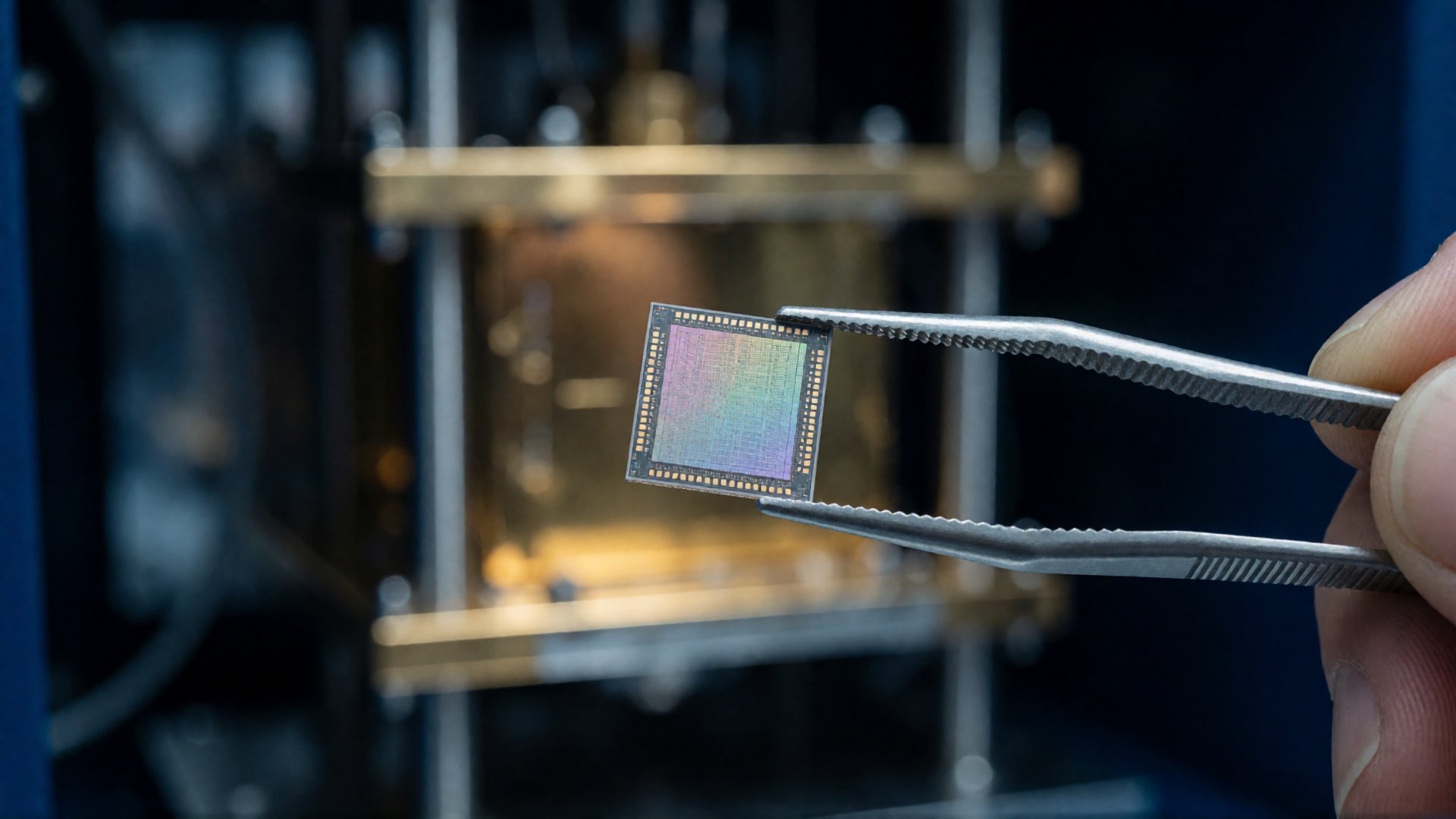
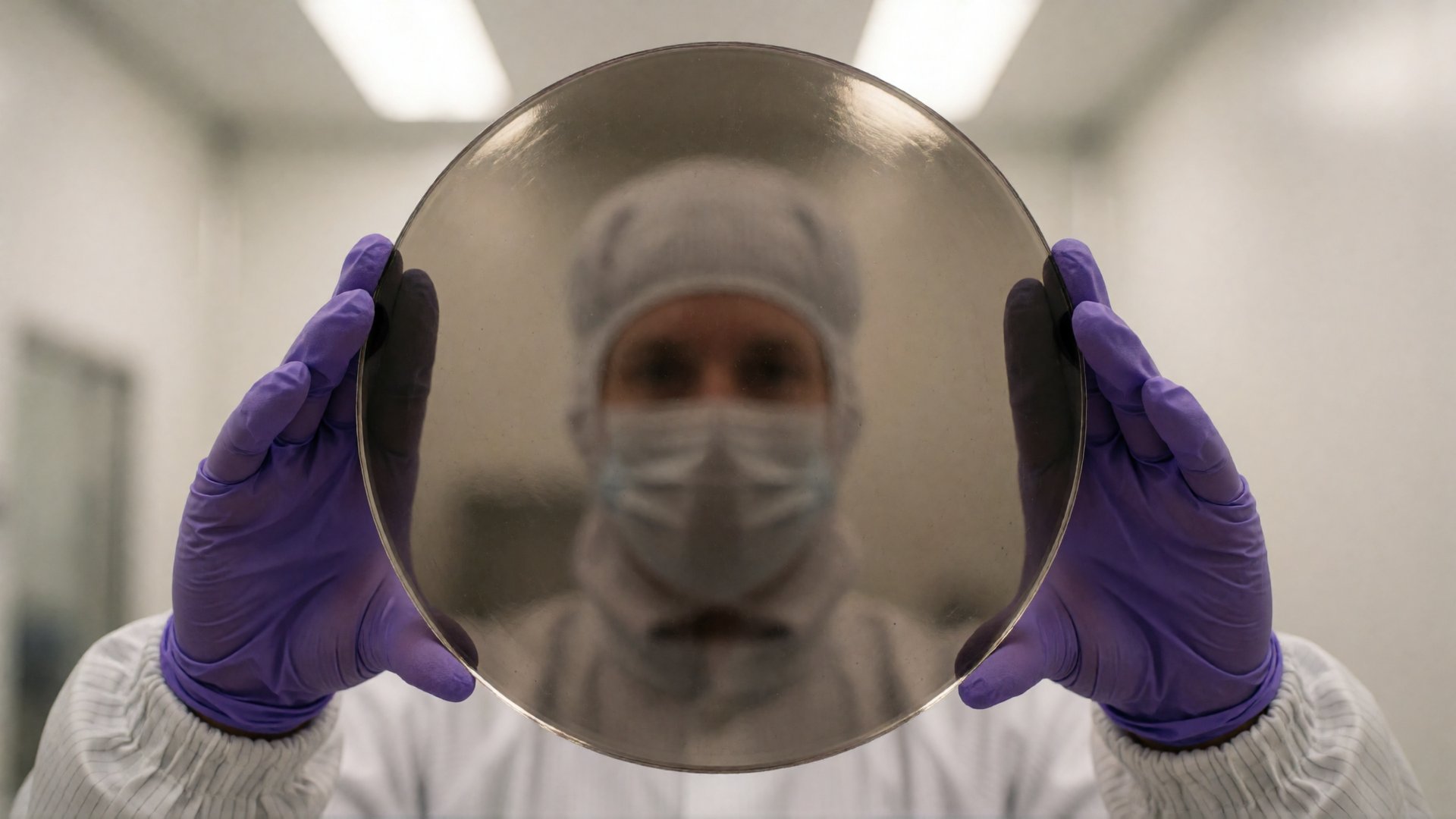
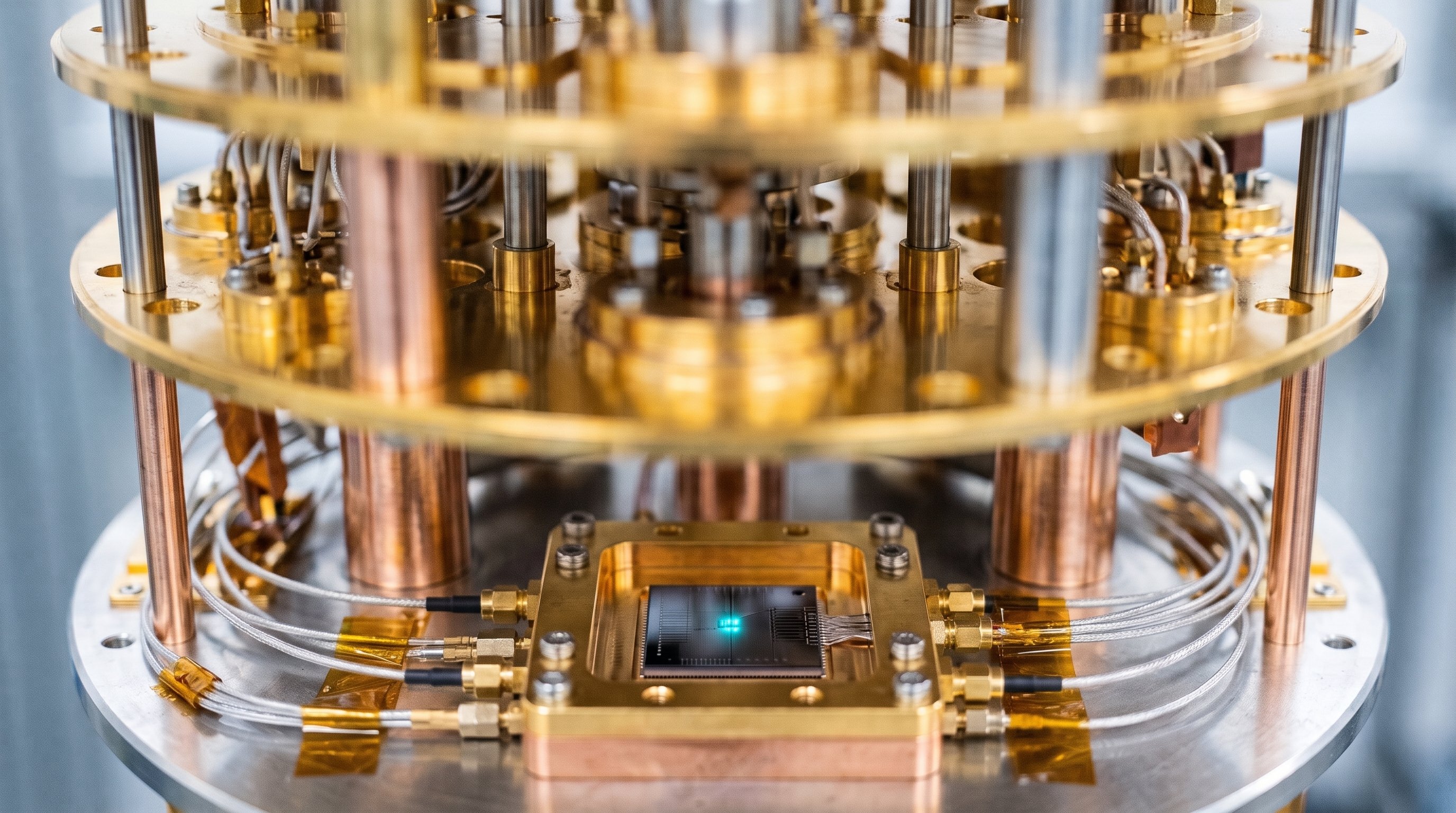
Quantum computers built on silicon chips have a big advantage: in principle they can be made in the same factories as ordinary computer chips. But some parts that such a quantum chip needs had to be built separately and to order until now. An international team now shows that one of these parts can also be made in a commercial chip factory. The research is published in the journal Nature Electronics.
Researchers took part from the nanoGUNE research centre in the Basque Country in Spain, the British quantum company Quantum Motion, the London Centre for Nanotechnology, Imperial College London and the University of Cambridge.
What is a superinductor?
An inductor, or coil, is an ordinary part in electronics. It resists quick changes in the current. Together with other parts it forms a circuit that resonates at one particular frequency, like a tuning fork at one note. Researchers use such a circuit to read very small signals from a quantum chip with radio waves.
A superinductor is a coil with an extremely high inductance that also loses almost no energy. Until now, such parts had to be made with special techniques and materials. This made them hard to combine with large-scale chip production.
The material was already there
The researchers used a standard production process from the chip manufacturer GlobalFoundries. That process already includes a thin layer of titanium nitride. At a temperature of about one degree above absolute zero (-273 °C), this material becomes superconducting: current flows through it without resistance. The electrons in the material are then slow to speed up or slow down, and this gives the layer a high inductance on a very small area.
As a result, their superinductor is tiny. According to the researchers, the sensor they built with it is more than 10,000 times smaller than it would have been with the ordinary coils from such chips.
A fast sensor
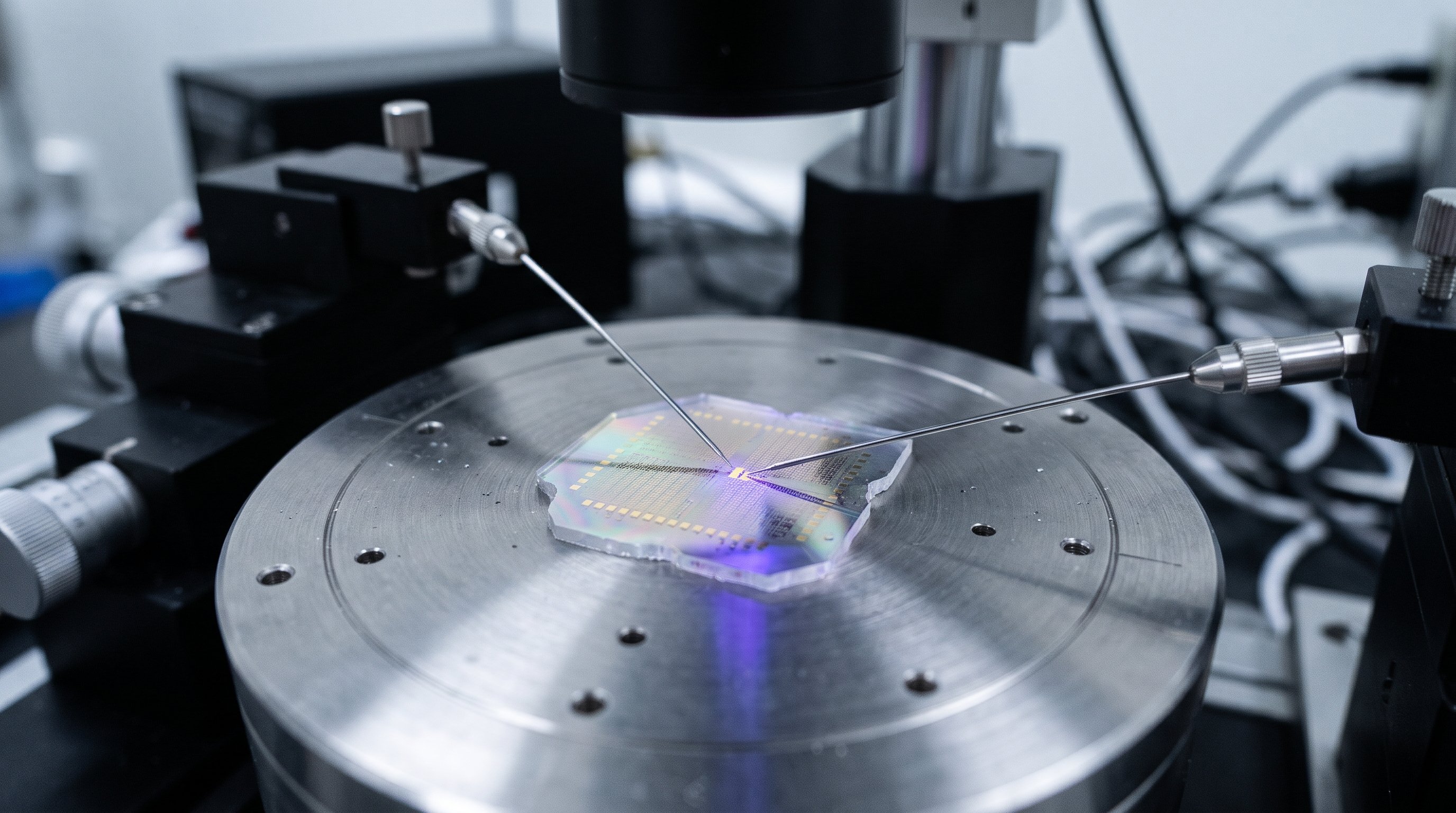
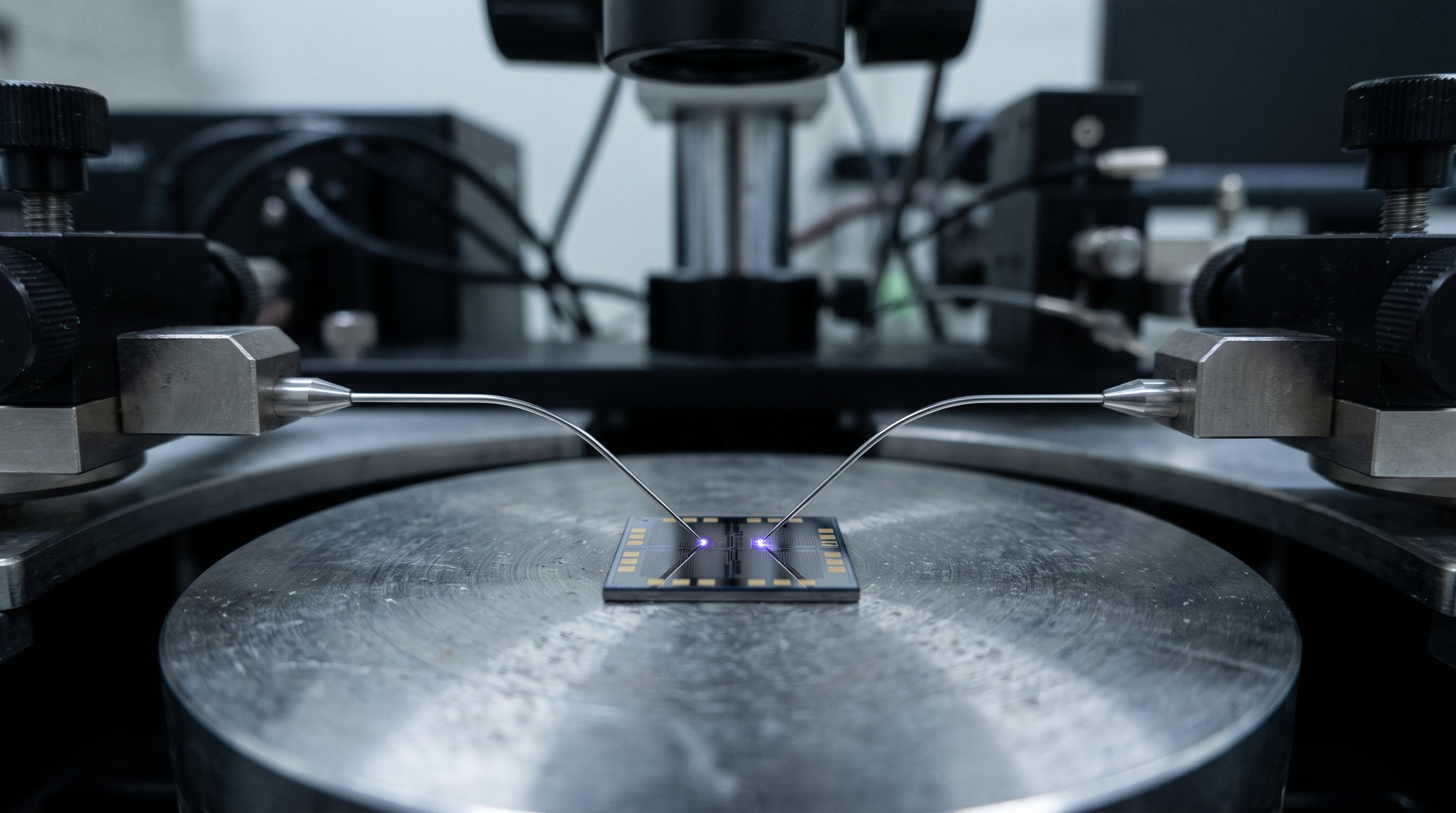
With the superinductor, the team built a sensor on the same chip that detects whether a single electron is present in a tiny pocket of silicon. Such a sensor is needed to read spin qubits: quantum bits that store their information in the spin direction of a single electron.
The sensor worked quickly and accurately. According to the researchers, it needs more than a hundred times less time to give a reliable signal than the best earlier comparable sensor. The layer also kept working in a strong magnetic field, which is needed because spin qubits are controlled with a magnetic field.
The next step is to combine the sensor with chips that hold several qubits side by side, to show that they can be read out in much less than a millionth of a second. According to the team, such coils could also be useful for radio telescopes and for low-power electronics that work at extremely low temperatures.
What does this mean for the road to the singularity?
A useful quantum computer needs a great many qubits, and every qubit has to be read out. That only works if the parts needed for this can be made at large scale, just like the billions of transistors in an ordinary chip. This research shows that an important part for this can be made in an existing chip factory, and that it is small and fast. That is a step towards quantum chips that can roll off the production line in large numbers.
What is the technological singularity? Read the explanation →
Sources
In the glossary: Chip, Quantum computer, Qubit