Nederlands
Quantum computer
A quantum computer calculates with qubits, which can be in several states at once. That lets it solve some problems much faster than an ordinary computer.
A quantum computer is a computer that calculates using the rules of quantum physics. An ordinary computer uses bits, which are either a 0 or a 1. A quantum computer uses qubits, which can be in both states at once. For some kinds of problems that brings an enormous speed-up. A quantum computer is not a faster version of an ordinary computer for everything: it is mainly meant for specific tasks.
How does it work?
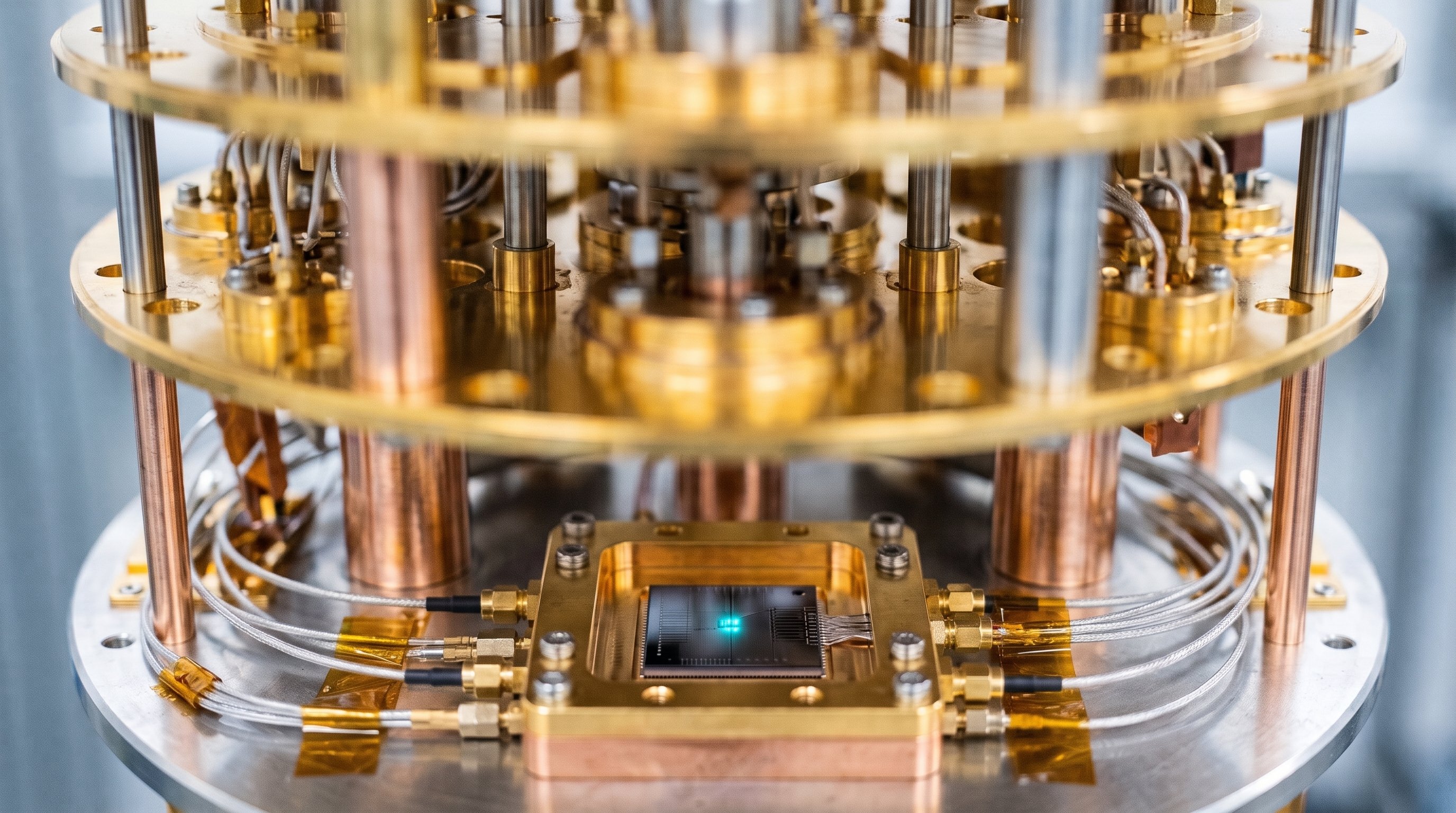
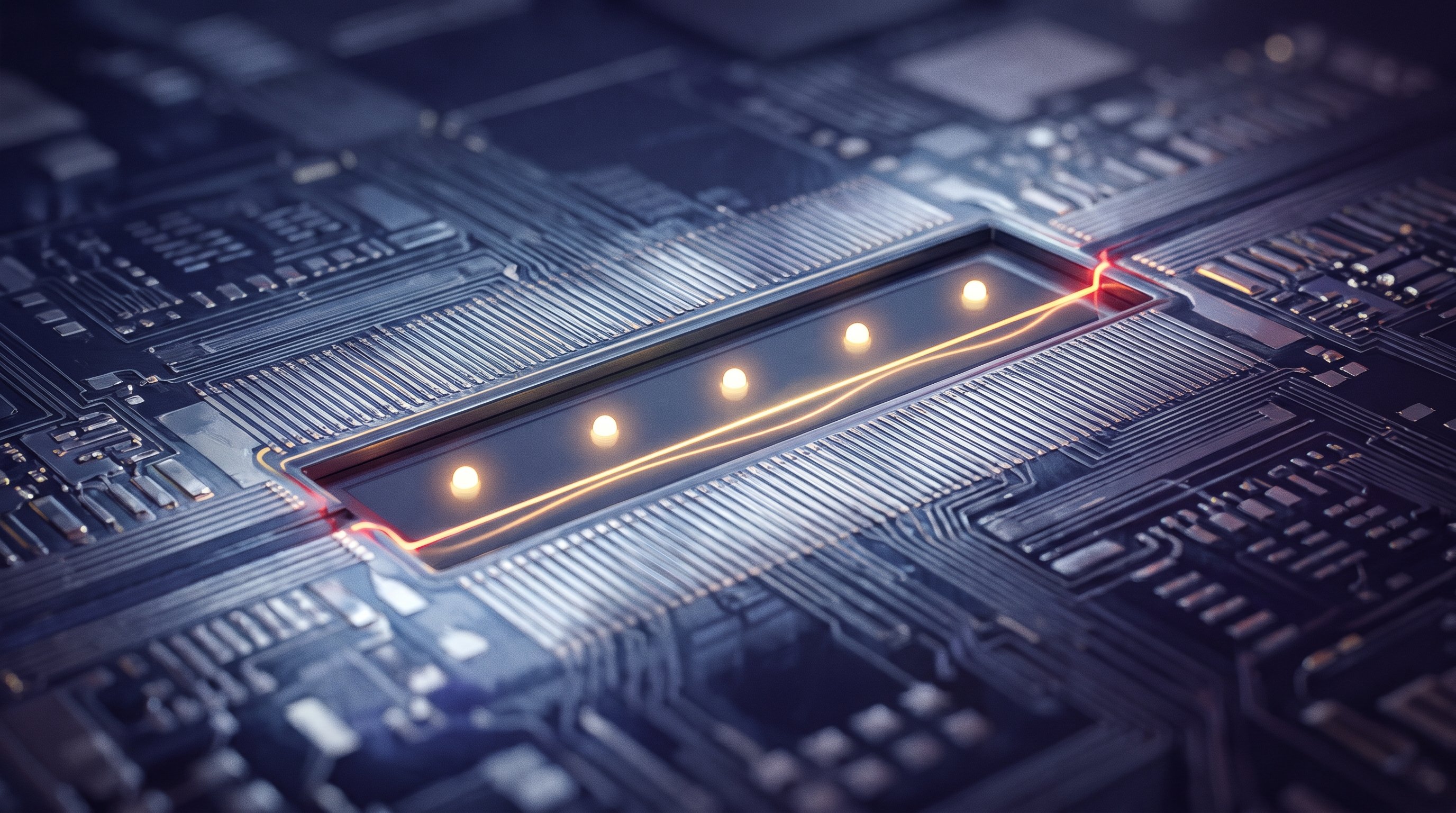
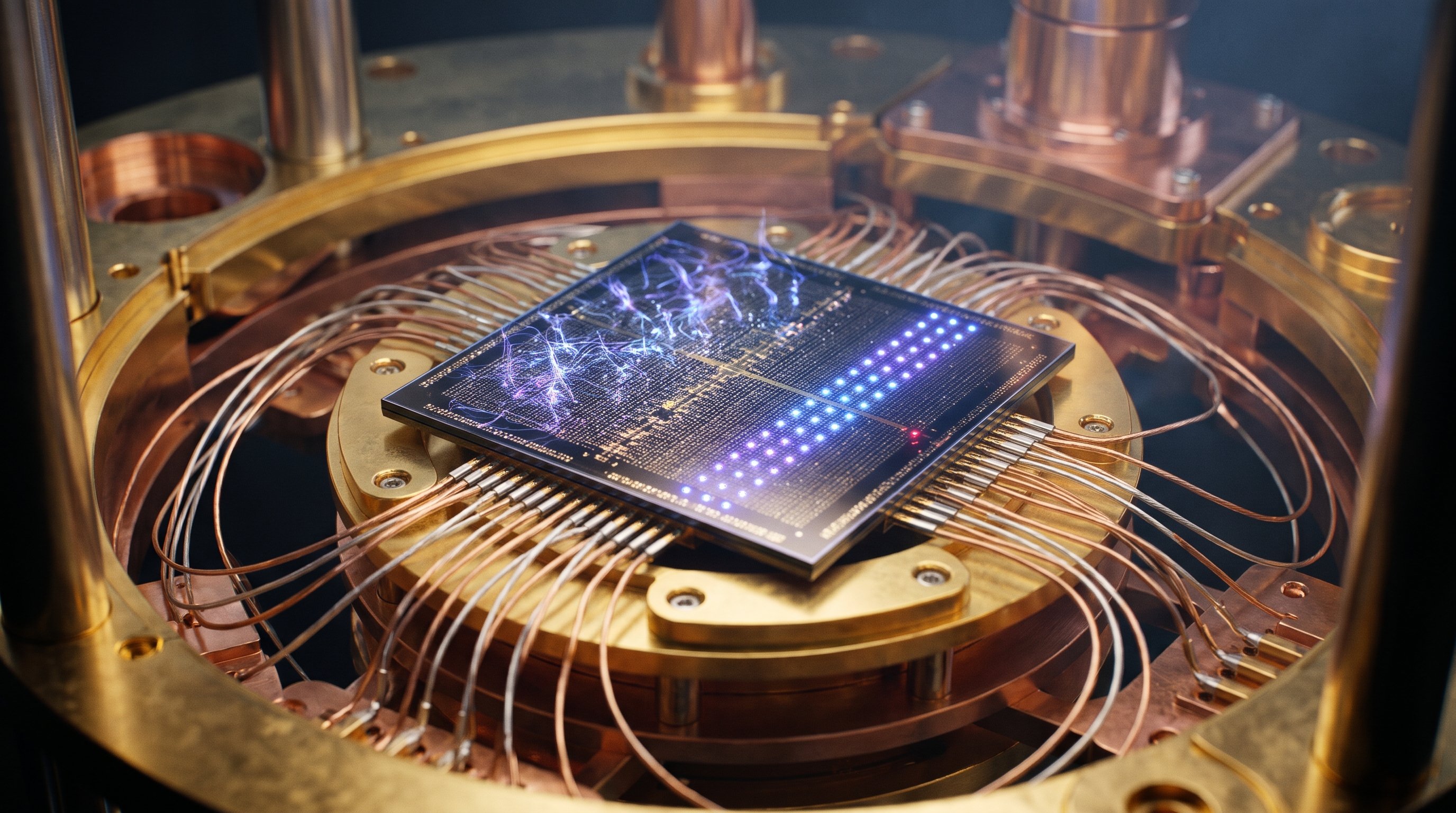
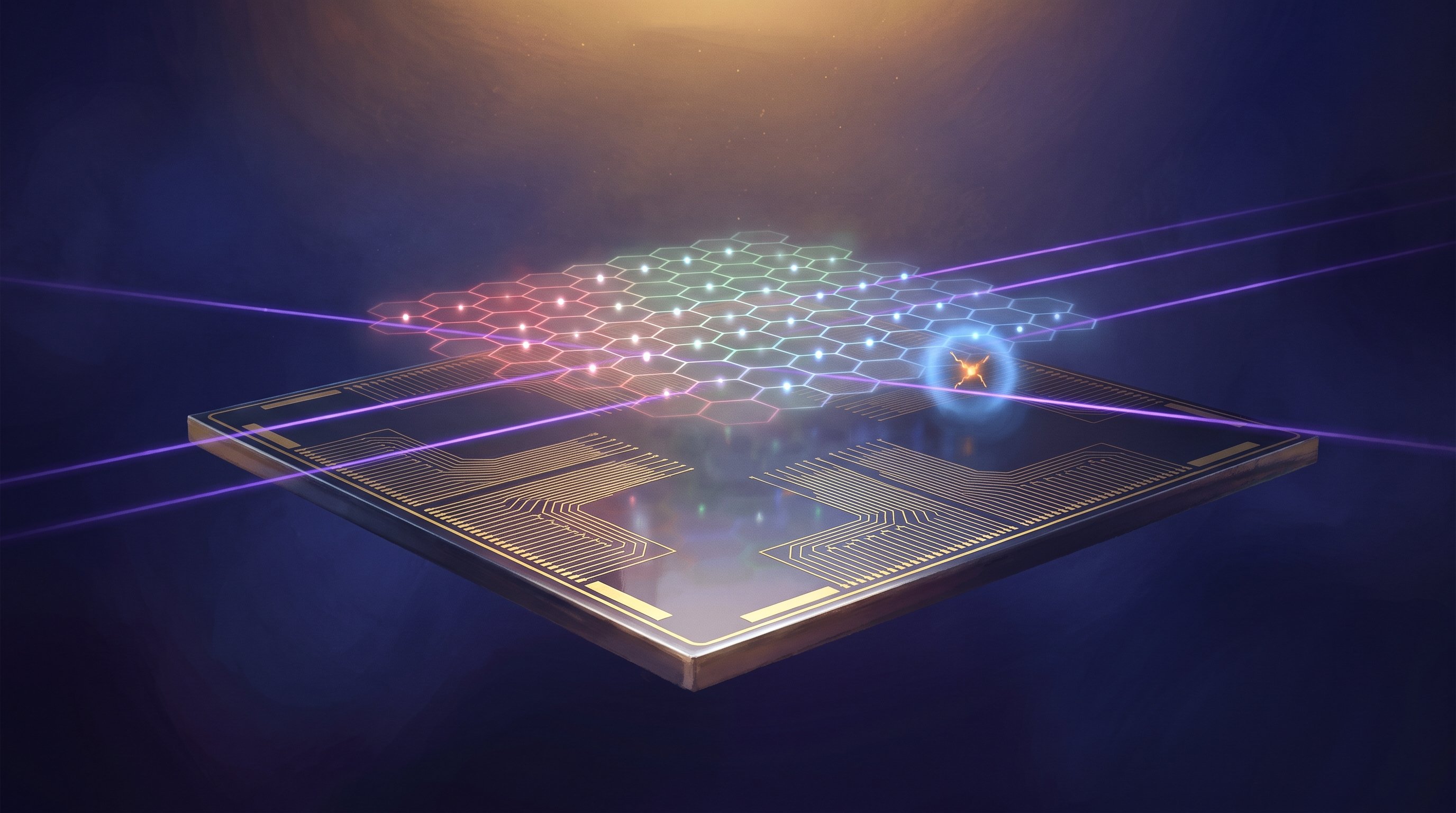
A quantum computer consists of qubits, such as superconducting loops, charged atoms or electrons in silicon, plus equipment to operate and read them. They often have to be cooled to just above absolute zero, or held in place in a vacuum with lasers. A program makes the qubits act on one another step by step, and at the end you measure the result.
The biggest challenge is that qubits are fragile. A little heat or a vibration is enough to disturb them. That is why researchers are working on quantum error correction, in which many qubits together form one reliable qubit.
Why it matters
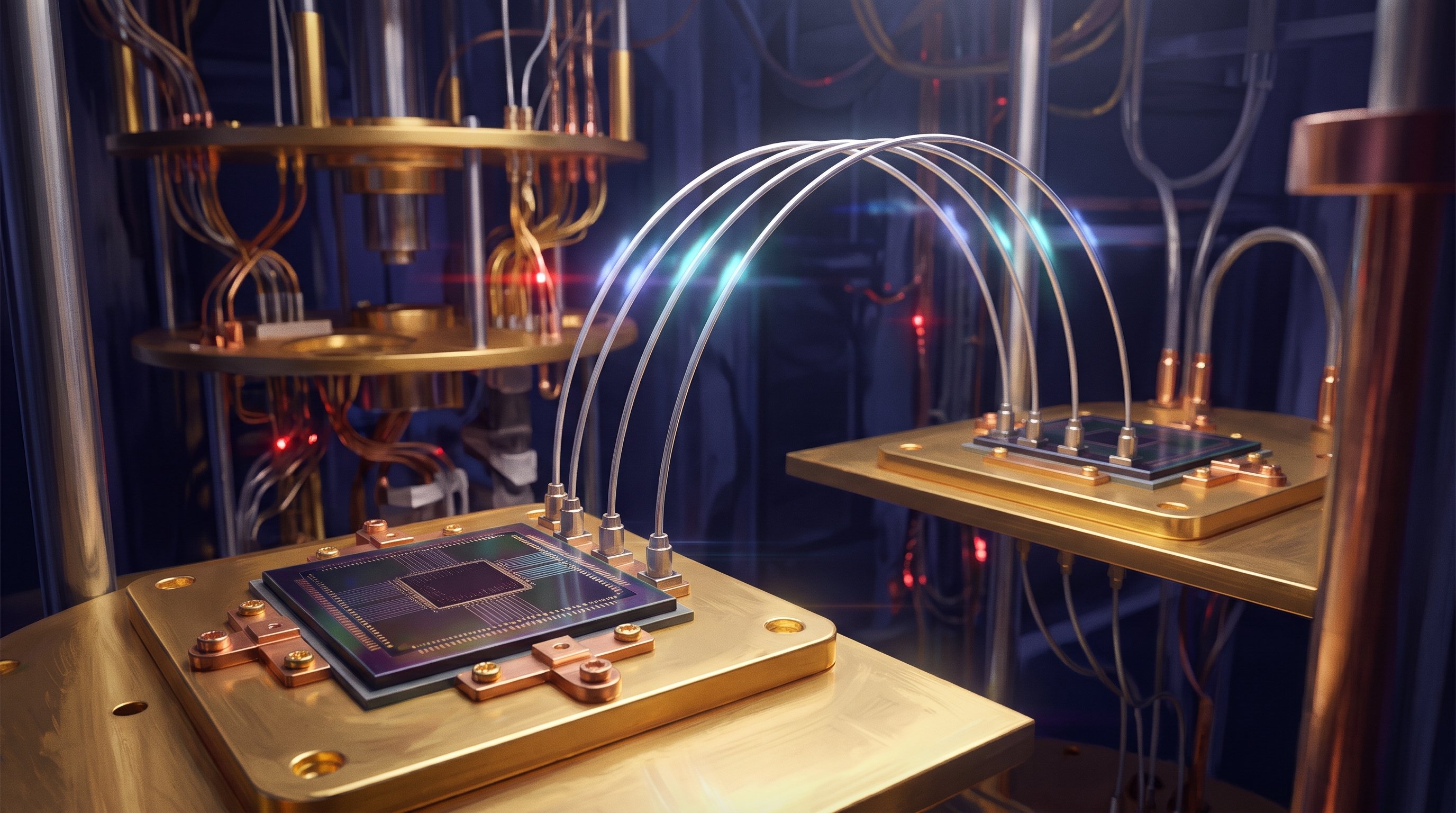
Quantum computers can calculate molecules and materials that are too complicated for ordinary computers, for example for new medicines and batteries. On Quantinuum's Helios computer, something went wrong on average only five times in a million per check round, ten times better than the previous record (link). IBM connected two quantum chips of 120 qubits each with four superconducting links of 80 centimetres, a step towards quantum computers built from separate modules (link). Another report concerns what such a machine might one day break: the French company Alice & Bob calculates that a quantum computer with some 23,000 qubits could crack the widely used RSA encryption in just over three days, far fewer qubits than previously thought (link). Such a machine does not exist yet.
Articles about Quantum computer
-
DeepMind: AI agents find two weak spots in outdated RSA-1024 encryption
AI agents from Google DeepMind, guided by humans, found two weak spots in outdated 1024-bit RSA encryption. It can therefore be attacked with less computing power than thought. Keys of 2048 bits or longer remain safe, according to DeepMind.
-
PSI: AI found proof of a 2008 conjecture on the limits of quantum computers
The US company Physical Superintelligence says its AI system found a proof of the Aaronson-Ambainis conjecture, an open question from 2008 about when quantum computers are much faster. The program Lean has approved the proof; fellow researchers are now checking it.
-
One short measurement beforehand halves a qubit's errors
A team led by the University of Regensburg had a qubit briefly measure which frequency it was on before each series of calculations, then adjusted the controls automatically. Errors fell by about 54 per cent. The next step is more qubits at once.
-
Bacteria as a calculator: swimming through a maze, they test many solutions at once
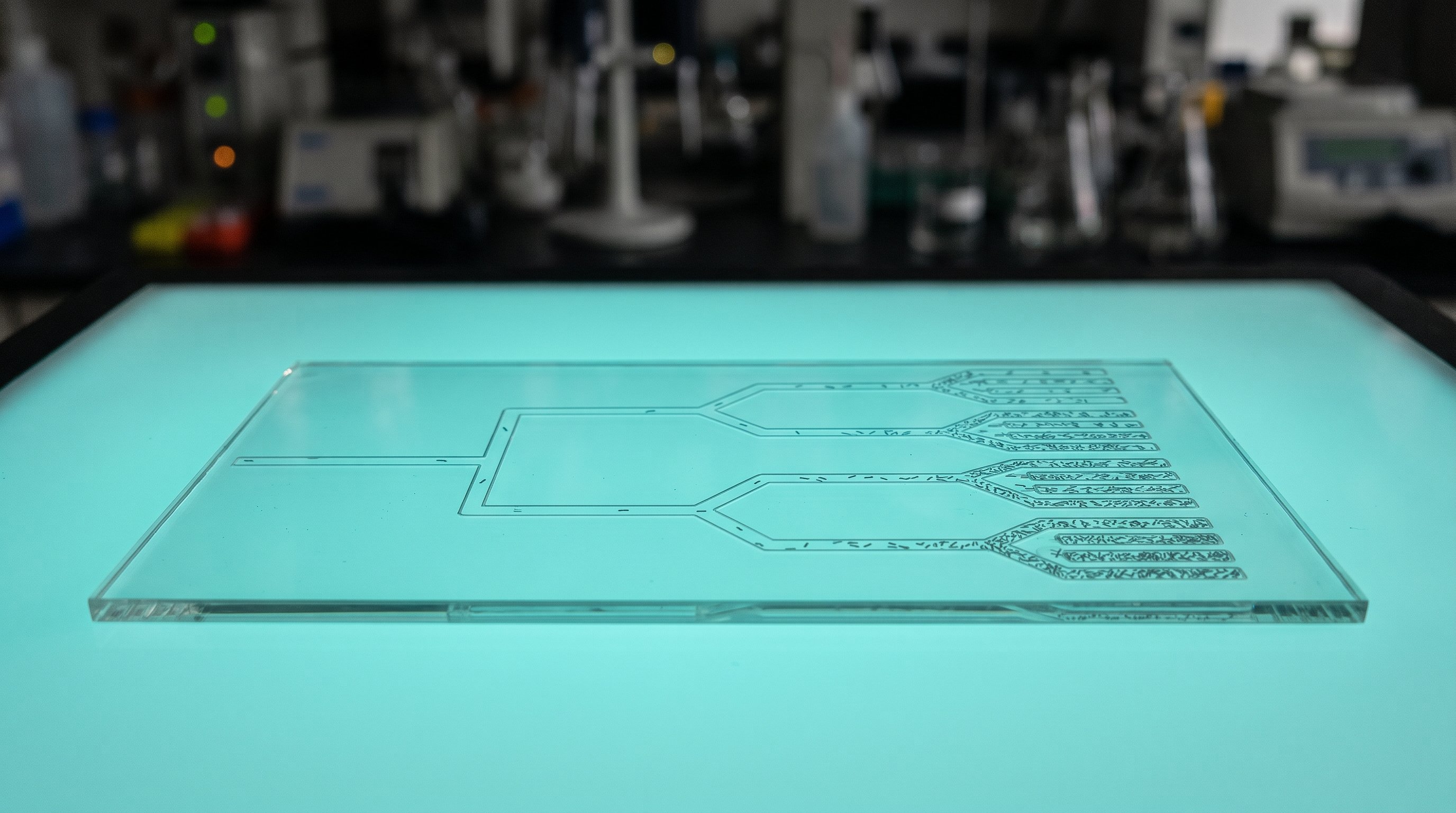
Researchers led by Canada's McGill University have bacteria solve a calculation puzzle by letting them swim through a network of tiny channels. Because bacteria divide, the number of "calculators" grows by itself. It is a first trial.
-
New calculation: quantum computer needs far fewer qubits to break internet encryption
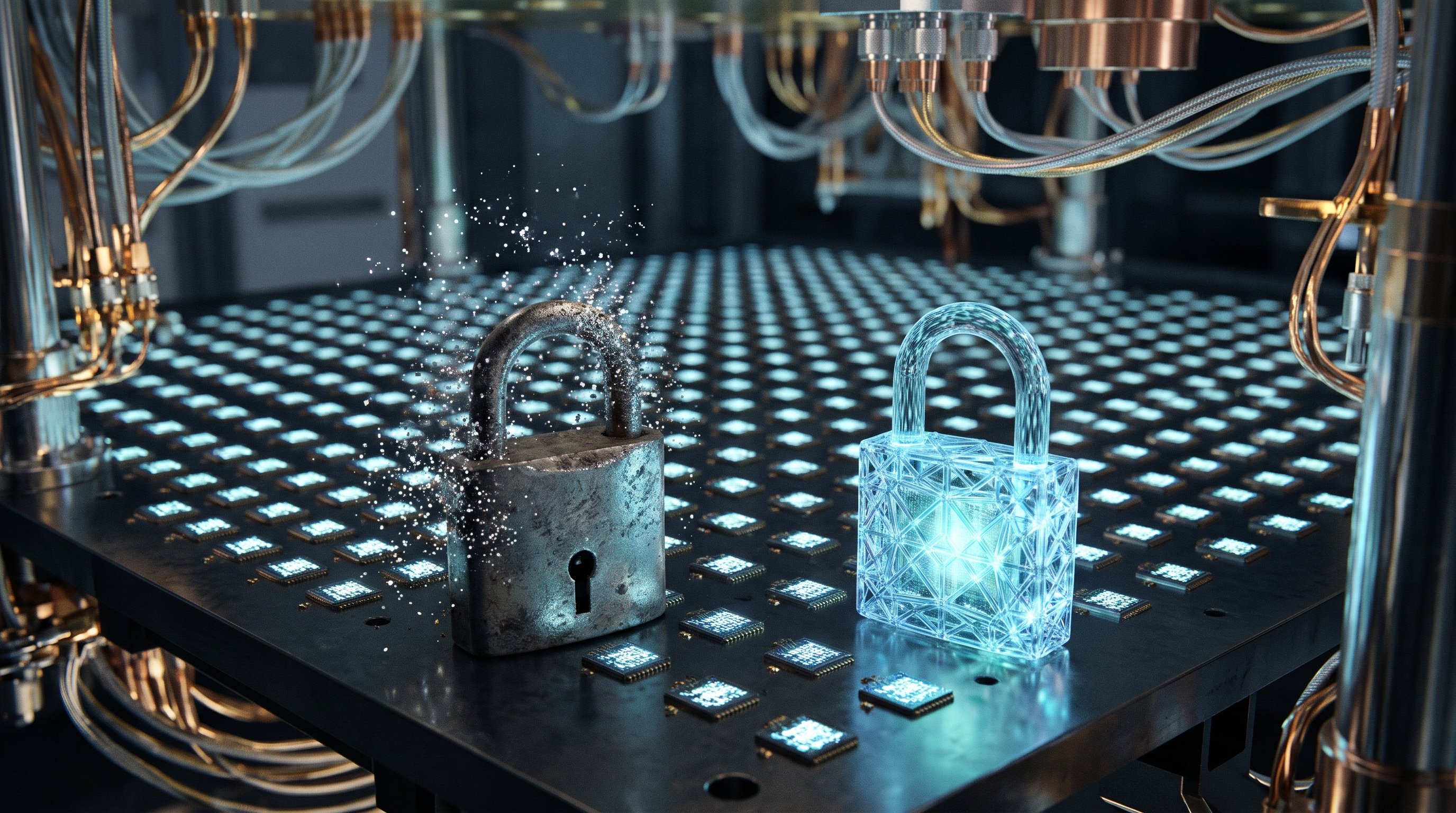
French quantum company Alice & Bob calculates that a quantum computer with about 23,000 qubits could break the widely used RSA encryption in just over three days. Such a machine does not exist yet, but the calculation shows why switching to quantum-safe encryption now is wise.
-
Tencent lets AI build its own tools for protein research and mathematics
Tencent has presented the second version of its research AI, Hyra. It delivers not only solutions but also tools that can be used again later. Models for proteins and molecules are already public, so other researchers can now test them themselves.
-
Google demonstrates magic state cultivation on Willow: 40 times fewer errors
Google Quantum AI tested a new way to make magic states on its Willow chip: special states that a quantum computer needs for its hardest operations. The errors in them became about 40 times smaller. The result is published in Science.
-
German company makes a molecule that stores quantum information and can pass it on with light
The German company NVision and researchers from Ulm and Jerusalem describe in Nature a molecule of carbon and hydrogen that stores quantum information and can pass it on with light. Such a building block could later link quantum computers together.
-
Start-up PSI uses AI to help publish five quantum proofs that a computer can check
Physical Superintelligence has used its own AI system to tackle five open questions in quantum information theory. Each proof is also written in Lean, a program that checks proofs step by step. Other researchers can now check them for themselves.
-
IBM links two quantum chips with 80-centimetre cables
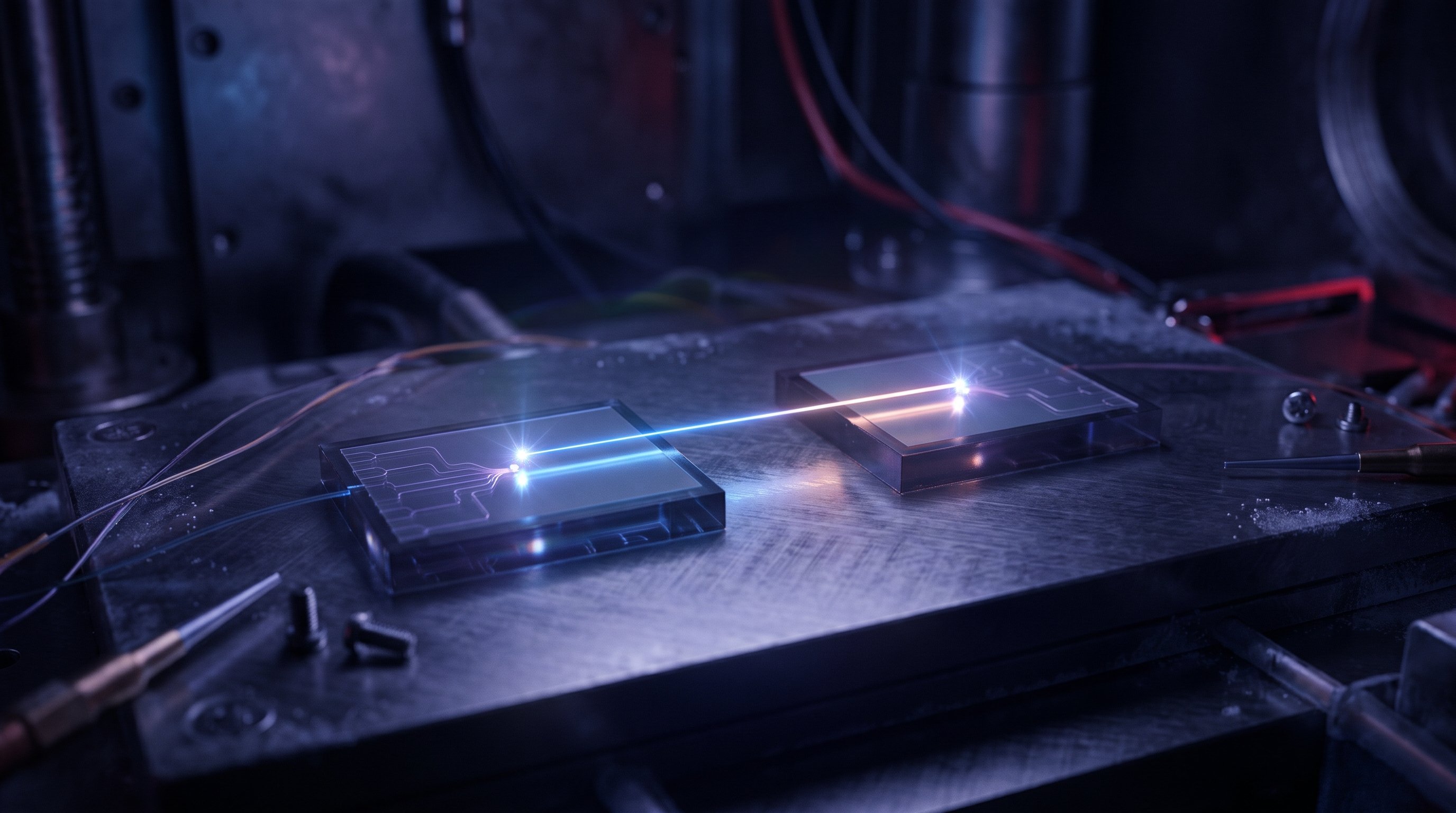
IBM researchers connected two quantum chips of 120 qubits each with four superconducting links of 80 centimetres. The quantum information came across with an average fidelity of 99 per cent. It is a step towards quantum computers built from separate modules.
-
What mathematicians think of OpenAI's 372 maths results
In early October, OpenAI put 372 results on open maths questions online. Mathematicians are impressed, but checking them will take months. What has been claimed, and what do experts think?
-
Japanese researchers control five quantum bits in silicon at once, with almost no errors
Researchers at RIKEN in Japan controlled five quantum bits on a silicon chip at the same time, through one shared control line. They found the biggest source of errors and kept accuracy at around 99.9 per cent. That helps to build larger quantum computers.
-
Quantum computer keeps chaos under control on 100 qubits: a step towards fault-tolerant computing
Researchers from Rutgers, IBM and other institutions had a quantum computer check and correct itself thousands of times while it was computing. It is not yet a working fault-tolerant quantum computer, but it is an important building block for one.
-
Quantum computer catches its own errors so well that only 5 in a million remain
Quantinuum's Helios quantum computer set a new record in error correction: on average, something went wrong five times in a million checking rounds. That is ten times better than the previous record. The next step is to show this for more complex calculations too.
-
Nvidia simulates a 104-qubit quantum circuit on a European supercomputer, real errors included
Nvidia and the German research centre Jülich used the JUPITER supercomputer to simulate how a 104-qubit quantum computer makes an important building block, including the errors that real hardware makes. This lets designs be tested before they are built.