Nederlands
First nuclear reactor runs under the stands of a stadium in Chicago
On a squash court under a stadium in Chicago, a team led by Enrico Fermi has started the first chain reaction that keeps itself going and can be controlled. The reactor produced about half a watt, but the principle has been proven.
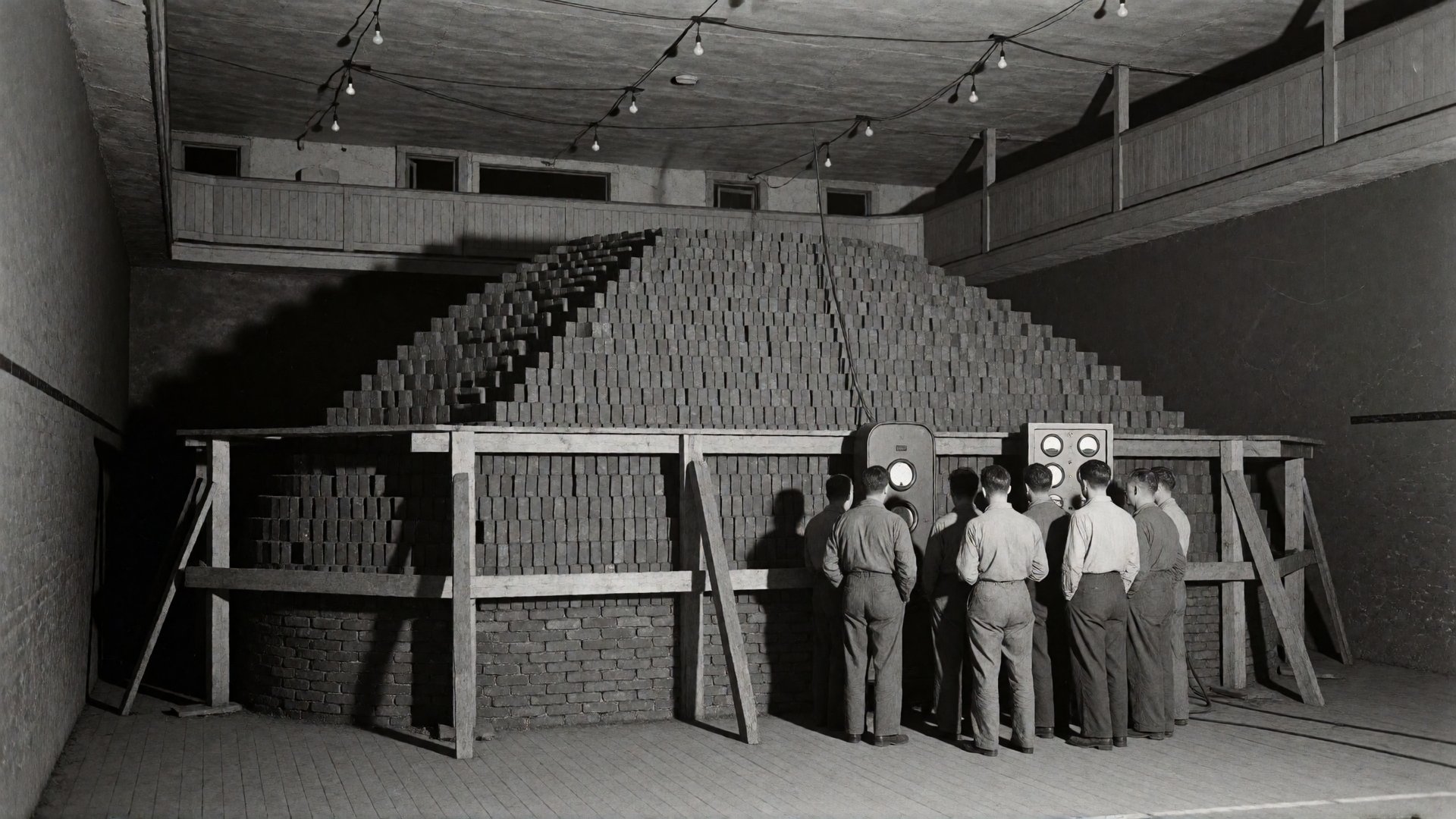
CHICAGO, DECEMBER 1942 - On a squash court under the west stands of Stagg Field, the stadium of the University of Chicago, something was achieved on 2 December that had never been done before. At 3.25 pm, a team led by the Italian physicist Enrico Fermi started a chain reaction in uranium that kept itself going and that the researchers could stop whenever they wanted.
Four-year-old news
That atomic nuclei can split has only been known since the end of 1938. The German chemists Otto Hahn and Fritz Strassmann then found a much lighter element in uranium that had been exposed to radiation. Lise Meitner and Otto Frisch explained what had happened: the heavy nucleus had split in two. This releases an enormous amount of energy, per gram far more than burning coal.
It soon turned out that splitting also releases a few neutrons, tiny particles that can split another nucleus. That was the start of the idea of the chain reaction. One split causes two, those cause four, and so on, like a row of dominoes that branches out at every step.
Why it is so difficult
In an ordinary lump of uranium, this does not happen. Most neutrons fly away or disappear without splitting a nucleus. They also move too fast: the very nuclei that split easily are hit by a slow neutron much more readily than by a fast one.
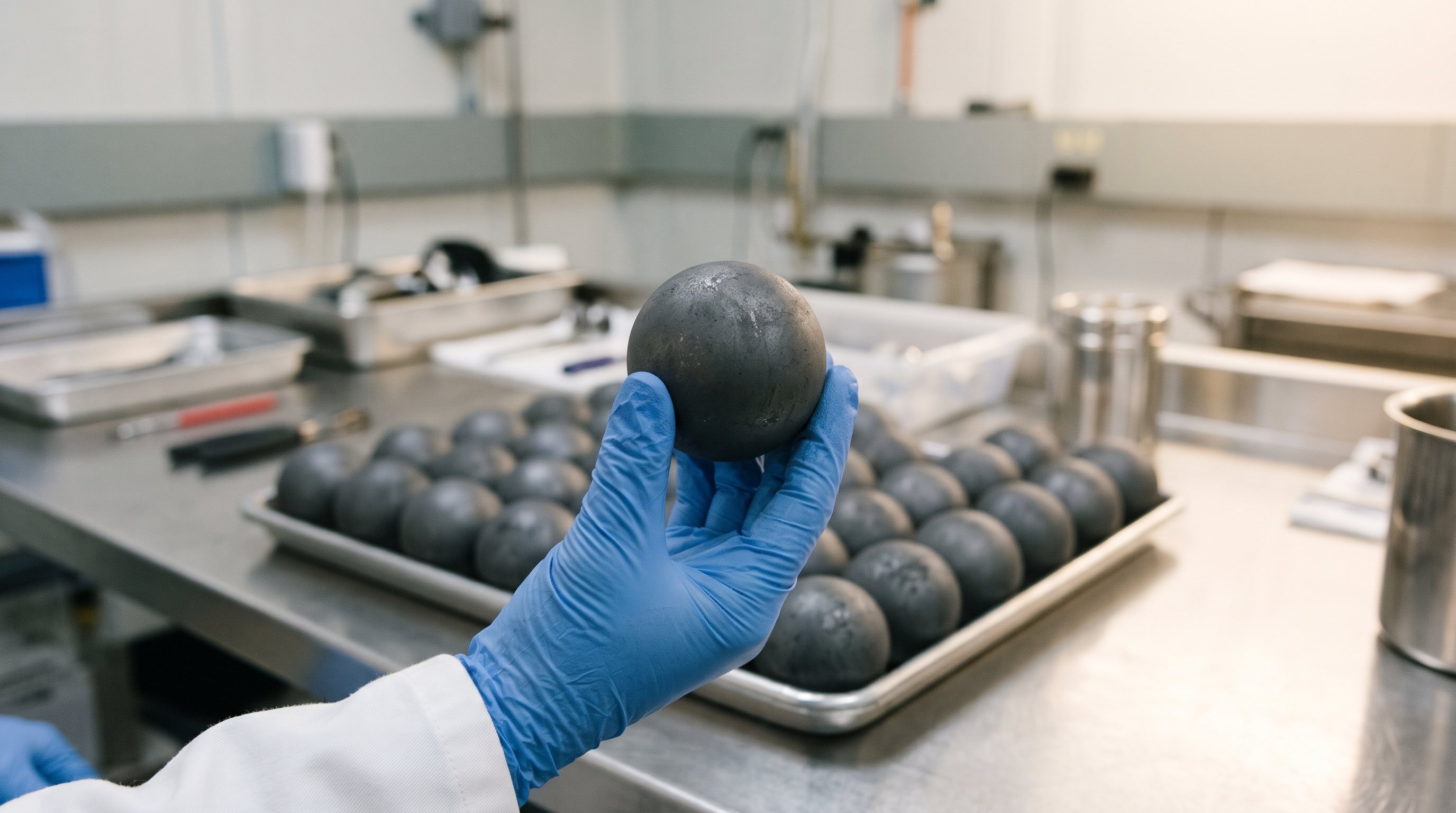
Fermi's solution is a pile. Chicago Pile-1 looks nothing like a machine. It consists of some 40,000 blocks of graphite, the material pencil lead is made of, with 19,000 pieces of uranium and uranium oxide in between. A neutron that shoots out of the uranium bumps into carbon atoms in the graphite and so loses speed, like a billiard ball that is slowed down again and again. After that, it hits the next uranium nucleus more easily.
To make sure the reaction does not run out of control, rods containing cadmium stick into the pile. Cadmium captures neutrons. As long as the rods are in, little happens. When they are slowly pulled out, more neutrons remain and the reaction grows.
The last rod
According to one account, 49 people watched that afternoon. On Fermi's instructions, the young researcher George Weil pulled the last cadmium rod out of the pile step by step. The meters rose and kept rising: the reaction kept itself going. Then the rods were pushed back in and the reaction stopped.
The reactor produced about half a watt, less than a small light bulb. That does not matter. It proves that people can release the energy in atomic nuclei at a calm, controllable pace.
Looking back from 2026
The experiment was secret and was part of the American nuclear programme during the Second World War. In 1943, the reactor was rebuilt outside Chicago as Chicago Pile-2. After the war, nuclear power grew from this beginning: power stations that supply electricity without emitting CO2 while generating it.
That world is now back in the news about AI. Data centres need more and more electricity, all day long, and nuclear power is seen as a serious option for this. This is how the pile on that squash court returns in the story of computing power.