Nederlands
Gordon Moore: the number of components on a chip doubles every year
In the magazine Electronics, Gordon Moore of Fairchild writes that the number of components on a chip has roughly doubled every year so far, and that this can continue for at least ten years. In ten years' time he expects 65,000 components on one chip.
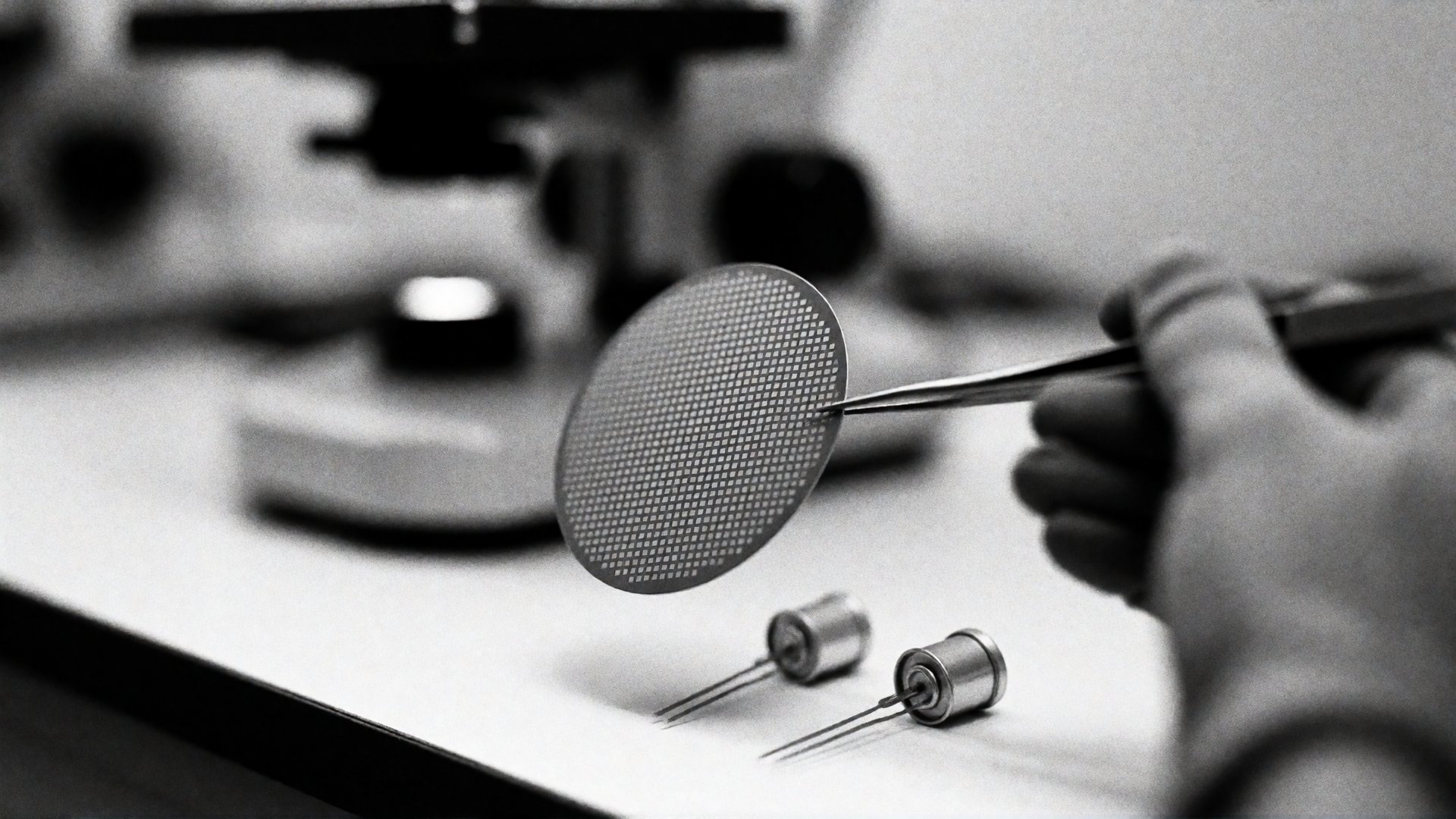
NEW YORK, APRIL 1965 - In the trade magazine Electronics of 19 April, Gordon Moore, who works at Fairchild Semiconductor, writes that the number of components that fit most cheaply on one chip roughly doubles every year. He thinks this will continue for at least ten years. By 1975 that could mean 65,000 components on a single piece of silicon.
What a chip is
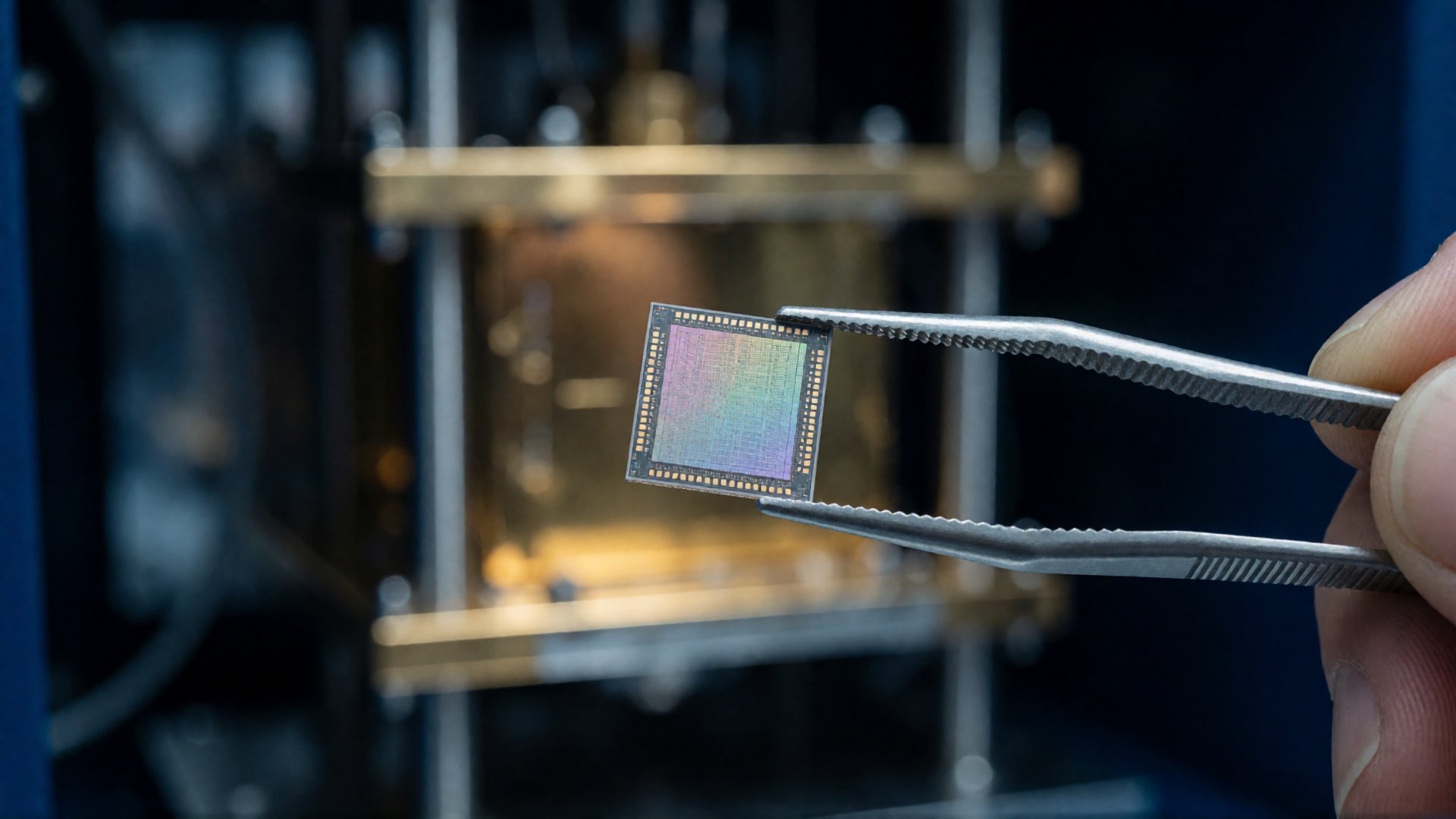
A chip is an integrated circuit, as Jack Kilby showed in 1958: transistors, resistors and other components that are made together in one small piece of semiconductor, instead of being soldered together separately. A semiconductor is a material that conducts electricity less well than metal, but better than glass. What makes a chip expensive is mainly making and packaging that small piece of material. How many components are on it makes little difference.
Why more components is cheaper, up to a limit
The article is built around a cost calculation. For simple circuits it works like this: the same piece of semiconductor in the same package can hold more components. The cost of the piece and the package is then spread over more components. As a result, the price per component falls roughly in inverse proportion to their number: twice as many components on a chip means roughly half the cost per component.
That does not go on forever. With more complex circuits, some of the chips already fail in the factory because they contain a fault somewhere. That share grows as more is put on the chip. The yield of usable chips then drops so sharply that the price per component rises again.
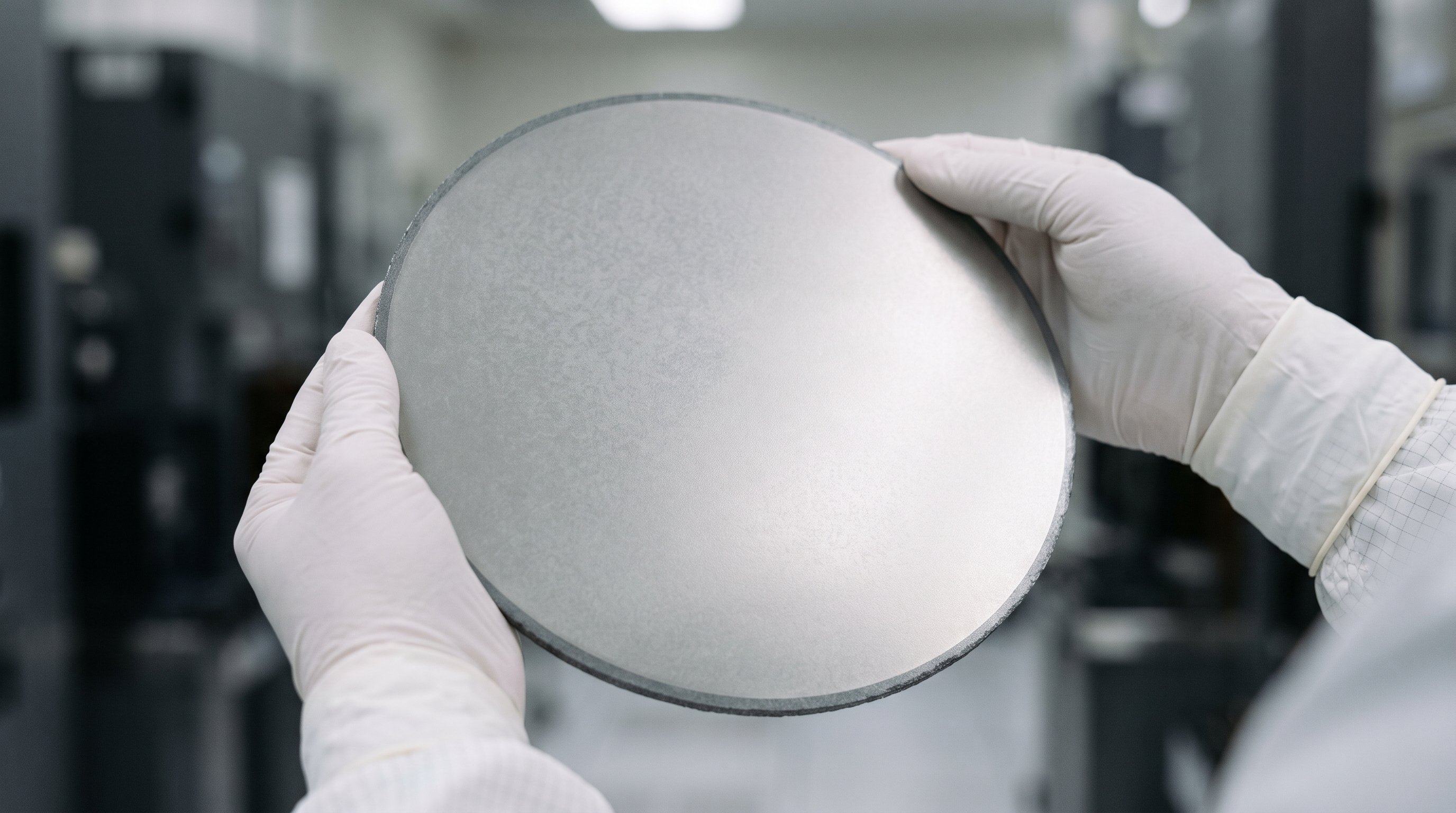
So at every stage of the technology there is a circuit with the lowest cost per component. In 1965 that point lies at about 50 components. According to Moore, it is rising fast: the complexity at that point roughly doubles every year. In five years he expects about 1,000 components, and the cost per component in 1970 would then be about a tenth of today's. He expects the pace to hold for at least ten years, up to 65,000 components in 1975, and that such a circuit can be built on a single wafer of silicon. He sees faults on the chip as something technology can improve, not as an insurmountable limit.
What that means
Moore also looks at the applications. Thanks to the low prices, he says, there will be home computers, or terminals connected to a central computer, automatic controls in cars and personal portable communication equipment.
Looking back from 2026
In 1975 Moore adjusted his forecast: the doubling takes about two years. Caltech professor Carver Mead later named it 'Moore's law'. It is not a law of nature but an observation that the chip industry used for decades as a guide for its plans. Moore later co-founded Intel.
Since about 2010, progress has fallen behind that pace. In 2022 Nvidia chief executive Jensen Huang and Intel chief executive Pat Gelsinger disagreed on whether the law still holds. Even so, the years of doubling showed what exponential growth is: a number that grows faster and faster. The computing power used to train large AI models rests in part on chips with billions of components.