Nederlands
Diamond Foundry grows a 200-millimetre diamond disc from a single crystal
The US company Diamond Foundry says it is the first to grow a diamond 200 millimetres across from a single crystal. A disc like this could later carry heat away from hot AI chips. First it still has to be polished and processed.
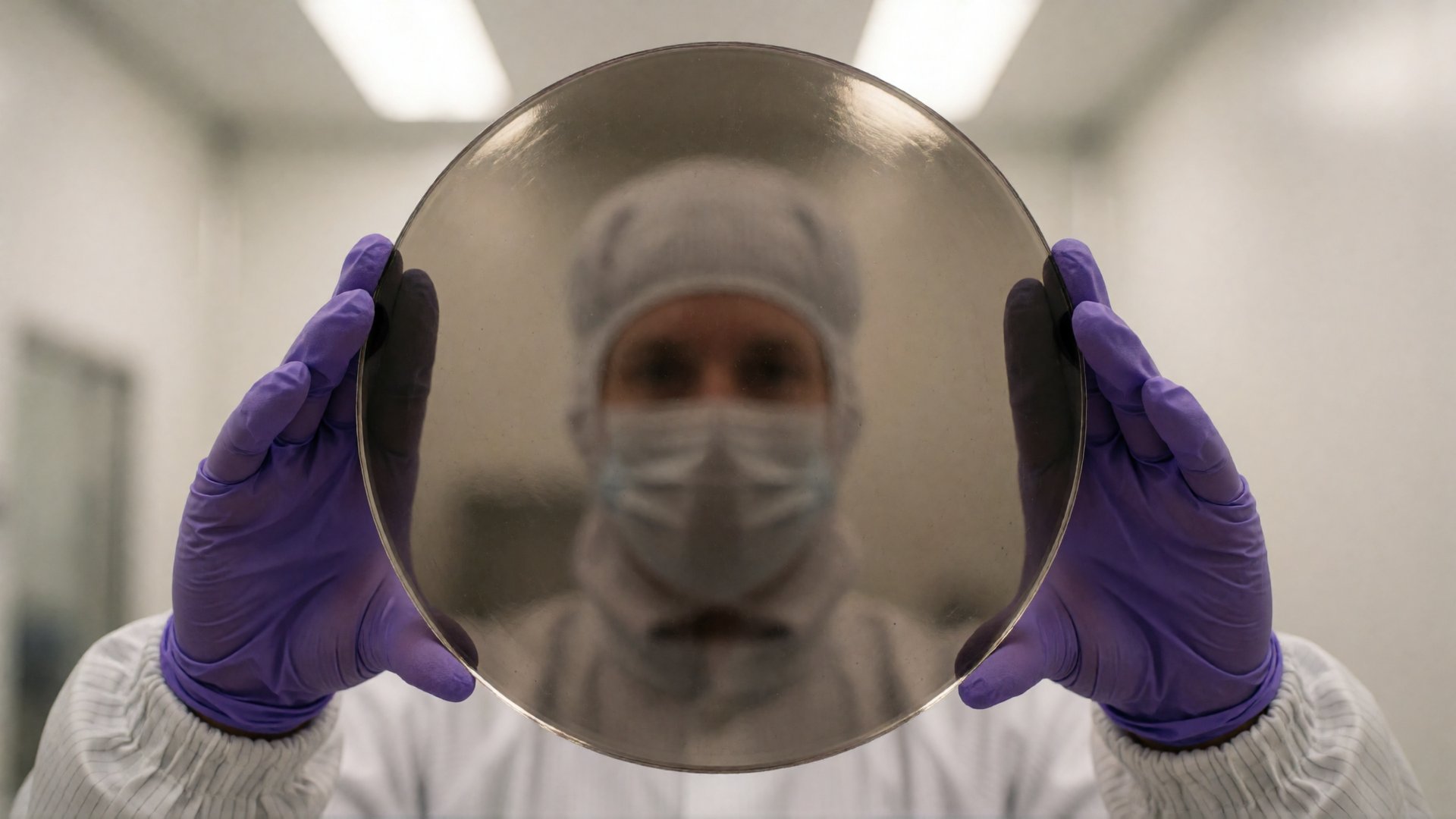
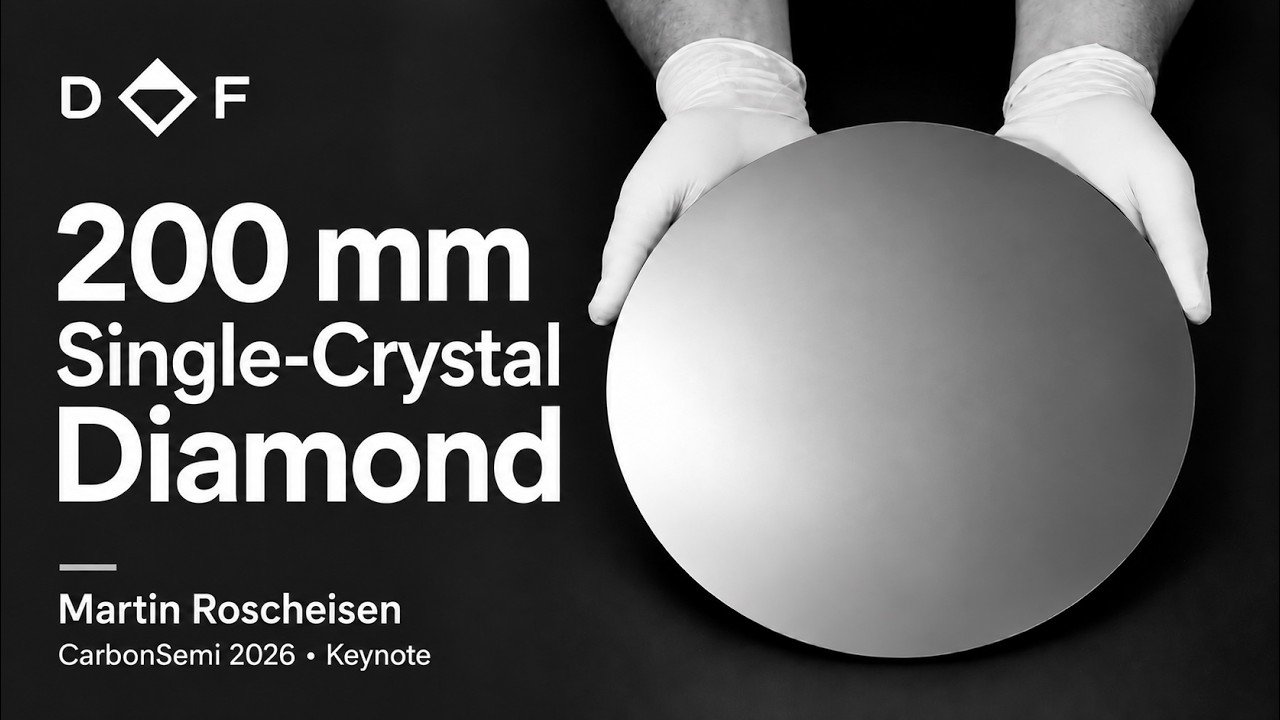
The US company Diamond Foundry, based in South San Francisco and known for lab-grown diamond, has grown a round diamond disc 200 millimetres across that consists of one continuous crystal. According to the company, this has never been done before. Chief executive Martin Roscheisen announced it in early November in a video presentation for the industry conference CarbonSemi 2026.
Playing loads YouTube, which may set cookies. More information
Why put diamond under a chip?
An AI chip uses a lot of power on a very small piece of silicon. Almost all of that power turns into heat. The heat has to leave quickly, otherwise the chip gets too hot and has to slow down. The better the material under the chip passes on heat, the more computing work the chip can handle.
Diamond is very good at this: it conducts heat about five times better than copper, the metal that is widely used for cooling today. At the same time, diamond does not let electric current through. So it can sit right against the chip without causing a short circuit.
One crystal instead of many small ones
Lab-grown diamond often consists of very many small crystals joined together. At every border between two crystals, the heat is held back a little. In one continuous crystal these borders do not exist, so the heat can flow freely. According to the company, that is exactly what makes such a crystal suitable for cooling hot spots on a chip.
The size matters. Chip factories work with round discs of 200 millimetres, and the newest factories with discs of 300 millimetres. A 200-millimetre diamond disc therefore fits into machines that already exist. According to Roscheisen, this step also makes a 300-millimetre disc foreseeable.
25 years of work
The result comes from Stefan Gsell and Martin Fischer, who, according to the company, worked for 25 years on growing large diamond crystals. They joined Diamond Foundry in 2022, when it took over the German company Augsburg Diamond Technology (Audiatec).
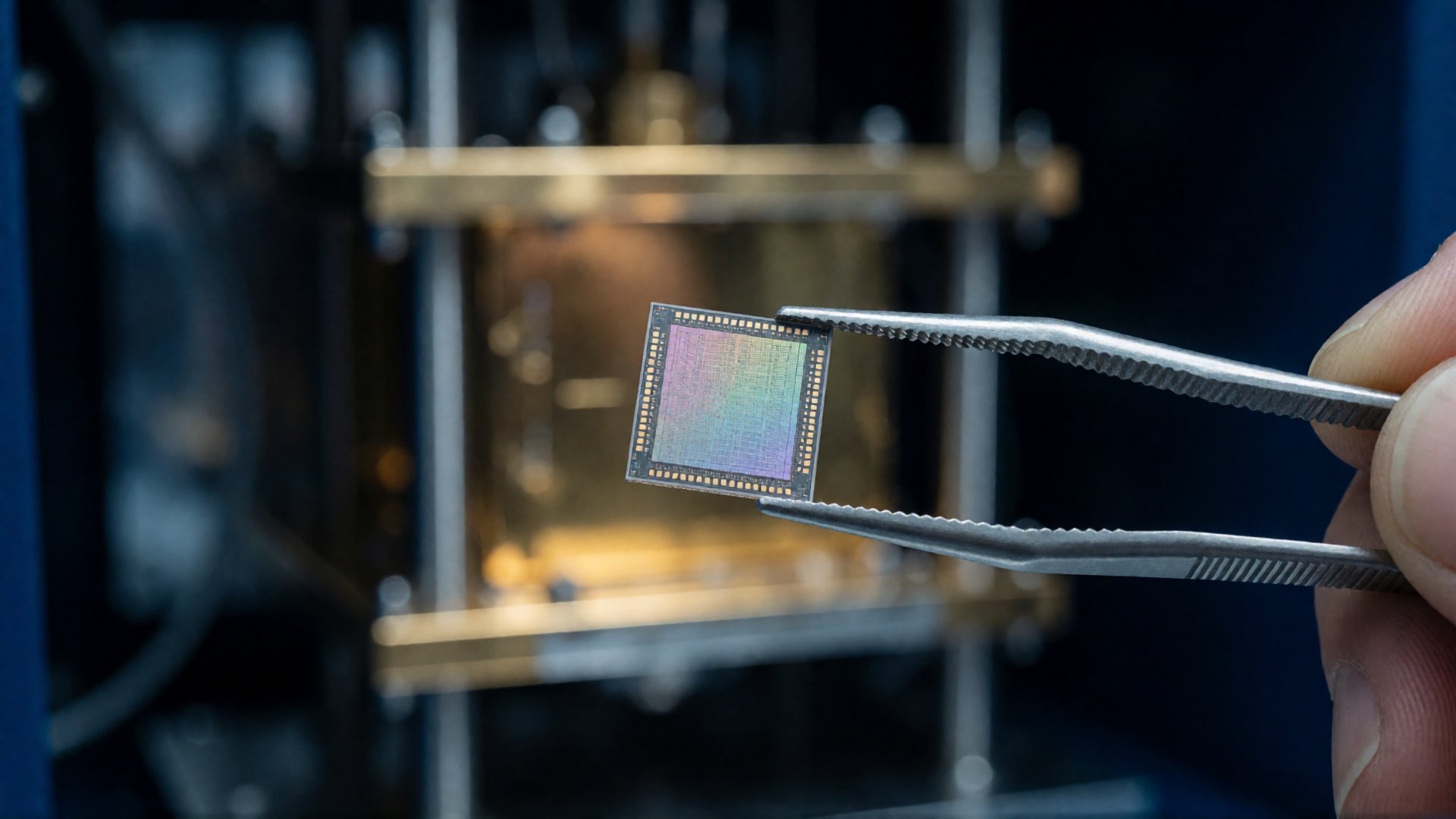
The crystal in the company's photos comes straight from the growth machine and has not been polished yet. Before chipmakers can work with it, it still needs a few more processing steps. The results come from the company itself; independent measurements are still to follow. Diamond Foundry says it is scaling up the production of diamond discs for chips in Spain, with a project worth 2.77 billion US dollars under the European Chips Act.
What does this mean for the road to the singularity?
How much AI can do also depends on how much computing work chips can do, and heat is a hard limit there. A diamond disc that fits into an ordinary chip factory could move that limit: the same chip could then do more work without getting too hot. The crystal still has to be polished and processed, and production still has to get going. But the step from diamond the size of a piece of jewellery to the size of a chip wafer is exactly the kind of building block that faster AI hardware needs.
What is the technological singularity? Read the explanation →
Sources
In the glossary: Chip, Data centre