Nederlands
Humanoid robot from South Korea pushes 35 kilos and lifts 20 kilos while walking
Researchers at KAIST in South Korea had their humanoid robot push objects of up to 35 kilos and lift up to 20 kilos while walking. Legs and arms are controlled together by a single AI system. It is a demonstration in the lab; more tests will follow.
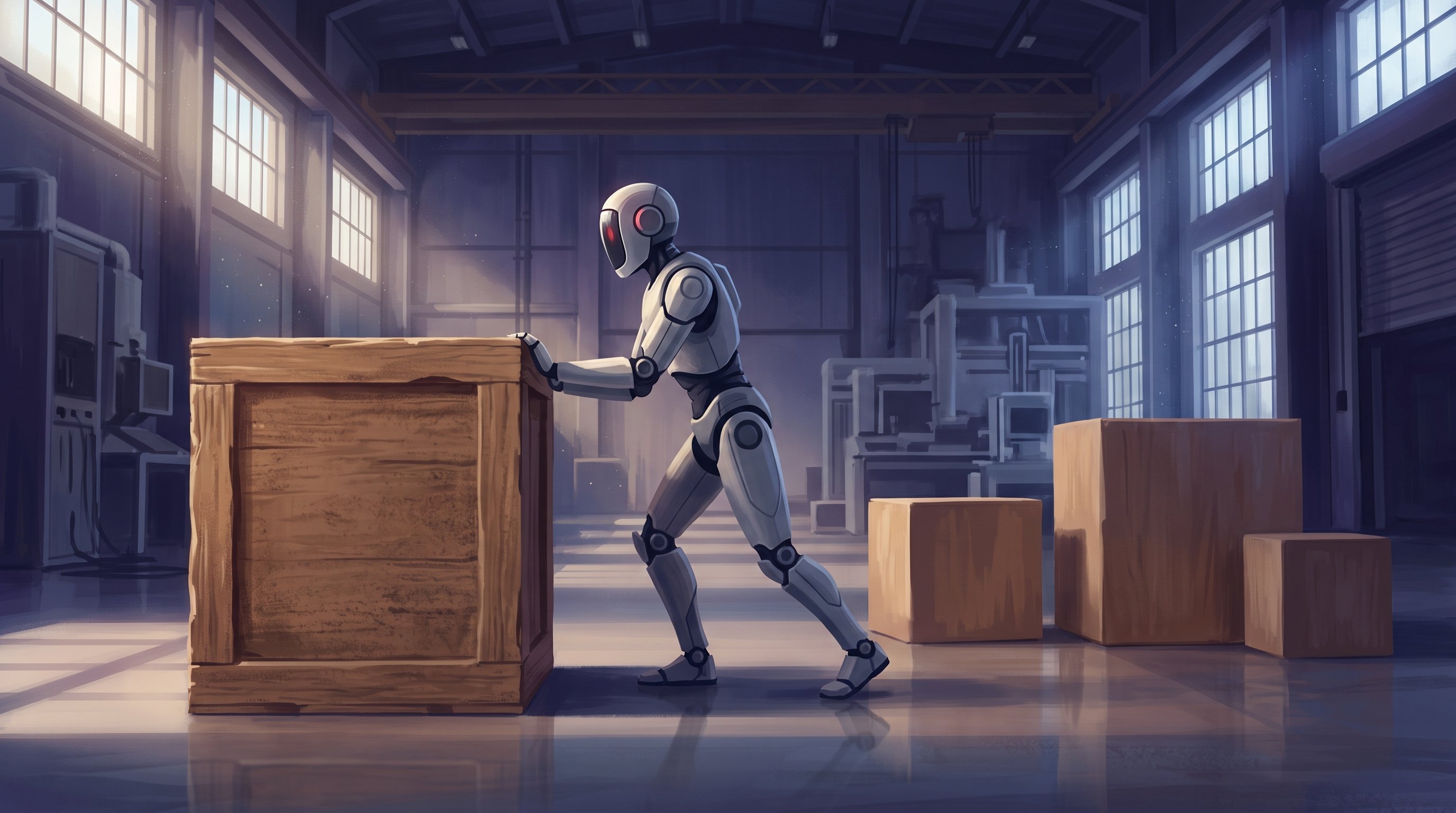
Walking while moving something heavy seems natural to people. If you push a full cupboard out of the way, you brace your feet, lean forward and keep adjusting your balance a little. For a robot, that is actually very difficult. Many humanoid robots do one thing after the other: first stand still, and only then use their arms.
On 19 October 2026, researchers at the Korean technology institute KAIST showed in a video that their latest robot can do it in one smooth movement. It is the KAIST Humanoid v0.9, built by the lab of Professor Hae-Won Park. The team of Professor Jemin Hwangbo took care of the arms and the movements of the upper body.
Pushing, lifting and placing blocks
In the video, the robot pushes objects of up to 35 kilos in front of it while walking. It also lifts loads of up to 20 kilos and keeps walking with them. In another task, it places large blocks so that together they form the letters of the institute's name. Meanwhile it constantly adjusts its posture and balance.
According to the researchers, the robot sees everything with cameras on its own body. No extra cameras in the room are needed to help it. That matters, because they are not there in a factory or warehouse either.
One brain for legs and arms
The special part is the control. A single AI system controls the legs and arms at the same time, instead of two separate systems that have to keep up with each other. The robot learned this with reinforcement learning: it practises the same task very many times in a computer simulation and gets a reward when it goes well. The system also looked at recordings of how people move. That helps the robot move more naturally and less jerkily.
The lab also builds the motors in the joints itself. They are made so that the joints give a little when they push against something, a bit like our muscles.
How strong is that?
For comparison: in a recent American study, another humanoid robot with its own cameras pushed up to 17 kilos. So the Korean robot pushes about twice as much. Its predecessor, the v0.7, was presented in March 2026; it weighed 75 kilos and was 1.65 metres tall.
The figures apply to these demonstrations and are not an officially measured maximum. A task with blocks in the lab is also something different from working reliably for days in a messy workshop. To be able to compare robots fairly, a competition especially for this kind of task will be held in December at a major robotics conference.
South Korea is investing heavily in humanoid robots. In 2025, an alliance of more than a thousand companies, institutes and other organisations was launched that wants to have a robot by 2028 that can lift at least 20 kilos. This robot already achieves that.
What does this mean for the road to the singularity?
Robots that really help out in factories, warehouses and later at home must be able to walk, look and apply force at the same time. This robot shows that AI is getting better and better at learning that, by practising endlessly in a simulation and copying people. Every robot that learns a new skill this way makes the next generation smarter faster, because it can build on the same lessons. Heavy and dull lifting work can thus increasingly go to machines, so that people have their hands free for other work.
What is the technological singularity? Read the explanation →