Nederlands
Intel puts a complete processing unit on a single chip
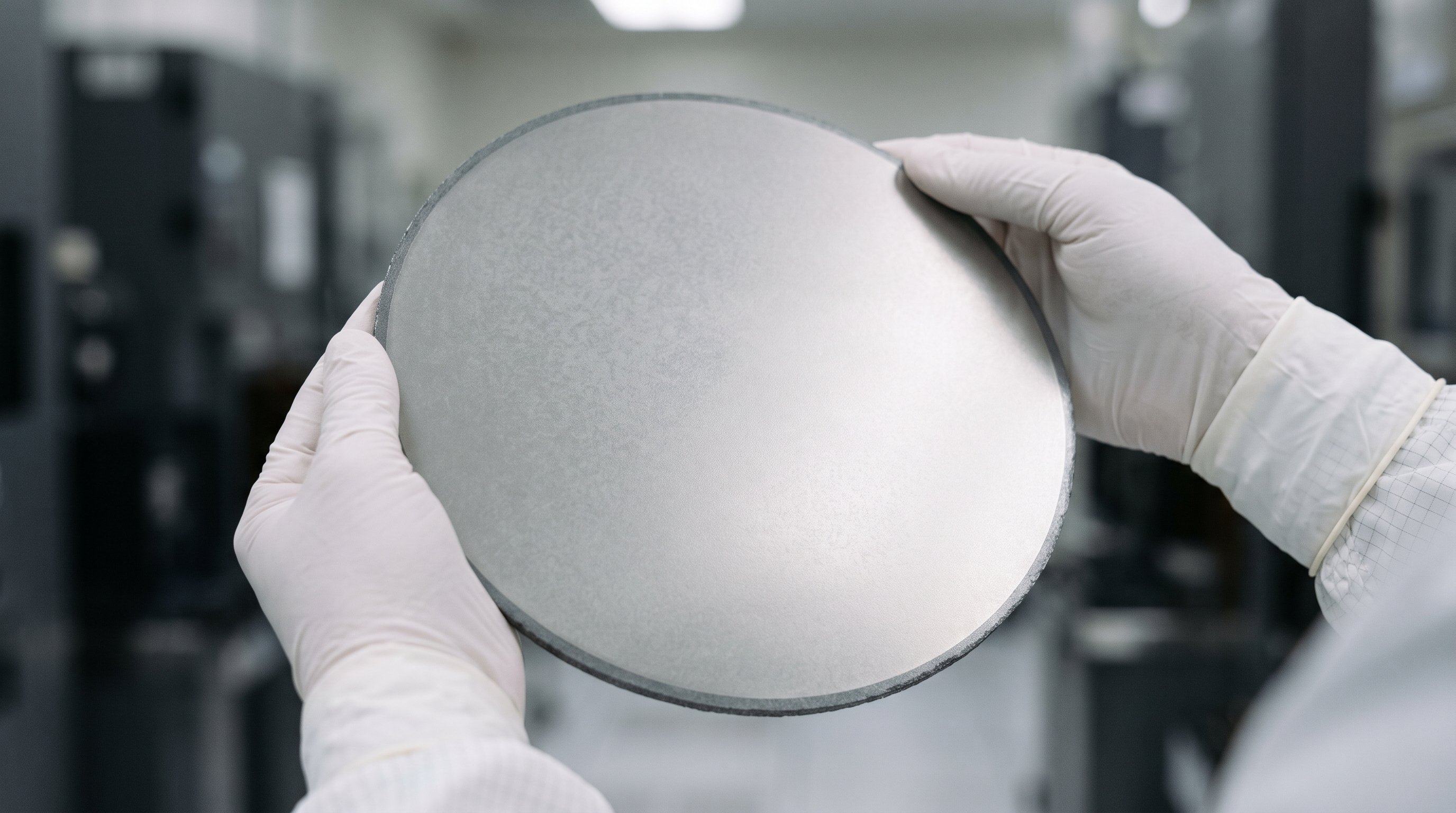
Intel announces the 4004: a processing unit of about 2,300 transistors on one piece of silicon, for 60 dollars. What used to take a cabinet full of parts now fits in a package with 16 pins.
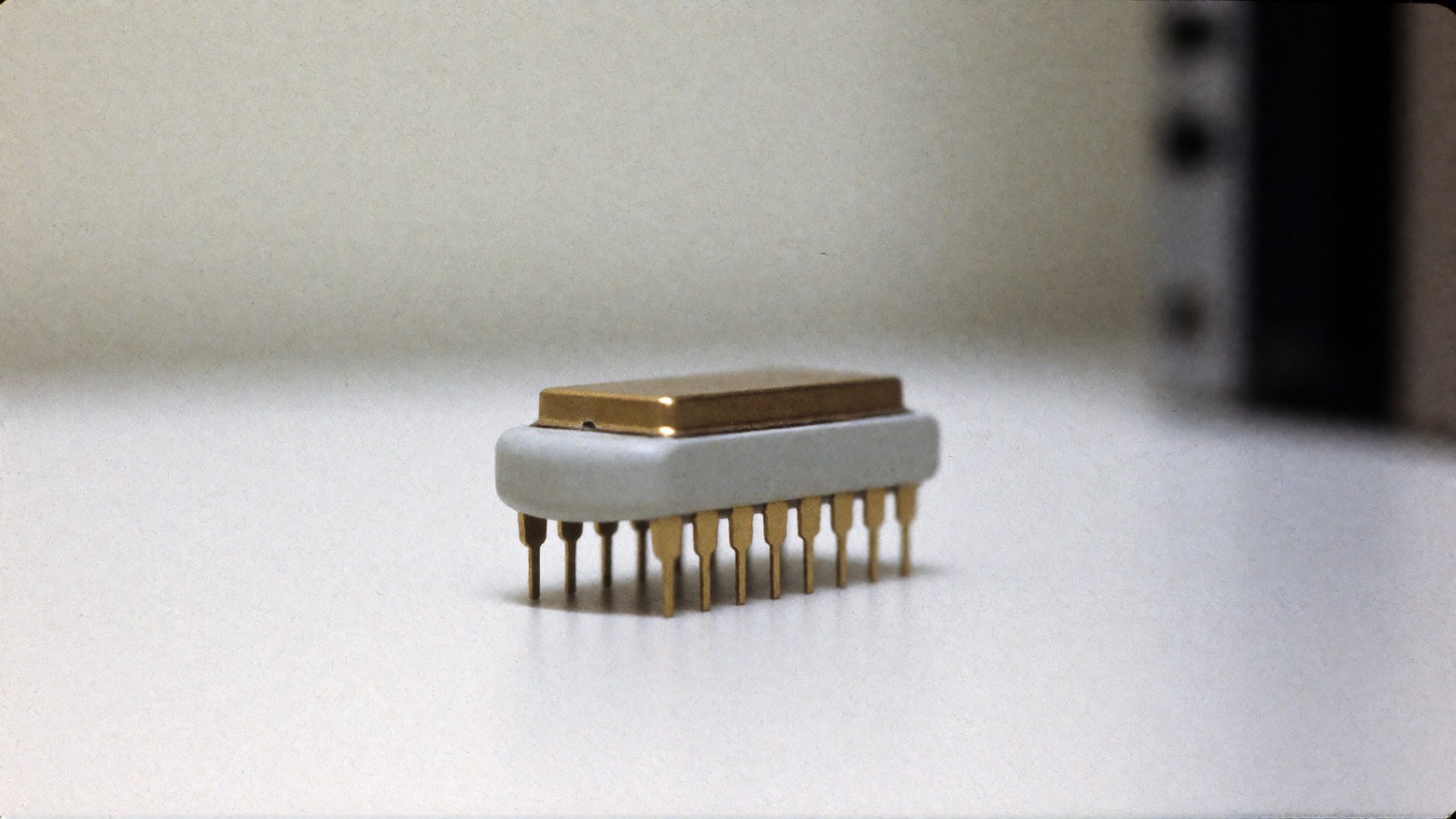
SANTA CLARA (CALIFORNIA), NOVEMBER 1971 - On 15 November, Intel placed an advertisement in the trade paper Electronic News under the headline 'Announcing a new era of integrated electronics'. The company is offering the 4004, a chip that contains the processing unit of a computer. It holds about 2,300 transistors and costs 60 dollars. The chip sits in a package with 16 pins.
What the processing unit does
A computer consists of a few parts. The memory holds numbers and instructions, the input and output talk to the outside world, and the processing unit, also called the processor, fetches one instruction at a time, carries it out and moves on to the next. Until now, that processing unit was spread over many separate chips or even many separate circuit boards. The 4004 brings everything a processing unit does together on one chip. Such a chip is called a microprocessor.
For comparison: ENIAC, the machine from 1946, filled a room with some 18,000 vacuum tubes and 27 tonnes of equipment. The processing unit of the 4004 fits on one chip.
What it can do
The 4004 is a 4-bit chip: it handles data in small chunks of four ones and zeros at a time. That is not much. It is enough for numbers from 0 to 15 per step, so calculating with larger numbers takes several steps. The clock runs at up to 740,000 ticks per second. According to the specifications, this lets the chip carry out between just over 46,000 and just over 92,000 instructions per second, depending on how long the instruction is. The parts on the chip are made with details of 10 micrometres, or 0.01 millimetres.
How it came about
It did not start as a computer project. Busicom, a Japanese calculator maker, asked Intel for a series of special chips for calculators. Engineer Marcian 'Ted' Hoff proposed a simpler plan: one chip that works as a computer and follows instructions to do whatever is needed, instead of a separate design for each product. Federico Faggin led the design of the silicon itself, using a new technique, and Masatoshi Shima and Stanley Mazor also worked on it.
Meanwhile, Busicom ran into money problems. Faggin persuaded Intel founder Robert Noyce to lower the price, and in return Busicom dropped the agreement that Intel could only supply the chip to Busicom. Intel is paying back 60,000 dollars in development costs. Now Intel can sell the 4004 to anyone.
Looking back from 2026
The 4004 was the first microprocessor to go on the market. From then on, computing power became small and cheap enough for any device: from calculators to, later, computers that fit on a desk. Every processor since then descends from this principle: a complete processing unit on one chip.
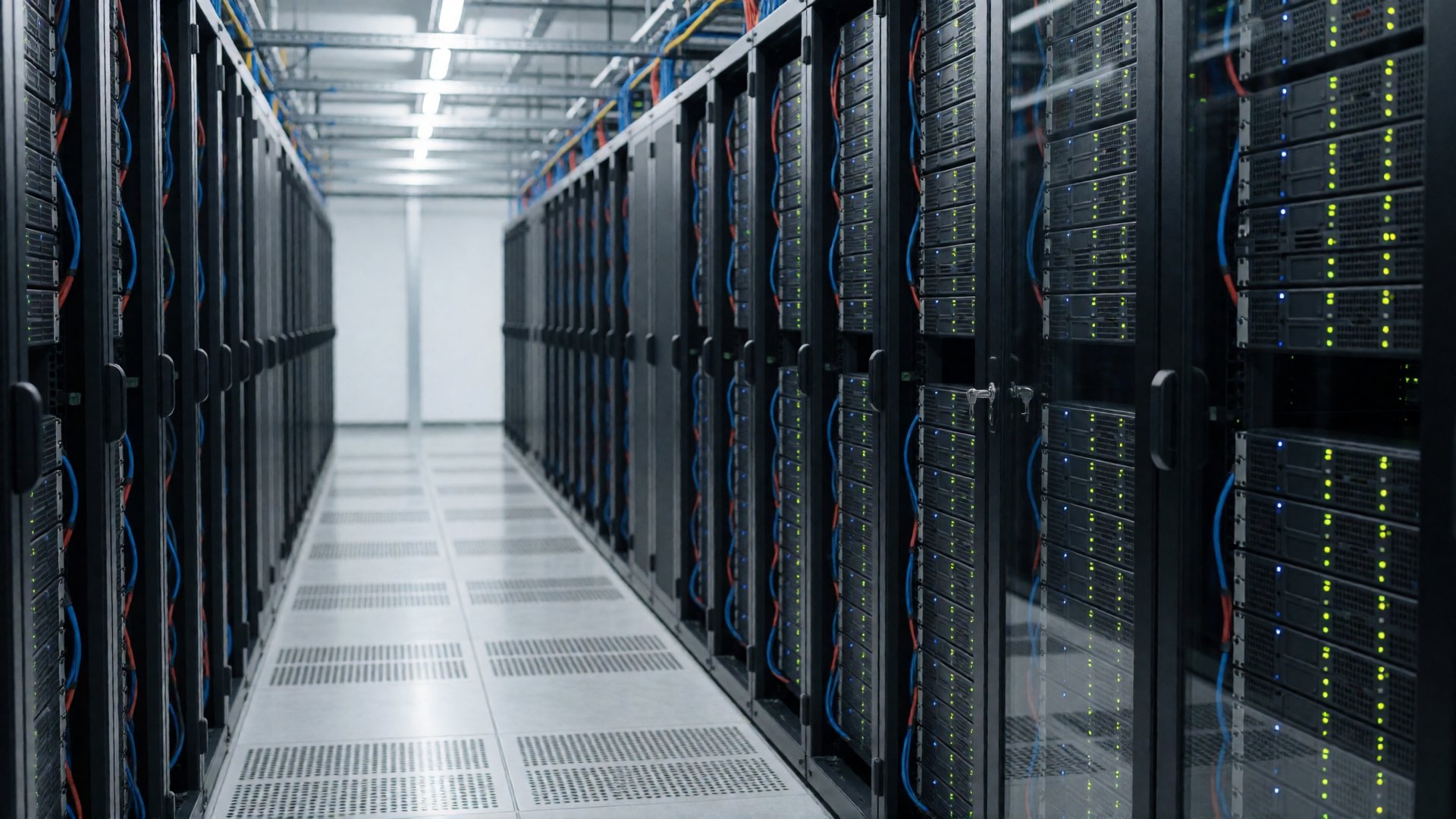
The chips in data centres for AI are also descendants of this idea. They are much bigger and contain billions of transistors instead of a few thousand, but the idea is the same: all the computing power needed, on one piece of silicon.