Nederlands
MIT to test a flat superconducting magnet for Thea Energy's fusion plant at full power
The US fusion company Thea Energy is having a large, flat superconducting magnet tested at MIT, at the full magnetic field and full force of a power plant. Flat magnets are much easier to make than the twisted magnets of ordinary stellarators.
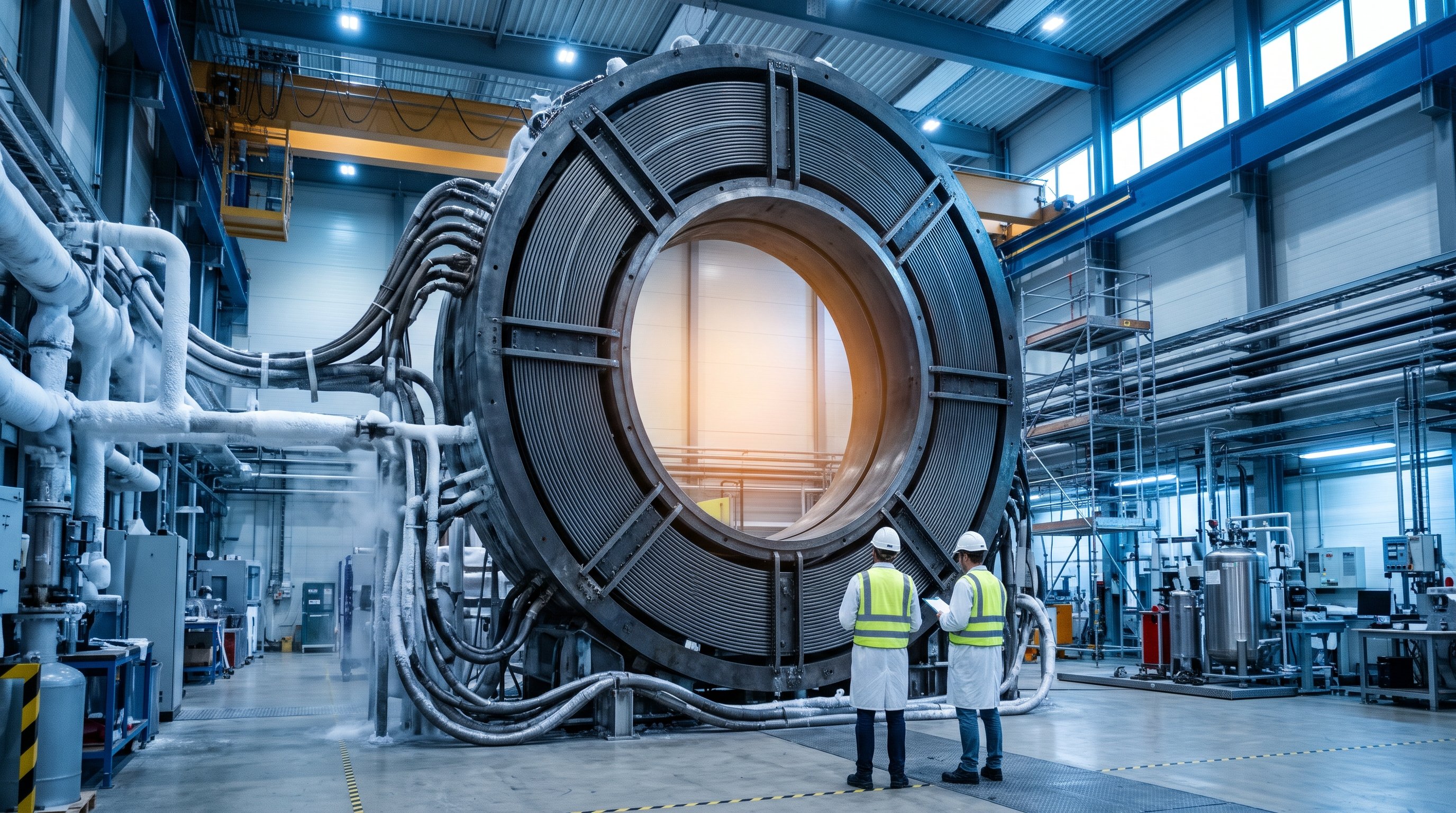
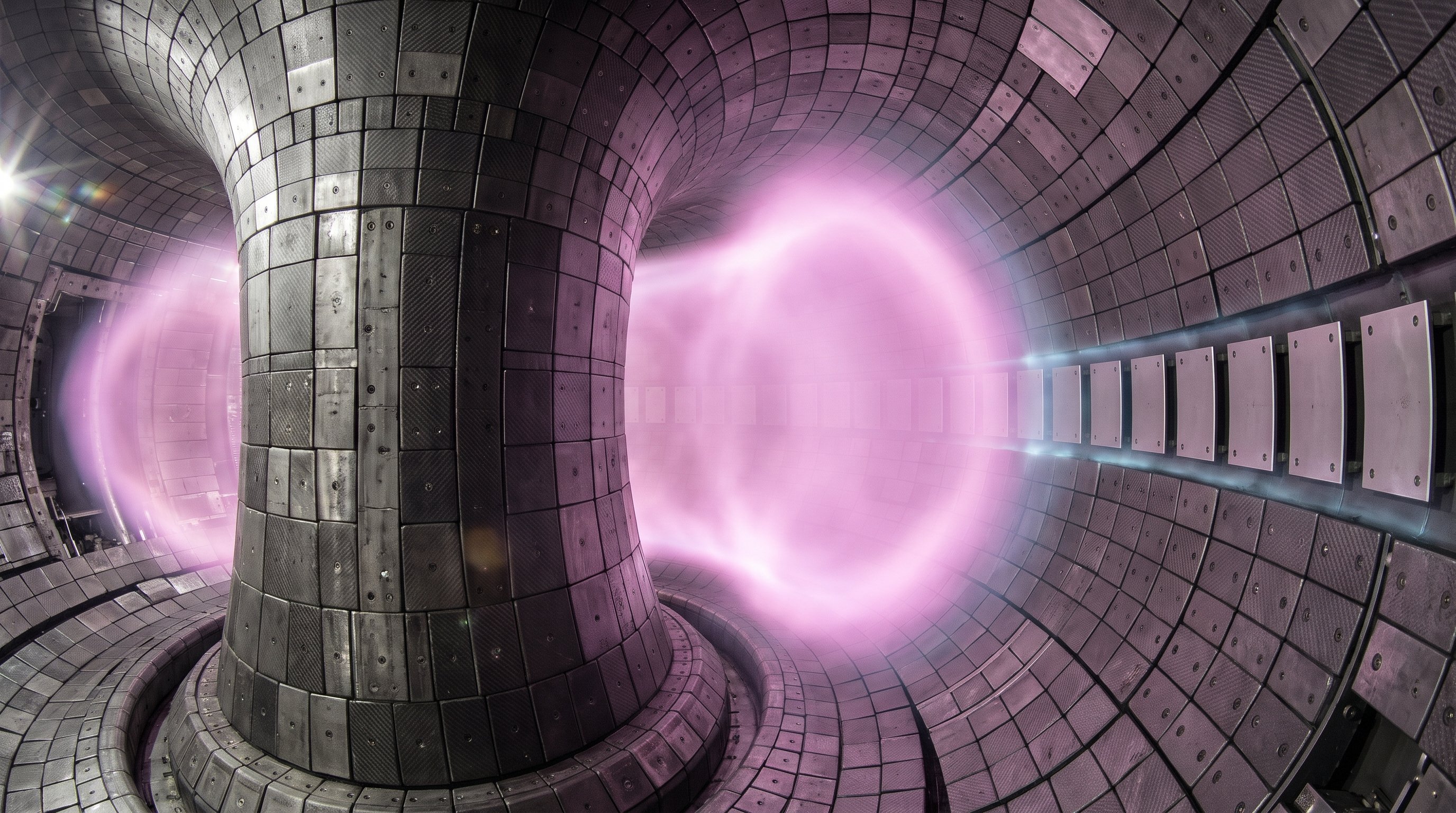
Nuclear fusion, the way the sun makes energy, could provide clean electricity on Earth. For that, an extremely hot gas has to float inside the reactor without touching the wall. This hot gas is called plasma: the electrons have come loose from the atoms, so the gas carries an electric charge. That is why strong magnets can hold it in place.
On 4 November, the US fusion company Thea Energy announced that it will work with the Plasma Science and Fusion Center (PSFC), the fusion institute of the Massachusetts Institute of Technology (MIT). There, one of the company's large magnets will be tested at the full magnetic field and the full force it has to withstand in a fusion plant. The partners have not yet said when the test will start.
Why flat magnets?
Thea Energy is building a stellarator: a fusion reactor shaped like a twisted ring. To keep the plasma in such a ring, the magnetic field must have a complicated, twisted shape. In ordinary stellarators, magnets with irregular, three-dimensional curves create that field. They are very difficult and expensive to make precisely.
Thea Energy takes a different approach: only flat magnets, which can be made in large numbers like other factory products. The shape of the magnetic field then comes from software, which controls the strength of each magnet separately. The design of the first reactor, Eos, has 12 large ring-shaped magnets around the plasma and about 300 smaller flat magnets that fine-tune the field. These small magnets can be adjusted separately and replaced when they wear out. According to Thea Energy, they have already been built and tested at full size. At MIT, it is now the turn of one of the large ring magnets.
The magnets are superconducting: they carry current without resistance, as long as they are cold enough. The PSFC has cooling systems to test such magnets at that temperature, and a lot of experience with this kind of magnet. Besides strength, the partners will measure how efficiently the magnet works and how well it withstands long-term use. A fusion plant has to deliver power as often as possible, and a magnet that breaks down often stops the whole plant.
Earlier steps
In March 2025, Thea Energy showed that a smaller grid of nine flat magnets, in three rows of three, can together make the kind of magnetic field that a stellarator needs. That test ran at minus 253 degrees Celsius. The US Department of Energy then confirmed that this series of tests met the agreed targets, within a programme that pays fusion companies for each milestone reached.
Zachary Hartwig, who heads the engineering department at the PSFC, calls Thea Energy's approach promising. In his view, the MIT test facility is well suited to assess the ring magnets.
Plans for 2035
Thea Energy was founded in 2022 as a spin-out from Princeton University and the Princeton Plasma Physics Laboratory. The company aims to deliver fusion power in 2035. The design of that plant, Helios, uses the same flat magnets. This year the company raised 100 million dollars from investors, among other funding, and received 20 million dollars from the US Department of Energy to start producing magnets in the United States. With NVIDIA and others, it is building a digital twin of the plant: a computer model that imitates how the real plant behaves. The measurements at MIT should also help to improve such models.
What does this mean for the road to the singularity?
Anyone who wants to supply the world with much more clean electricity, including for the data centres that AI runs on, has long looked at nuclear fusion. With stellarators, a large part of the problem lies not in the physics but in making the magnets. Flat magnets that can be built in series in a factory make that much easier. If the large ring magnet withstands the full force of a power plant at MIT, Thea Energy will have proven an important part of its design, and a stellarator that can be built in large numbers comes a step closer.
What is the technological singularity? Read the explanation →