Nederlands
NASA probes use powered flyby past Earth on their way to Mars
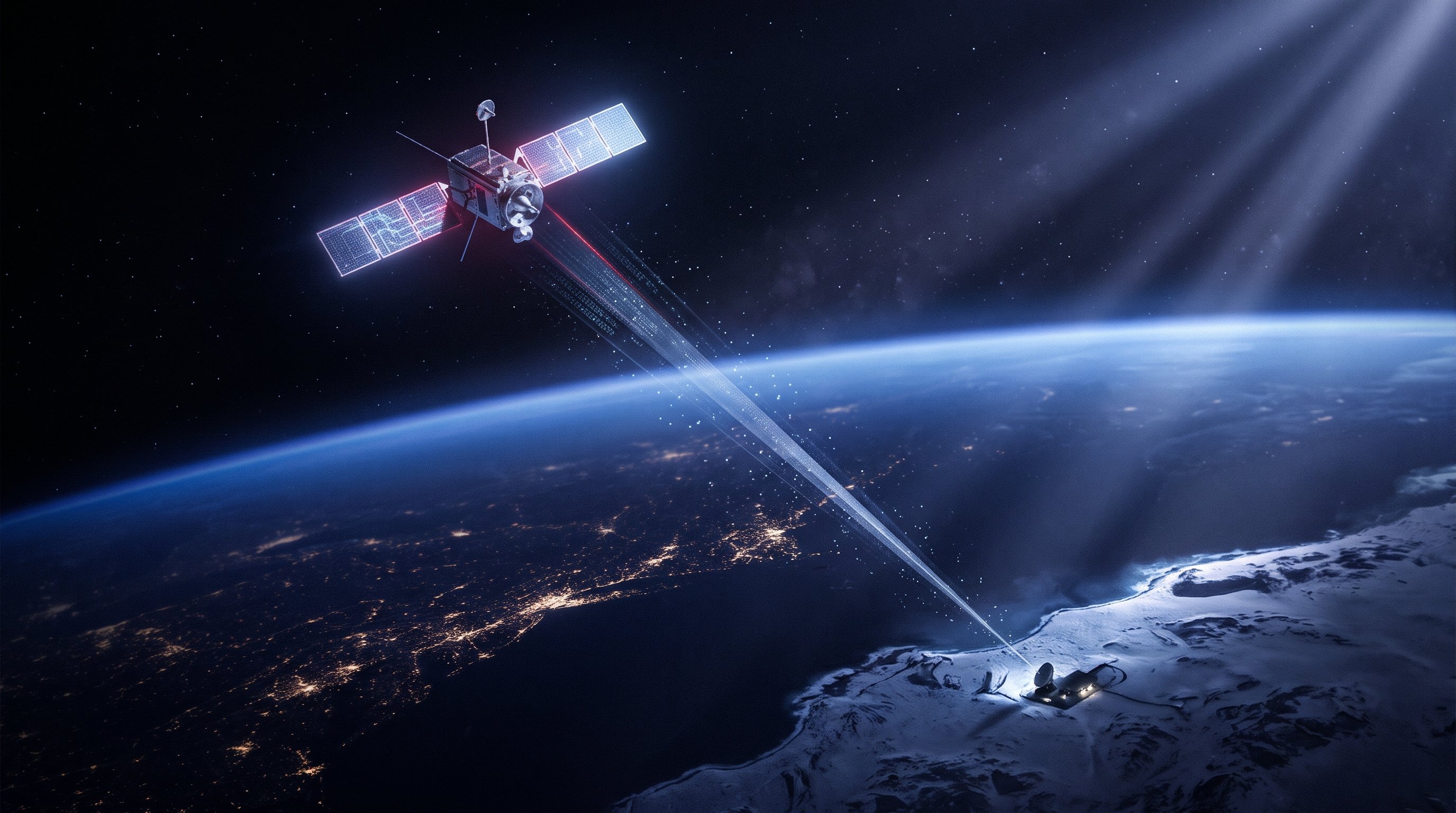
According to NASA, the two ESCAPADE probes fired their engines during a close flyby of Earth and are now on their way to Mars. NASA had not used this combination of gravity and engine power for a Mars mission before.
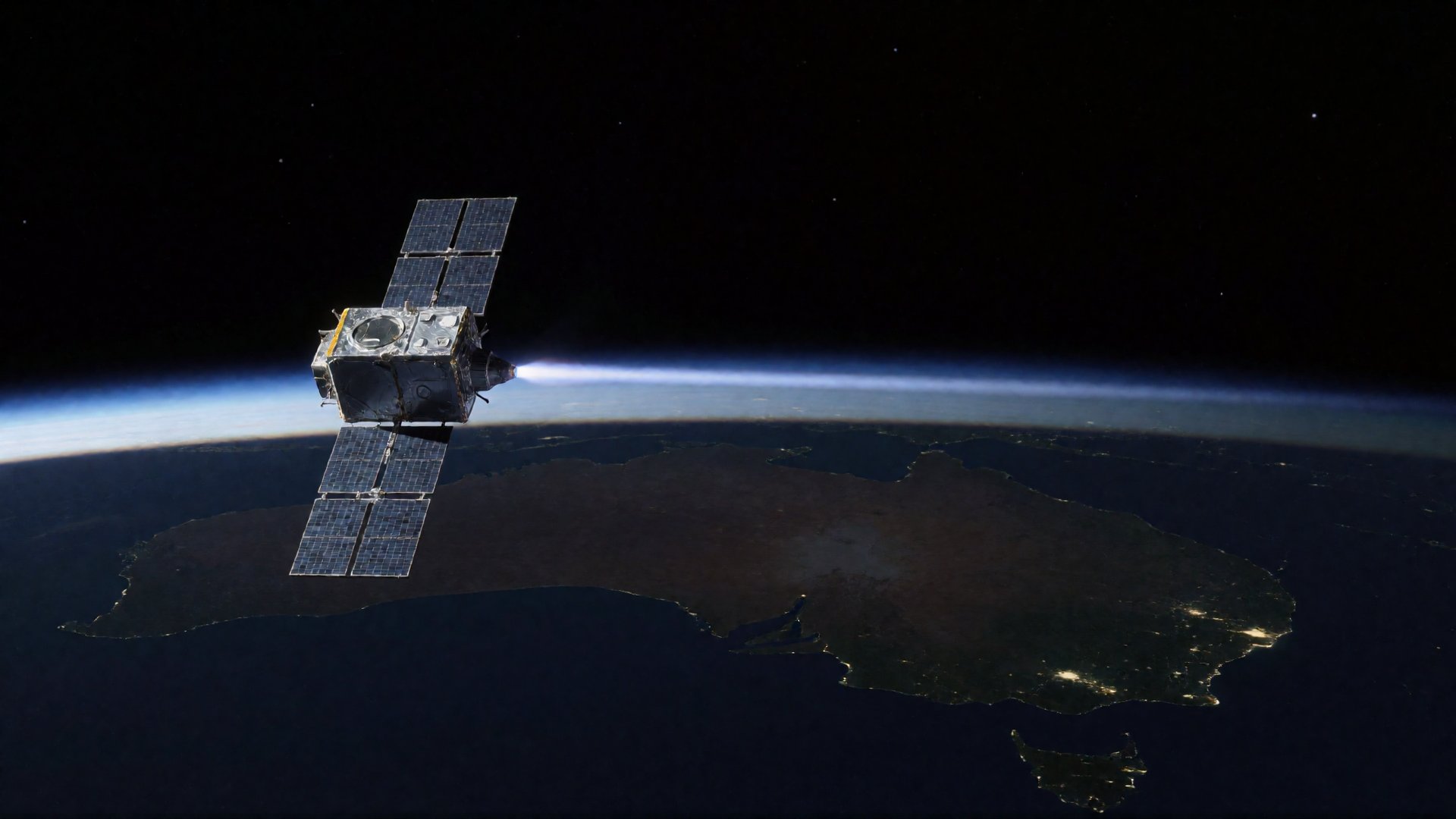
NASA's two ESCAPADE space probes flew close past Earth on 7 and 9 November 2026 and fired their engines as they did so. According to the US space agency, they are now on their way to Mars, where they will arrive in September 2027. There they will study how the solar wind, the stream of particles coming from the Sun, slowly blows away the atmosphere of Mars.
The first probe passed Earth at an altitude of about 1,600 kilometres. Two days later the second followed at about 1,050 kilometres, above southern Australia. Both probes fired their engine for about nine minutes. According to NASA, it is the first time the agency has used such a powered flyby of Earth to send a spacecraft to Mars.
Extra speed at the fastest moment
In an ordinary flyby, a planet's gravity pulls a spacecraft in a different direction, without using fuel. These probes added an engine burn, exactly at the moment they were closest to Earth and therefore moving fastest. At that point a rocket engine delivers the most extra energy for the same amount of fuel. This trick is called an Oberth manoeuvre. According to NASA, each probe gained more than 1,600 kilometres per hour, going from about 10.1 to 10.8 kilometres per second.
A detour to Mars
The probes left Cape Canaveral in Florida on 13 November 2025, on a New Glenn rocket from space company Blue Origin. At that time Earth and Mars were on opposite sides of the Sun, so flying straight to Mars was not possible. Normally, a Mars mission therefore has to wait for the right position of the planets, which comes round about once every 26 months.
Instead, the probes spent a year making a loop around the second Lagrange point of the Sun and Earth. This is a spot about 1.5 million kilometres from Earth, on the side facing away from the Sun, where a spacecraft can travel around the Sun together with Earth using little fuel. After that, they returned for their flyby.
According to Jeff Parker, lead route designer at space company Advanced Space, this means a mission can launch at almost any time, instead of having to wait two years each time. NASA reports that the team will adjust the course a few more times along the way.
During their detour, the probes also flew several times through Earth's magnetic tail. This forms because the solar wind stretches the magnetic field around Earth into a long tail. This gave them extra measurements even before reaching Mars.
Two probes at Mars at the same time
At Mars, the probes first have to slow down to enter an orbit around the planet. After that, they will fly in formation. This lets them measure the surroundings of Mars from two places at once, which according to principal investigator Rob Lillis is a first for a science mission around Mars. NASA expects the scientific work to begin in June 2028.
The Space Sciences Laboratory of the University of California in Berkeley leads the mission. Space company Rocket Lab built the probes, which are each about the size of a fridge. ESCAPADE is part of NASA's SIMPLEx programme for small, lower-cost space missions.
What does this mean for the road to the singularity?
Until now, a journey to Mars has been tied to a short launch window that opens once every two years or so. This route shows that a small mission can also leave outside that window, for example when there is room on a rocket. If such routes are used more often, more and cheaper missions can go to Mars and other planets. That brings further exploration of the solar system closer.
What is the technological singularity? Read the explanation →