Nederlands
Ray Kurzweil expects a human-level computer around 2029 and the singularity around 2045
In his new book, Ray Kurzweil explains why he thinks technology is growing faster and faster. Around 2029, he says, a computer will pass the Turing test, and around 2045 the singularity will follow. There are critics too.

NEW YORK, SEPTEMBER 2005 - The publisher Viking has released The Singularity Is Near, the new book by the inventor and author Ray Kurzweil. Its subtitle is When Humans Transcend Biology. The book has more than 650 pages and one big claim: technology is growing faster and faster, and around the middle of this century that will lead to a turning point he calls the singularity.
First: why growth keeps speeding up
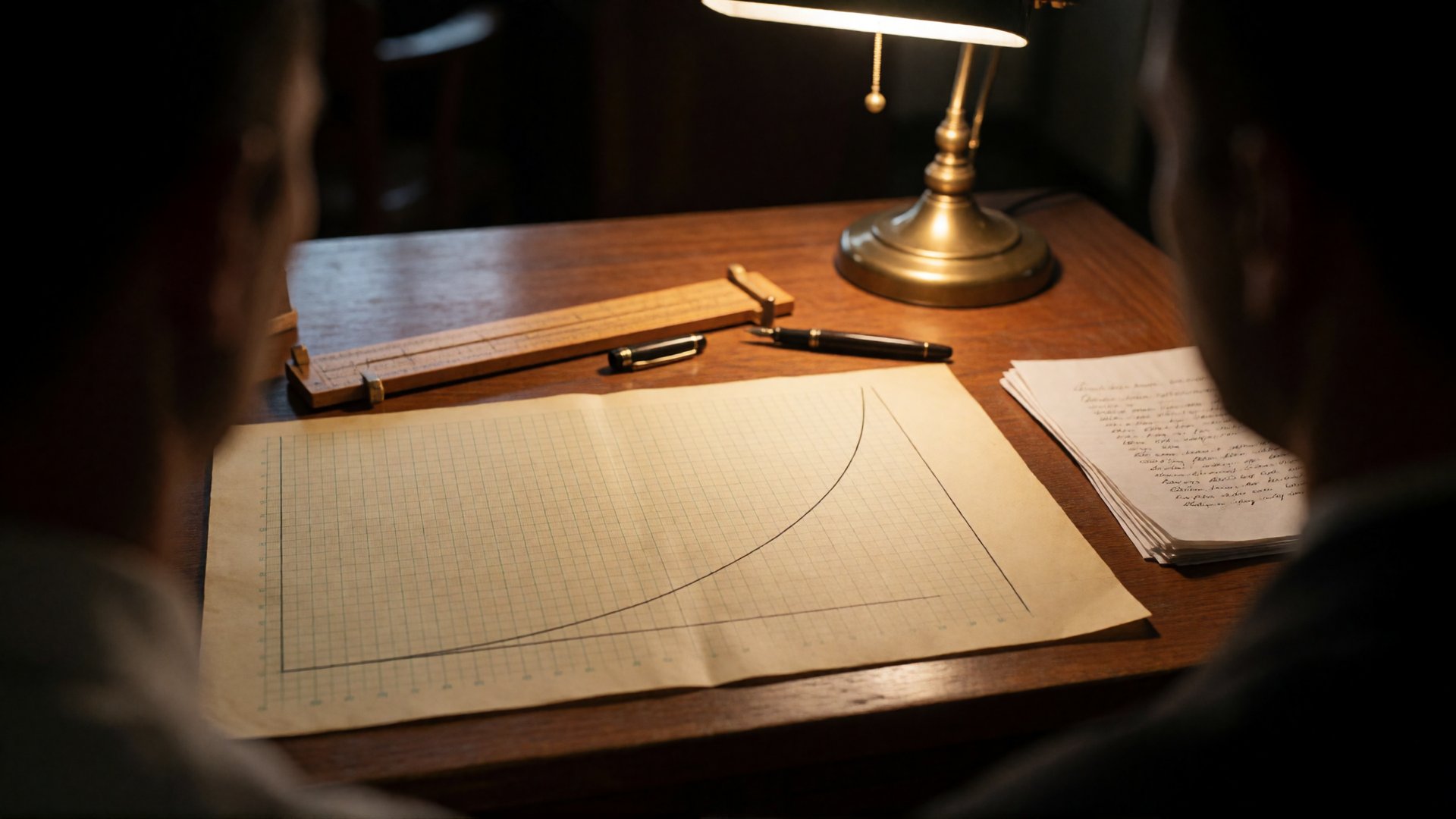
Kurzweil's reasoning has a few steps. The first: technologies such as computing, genetics, nanotechnology and robotics do not grow in equal steps, but exponentially. With equal steps, the same amount is added every year. With exponential growth, something keeps doubling, so for a long time it seems calm and then suddenly it goes very fast. According to Kurzweil, this happens because every improvement makes the next improvement easier. He calls this the law of accelerating returns and sees it as an extension of Moore's law, the observation that the number of components on a chip keeps doubling.
How much computing power does a brain have?
The second step is an estimate. Kurzweil calculates that the human brain performs about 10 quadrillion calculation steps per second and has some 10 trillion bits of memory. He expects that around 2020, 1,000 dollars will buy enough computing power to match that.
The timeline
The third step is the schedule. Around 2029, he says, a computer will pass the Turing test, in which a person cannot tell during a conversation whether they are talking to a human or a machine. In the early 2030s, the computing power of machines would exceed that of all living people combined. Then in 2045 comes the singularity: the point at which technology and human intelligence merge and changes happen too fast to follow.
What do others say?
Reactions vary. In Nature, Paul Davies calls the book an adventurous journey along the edges of what is technically possible, and recommends a healthy dose of scepticism. The neuroscientist David Linden says Kurzweil confuses collecting data with understanding, and doubts whether mapping the brain will keep to his schedule. Theodore Modis argues that growth more often follows an S-shaped curve that levels off than a line that keeps rising. Others find the book convincing and well written.
Looking back from 2026
Kurzweil sticks to his dates. In 2024 the sequel The Singularity Is Nearer appeared, with the same dates: 2029 for a human-level computer and 2045 for the singularity. The year 2029 is still ahead of us. The 2005 book brought the idea of a technological singularity, which Vernor Vinge had described in 1993, to a large audience.
Critics point out that growth often levels off, and that being able to match the computing power of a brain does not mean understanding how a brain works. The predictions remain disputed, but they give the debate about AI a yardstick: a date against which progress can be measured.