Nederlands
SpaceX catches Starship for the first time after a flight in orbit
SpaceX has caught the upper stage of its Starship rocket with the arms of its launch tower in Texas, after fourteen orbits of the Earth. This had never been done before. The lower stage of the same rocket was lost.
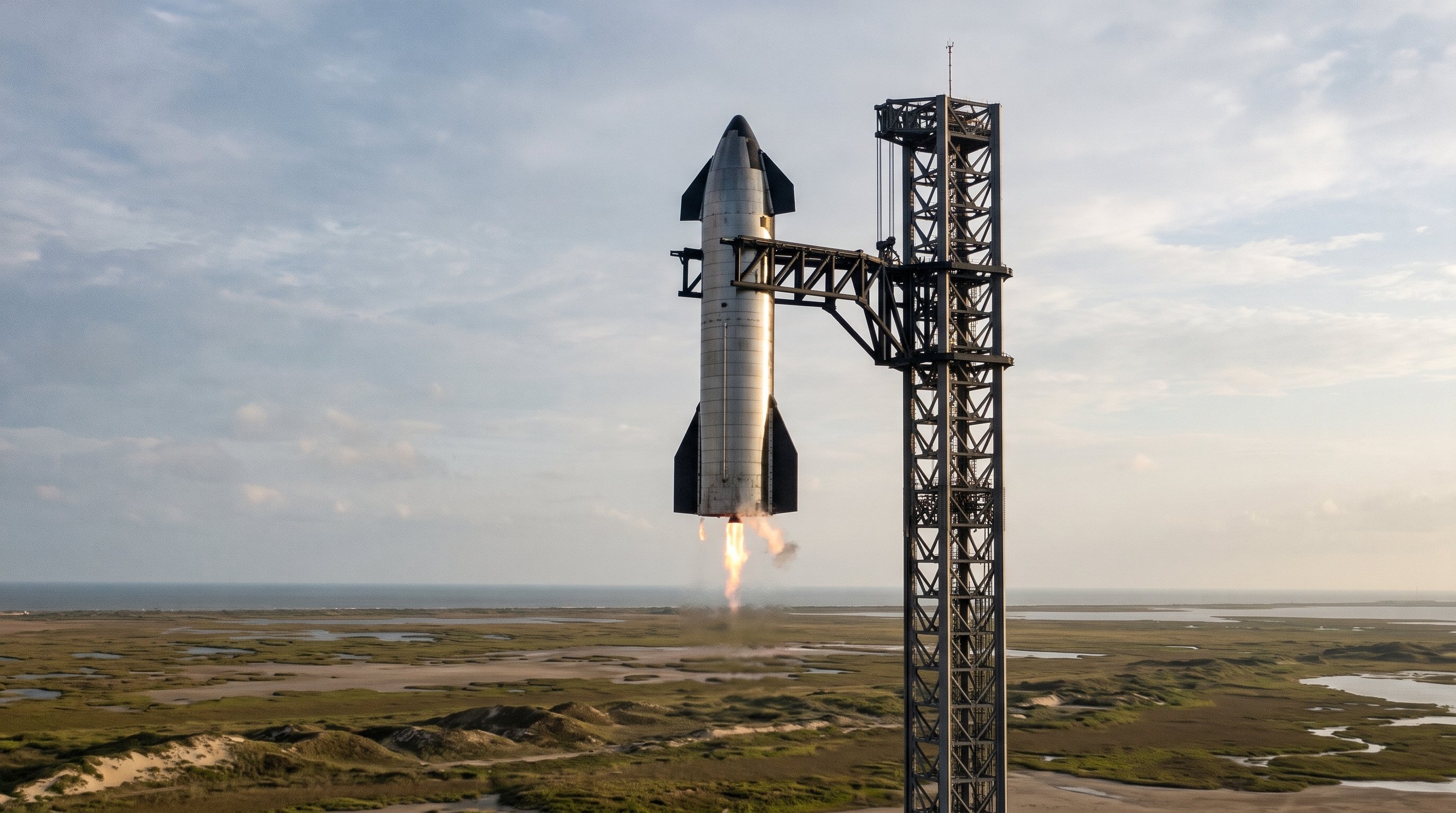
, SpaceX caught the upper part of its Starship rocket for the first time after a flight in orbit around the Earth. The spacecraft, Ship 42, returned to the Starbase launch site in southern Texas, where the two large arms of the launch tower grabbed it. SpaceX calls this tower Mechazilla.
Playing loads X, which may set cookies. More information
Starship consists of two parts stacked on top of each other. The lower stage, Super Heavy, also called the booster, gives the first push and returns after a few minutes. The upper stage, Ship, continues into space. Until now, a Ship came down in the sea after its flight and was lost. To use the rocket again, both parts have to come home safely.
A day in space
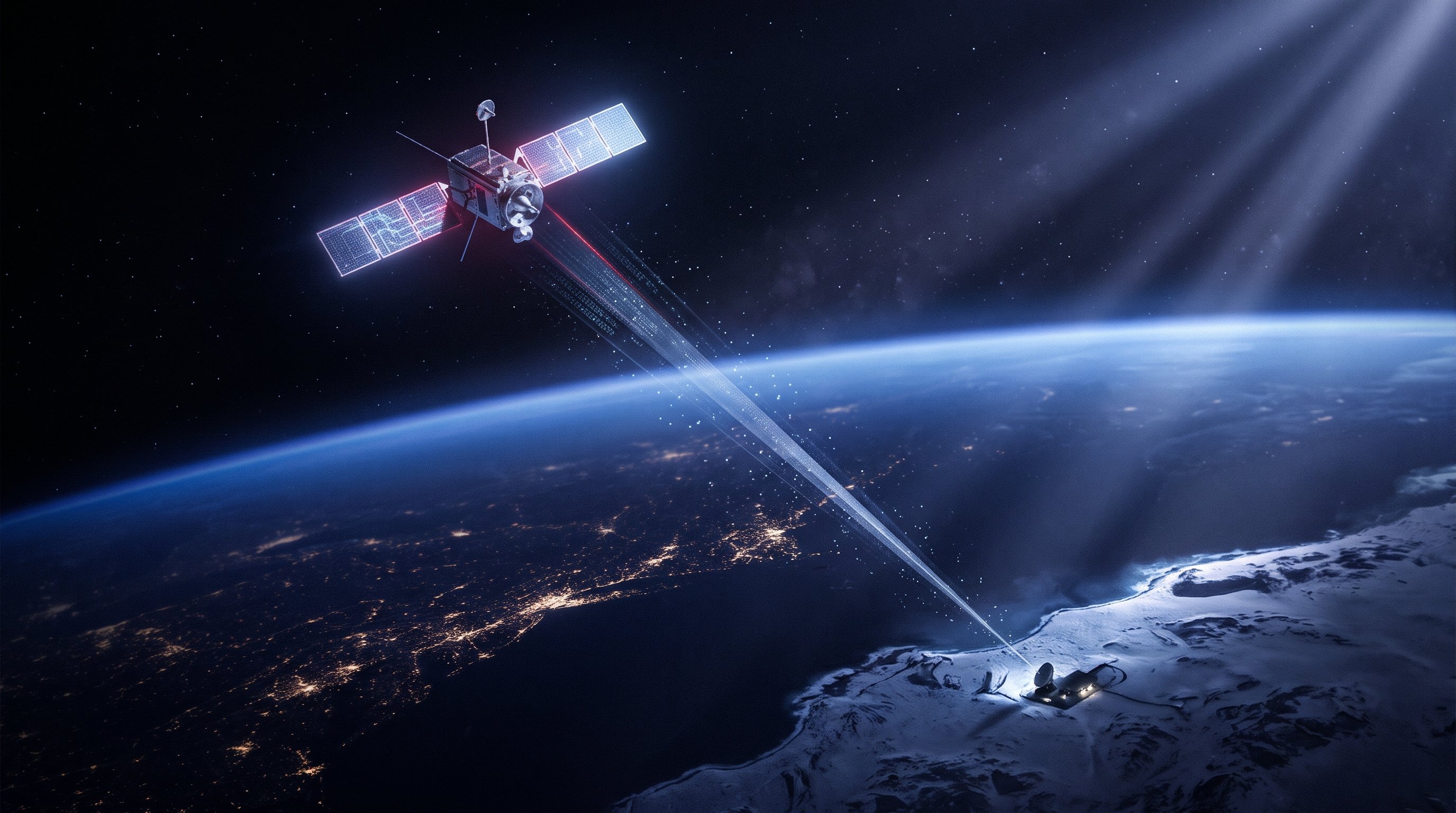
The flight, Starship's fifteenth test flight, began on the evening of 13 November from Starbase. Ship 42 orbited the Earth fourteen times and stayed in space for about 22.5 hours. About 40 minutes after launch, it released 26 Starlink satellites. These belong to the new, third generation of the satellites that SpaceX uses to provide internet access.
Catching a Ship is harder than catching a booster. The ship comes back from much higher up and at a much higher speed, straight through the atmosphere, and then has to end up exactly next to the tower.
Lower stage was lost
On this flight, SpaceX also wanted to catch the lower stage, Booster 22, at the tower. That did not happen. Shortly after launch, the booster called off the attempt itself. It was then sent to the Gulf of Mexico, where it was lost. During SpaceX's live broadcast, it was first said that the control system had detected a navigation problem. Elon Musk, the head of SpaceX, later said that the booster also had too little fuel left. The exact cause is still being investigated.
SpaceX has caught several boosters with the tower arms before. The goal of this flight, catching both parts in one go, has therefore not yet been reached. But the hardest part has now succeeded for the first time.
What does this mean for the road to the singularity?
A rocket that is thrown away after every flight is as expensive as an aeroplane that is scrapped after a single trip. Reusable lower stages have existed for years. With a caught Ship, a rocket comes within reach that no longer loses any of its large parts. If that works again and again, and the parts can fly again quickly, the price of a launch will fall to little more than the cost of fuel and maintenance.
That forces other rocket makers to reuse their rockets too or to become cheaper; otherwise customers will choose SpaceX. Cheap launches also make plans possible that are still too expensive today: many more satellites for internet in remote places, large telescopes and measuring stations, and in the long run even data centres in orbit around the Earth, where there is plenty of solar energy. In this way, space could become an ordinary place to build and work. At the same time, much of that access would be in the hands of a single company. Whether it stays that way depends on how quickly competitors catch up.
What is the technological singularity? Read the explanation →