Nederlands
Detector counts up to 276 photons with an uncertainty of less than one photon
Researchers at Paderborn University have built a measuring system that counts the particles of light in a short flash. Up to 276 photons, the count is off by less than one photon. This could help in building quantum computers that calculate with light.
Light consists of tiny particles called photons. An ordinary light meter only sees how bright the light is. But technology that works with individual particles of light, such as quantum computers that calculate with light, needs to know exactly how many photons are in a short flash of light. That is difficult: the more photons there are, the harder it becomes to count them one by one.
Timon Schapeler and Tim Bartley of Paderborn University in Germany have now built a measuring system that counts flashes of up to 276 photons with an error of less than one photon. It can even count more than 9,000 photons in a single flash, although the measurement then becomes less precise. They published the work in the scientific journal Optica.
One flash spread over 1,024 counting spots
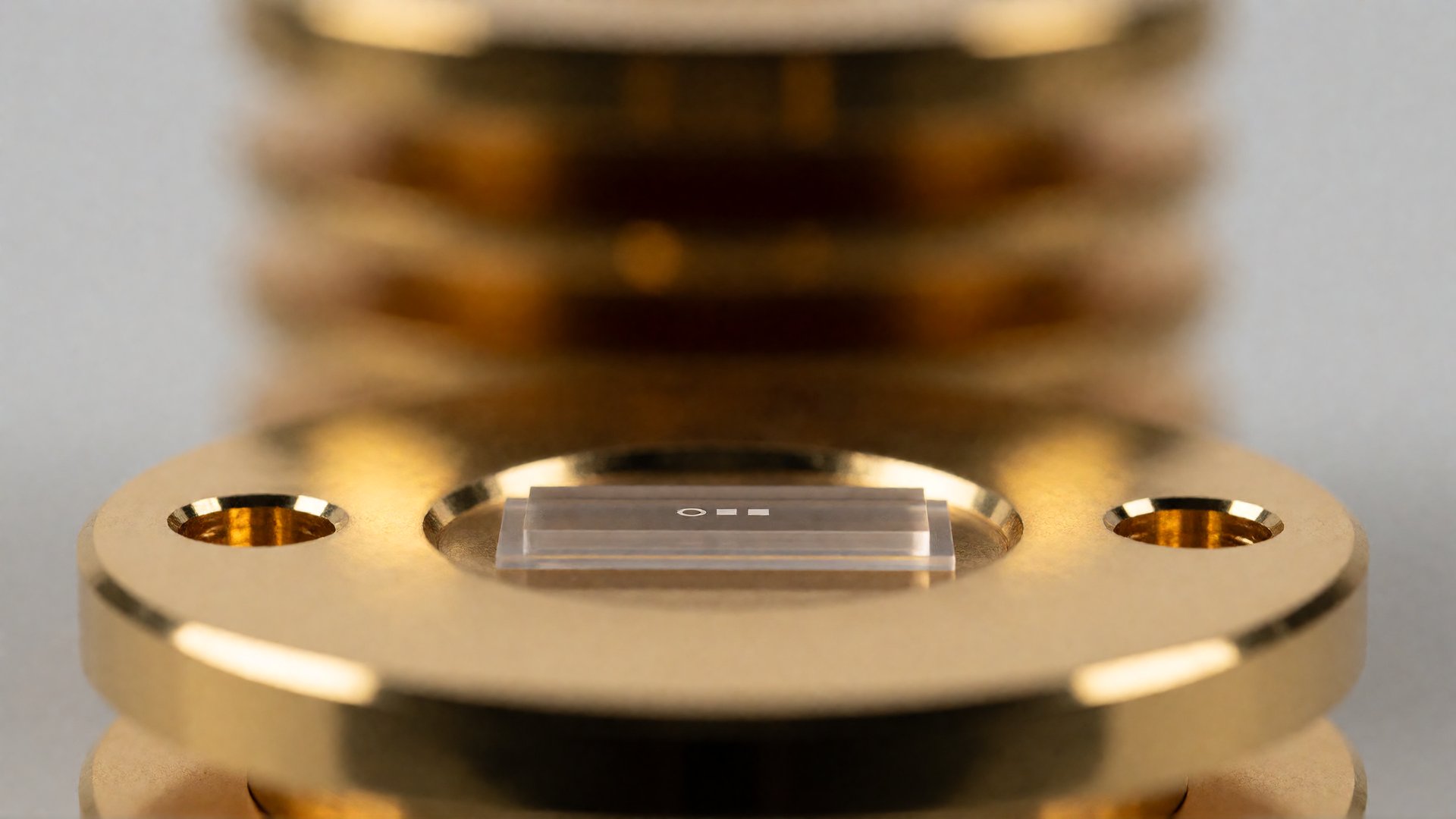
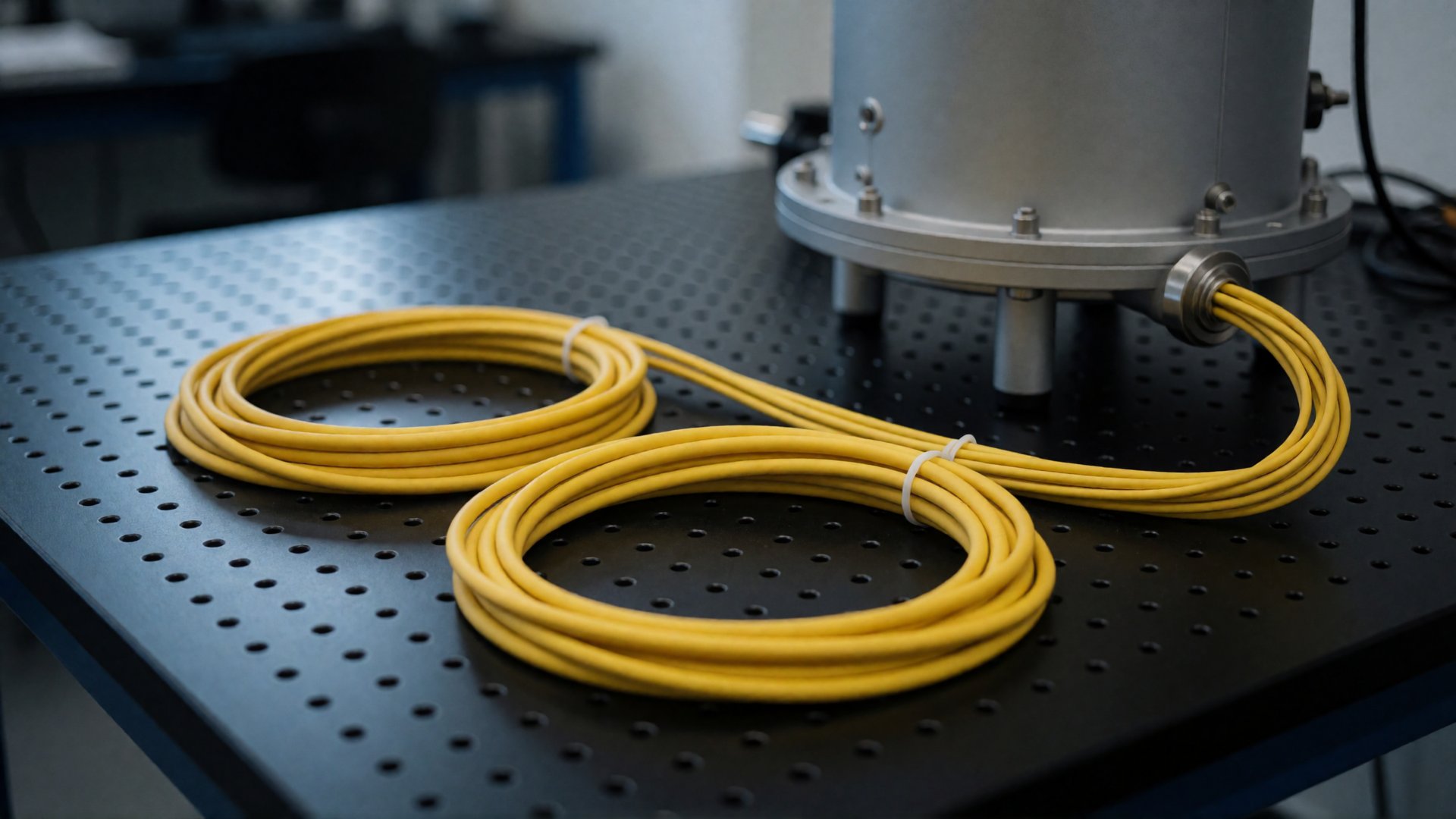
The researchers used detectors that are available off the shelf: superconducting nanowires. These are extremely thin wires that are cooled so strongly that they conduct electricity without resistance. When a photon lands on such a wire, the detector notices it immediately.
To count many photons at once, the researchers first split each flash of light into 128 smaller flashes that arrive one shortly after the other. These went to eight detectors, which gives 1,024 counting spots in total. Because the light is spread over so many spots, each spot receives only a small share of the photons, and together they count the whole flash. To make the result precise, the researchers used a computer model that describes how each part of the detectors responds. They had built that model earlier together with Mariia Sidorova of PTB, Germany's national institute for measurement standards.
The gain lies in that combination. According to the researchers, spreading out the light alone would have needed about 37,000 counting spots for the same precision, more than 36 times as many. According to Schapeler, their system is about ten times as large as earlier systems that spread out and count photons in this way.
First laser light, then quantum light
The researchers carried out the experiment with flashes from a laser, with an average of between 1 and 15,000 photons per flash. The next step is to measure light with quantum properties, such as the light that a quantum computer based on light uses to calculate. According to Bartley, such a measuring system can teach a lot about how to make these computers larger, and also about cameras that can see individual photons.
What does this mean for the road to the singularity?
Quantum computers that calculate with light work with flashes of light in which the exact number of photons matters. The larger such a computer becomes, the more photons pass through the device at the same time. If that number cannot be measured well, it is also impossible to see where things go wrong. A measuring system that counts hundreds of photons precisely, with far fewer counting spots than seemed necessary before, makes it easier to check and improve larger set-ups.
If that trend continues and the system also works for quantum light, the builders of such computers can see more quickly which part makes errors and fix it. Quantum computers are mainly expected to simulate molecules and materials that are too hard for ordinary computers. A better measuring instrument does not build such a computer by itself, but every step that speeds up the building brings that work closer: from new medicines to better batteries. Cameras that see individual photons can also benefit. They take pictures in light so dim that an ordinary camera sees nothing.
What is the technological singularity? Read the explanation →