Nederlands
Data centre
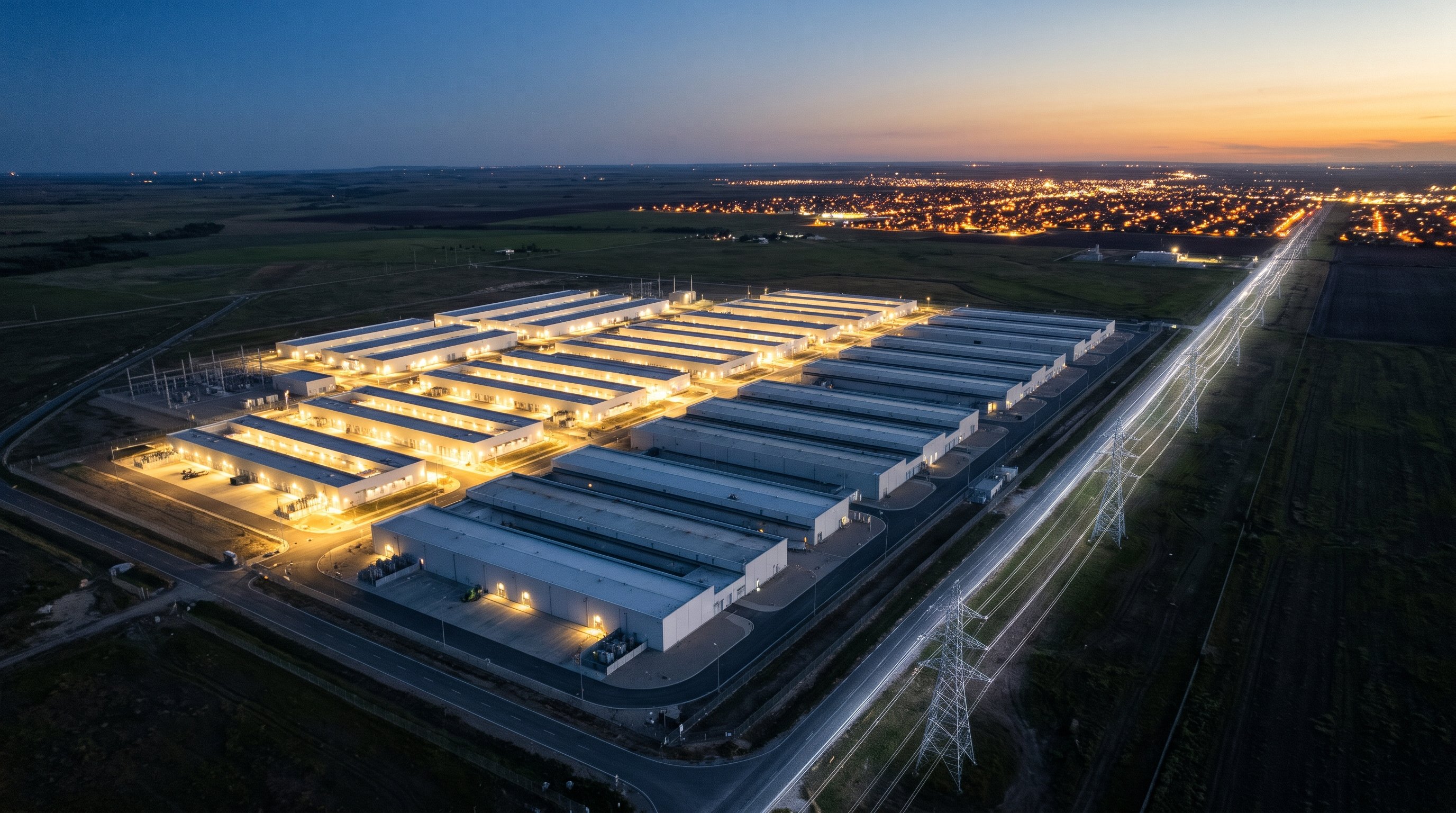
A data centre is a large building full of servers: powerful computers that compute and store data day and night. AI models are trained there and run there when you ask a chatbot something.
A data centre is a building full of servers: powerful computers in racks that work day and night. They store data, serve websites and carry out computation. When you ask an AI chatbot a question, it usually goes to a data centre, where an AI model works out the answer and sends it back.
How does it work?
A data centre holds thousands of servers, connected by fast cables. For AI there are many specialised chips in them, which together do enormous amounts of computation at the same time. Two things are always important: power and cooling. Chips get hot, and a data centre needs a constant, reliable power supply.
The work in a data centre falls roughly into two parts. First an AI model is trained, which can take weeks and uses a great deal of computing power. Then the model runs for users, and that happens continuously, every second, for millions of questions. Spreading that work over different chips makes the answers faster. The company d-Matrix showed this with a mix of two kinds of chips (link).
Why it matters
As AI is used more, data centres get bigger and demand more electricity. That affects the energy sector. OpenAI, for instance, promises that its new data centres will use less power when the grid is under strain. The first, in the US state of Georgia, can hand back up to 1,000 megawatts (link). At the same time Google and Meta are adding supply: they help pay for extra power from existing nuclear plants (link).
Demand for computing power itself is growing too. On GitHub, more than five times as many code changes were saved in September as a year earlier, mostly because of AI agents. The platform therefore put in 4 million extra CPU cores, the computing cores of ordinary processors (link). Data centres are thus more than storage space: they help determine how fast AI can develop and where the power for it comes from.
Articles about Data centre
-
Cornell builds first working transistor from semiconductor with the widest band gap ever
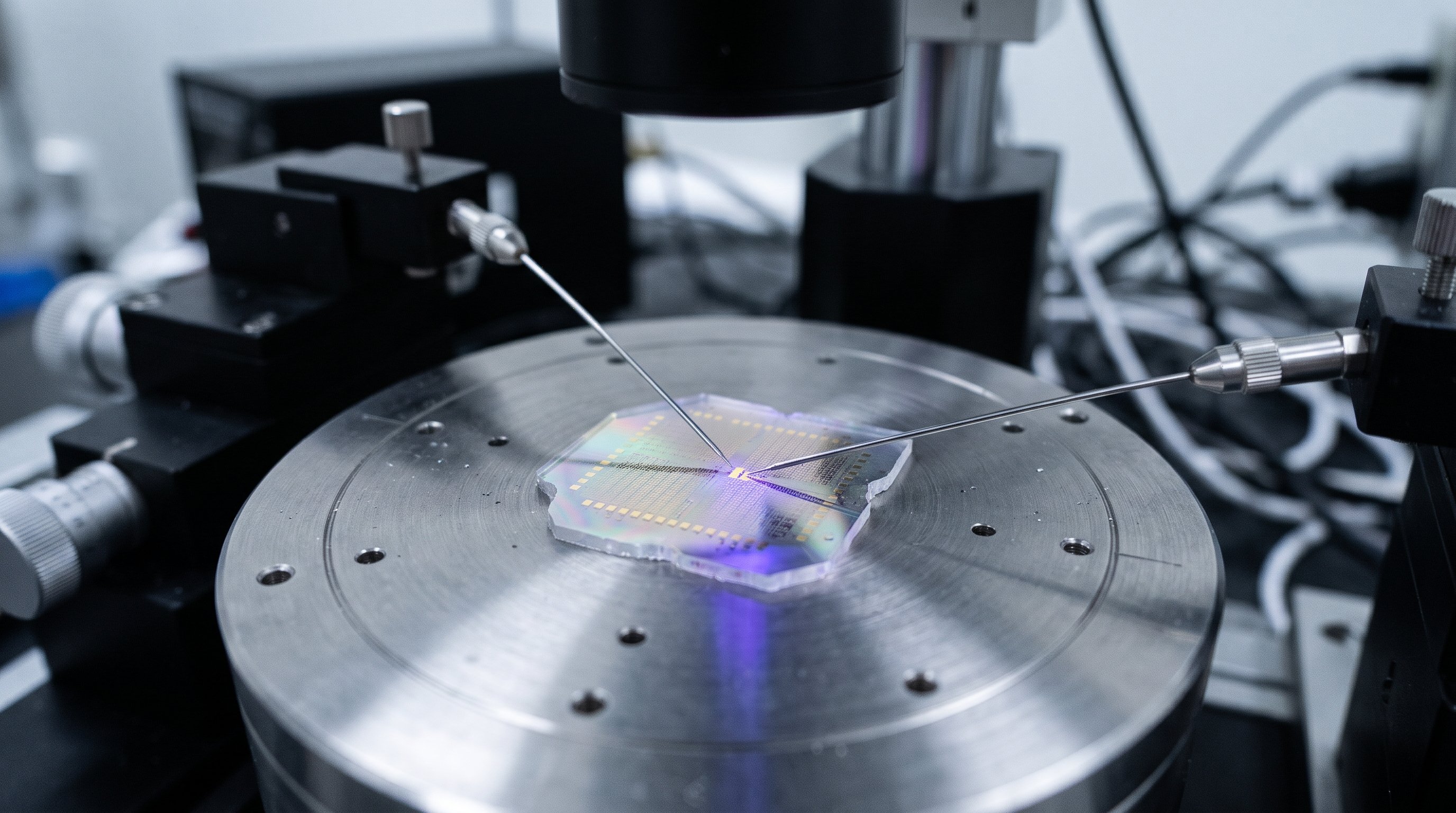
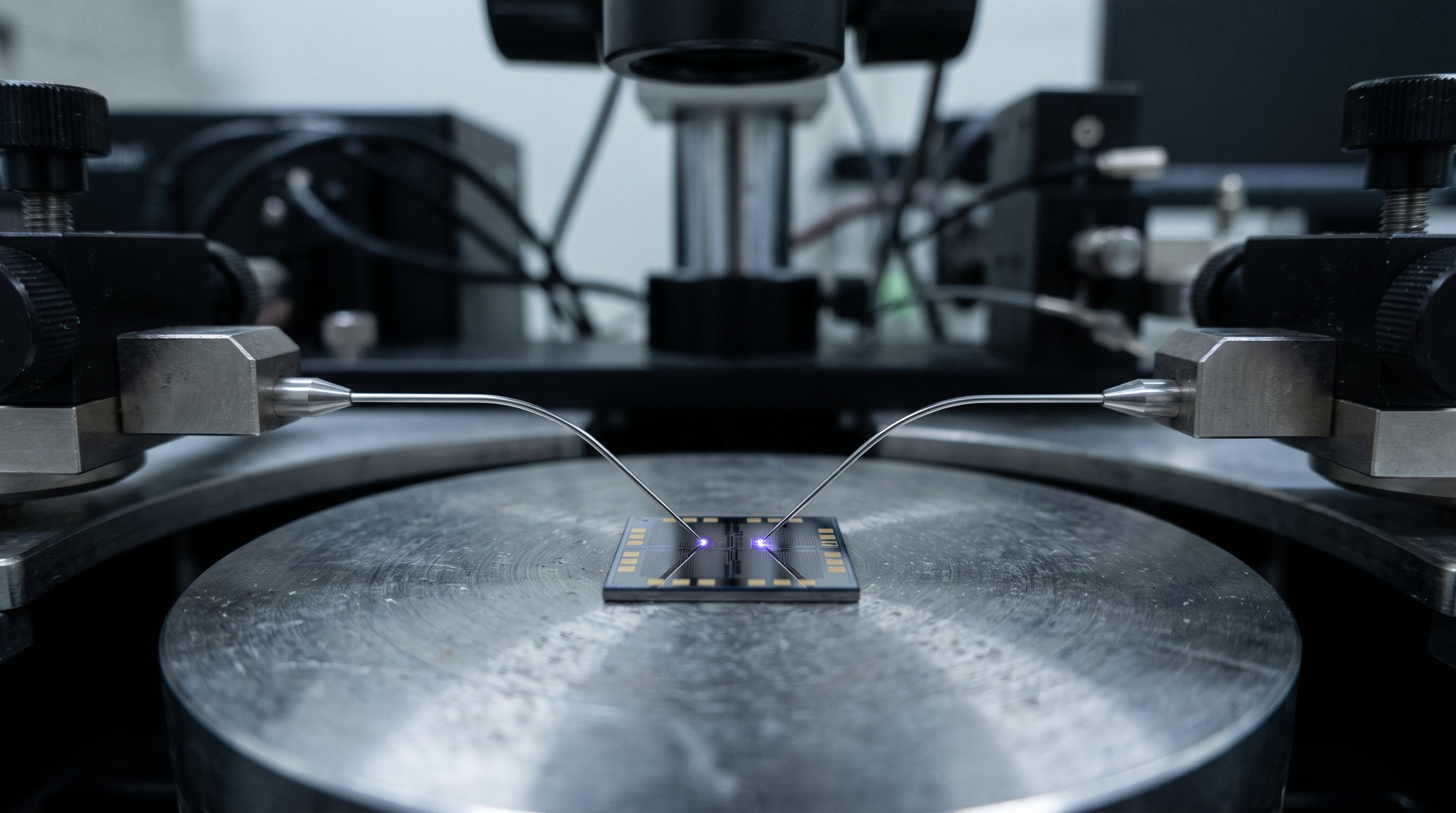
Researchers at Cornell University made a semiconductor with a band gap of more than 7 electronvolts, the widest ever in a working device, and built a diode and a transistor from it. With further development, this could lead to more efficient electronics for high voltages.
-
Tiny memory component works at just 0.6 volts and survives a trillion switches
Researchers from South Korea, together with Samsung, made a memory component 5 nanometres thick that switches fast at just 0.6 volts and withstands a trillion switches. In time, this could lead to memory that uses less power, including in AI servers.
-
Small open AI model reads text aloud on your phone, without internet
The AI company Gradium has released Phonon as open models: small text-to-speech models that read text aloud with a natural voice, entirely on a phone, a laptop or in the browser. On a public Hugging Face leaderboard, Phonon is among the most intelligible text-to-speech models.
-
Unsloth shrinks a large open AI model from Alibaba and, by its own tests, makes it more accurate than other versions
Unsloth has released new, smaller versions of Qwen3.8-Flash-Next, a large open AI model from Alibaba. By its own tests, they score 15 per cent higher on average than other shrunken versions. This lets more people run the model on their own computers.
-
OpenAI uses its AI for hardware design: from 3D models to circuit boards
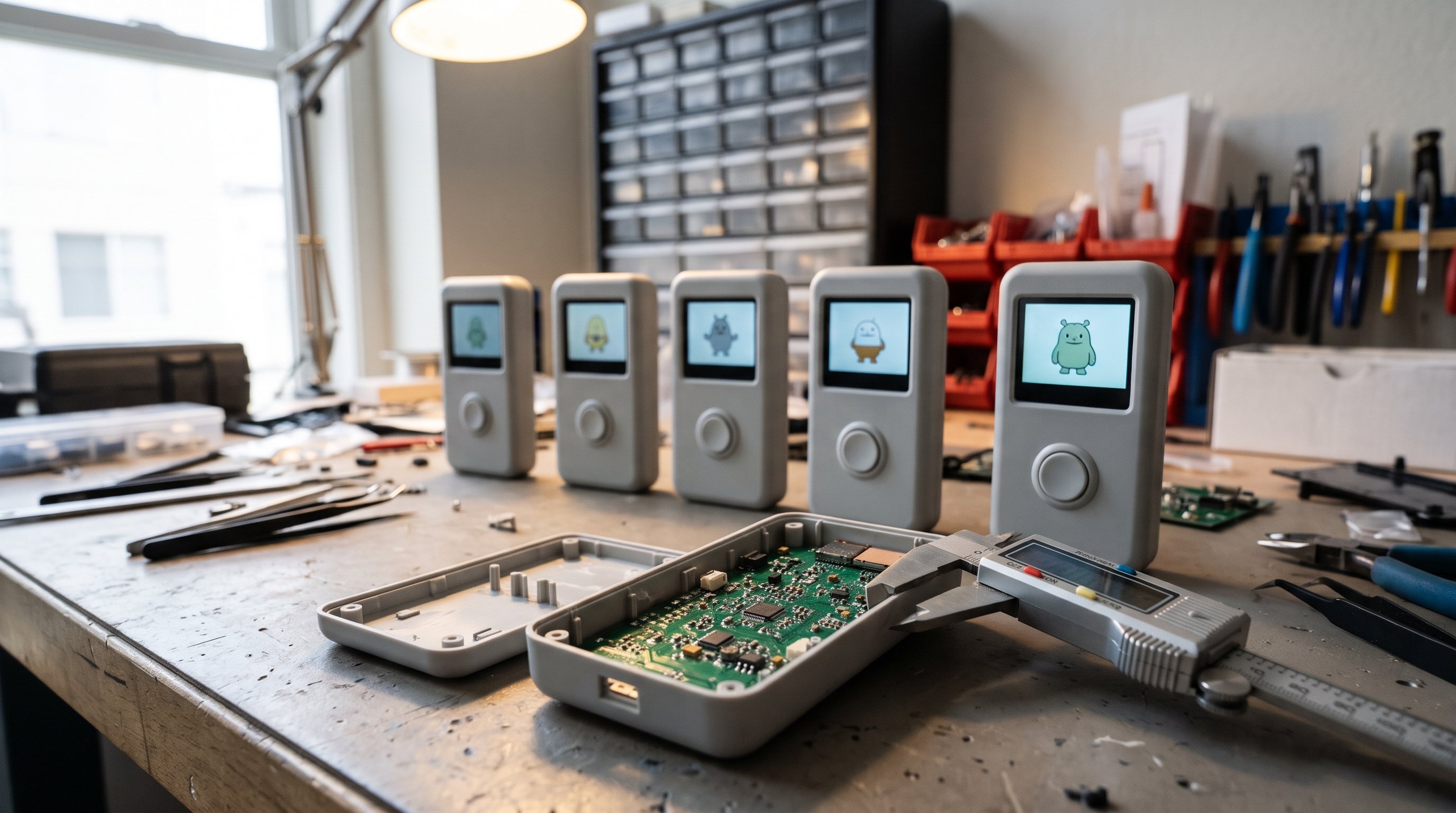
OpenAI shows how ChatGPT and Codex help engineers design physical products. Two employees had the GPT-6 Astra model design a working prototype in less than a week. Getting it made in a factory still took several rounds of checks by humans.
-
Small X-energy nuclear reactor passes safety review: construction permit for plant at Texas chemical site moves closer
The US nuclear regulator NRC has completed its safety review of the Xe-100, a small reactor cooled with helium gas. Four of these reactors are to supply power and steam to a Dow plant in Texas. The construction permit is the next step.
-
OpenAI data centre will cut its power use by up to 1,000 megawatts when the grid is in trouble
OpenAI promises that its new data centres will use less electricity when the power grid is under strain. The first one, in the US state of Georgia, can cut up to 1,000 megawatts. A British trial showed that AI computers can do this quickly.
-
Rocky Linux creator builds Linux-compatible kernel in eleven days with an AI agent
Gregory Kurtzer, known for CentOS and Rocky Linux, built Ginux in eleven days: a new core for an operating system that can run existing Linux programs. An OpenAI AI agent wrote almost all the code. It is still a research prototype.
-
Google runs an AI model on a TPU in space for the first time
Google's Project Suncatcher has reached a milestone: a Gemma 4 model aboard a prototype satellite answered a prompt from orbit. It is a first step towards data centres in space.
-
German company makes a molecule that stores quantum information and can pass it on with light
The German company NVision and researchers from Ulm and Jerusalem describe in Nature a molecule of carbon and hydrogen that stores quantum information and can pass it on with light. Such a building block could later link quantum computers together.
-
Small transportable nuclear reactor may be tested at full power in Idaho
The US Department of Energy has approved the safety analysis of Kaleidos, a 1-megawatt nuclear reactor that can travel by lorry. After one final check, the company Radiant may test the reactor for several months.
-
Mistral releases a giant AI model for anyone to use, strong in coding and security
France's Mistral is putting Mistral Large 4, nicknamed Le Chonk, online for free: a model with a trillion parameters that anyone can download and, with enough computers, run themselves. According to the company, it is the best open model for programming and for securing software.
-
GitHub adds 4 million CPU cores to cope with a wave of AI agents
In September, changes to code were saved 7.4 billion times on GitHub, more than five times as often as a year earlier, mostly because of AI agents. The platform added 4 million processor cores this year and is rebuilding its storage.
-
SpaceX leases 40 billion dollars' worth of AI chips
SpaceX has signed a binding commitment to lease about 40 billion dollars' worth of AI chips and data centre equipment, including Nvidia's new Vera Rubin chips. The first equipment is due in the first half of 2027.
-
Solar power overtakes nuclear power worldwide for the first time
In 2025, solar panels generated more electricity than all nuclear power plants combined for the first time, says a major annual report on nuclear power. This year the lead is already clear, while nuclear's share is at its lowest level in 45 years.