Nederlands
TU Munich robot stops when unsure and learns new tasks without forgetting old ones
Researchers at the Technical University of Munich have taught a robot to stop when it is not sure how to do a task. A person then demonstrates the movement. Each new skill gets its own extension of the AI model, so the old skills keep working.
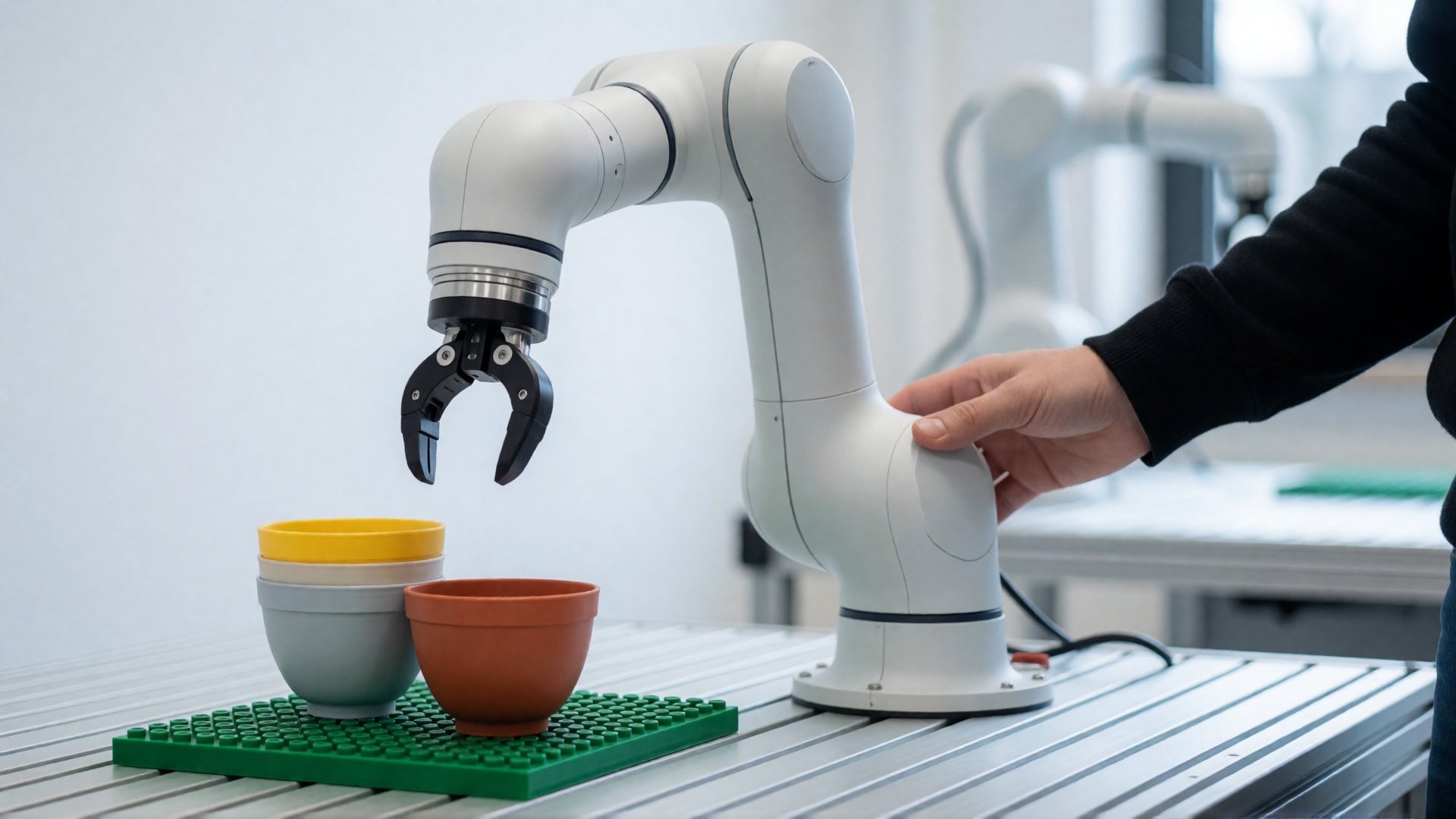
A robot that cannot do something properly usually just carries on. Researchers at the Technical University of Munich (TUM) take a different approach: their robot stops as soon as it is unsure and then waits for help. The team of researcher Ralf Römer and professor Angela Schoellig combines this with a second ability: the robot learns new skills without losing the old ones.
Too few examples
The robot works with a vision-language-action model: an AI model that turns an instruction in words into movements, and uses camera images to see what the situation looks like. Such a model learns from examples. The internet has plenty of text and photos, but not enough robot movements. People can demonstrate movements and researchers can recreate them in a computer simulation, but that can never cover every situation in the real world. So sooner or later a robot runs into something it cannot do well.
In the experiments, a robot arm did simple jobs on a worktable, such as stacking bowls and putting something in a drawer.
Stopping and being shown
If the robot is unsure, it stops. A researcher then guides the robot arm through the unfamiliar movement. With these new examples, the team gives the model extra training precisely for the situations in which it was unsure. According to Römer, this means up to 20 per cent less training is needed.
The team builds on relatively small language models, such as PaliGemma, an open model from Google. A small model responds to an instruction much faster than a large model such as ChatGPT, and that speed is needed to control a robot without delay.
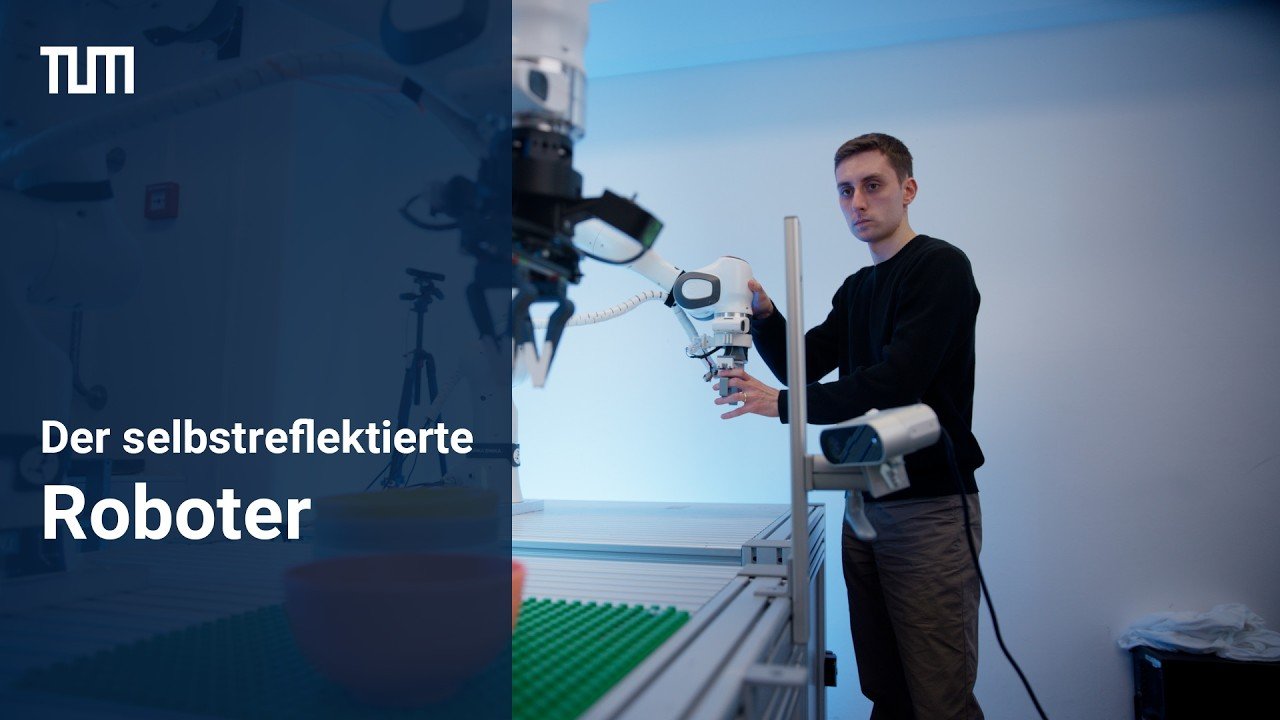
A video from TUM shows how the robot stops and how the researcher helps it.
Playing loads YouTube, which may set cookies. More information
Learning without forgetting
An AI model that learns something new changes on the inside. As a result, it can start doing old tasks less precisely: new and old knowledge get in each other's way. Römer prevents this with a so-called adapter, a small, separate extension of the model that stores only the new skill. For each task, the system itself picks the adapter it needs, and the rest of the model is left untouched. Many adapters can be added this way. Schoellig expects that people will trust a robot that works like this more quickly.
The system is called CLARE and was described in the journal IEEE Robotics and Automation Letters in May 2026. TUM does not say exactly which language model CLARE is built on or when the experiments were carried out. The team is also working on ways to predict when a robot is about to make a mistake, before it happens.
What does this mean for the road to the singularity?
Robots in factories and warehouses are now trained in advance and rarely learn anything new afterwards. Every new task means collecting examples again, training again and hoping the old tasks keep working. A robot that signals by itself where it gets stuck, and gets a small extension for each task, turns this around: the learning happens during the work, exactly where it is needed.
If this trend continues, a robot becomes something the people on the shop floor can teach themselves, the way a new colleague is shown how to handle something. A small workshop or a care home then does not have to wait until a manufacturer has foreseen every situation. And because every skill is a separate building block, it seems natural to share such a block with other robots of the same type: what one robot learns in one place, many more could then do. For that, the robot does have to recognise its own doubt reliably, because a robot that does not see a mistake coming will not stop either. That is exactly what the team is working on next.
What is the technological singularity? Read the explanation →