Nederlands
Vaccine against gut bacterium Shigella meets its goals in two studies in adults and babies
The trial vaccine S4V2 from Valneva and LimmaTech led to fewer Shigella infections in adults in a challenge trial, and babies in Kenya made antibodies against all four variants. The search for the best dose is now under way.
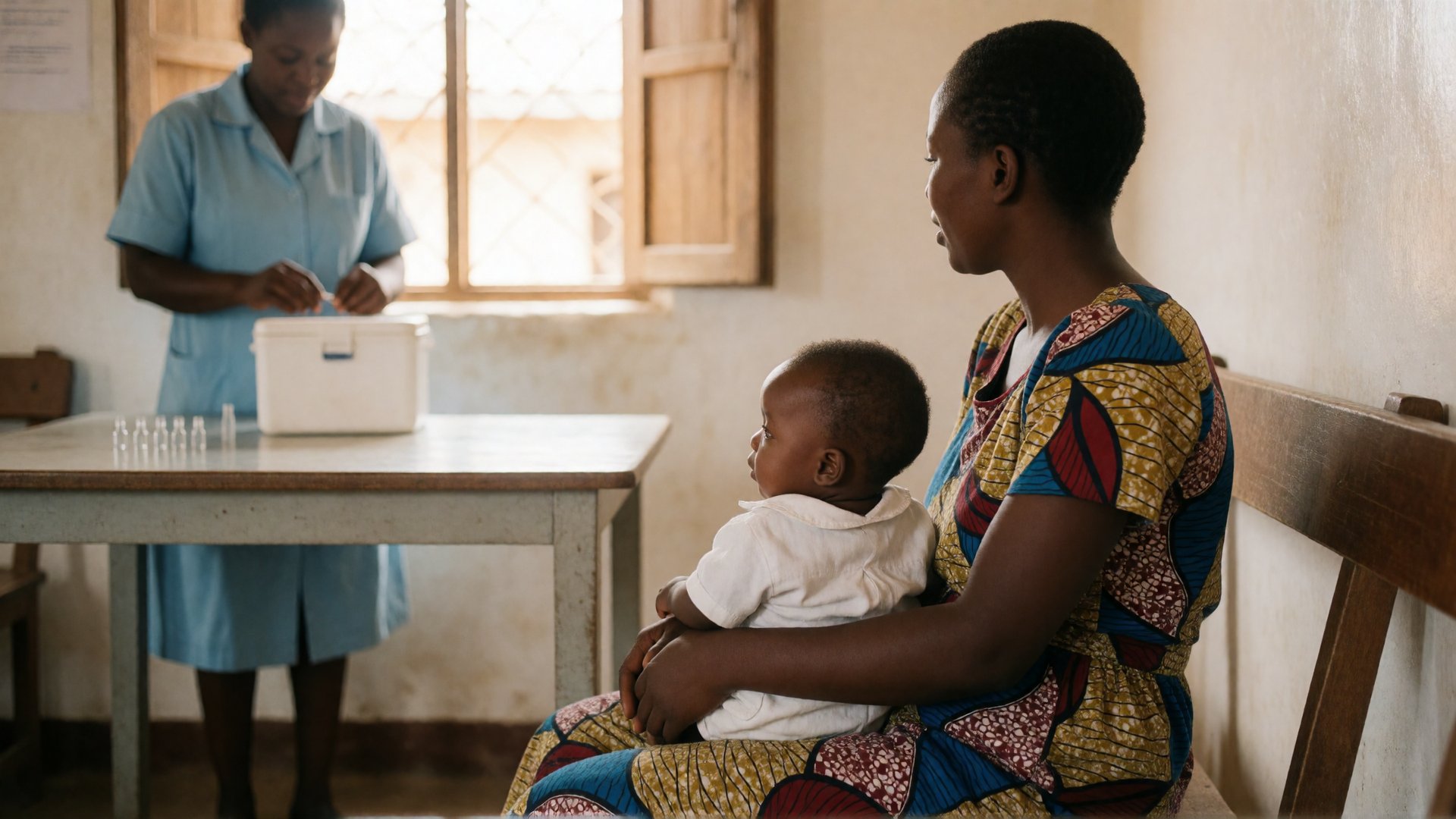
Shigella is a gut bacterium that causes severe diarrhoea with blood and fever. An estimated up to 165 million people fall ill from it every year, and it is one of the main causes of deadly diarrhoea. There is not yet an approved vaccine. This is becoming more urgent, because more and more Shigella bacteria no longer respond to antibiotics: antibiotic resistance.
The French vaccine company Valneva and the Swiss biotech company LimmaTech Biologics announced the results of two phase 2 studies of their trial vaccine S4V2 on 9 November 2026. According to the companies, both studies met their main goal.
Four variants in one vaccine
Shigella comes in many variants, and the immune system recognises each one differently. S4V2 targets four of them: Shigella sonnei and three variants of Shigella flexneri. The vaccine contains pieces of the sugar coating on the outside of the bacterium, linked to a protein. Such a link mainly helps the immune system of young children to respond well to it.
Less illness after a challenge trial
In the United States, about 120 healthy adults aged 18 to 50 received two injections of S4V2 or of a dummy vaccine (placebo), one month apart. Afterwards, under medical supervision, they were deliberately given a Shigella sonnei bacterium. Those who had received the real vaccine fell ill clearly less often than those who had received the placebo. The companies have not yet announced exactly how strong the protection was; those analyses are still under way. This trial does not yet show anything about the three flexneri variants.
Antibodies in babies in Kenya
In Kenya, 110 babies aged nine months received two injections: S4V2 at one of two doses, or an existing vaccine against meningitis for comparison. The babies who received S4V2 made clearly more antibodies against all four variants. Six months after the second injection, these were still above the level before vaccination. Follow-up research will show whether these antibodies also really protect babies against illness. The Gates Foundation paid for this study.
In both studies, the vaccine was well tolerated. Most side effects were mild to moderate, did not occur more often than in the comparison group and went away on their own. Valneva is now reviewing all the data to choose the best dose and the best injection schedule for the next step. The US Food and Drug Administration (FDA) already gave the vaccine a fast-track review route in 2024.
What does this mean for the road to the singularity?
A vaccine that protects babies against four variants at once could save many children's lives, especially in poor countries. And because it works before an infection starts, it also protects against bacteria that antibiotics can no longer stop. These two studies are an important step on that road: the next one is a large study that shows how well the vaccine protects children where Shigella really occurs.
What is the technological singularity? Read the explanation →