Nederlands
People with stiff person syndrome walk faster after experimental CAR-T therapy
One year after a single treatment with the experimental cell therapy miv-cel, 26 people with stiff person syndrome needed a median of 49 per cent less time for a short walking test. Larger studies with a comparison group are the next step.
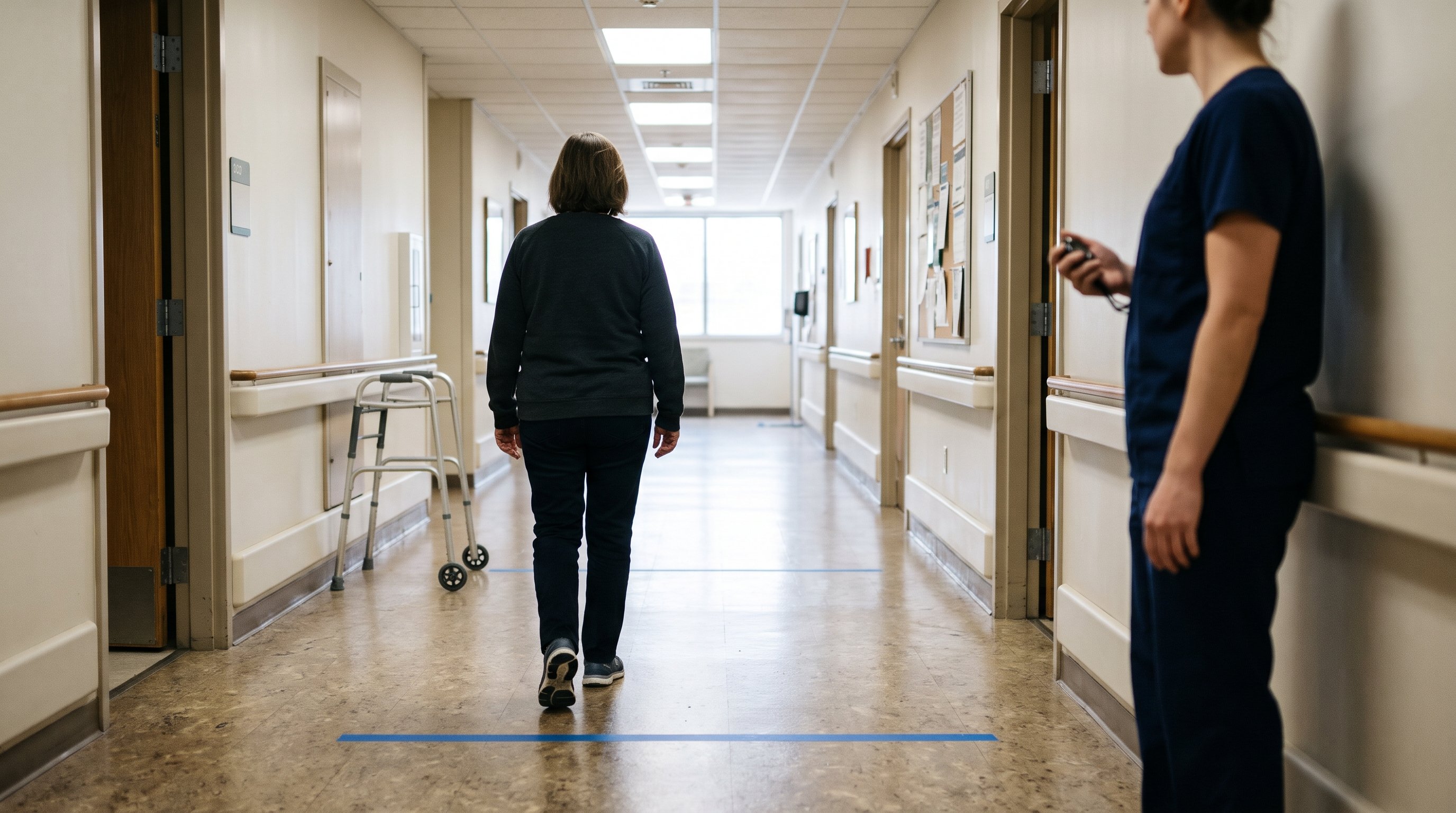
Stiff person syndrome is a rare autoimmune disease: the immune system turns against the body's own nervous system. Patients develop stiff muscles and painful spasms, and walking becomes increasingly difficult. No medicine made specifically for this disease has been approved yet.
A new cell therapy, mivocabtagene autoleucel, or miv-cel for short, is now showing promising results. In the phase 2 study KYSA-8, 26 adults received a single infusion of the therapy. The study was published on 9 November 2026 in the scientific journal JAMA Neurology. The researchers presented the one-year results at a conference in October 2026.
Walking faster, fewer medicines
The researchers measured how long participants took to walk 7.6 metres. After 16 weeks, that time had fallen by a median of about 46 per cent, and after one year by 49 per cent. Median means here that half of the participants improved by at least that much. Of the twelve participants who needed a walking aid for the test at the start, eight could do the test without help after one year.
After one year, 24 of the 26 participants also no longer needed other medicines that suppress the immune system. All participants completed the one-year study, according to the University of Colorado Anschutz, where neurologist Amanda Piquet led the study. The research was paid for by the developer of the therapy, the US biotech company Kyverna Therapeutics.
The study had no comparison group that received a different treatment or no treatment. Larger studies will have to show how miv-cel performs compared with usual care. They will also show how long the improvement lasts.
How the therapy works
In CAR-T therapy, a doctor takes immune cells called T cells from the patient's blood. In a lab, these cells receive an extra piece of DNA that allows them to recognise a particular protein. For miv-cel, that is CD19, a protein on B cells: immune cells that play a part in this disease. After a preparatory course of chemotherapy, the patient receives the modified cells back. They then seek out and attack the B cells.
According to Tech Times, 92 per cent of the participants had a known side effect of CAR-T therapy in which the immune system becomes very active for a while. In everyone, it stayed in the two mildest categories. In 12 per cent, a mild neurological side effect occurred; everyone recovered fully. A rare, severe form of excessive immune reaction did not occur in this study.
Safety is being watched closely. In August 2026, Novartis stopped eight studies of a similar CAR-T therapy after three patients died from such a severe immune reaction. Researchers are still working out why miv-cel has done better so far. One possible explanation is the way the cells are made, but that has not been proven yet.
Kyverna aims to complete its application to the US Food and Drug Administration (FDA) at the end of 2026. If miv-cel is approved, according to the university it will be the first treatment made specifically for stiff person syndrome, and the first CAR-T therapy for an autoimmune disease.
What does this mean for the road to the singularity?
CAR-T therapy started as a treatment for blood cancer. This study shows that modified immune cells can also hold back a serious autoimmune disease, with a single treatment. If larger studies confirm this, the same approach could open the way for other diseases in which the immune system attacks the body itself.
What is the technological singularity? Read the explanation →