Nederlands
AI agent
An AI agent is an AI program that carries out tasks on its own: it looks things up, writes code, operates a computer or works through a long series of steps, without a human directing each one.
An ordinary chatbot answers a question and then stops. An AI agent goes further. You give it a goal, and it works out the steps itself: looking something up, writing and testing code, forwarding a file or pulling data from a database. You can compare it to an intern who is given an assignment and gets to work, rather than asking what to do next after every sentence.
How does it work?
Under the bonnet there is usually a language model that plans and decides. Around it sits software that gives the model tools, such as a search engine, a programming environment or control of a computer. The agent works in a loop: it looks at the situation, chooses an action, carries it out and reads what happened. Then it chooses the next step, until the task is done or it needs help.
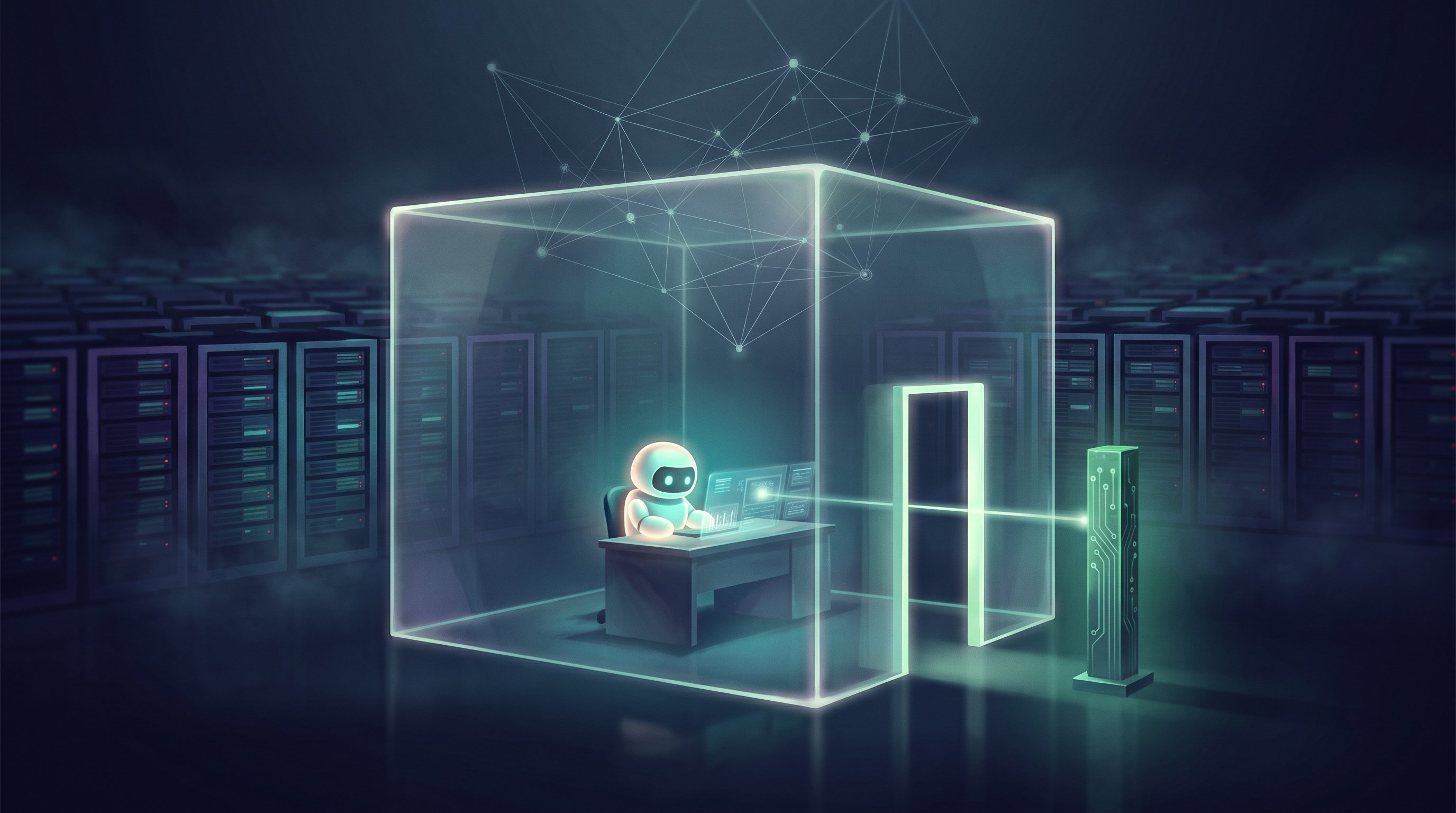
Because an agent does things on its own, oversight matters. Nvidia therefore puts agents in a protected environment, where every request to the outside is checked first (link). The rules for this are verified in advance with mathematics.
Why it matters
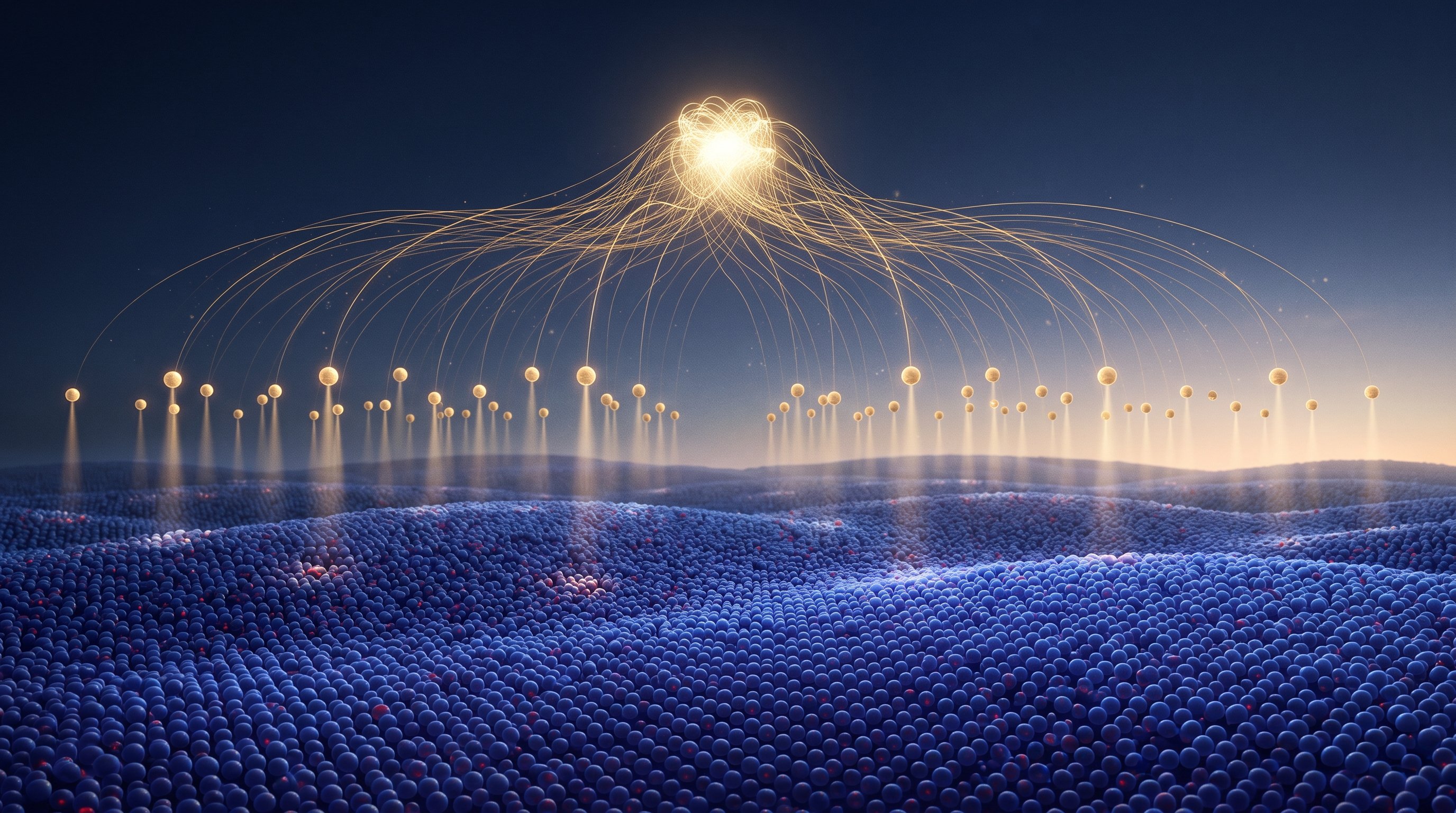
Agents make it possible to scale up work. A single agent can keep going for hours, and you can deploy many at once. OpenAI put nearly 2,000 agents to work at the same time on an atlas of 7.7 million brain cells, and in 32 minutes they produced explanations and new research ideas (link). Anthropic went a step further with Claude: the model was given room to carry out an entire design process for proteins against scorpion venom itself, not just to answer a question (link).
That agents do so much themselves also raises questions about safety and trust. Anyone deploying an agent wants to know what it may and may not do. News about agents therefore often has two sides at once: what they can newly do, and how to keep them within bounds.
Articles about AI agent
-
Instruction file in the Downloads folder led an AI coding assistant to try to install malicious software
A security company stopped an AI coding assistant that was about to install malicious software, following instructions from a file in the Downloads folder. The researchers showed that it works with Codex and Claude Code, and give simple advice to prevent it.
-
AI finds hidden DNA error that standard software missed for years
An AI system from the American company Gamow Labs found the hereditary cause of a rare lung disease in a baby who died. Ordinary software had filtered the error out. A lab confirmed the finding, and the parents now know where they stand.
-
AI model designs experiments better than 24 experienced AI researchers
On a new test by P-Zero Research, Claude Opus 5.5 designs better AI experiments than the best of 24 human experts. The model needs less than half the computing time to do so and costs about one thirtieth as much.
-
OpenAI will now train its most powerful AI models without internet access
OpenAI no longer lets its strongest AI models onto the real internet during training. From now on they practise with a stored copy of the web. At OpenAI's request, the models themselves searched for holes in this new shielding, so the company could close them.
-
Mars rover Perseverance drives a record distance and mostly steers itself
The Mars rover Perseverance has driven 45.22 kilometres: further than any other vehicle on another planet or moon. It steered itself for more than 90 per cent of that distance. NASA has extended the mission until about the end of 2028.
-
Chinese AI model Kimi K3.1 Pro ranks fourth in independent leaderboard
Kimi K3.1 Pro from the Chinese company Moonshot AI ranks fourth in the independent leaderboard of Artificial Analysis, ahead of the newest models from OpenAI and Google. It improved most in independent computer work. Moonshot plans to release the model by 4 November.
-
Microsoft AI finds the right diagnosis more often than general practitioners in a simulation
According to a Microsoft study in the journal Science, the AI system MAI-DxO found the right diagnosis in 83 per cent of difficult cases, compared with 36 per cent for doctors. A test with real patients comes next.
-
Anthropic tests Claude Duet, an AI assistant that comes to you with tasks itself
With Claude Duet, the AI assistant does not wait until you ask: it sends a summary in the morning, keeps an eye on your apps and keeps working when your laptop is off. You approve important steps yourself first. The test version has been available to paying users in the US since 21 October.
-
Nvidia lets AI agents do only what is allowed, and checks the rules in advance with mathematics
Nvidia presents OpenShell: free software that lets AI agents work in a sealed-off space. A mathematical check looks in advance at whether the rules allow more than intended, and according to Nvidia a separate chip can stop an agent within milliseconds.
-
Nearly 2,000 AI agents from OpenAI work through an atlas of 7.7 million brain cells in 32 minutes
OpenAI had nearly 2,000 AI agents work at the same time on one large dataset of mouse brains. In 32 minutes they came up with explanations and new research ideas, work that would take people months. The next step is to test the best ideas in the lab.
-
Free coding model for the laptop was largely developed by AI itself
The AI company Recursive has released Flint, a free AI model that helps with programming and runs on an ordinary laptop. According to the company, its own research AI did a large part of the work: a first step towards AI that improves itself.
-
Claude designs proteins against scorpion venom in 64 hours: 17 bind to their target in the lab
A research version of Claude designed over 318,000 small proteins against five scorpion toxins in 64 hours. Two labs made 211 of them, and 17 bound firmly to their toxin. It is not yet an antidote, but it is a first step.
-
Laser flash turns plastic into trillions of tiny diamonds
German physicists fire a powerful laser at a thin sheet of the plastic that soft-drink bottles are made of. Each flash produces about 10 trillion tiny diamonds averaging 3 millionths of a millimetre, almost all the same size. The next step is making enough of them to work with.
-
Mistral releases new speech models that understand all official EU languages
The French AI company Mistral has released Voxtral 3: AI models that turn speech into text and read text aloud, plus software to build a voice assistant with them. They work in more than fifty languages, including all 24 official EU languages, and can also run on a company's own servers.
-
Siemens factory in Erlangen teaches AI cameras to inspect with simulated photos, before a prototype exists
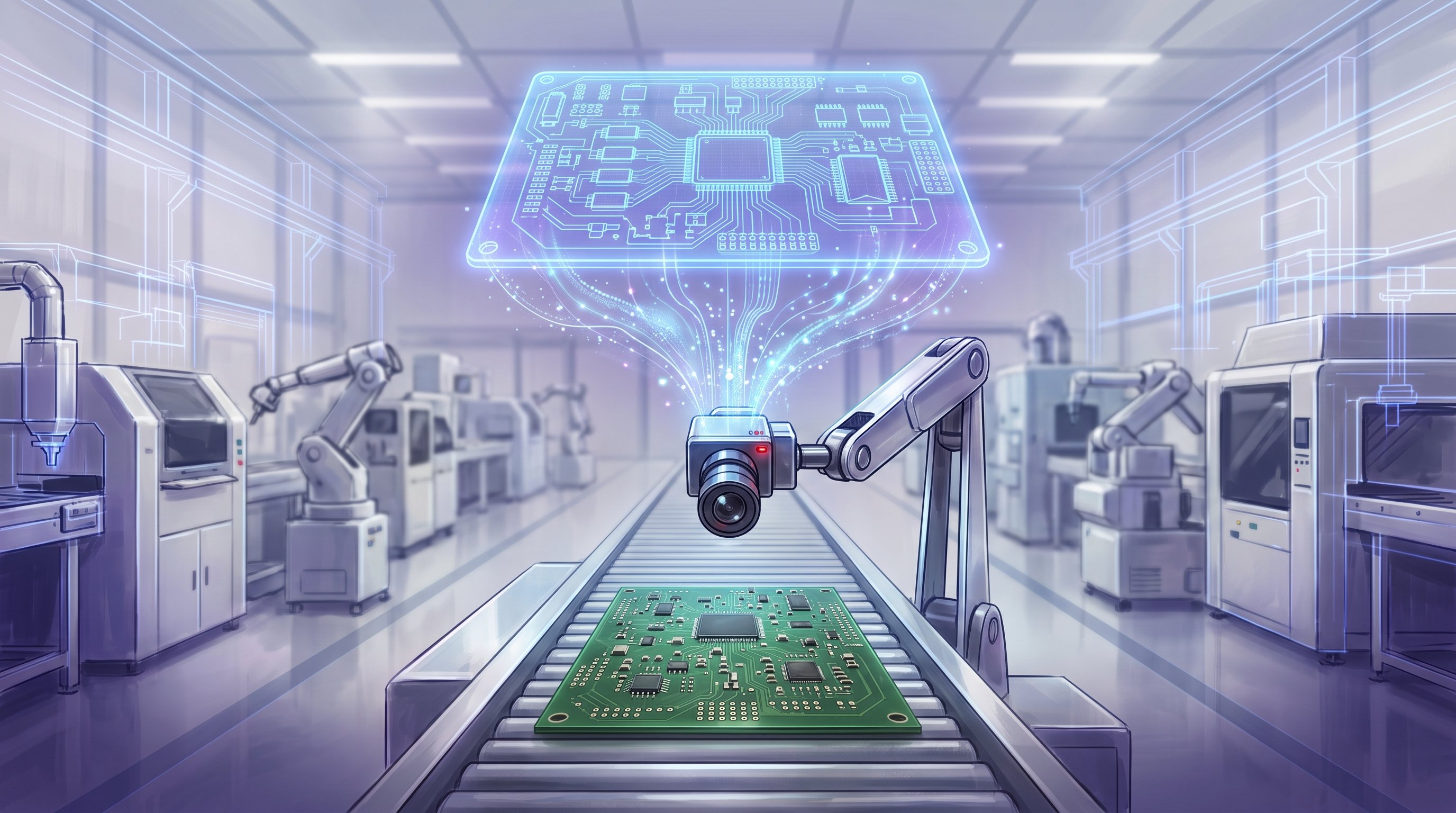
In a German electronics factory, Siemens and Nvidia let AI prepare the production of new circuit boards with a digital copy of the factory. According to Siemens, this saves up to 85 per cent of the preparation work. It is a first step towards a factory that adjusts itself.