Nederlands
Nearly 2,000 AI agents from OpenAI work through an atlas of 7.7 million brain cells in 32 minutes
OpenAI had nearly 2,000 AI agents work at the same time on one large dataset of mouse brains. In 32 minutes they came up with explanations and new research ideas, work that would take people months. The next step is to test the best ideas in the lab.
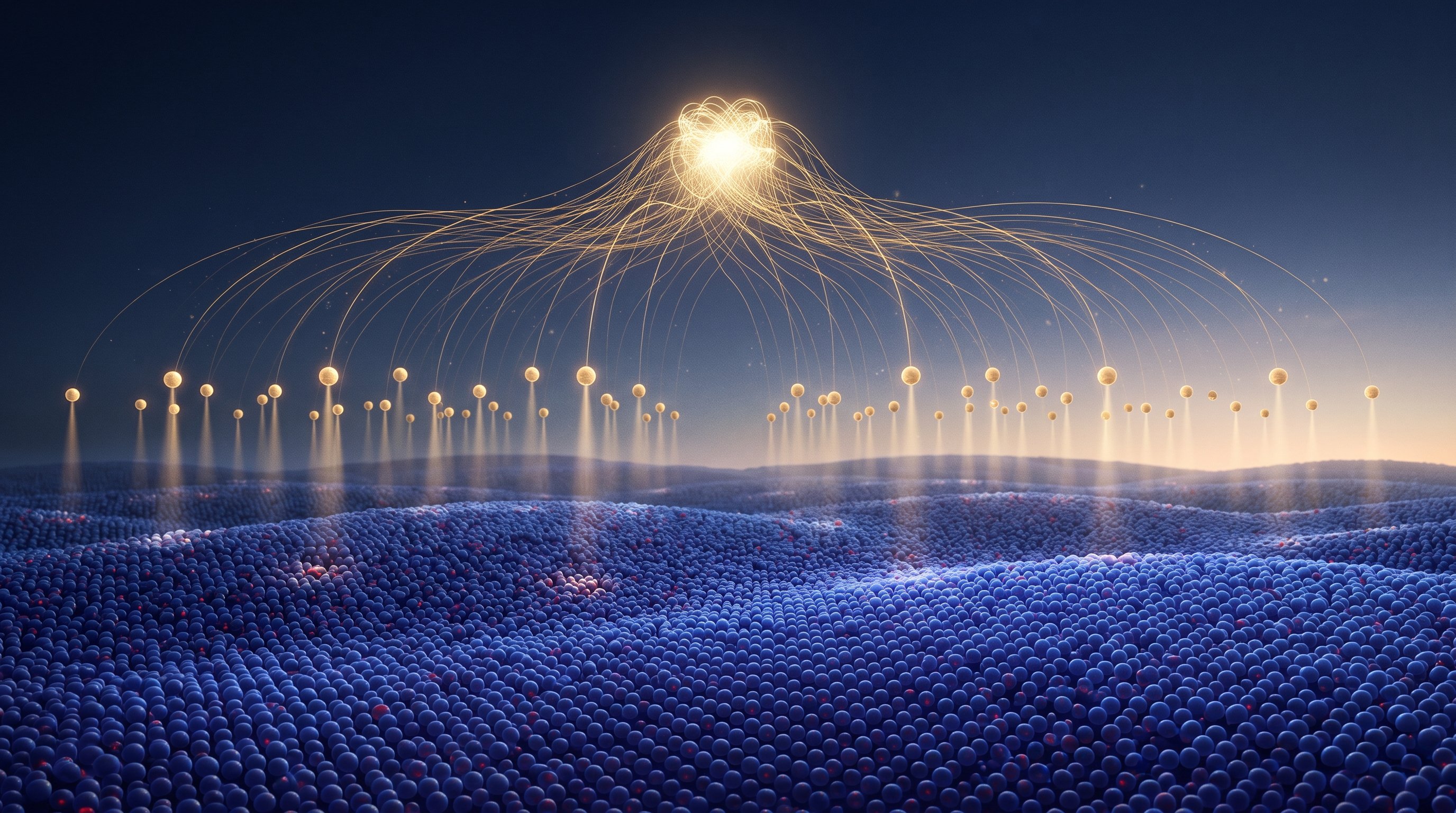
An AI model that has to work through an enormous pile of data in one go loses track. OpenAI therefore took a different approach: it had nearly 2,000 AI agents work at the same time, each on a small piece of the same research. Together they worked through an atlas of 7.7 million brain cells from mice in 32 minutes. OpenAI, the biotech company PerturbAI and the American research institute Scripps Research announced this on 21 October 2026.
An AI agent here is an AI model that carries out a task on its own: looking at data, searching scientific articles and writing down an explanation. The agents ran on GPT-Rosalind, the AI model that OpenAI released this spring for research in biology and medicine.
An atlas of switched-off genes
The data come from PerturbAI. In the brains of 74 mice, that company switched off one gene at a time, 1,947 genes in total, all of them linked to diseases. It then measured in each brain cell which other genes started working harder or more quietly. This method is called Perturb-seq.
Such an atlas produces a mountain of data. For every switched-off gene, someone has to work out what the changes mean and what is already known about it. According to the researchers, a team of people would spend months to a year on that. That is an estimate: they calculated with a quarter of an hour per gene and ten minutes per article that has to be read.
One gene per agent
In the new research, each agent was assigned one switched-off gene. The agent looked at how the cells reacted, searched the scientific literature and proposed an explanation. The system then combined all the reports, looked for links between genes and put the best ideas for follow-up research at the top. The result is a 'reasoning atlas' that anyone can search.
Spreading the work over many agents makes a big difference. A single agent that did everything alone cited on average about 11 scientific sources for the largest amount of work. According to the project data, the agents together came to more than 7,500 sources. Biologists with a doctorate who did not know which report came from whom more often chose the work of the group of agents than that of the single agent.
The agents were not shown the original scientific article about the atlas. Even so, according to the researchers, they found 48 of the 55 conclusions that could be drawn from the data, or sharpened them.
A lead to cholesterol
One of the new ideas concerns the gene DCTN1. That gene helps nerve cells transport substances through the cell and is linked to brain diseases such as ALS and a form of dementia. When DCTN1 was switched off, genes for making cholesterol started working harder. One agent suggested that nerve cells start making more cholesterol themselves when its transport inside the cell falters. Three biologists who did not know where the idea came from gave it an average of 4.3 out of 5 as a topic for follow-up research.
Next step: the lab
For now, all the ideas in the reasoning atlas are hypotheses that can now be tested in the lab. The research is online as a preprint: other scientists are still reviewing it. Eight of the fourteen authors work at OpenAI or PerturbAI, which they themselves report as a possible conflict of interest. According to the makers, scientists continue to make the important choices: which explanation is strongest and which experiment is done first.
Independent researchers are positive. Tomasz Nowakowski, a brain researcher at the University of California in San Francisco, says the clues sometimes already exist, spread across different fields, but that nobody had linked them together yet. Sarah Teichmann of the University of Cambridge, one of the founders of the international Human Cell Atlas project, expects AI to help many more researchers explore such cell atlases and draw testable questions from them.
The software is freely available on GitHub. PerturbAI and OpenAI now want to use the approach for their own data on the brain, metabolic diseases and ageing.
What does this mean for the road to the singularity?
Labs are making ever larger datasets ever faster. Working out what all those measurements mean is therefore becoming the new bottleneck. This research shows that AI can scale up that work: not one clever assistant, but a whole team that works on thousands of questions at once and puts the answers together.
The biggest advantage lies in the cross-fertilisation that Nowakowski points to. A language model has read articles from cell biology, neurology and metabolism at the same time. That allows it to make links that stay out of view for a single specialist, such as between a transport gene and cholesterol. If the best ideas are confirmed in the lab, such a swarm of agents could considerably speed up the start of drug research: from a mountain of measurements to a short list of promising ideas in half an hour.
What is the technological singularity? Read the explanation →