Nederlands
Siemens factory in Erlangen teaches AI cameras to inspect with simulated photos, before a prototype exists
In a German electronics factory, Siemens and Nvidia let AI prepare the production of new circuit boards with a digital copy of the factory. According to Siemens, this saves up to 85 per cent of the preparation work. It is a first step towards a factory that adjusts itself.
In the German city of Erlangen there is an electronics factory run by Siemens. Since 1971, about 1,000 people have made parts there for the drive systems of machines. At the heart of these are circuit boards: green boards full of chips and other components. On 19 October 2026, Siemens and the American chipmaker Nvidia announced that they had reached a first milestone in this factory on the way to a factory that is largely run by AI.
The problem: waiting for the first unit
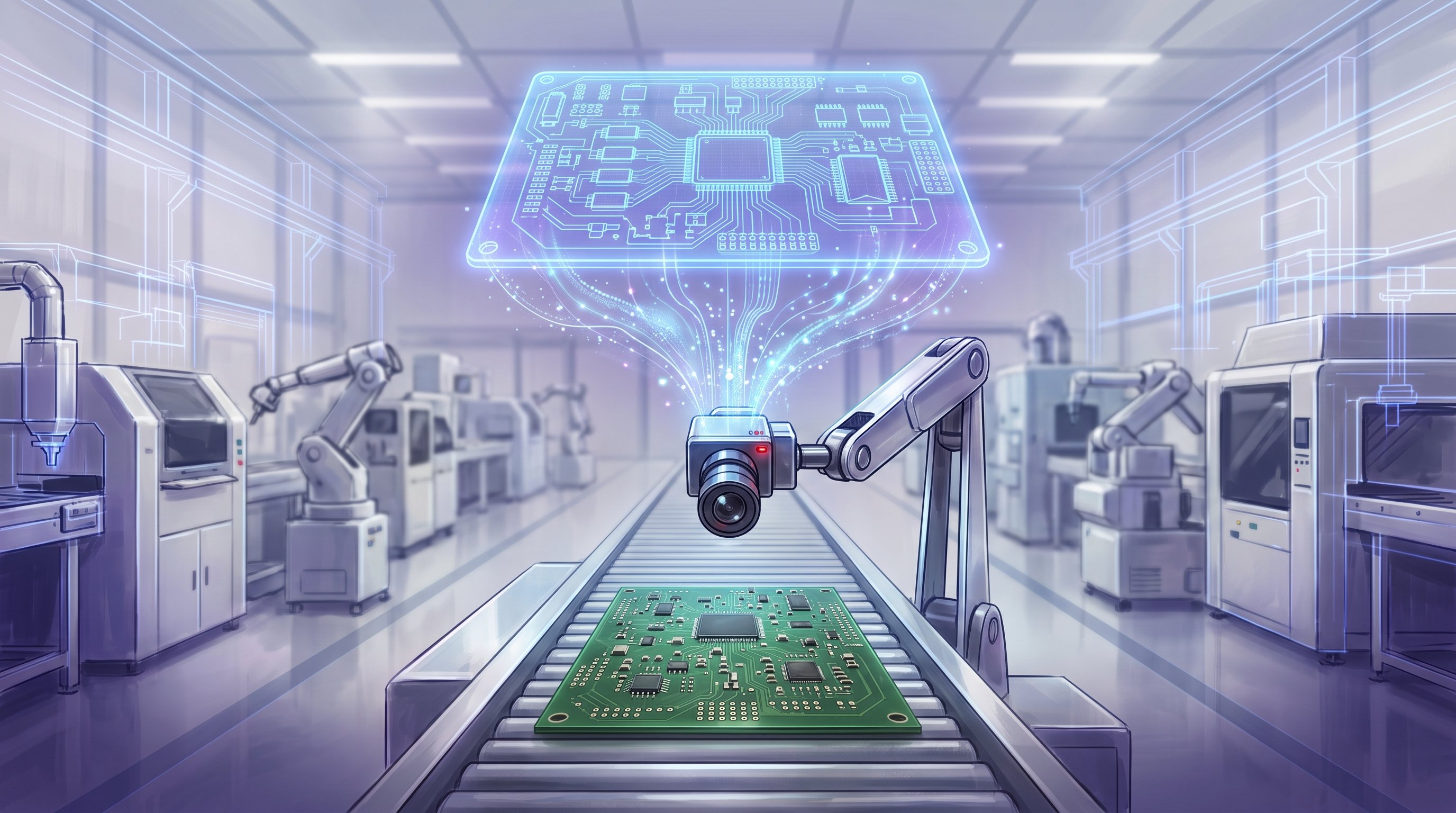
A factory has a lot to prepare for a new circuit board. An important part of this is quality control. Cameras with image recognition check whether every component is in the right place. These cameras first have to learn what a good and a faulty circuit board look like. Until now, that required photos of real units. So the factory had to wait until the first trial versions, the prototypes, were ready. According to Siemens, that took weeks.
Photos of a circuit board that does not exist yet
Now AI makes those photos itself. Every new circuit board first exists as a design on the computer, as a digital twin.
Using AI models from Nvidia, the factory turns that design into lifelike photos of the circuit board, including boards with faults. The cameras use these to learn in advance what to look for. This way the inspection can be ready before the first real unit comes off the production line.
An AI agent that makes the schedule
The factory also works with an AI agent, an AI program that carries out tasks on its own. When a new order comes in, the agent works out different ways to make it. It shows the planners what each choice means for things like time and cost. Before a plan is carried out, it is first tested in a digital copy of the whole factory.
The results according to Siemens
According to Siemens, this approach saves up to 85 per cent of the work in preparing the production of new circuit boards. A new circuit board reaches the market up to 40 per cent faster. Planning with the AI agent saves up to 20 per cent in costs. These are Siemens's own figures; there are no independent measurements yet. Another important question is how closely the simulated photos match reality. This is being studied further in practice.
According to Siemens, more than 100 AI applications are already running in the factory, for production, logistics, quality control and maintenance. Siemens is investing 500 million euros in modernising the factory up to 2030. Erlangen is meant to become the testing ground that other factories can learn from. More applications will follow in the coming months.
What does this mean for the road to the singularity?
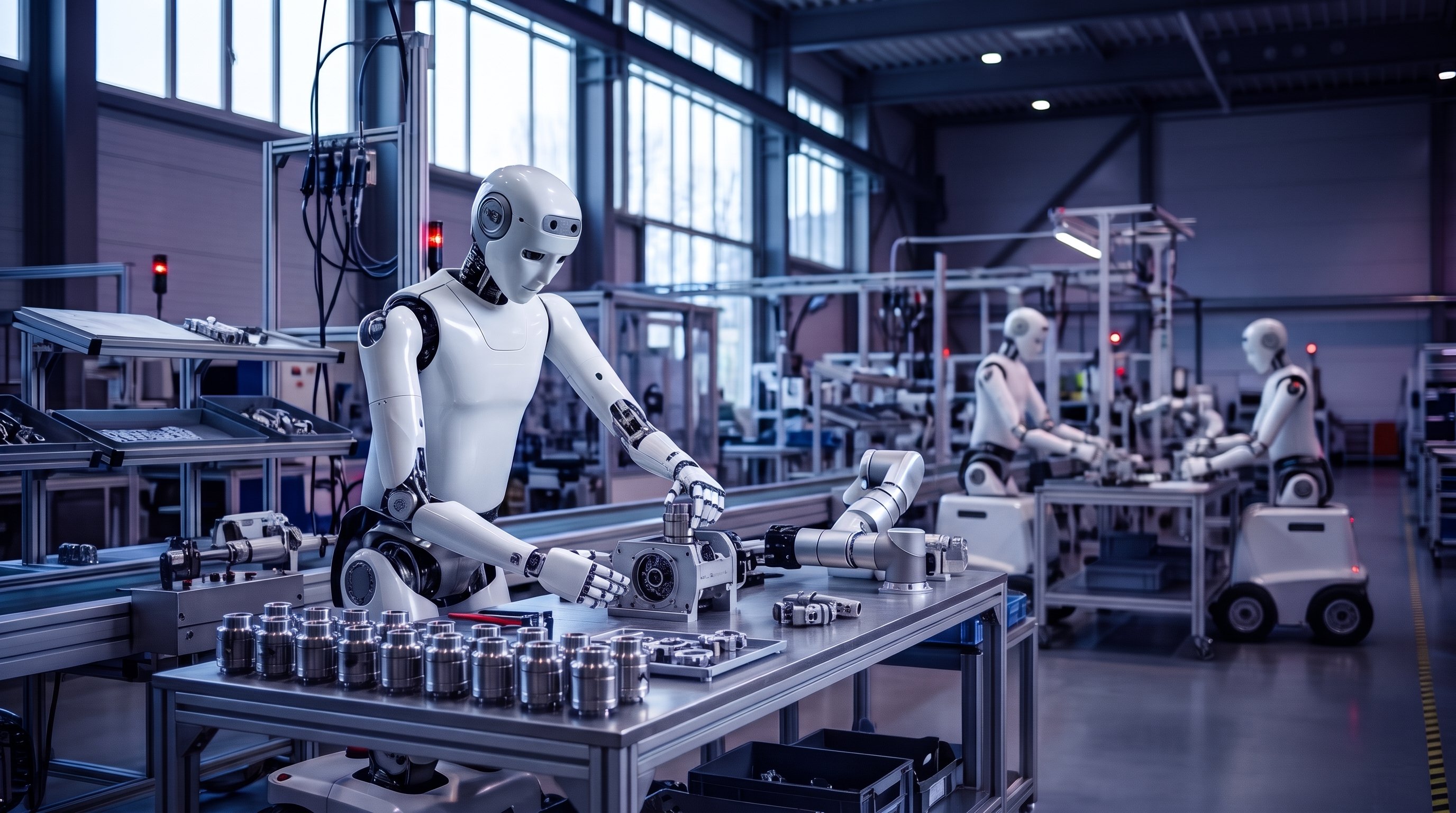
AI still lives mainly in data centres and on screens. In Erlangen it is moving onto the factory floor: it makes training material for other AI by itself and helps with the planning. That is a step towards factories that can adapt quickly to new products, without weeks of preparation.
What is interesting is that AI is training AI here: one model makes the photos that the other uses to learn how to look. If this approach proves itself, factories will be able to make new products much faster, including the chips and machines that AI itself needs. In this way, progress can give itself a push.
What is the technological singularity? Read the explanation →