Nederlands
GPU
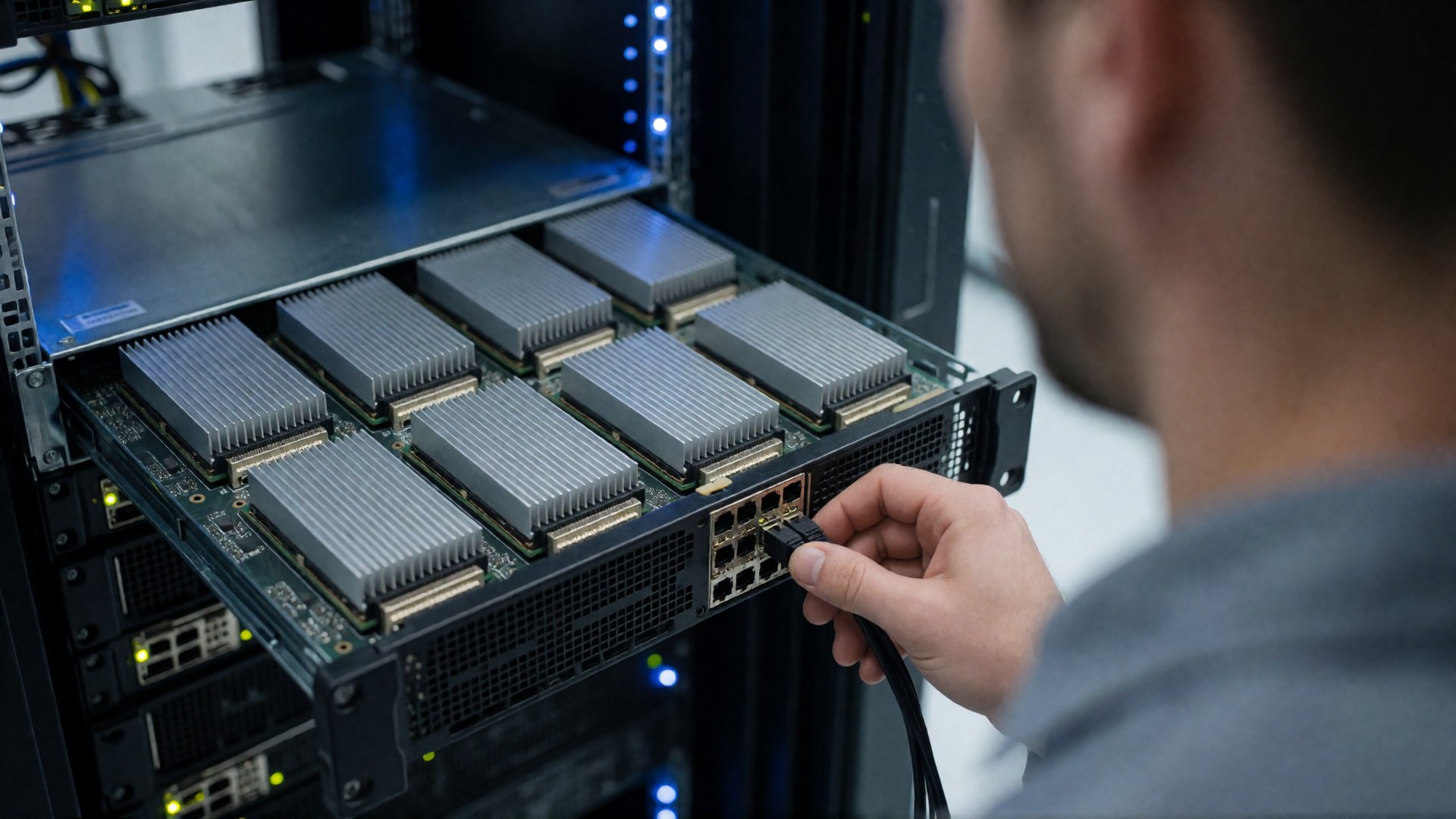
A GPU is a chip that performs a huge number of simple calculations at the same time. It was designed for graphics and games, but is now also the most important chip for training and running AI models.
An ordinary processor (CPU) is good at many different tasks, but does them largely one after another. To show an image on a screen, millions of pixels have to be calculated at once. That is what the GPU (graphics processing unit) was designed for: a chip with thousands of small computing cores that together perform the same kind of calculation on very many numbers at once. In a PC it usually sits on a graphics card.
The arithmetic behind AI closely resembles that of graphics: enormous rows of numbers being multiplied together. That is why most AI models run on GPUs, from a single graphics card in a PC to tens of thousands in a data centre. Nvidia is the largest maker. AMD makes them too, and companies such as Google also use their own AI chips.
Why it matters
GPUs are the engine of today's growth in AI: whoever has enough of them can train larger models. They are also useful beyond language models. NVIDIA software uses a single powerful graphics card to work out, in a few milliseconds on average, how a robot arm can move without hitting anything. In a simulated practice world for robots, hundreds of plans run at once on one graphics card. At the same time, some models are becoming so efficient that they no longer need a powerful graphics card and simply run on a phone or laptop.
Articles about GPU
-
Anthropic: Claude Mythos got Claude running on AMD chips in three days
According to Anthropic, its AI model Claude Mythos got the Claude models running on AMD chips in about three days, with little human help. Such a switch used to take dozens of engineers months of work.
-
Skild AI releases fast simulator for training robots
Skild AI and Nvidia have released Steel: software that calculates on a computer how robots move. For a mix of many kinds of robot tasks, it is up to 13 times as fast as the widely used PhysX, according to the company's own measurements. Anyone can now use and test the code.
-
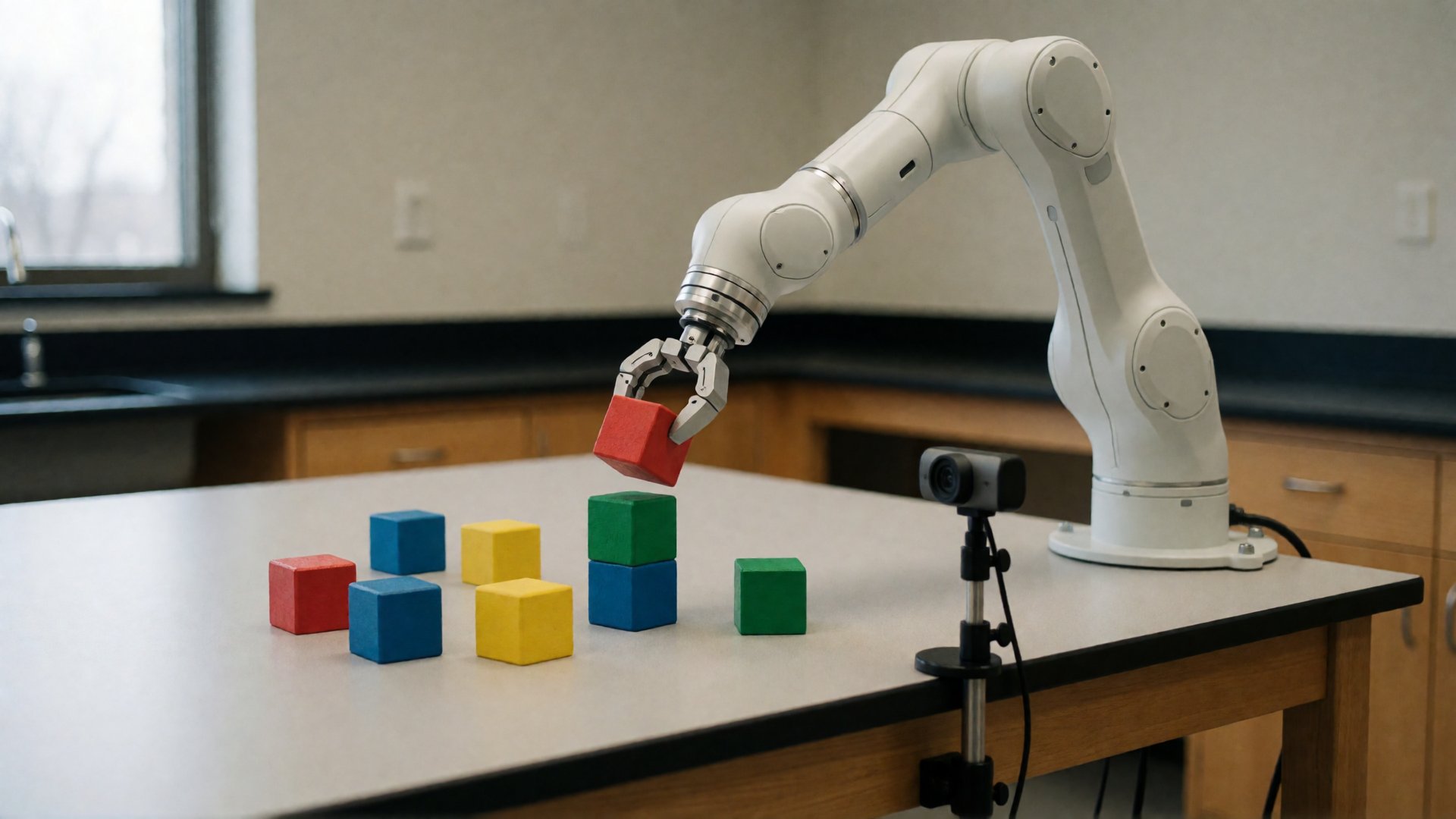
Ai2 releases open practice world for robots: a robot arm and a table full of blocks
The American research institute Ai2 has released ToyBlocks: an open, simulated world in which robots practise with blocks. According to Ai2, models trained only there also performed single actions on a real robot arm, in 81 per cent of the trials.
-
Anthropic uses AI to determine, for the first time, the shape of a puzzling protein shell from the bacterial world
Anthropic's biology team has used its AI assistant Claude to determine, for the first time, the 3D shape of a vault from the bacterial world: a hollow protein shell made with a protein from a bacterial virus. What such shells do in cells is now being studied further.
-
Thinking Machines Lab releases Inkling 2 Small, open version to follow after safety tests
The AI company of former OpenAI executive Mira Murati has started its second generation of models with Inkling 2 Small. The model is available through the company's own platform, Tinker. The company wants to release it next week, once the external safety tests are finished.
-
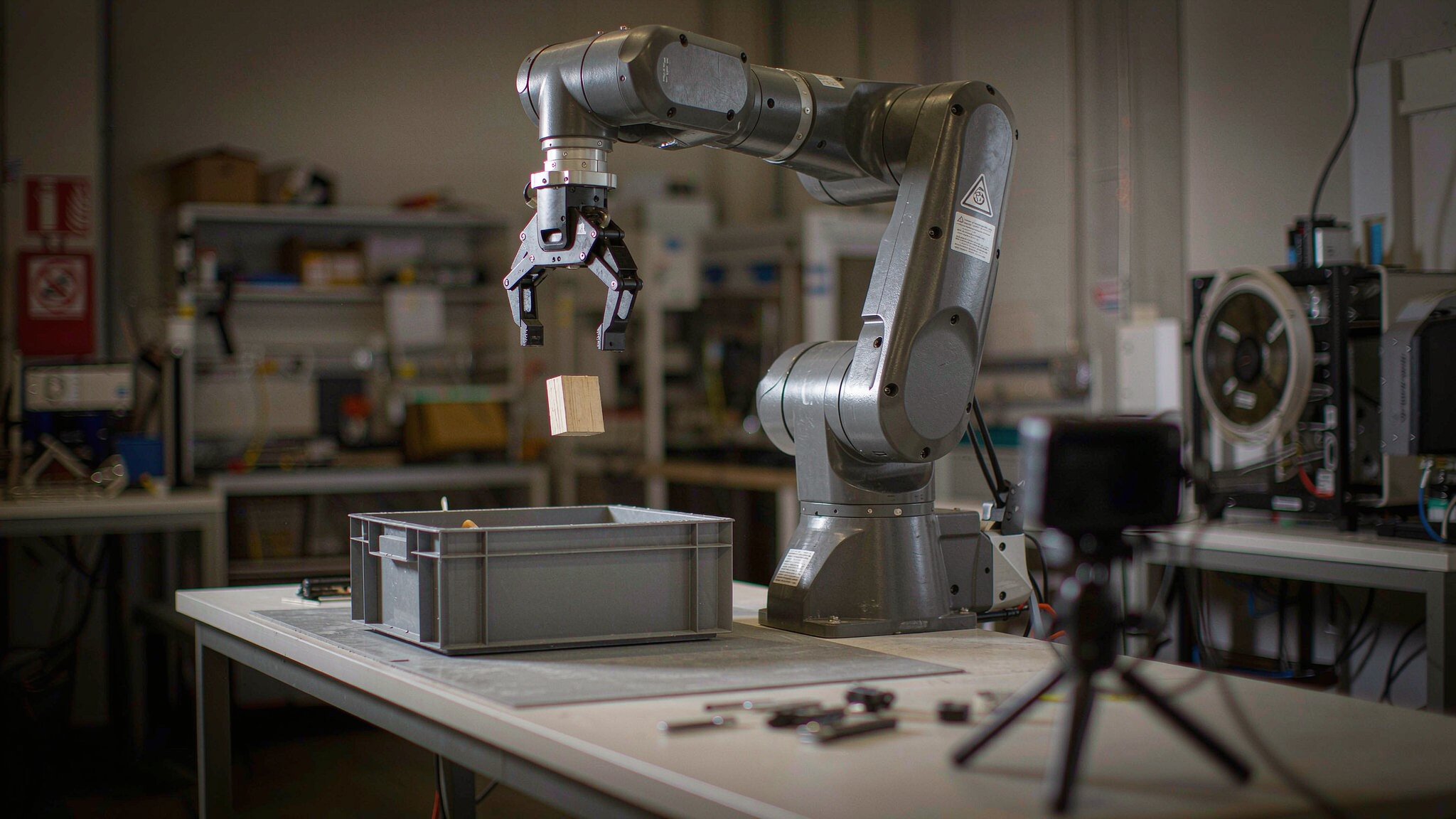
NVIDIA releases fast planner for robot arms: route in 4.4 milliseconds on average
NVIDIA researchers have released cuRoboV2-Fast, software that works out how a robot arm moves without hitting anything. In their own tests, this took 4.4 milliseconds on average. On a real robot, a work cycle became more than a third shorter than with its predecessor.
-
Small open AI model reads text aloud on your phone, without internet
The AI company Gradium has released Phonon as open models: small text-to-speech models that read text aloud with a natural voice, entirely on a phone, a laptop or in the browser. On a public Hugging Face leaderboard, Phonon is among the most intelligible text-to-speech models.
-
Anthropic builds FlashProve: cryptographic proof of which AI model produced an answer
Anthropic has released FlashProve, an open-source research prototype that uses zero-knowledge cryptography to show which model generated an answer, without revealing the model weights.
-
Chinese company releases free AI model for chemistry, trained on its own lab work
The Chinese company Deep Principle has released Hydrogen-1.0, an AI model for chemistry and materials research that anyone can download. It also learned from failed experiments in the company's own lab. The results have so far been measured by the company itself.
-
Rocky Linux creator builds Linux-compatible kernel in eleven days with an AI agent
Gregory Kurtzer, known for CentOS and Rocky Linux, built Ginux in eleven days: a new core for an operating system that can run existing Linux programs. An OpenAI AI agent wrote almost all the code. It is still a research prototype.
-
Developer builds a complete processor inside the weights of an AI language model
Developer Divyansh Agrawal built a complete processor inside the weights of the language model Qwen 3.5. In his tests, the model now calculates almost without errors, with no outside tool. It is still a slow experiment, but everything is online for anyone to see.
-
Google runs an AI model on a TPU in space for the first time
Google's Project Suncatcher has reached a milestone: a Gemma 4 model aboard a prototype satellite answered a prompt from orbit. It is a first step towards data centres in space.
-
Microsoft releases free AI model that shows how proteins move
With BioEmu-2, researchers can predict which shapes a protein or other biomolecule can take, also together with DNA, RNA or small molecules. Microsoft shares the code and the model for free under an open licence; it is meant for research.
-
Block builds a speech model that learned to talk just by listening to conversations
Block, Jack Dorsey's company, has shown Dessa: an AI model that learned to talk without any text, only from recordings of conversations. It listens and speaks at the same time and runs on a powerful laptop. A small group of safety researchers is now the first to test it.
-
Nvidia releases free speech model that transcribes recordings in 40 languages, translates them and recognises speakers
Nvidia has released an open speech model that transcribes, translates and shows who is speaking, all in one go. It uses only a small part of its computing power per step and runs on a single graphics card, without the cloud. For now, the performance figures come from Nvidia itself.