Nederlands
GPU
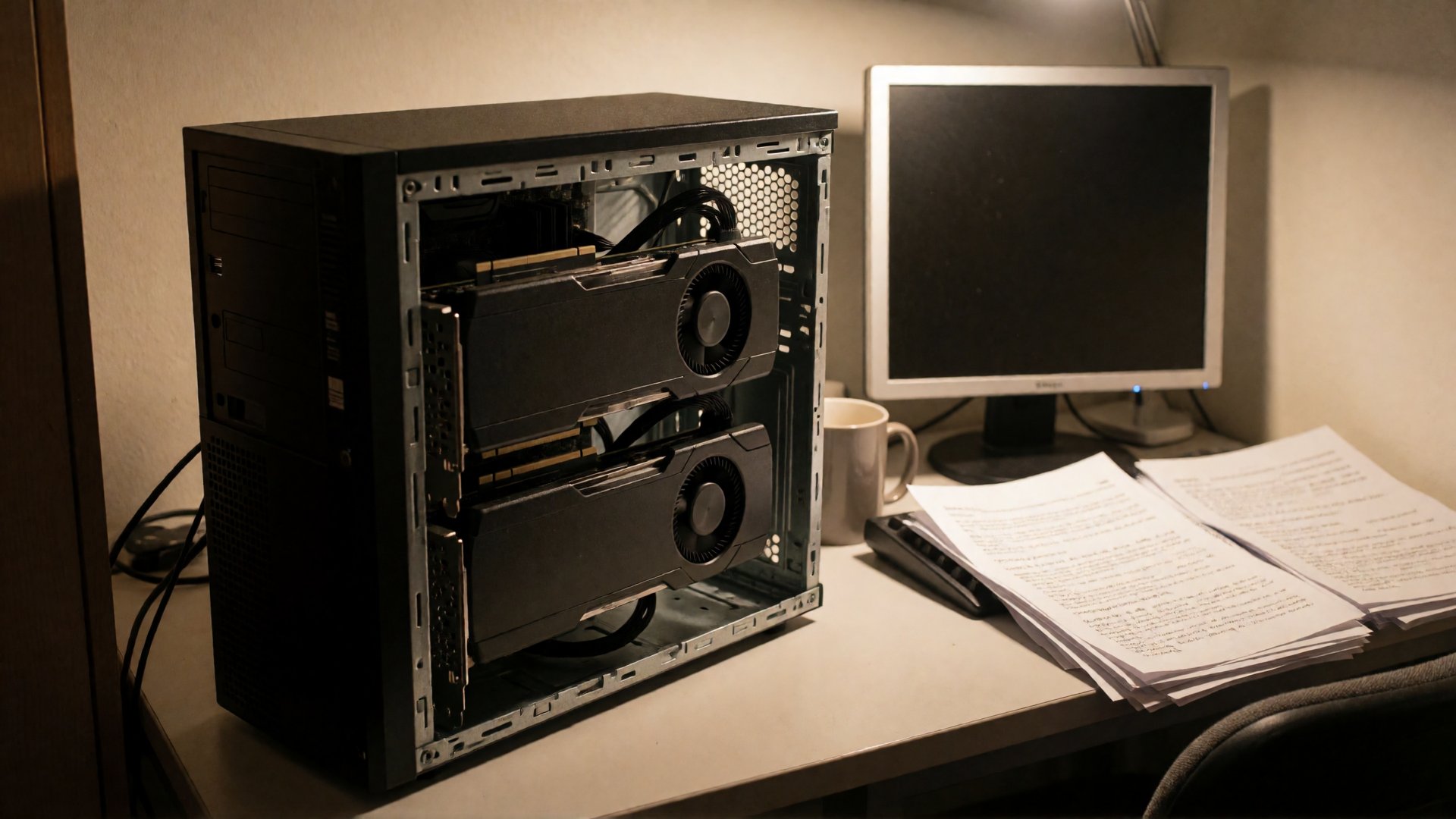
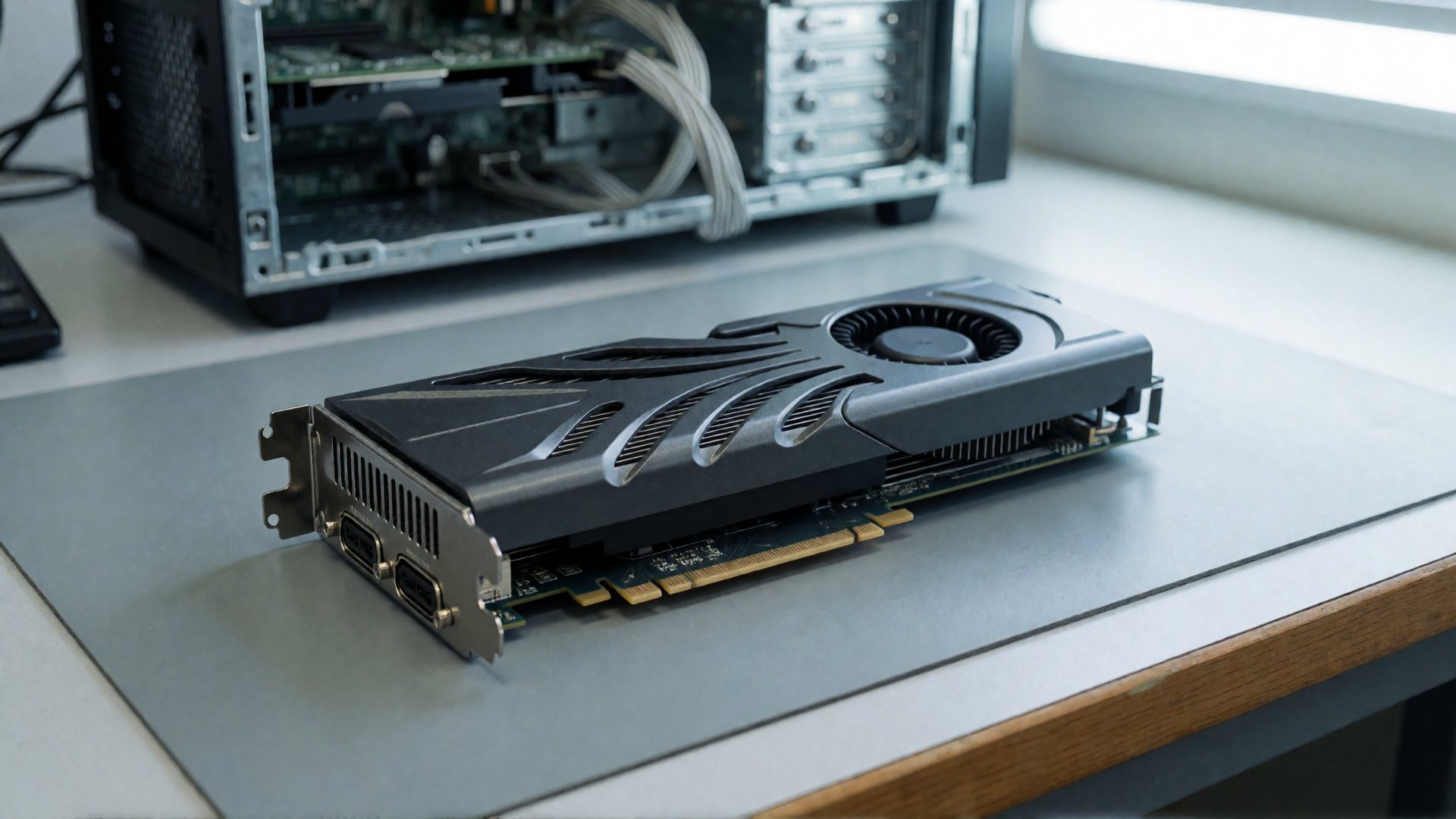
A GPU is a chip that performs a huge number of simple calculations at the same time. It was designed for graphics and games, but is now also the most important chip for training and running AI models.
An ordinary processor (CPU) is good at many different tasks, but does them largely one after another. To show an image on a screen, millions of pixels have to be calculated at once. That is what the GPU (graphics processing unit) was designed for: a chip with thousands of small computing cores that together perform the same kind of calculation on very many numbers at once. In a PC it usually sits on a graphics card.
The arithmetic behind AI closely resembles that of graphics: enormous rows of numbers being multiplied together. That is why most AI models run on GPUs, from a single graphics card in a PC to tens of thousands in a data centre. Nvidia is the largest maker. AMD makes them too, and companies such as Google also use their own AI chips.
Why it matters
GPUs are the engine of today's growth in AI: whoever has enough of them can train larger models. They are also useful beyond language models. NVIDIA software uses a single powerful graphics card to work out, in a few milliseconds on average, how a robot arm can move without hitting anything. In a simulated practice world for robots, hundreds of plans run at once on one graphics card. At the same time, some models are becoming so efficient that they no longer need a powerful graphics card and simply run on a phone or laptop.
Articles about GPU
-
SpaceX leases 40 billion dollars' worth of AI chips
SpaceX has signed a binding commitment to lease about 40 billion dollars' worth of AI chips and data centre equipment, including Nvidia's new Vera Rubin chips. The first equipment is due in the first half of 2027.
-
Free tools take the brakes off Nvidia graphics cards: up to twice as much AI computing power
Free open-source tools remove a brake that Nvidia built into the firmware of its GeForce graphics cards. For AI calculations, some cards become up to twice as fast. In practice the gain is smaller, and the tools are still experimental.
-
Hugging Face releases open AI model that lets researchers 'talk' to DNA
With Hugging Face's Carbon-X, researchers paste a piece of DNA into a chat and ask in plain language whether a change is likely to be harmful. The model is free and runs on a researcher's own computer. It is meant for research; the next step is testing in the lab.
-
Quantum computer catches its own errors so well that only 5 in a million remain
Quantinuum's Helios quantum computer set a new record in error correction: on average, something went wrong five times in a million checking rounds. That is ten times better than the previous record. The next step is to show this for more complex calculations too.
-
Claude designs proteins against scorpion venom in 64 hours: 17 bind to their target in the lab
A research version of Claude designed over 318,000 small proteins against five scorpion toxins in 64 hours. Two labs made 211 of them, and 17 bound firmly to their toxin. It is not yet an antidote, but it is a first step.
-
Large open AI model from DeepSeek now fits on a computer with 128 gigabytes of memory
DeepSeek's new open AI model is too big for an ordinary computer. The company Unsloth made a heavily reduced version that runs on a powerful laptop or mini computer with 128 gigabytes of memory. This costs some accuracy.
-
AI model Maxwell makes existing software faster while it runs
The Israeli company doubleAI presents Maxwell, an AI that rewrites programs while they run so that they go faster, without touching the source code. According to the company, one customer's computing costs fell by 67 per cent.
-
d-Matrix splits the work of an AI model across two kinds of chips for faster answers
At a major data centre conference, the American chip company d-Matrix showed how an AI model answers faster when ordinary graphics chips and its own chips each do the work they are good at. The company now also supplies complete computing clusters.
-
Chinese company Sugon shows computing cluster with 100,000 home-grown AI chips
China's Sugon is showing its Sugon 8000: a computing cluster that links 100,000 computing cards made in China. The system combines AI with classic supercomputing and, according to Sugon, has already run ten research projects.
-
Nvidia releases open AI models for digital assistants on servers and laptops
Nvidia has released three new open AI models for assistants that carry out tasks on their own. The largest runs in companies' data centres; the smaller ones simply work on a laptop. According to Nvidia, the large model beats top models on specialist tasks after extra training.
-
Meta releases Muse Spark Open: a large AI model for programming that also runs on your own computers
Meta has released Muse Spark Open, a large AI model for programming and independent agent tasks that anyone can download. According to Meta, it is the strongest American open model so far, and it even runs on two Mac Studios.
-
Frontier is the first supercomputer to pass a quintillion calculations per second
The supercomputer Frontier at Oak Ridge is the first in the world to pass a quintillion calculations per second on the standard test for supercomputers. It is built from thousands of processors and graphics chips.
-
Google researchers: a network that looks at all words at once translates better and learns faster
Google researchers describe the Transformer, a new kind of neural network that looks at all the words of a sentence at once and finds the most important links. It translates better than earlier methods and is faster to train.
-
AlexNet network wins image recognition contest by a wide margin
A neural network built by three researchers from Toronto wins the ImageNet contest with an error rate of 15.3 per cent, more than ten percentage points better than the runner-up. The network was trained on graphics chips.
-
NVIDIA lets graphics chips do ordinary calculations too
NVIDIA presents CUDA: with the programming language C, developers can use the hundreds of computing cores of a graphics chip for all kinds of calculations, not just images. The company says this can be up to 100 times faster.