Nederlands
German company makes a molecule that stores quantum information and can pass it on with light
The German company NVision and researchers from Ulm and Jerusalem describe in Nature a molecule of carbon and hydrogen that stores quantum information and can pass it on with light. Such a building block could later link quantum computers together.
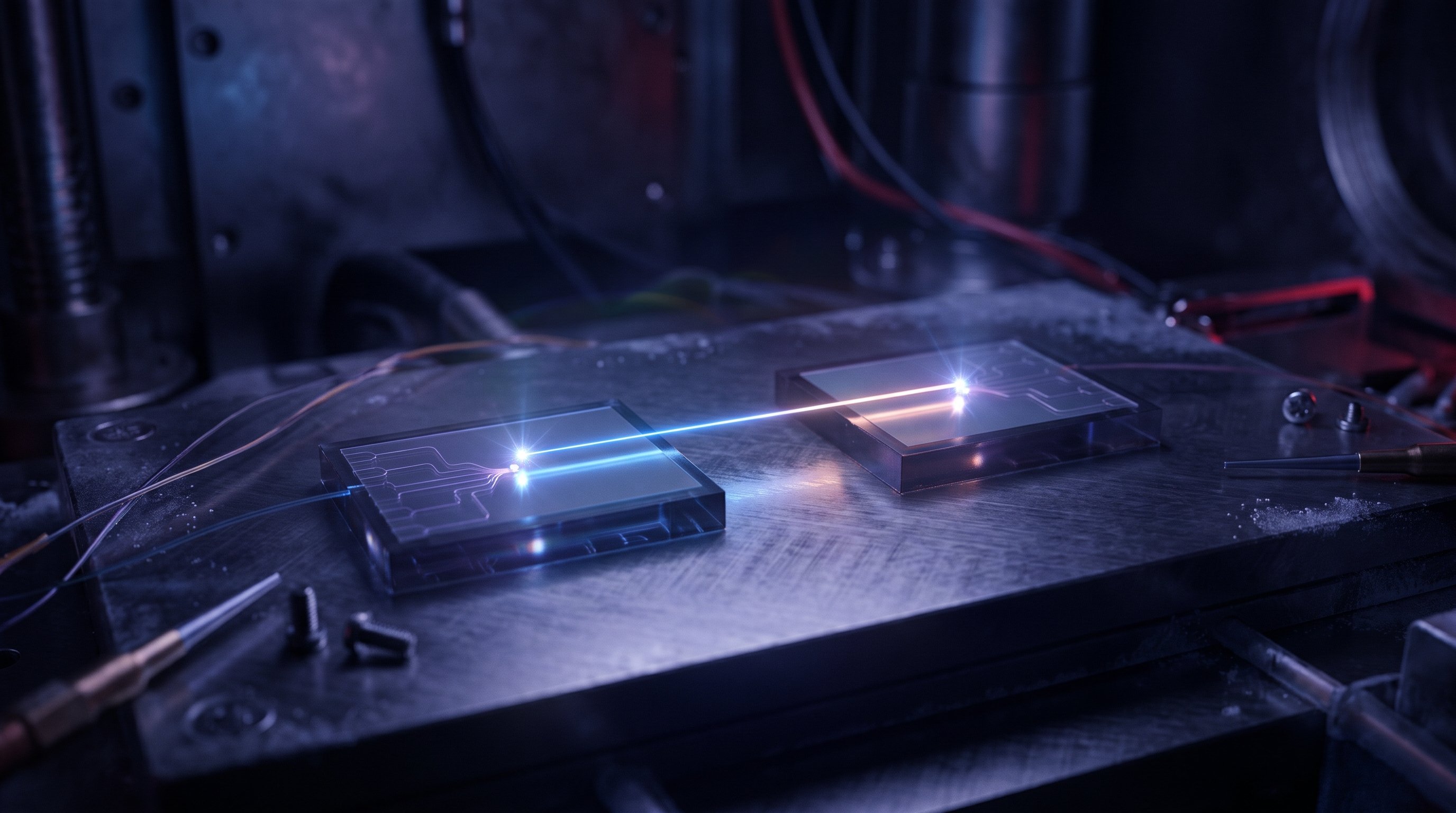
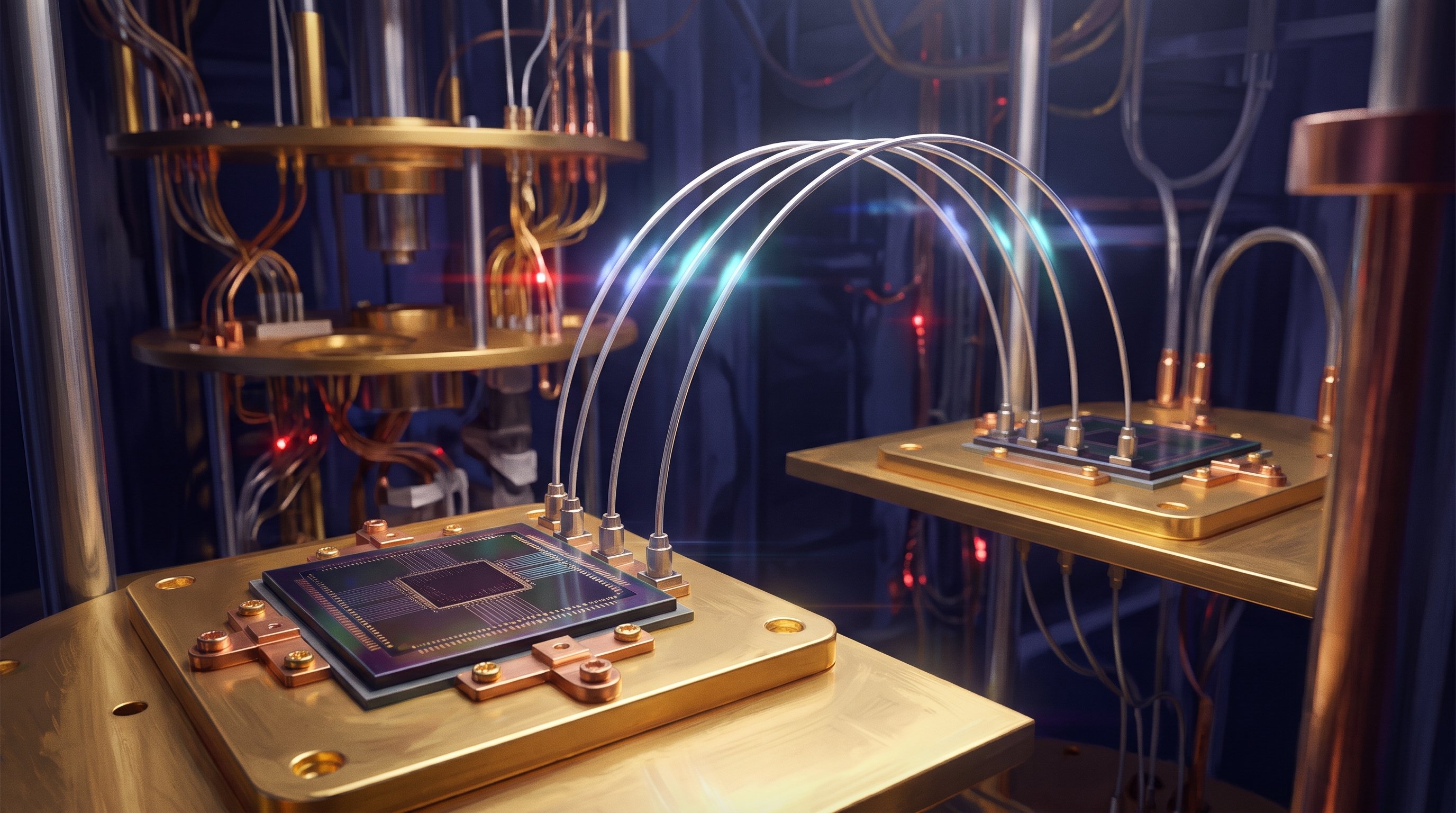
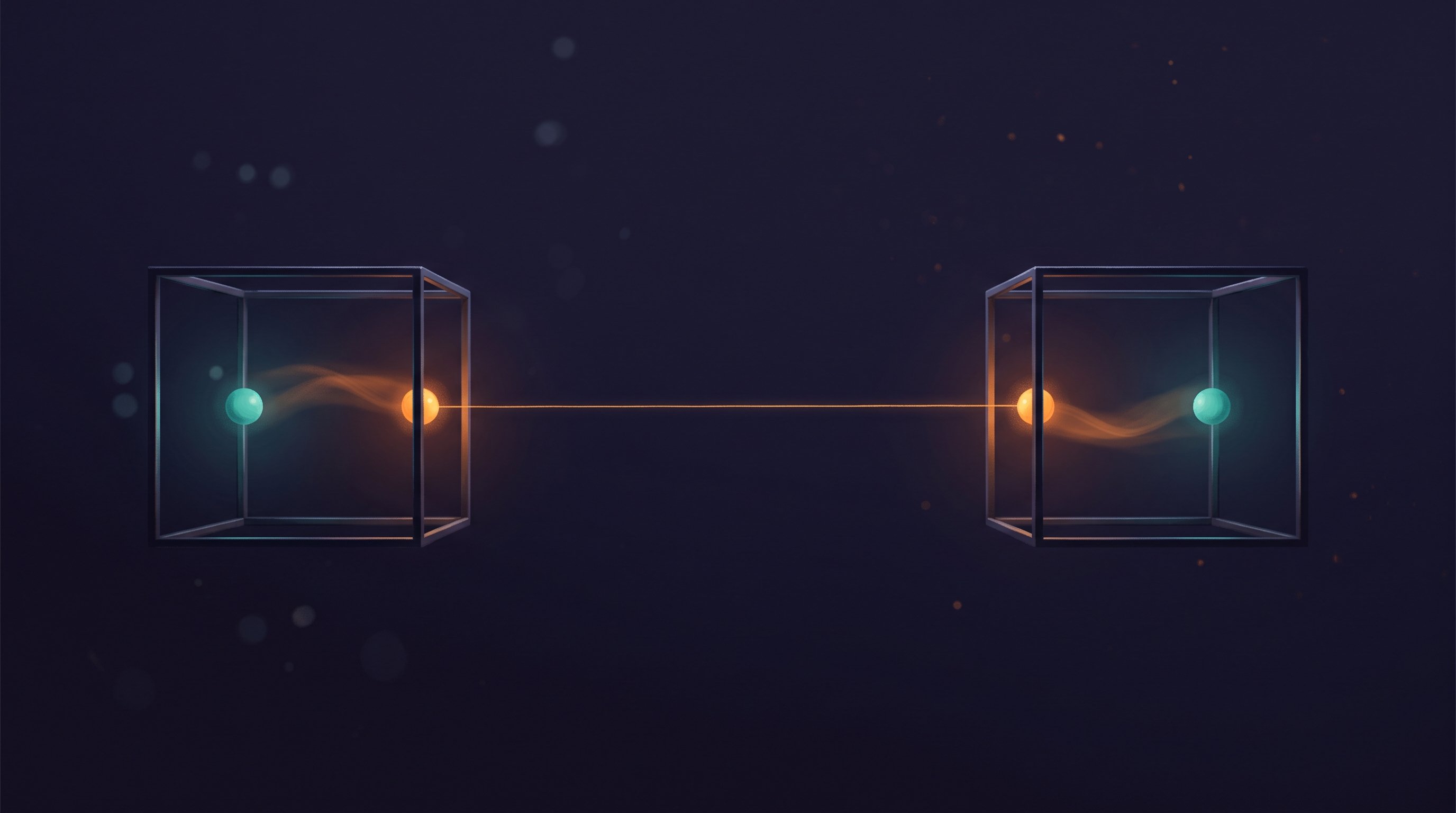
Quantum computers calculate with qubits: tiny building blocks that can hold a quantum state. The more qubits, the more such a computer can do. But only so many fit on one chip. A widely mentioned solution is to link several smaller quantum chips with light, just as optical fibre already connects computers in data centres. That requires a component that can store quantum information and also pass it on to a particle of light (a photon). Specialists call this a spin-photon interface.
On 28 October 2026, the German company NVision Quantum Technologies from Ulm described such a component, made from a single molecule, in the scientific journal Nature. According to the company, it is the first time this has been done with an individually controllable organic molecule: a substance made only of carbon and hydrogen, which a chemist can make in the lab. NVision carried out the research together with researchers from Ulm University and the Hebrew University of Jerusalem.
Playing loads YouTube, which may set cookies. More information
Four requirements at once
A good link between a qubit and light must be able to do four things at once, NVision explains. The light the qubit emits must reveal which state it is in. The colour of that light must be very pure and stable. Only then are particles of light from different molecules impossible to tell apart, and that is needed to link two qubits through light. The qubit must emit enough particles of light. And it must hold on to its information long enough: a few thousandths of a second. According to NVision, no existing technique had yet met all four requirements at once.
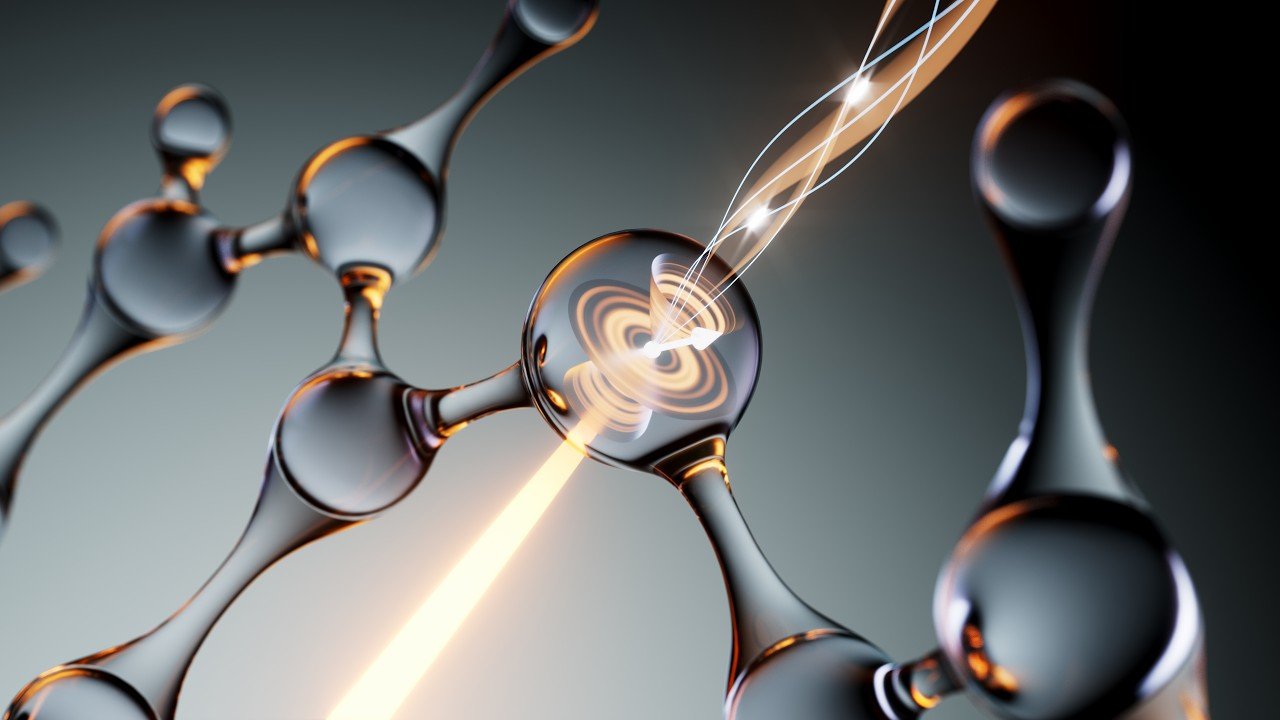
The team therefore searched in a targeted way. On the computer, the researchers looked at more than 150 candidate molecules, and they actually made more than 40 of them in the lab. The best one was named BiPhi. In its centre, the molecule has a carbon atom with two unpaired electrons. Together, those electrons behave like a very small magnet, and the direction in which it points is the qubit. Usefully, the molecule takes on that state by itself: it is its calmest, most stable form.
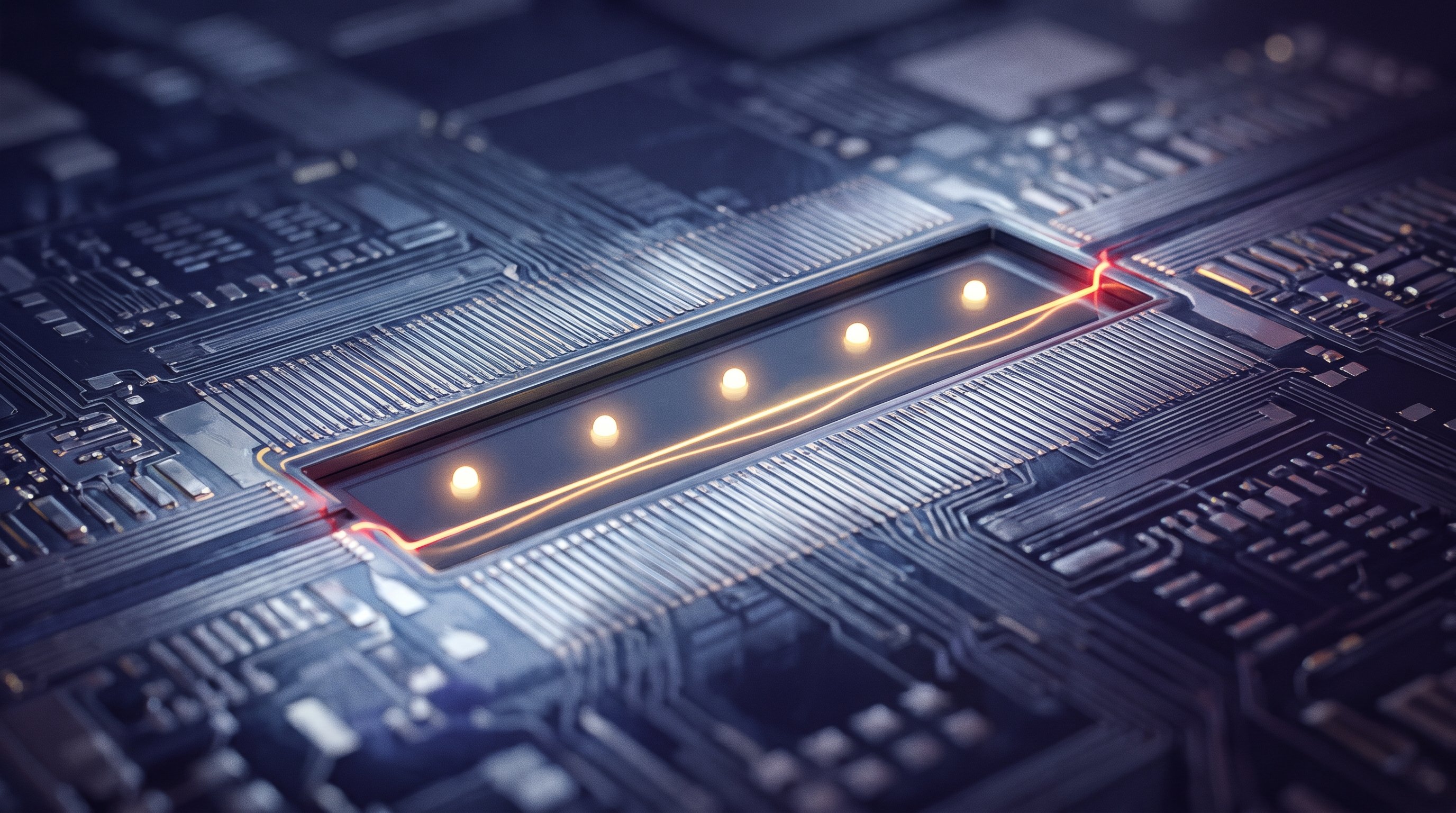
BiPhi is enclosed in a crystal of an almost identical molecule. That crystal presses BiPhi's two arms almost flat, so that they vibrate less. Less vibration means purer light. With a short laser pulse, the researchers switch the qubit 'on' at exactly the right spot in the crystal.
What the measurements show
The experiments were done at about minus 269 degrees Celsius, just above absolute zero. There, a single molecule really worked as a separate light source. The colour of the light stayed almost the same for more than an hour. And the qubit held its information for more than two thousandths of a second. That worked with a rapid series of short microwave pulses (the same kind of radiation as in a microwave oven), which keep undoing disturbances.
There is also work still to be done. Without those pulses, the qubit loses its information much faster, after about 12 millionths of a second. In addition, about 2 per cent of the light ends up in the usable, pure colour. For the best other light sources for quantum technology, so-called quantum dots, that is about 70 per cent. NVision therefore designs its chips to cope with a lot of light loss: according to the company, up to 70 per cent of the particles of light may be lost. A lost particle of light then makes the linking slower, but not wrong. The research shows one qubit; connecting two molecules through light is the next step.
The goal is the same as that of physicists in Oxford, who earlier linked atoms in two places into a single quantum state, also as a step towards networks of quantum computers. They worked with atoms of strontium and calcium. NVision is taking a different route: a molecule that can be made in a chemistry lab and applied to a chip as a thin layer.
On the way to a chip
At the same time, NVision announced a collaboration with HyperLight from Cambridge in the US state of Massachusetts. That company makes chips that guide light, from a thin layer of lithium niobate: a crystal that is already used in fast connections in data centres and telecom networks. The molecules go onto those chips as a thin layer, roughly like the light-emitting layer on an OLED screen. NVision expects the first test chips in the last quarter of 2026. With them, the company wants to show that the molecule works just as well on a chip as in the lab. In the longer term, NVision is aiming for 1,000 reliable, error-resistant qubits on one chip in 2030.
What does this mean for the road to the singularity?
Large quantum computers will be able to simulate substances, medicines and materials that are too complex to calculate today. For that, many quantum chips need to work together, and light is one of the best ways to connect them. BiPhi shows that a molecule from the chemistry lab can meet all four requirements for such a light link at once. If it also works on a chip, qubits could in future be made with chemistry, alongside today's expensive chip factories. That brings large quantum networks a big step closer.
What is the technological singularity? Read the explanation →