Nederlands
AI finds pattern in routine ECGs that predicts risk of sudden cardiac death
An AI model spots a previously undescribed pattern in ordinary ECGs that is linked to sudden cardiac death. In Swedish data, it found many high-risk people whom the standard heart test did not flag.
In sudden cardiac death, the heart stops unexpectedly because of a severe rhythm disorder: it beats so fast and chaotically that it no longer pumps blood around the body. People who suffer this outside hospital usually die within a few minutes. Doctors therefore try to identify in advance who is at risk, but the standard test misses many of these people.
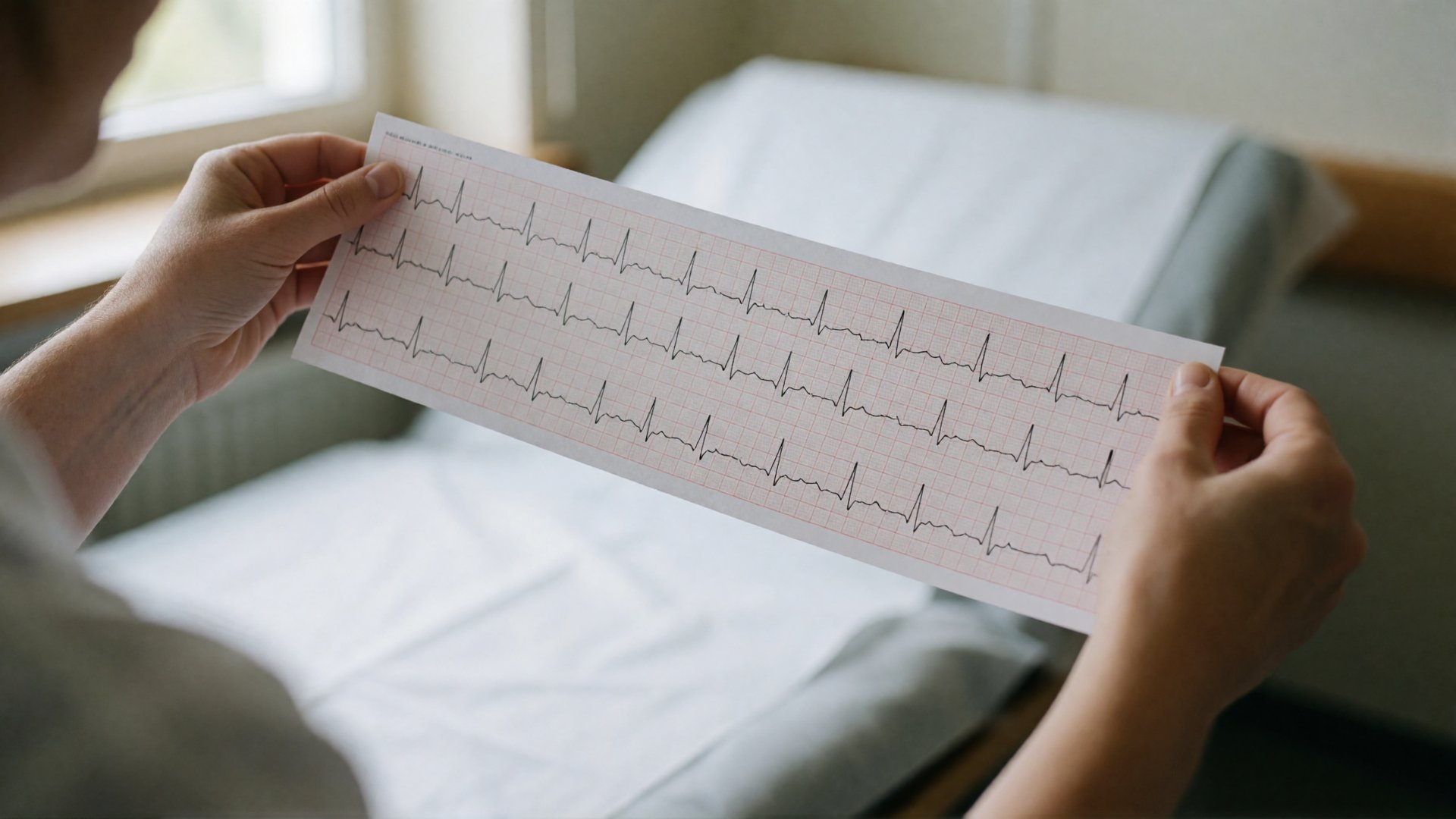
Researchers led by Ziad Obermeyer, associate professor at the School of Public Health of the University of California, Berkeley, trained their own deep learning model on more than 440,000 Swedish heart recordings, also known as ECGs. A model like this learns to recognise patterns by itself from a very large number of examples. An ECG measures the electrical activity of the heart and is recorded in hospitals every day. The researchers linked the ECGs to death certificates, so the model could learn which recordings belonged to people who died suddenly within a year. The work was published in the journal Nature.
More high-risk people found
The standard measure is the ejection fraction: the share of blood that the left ventricle of the heart pumps out with each beat, measured with an ultrasound scan of the heart. In a separate Swedish test group, which the model had never seen before, 1.9% of people had an ejection fraction that was too low. Of these, 4.6% died of sudden cardiac death each year.
The model flagged 2.2% of the same test group as high risk. In that group, 7.0% died of sudden cardiac death each year. Almost nine in ten of these people (86.1%) did not have a low ejection fraction. The standard test would therefore not have picked them out.
The team also tested the model on data from a large US healthcare system in San Diego and from a hospital registry in Taiwan. There, it predicted dangerous rhythm disorders in the lower chambers of the heart and cardiac arrests caused by a rhythm disorder.
A clue to the cause
Using a second AI model, which can generate ECGs itself, the researchers made visible what the first model pays attention to. Among other things, they found a small, previously undescribed distortion at the end of one of the peaks in the recording. Based on this, they propose a first explanation of what goes wrong in the heart. Follow-up research still needs to confirm that explanation.
An implantable defibrillator can stop a dangerous rhythm disorder with an electric shock. About two-thirds of the defibrillators that are currently implanted because of a low ejection fraction never need to deliver a shock. Among people whom the model rated as high risk and who already had a defibrillator, the chance of dying of sudden cardiac death was 54.4% lower than expected. That points to a possible benefit. To prove that choosing patients with the model saves lives, a study is needed in which patients are randomly assigned to receive a defibrillator or not.
From archive to practice
Obermeyer is now working with healthcare systems in Sweden, Taiwan and the United States to let the model examine the ECGs that hospitals already have. The plan is for doctors to then offer high-risk people a patch that records the heart over a longer period. Anyone interested can sign up on the study's website; the team will get in touch once the analysis becomes more widely available.
What does this mean for the road to the singularity?
Hospitals hold large archives of ECGs, which a doctor mainly looked at when each recording was made. This research shows that an AI model can find a signal in such an archive that doctors had never described, and that researchers can then study that signal themselves. In this way, AI not only helps with prediction, but also raises new questions about how the heart works.
If this approach works more often, hospitals could have existing scans, blood test results and ECGs searched again, without anyone having to undergo a new test. A cheap examination that many people have already had would then find the people who are currently missed, so that they get treatment in time. For that, hospitals must be able to link their data securely, and the predictions must prove accurate in practice.
What is the technological singularity? Read the explanation →